Batana Oil vs Coconut Oil for Hair: Which One Fits You?
Written by

Published on Jan 07, 2026

In this article
You probably want healthy, thick, shiny hair that looks good day to day. The goal is hair that feels soft when you touch it and doesn’t seem dry or brittle. There’s no single secret, but many people use pure, natural hair oils to add slip, shine, and smoother ends.
A common question is whether Batana Oil or Coconut Oil is better for your hair. Both can help, and your hair type matters. Each has its own strengths, so the right pick depends on your goal.
Coconut oil has been used for years, while batana oil has been used for centuries in Indigenous communities in South America. Batana oil has only reached mainstream hair care in the last few years, so you may see it described as an option.
So, for batana oil vs coconut oil for hair, which one fits you best? Coconut oil has solid hair-care upsides, but batana oil often feels richer on dry or damaged hair, especially when you want more softness and shine. Here’s a clear comparison.
Key Takeaways
-
Batana oil is thick plus nutrient-rich, supporting intense hydration and damage repair.
-
Coconut oil penetrates the hair shaft, helping reduce protein loss plus breakage.
-
Batana oil fits coarse, curly, or heat damaged hair needing extra slip.
-
Coconut oil fits easy pre-wash routines and is usually cheaper and easier to find.
What is Batana Oil?

Batana oil, sometimes called African Oil Palm Oil, comes from the fruit of the oil palm tree, a species native to West Africa. It’s rich in essential fatty acids, vitamins, and antioxidants, which is why people use it for culinary and medicinal purposes.
Learn more about batana oil
What is Coconut Oil?

Coconut oil comes from the kernel of mature coconuts and has become widely used in recent years. It’s known for its high level of medium-chain triglycerides (MCTs), which the body absorbs quickly and links to various health benefits.
Learn more about coconut oil
Batana Oil vs Coconut Oil: Which is Best For Your Hair?

Batana oil or coconut oil, which is better? Below is a look at their nutrient profiles, moisturizing power, price, and ease of use so you can match it to your hair needs.
Nutrient Profiles
Batana oil is rich in essential fatty acids, antioxidants, and vitamins like vitamin E. These nutrients make it great at fixing damaged hair and returning its natural luster.
Current evidence suggests coconut oil’s medium-chain fatty acids, like lauric acid, deeply penetrate the hair shaft. It’s also rich in antioxidants and has antimicrobial properties, which may support scalp health. Both oils are nutrient-dense, but batana oil focuses more on repair.
Moisturizing Properties
Batana oil, with its thicker consistency, provides intense hydration plus forms a protective layer around the hair. It’s especially beneficial for coarse or highly damaged hair that needs a heavier treatment to restore its moisture balance. This oil is so moisturizing that there are even batana oil upsides for skin!
Coconut oil is also moisturizing, its small molecular structure allows it to seep deeply into the hair, locking in moisture. It’s good for preventing dryness and frizz, but it doesn’t have the deeply moisturizing properties that come with batana oil.
Hair Strengthening Benefits
Batana oil is noted for its ability to repair split ends, fortify brittle strands, and improve overall hair resilience. Its high concentration of fatty acids and antioxidants helps to rebuild damaged hair fibers.
Researchers observed coconut oil may strengthen hair by helping prevent protein loss, a common cause of breakage. It’s also good at supporting the integrity of healthy hair overall. If your focus is damage repair, batana oil is the better choice, while coconut oil fits when you’re mainly trying to maintain strength.
Suitability for Different Hair Types
Batana oil is extremely versatile, and even upsides coarse, curly, and chemically treated hair. Its richness provides the deep nourishment that those hair types need. People use batana oil for grey hair, alopecia, and even beard as a oil - there’s almost nothing it can’t do!
Coconut oil works well for fine to medium hair textures plus is great for those seeking lightweight hydration without weighing hair down. It’s also suitable for oily scalps due to its antimicrobial properties, but it’s not quite as versatile as batana oil when it comes to coarse or curly hair.
Ease of Use
Figuring out how to use batana oil couldn’t be easier, plus there are almost no batana oil side effects you need to know about. In fact, when it comes to batana oil vs coconut oil for hair, there’s almost no difference in terms of their ease of use, both are easy and useful.
When Is It Best to Use Batana Oil?
Batana oil is usually the better pick when your priority is deep conditioning plus improving how hair feels day to day.
Choose batana oil when you have:
-
Very dry hair that feels rough even after conditioner
-
Coarse, curly, or coily hair that wants more weight for frizz control
-
Bleached, colored, or heat-stressed hair that feels brittle plus needs extra slip
-
A routine where you want a weekly “mask style” oil step instead of daily oiling
Best way to apply (simple steps):
-
Warm a small amount until it melts.
-
Apply to mid-lengths plus ends first.
-
Wait 20 to 45 minutes, then shampoo well.
When Is It Best to Use Coconut Oil?
Coconut oil is usually the better pick when your priority is wash-day protection plus reducing damage tied to protein loss.
Choose coconut oil when you have:
-
Hair that breaks easily after shampooing or feels rough after washes
-
A goal of better length retention with less breakage
-
A easy routine where you can do a consistent pre-wash step 1 to 2 times weekly
Best way to apply (simple steps):
-
Warm a small amount in your hands.
-
Apply to mid-lengths plus ends on dry hair.
-
Wait 15 to 30 minutes, then shampoo.
FAQs
Can we mix batana oil with coconut oil?
Can I mix Batana oil with coconut oil? Yes, yet be cautious if you have protein-sensitive or low-porosity hair, as coconut oil can cause hardness in some textures.
Can coconut oil make hair feel stiff or dry?
Yes, some people report stiffness, especially if they use too much or leave it on too usually. Coconut oil is best used as a pre-wash step in small amounts to reduce buildup risk.
Is batana oil better for curly or coily hair?
Usually, yes. Curly and coily hair tends to benefit from more conditioning, better slip, and stronger moisture sealing, which batana oil can support.
Can batana oil help with breakage?
It may help reduce breakage indirectly by lowering friction, improving detangling, plus keeping ends more flexible, which can reduce snapping during styling.
Use Coconut Oil with Keyoma’s Batana Oil with Rosemary
Get better wash-day results by using both oils for different goals, with batana as the main pre-wash. If your hair feels dry after conditioner, use Keyoma Batana Oil with Rosemary for 20 to 45 minutes on mid-lengths and ends before shampoo so it rinses out softer and looks smoother.
For me, using less made the rinse-out feel cleaner without losing slip. If coconut oil makes your hair feel stiff, use it only as a short pre-wash. Ready to act? Buy Keyoma Batana Oil with Rosemary from Keyoma, or shop it in the Keyoma Amazon store.
Featured Product
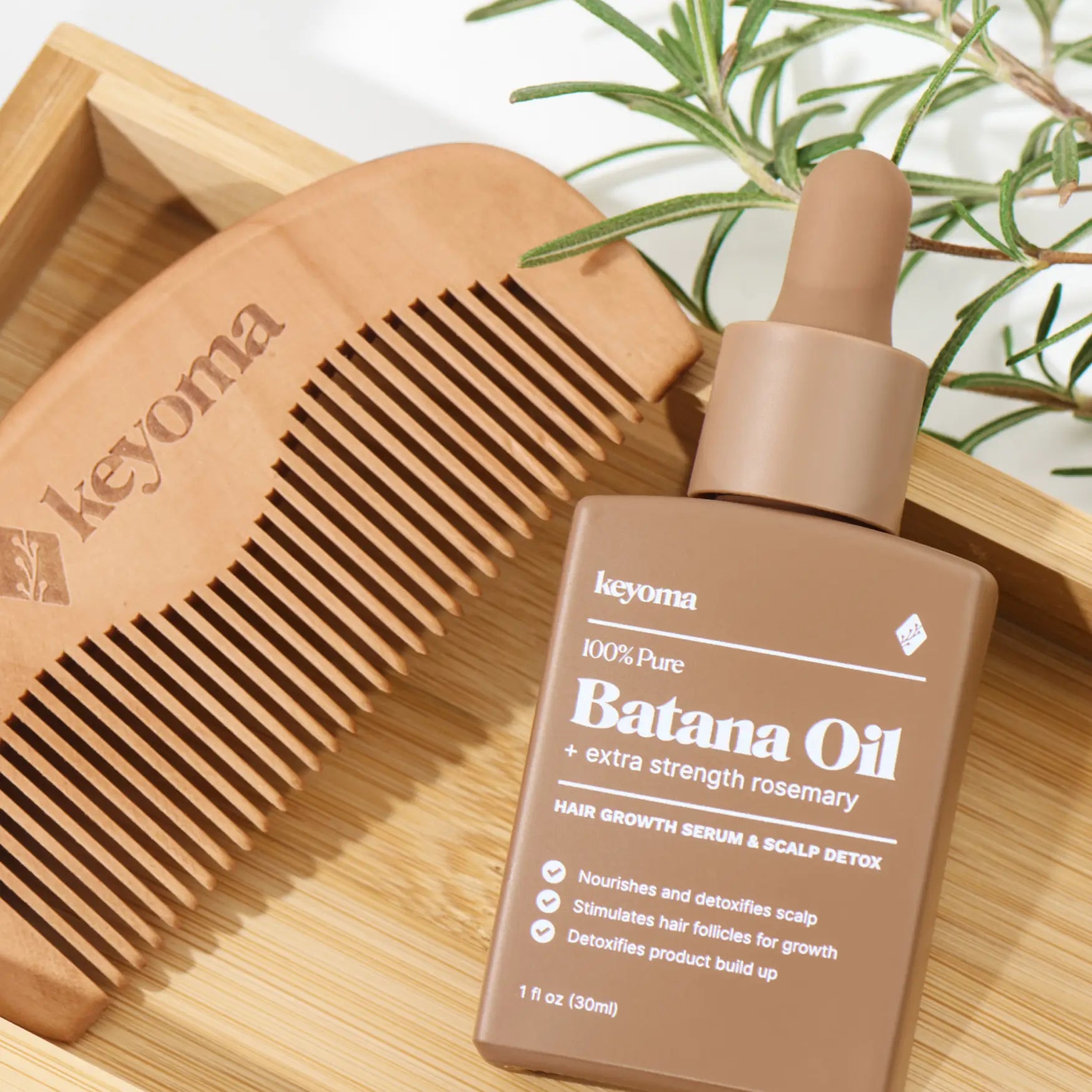
30% Off + 3 FREE Gifts
100% Pure Batana Oil + Rosemary
↓Best Batana Oil to Buy↓

1 Month
Subscribe & Save
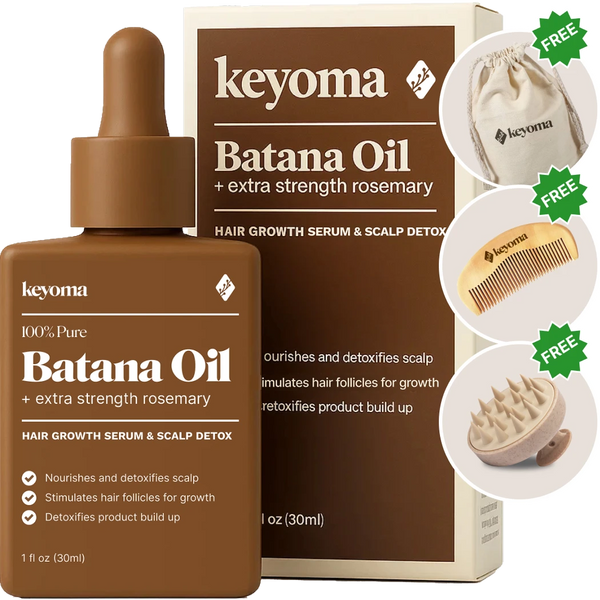


- 30-day supply delivered monthly $35
- 30% off for life $6
- Free haircare essentials kit $33
- Free custom wooden comb $10
- Free scalp massager $15
- Free eco-friendly travel bag $8
- 30-Day Money Back Guarantee
- Free Shipping
- Online portal for easy cancel, skip, or pause.
1 Month One Time Purchase
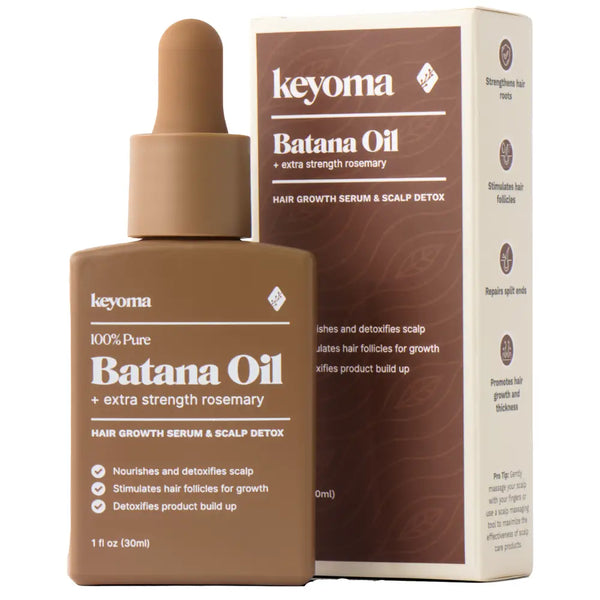
- 30-day supply $50
- 30% off for life $6
- Free haircare essentials kit $33
- Free custom wooden comb $10
- Free scalp massager $15
- Free eco-friendly travel bag $8
