Batana Oil vs Vitamin E Oil: Which Repairs Damage Better?
Written by

Published on Jun 15, 2026

In this article
If your hair feels dry, brittle, frizzy, or rough at the ends, batana oil is usually the better choice than vitamin E oil alone. It works more like a rich conditioning oil for damaged-feeling strands, while vitamin E oil is better viewed as an antioxidant support ingredient.
That does not mean vitamin E oil has no value. It can support scalp and hair products when used in the right amount. The problem is that many people treat vitamin E oil like a full repair treatment, then feel disappointed when it does not add enough softness, slip, or moisture on its own.
The simple choice comes down to your main concern. For dry lengths, frizz, breakage from rough handling, and damaged-feeling ends, batana oil is the stronger fit. For antioxidant support, scalp-focused formulas, or a small booster in a blend, vitamin E oil may help, but it should not be treated as a proven hair growth oil.
Key Takeaways
-
Batana oil is better for dry, brittle, damaged-feeling hair.
-
Vitamin E oil works better as an antioxidant booster.
-
Neither oil should be sold as a proven regrowth treatment.
-
Fine, oily, or flaky scalps need lighter use.
What’s the Difference Between Batana Oil and Vitamin E Oil?
Batana oil and vitamin E oil are not equal product types. Batana oil is a whole botanical oil, while vitamin E oil is usually a concentrated antioxidant ingredient added to oils, serums, conditioners, and scalp products. That difference matters because damaged hair often needs more than one antioxidant. It needs softness, lubrication, and a richer coating that helps strands feel smoother.
A good batana hair oil gives you a full oil base. It can help dry hair feel more flexible because it contains natural fatty compounds that coat and condition the strand. Vitamin E oil is narrower. It may support the formula, but it does not give the same deep, buttery feel unless it is blended into a carrier oil.
Batana Oil Is a Rich Hair Oil
Batana oil comes from the American palm tree, also known by the INCI name Elaeis oleifera kernel oil. Formula Botanica describes it as a rare botanical oil from Central and South America that contains fatty acids, antioxidants, and vitamin E compounds.
That full oil profile is why batana is often used for dry, coarse, curly, coily, heat-styled, or chemically treated hair. It can add slip, soften roughness, and make frizz look calmer. It does not glue split ends back together, but it can make damaged ends feel less sharp and dry between trims.
For readers who want the ingredient background before buying, the article on what batana oil is made of is a useful next step.
Vitamin E Oil Is an Antioxidant Ingredient
Vitamin E is a fat-soluble antioxidant, not a complete hair oil routine by itself. In beauty products, it often appears as tocopherol or tocopheryl acetate. It can help protect oils in a formula from oxidation and may support skin barrier comfort, but the evidence around topical vitamin E for hair is still limited.
Medical News Today notes that many shampoos and conditioners contain vitamin E, but there is little evidence that these products strongly boost hair health. It also notes that vitamin E oils may need dilution with a carrier oil to reduce irritation risk.
That makes vitamin E for hair more of a support topic than a simple “apply it and repair everything” answer. It can belong in a formula, but it is not always the best standalone oil for dry, damaged lengths.
Which Is Better for Damaged Hair?
For damaged-feeling hair, batana oil usually wins because it behaves more like a treatment oil. Dry, rough hair often needs a richer layer of conditioning to reduce friction and make strands easier to handle. Less friction can mean less snapping during brushing, detangling, styling, and wash day.
Vitamin E oil can still help in a blend, especially when the formula needs antioxidant support. But if you are choosing one oil to make brittle hair feel softer, smoother, and less frizzy, a full botanical oil usually makes more sense than a concentrated vitamin ingredient.
Batana Oil Gives More Cushion to Dry Strands
Damaged hair often feels rough because the outer cuticle is worn, lifted, or uneven. Oil cannot rebuild that structure like a bond repair treatment, but it can reduce the dry, rough feel by adding lubrication. That makes strands feel less grabby when they rub against each other.
A batana oil for damaged hair routine is strongest when your main issues are dryness, frizz, dullness, and brittle ends. It is especially useful before washing because shampoo can leave already-dry hair feeling even more stripped if the lengths are not protected.
Vitamin E Oil Works Better as a Booster
Vitamin E oil is better when you want to support a blend, not replace the whole blend. A few drops in a carrier oil can add antioxidant value, but using a thick vitamin E oil directly on your scalp or lengths may feel sticky, heavy, or hard to spread.
A 2016 review on vitamin E in dermatology says topical vitamin E is widely used for antioxidant reasons, but it is still hard to determine its exact effects on skin and hair from the available evidence.
That is why vitamin E oil is not the best first choice for someone asking for the best oil for damaged hair. It can support the routine, but it should not carry the entire job.
Neither Oil Permanently Repairs Split Ends
Split ends are physical damage. No oil can permanently seal them, reverse them, or turn them back into healthy ends. Oils can make split ends look smoother for a short time because they coat the strand and reduce the dry, frayed look.
A classic Journal of Cosmetic Science study found that oil type matters for hair damage support. Coconut oil reduced protein loss better than mineral and sunflower oils in that study, showing that the effect depends on the oil’s chemistry and how it interacts with the hair fiber.
Batana oil should be framed with the same honesty. It may help hair feel softer and less brittle, but trimming split ends is still the only true fix once the strand has split.
Hair Texture Should Guide the Choice
Thicker, drier, textured, curly, coily, or high-porosity hair usually handles batana oil better. These hair types often need more slip and can absorb or tolerate richer oiling without looking greasy right away.
Fine, straight, low-porosity, or oily hair needs a lighter approach. If heavy oils make your roots flat, you may be better off using less product, applying only to the ends, or comparing lightweight hair oils before committing to a rich treatment.
Can Batana Oil or Vitamin E Oil Help Hair Growth?
Batana oil and vitamin E oil may support healthier-looking hair by improving softness, scalp comfort, and breakage control. That is different from regrowing hair. Regrowth means a treatment has a direct effect on follicles or a medical cause of hair loss. Oils should not be presented that way unless there is strong clinical evidence.
Melanie Palm, MD, told Health that batana oil is rich in fatty acids and vitamin E, but there is no scientific evidence that it directly stimulates hair growth. Brendan Camp, MD, also noted that hair oils may support scalp conditions and reduce breakage, but they do not directly cause growth.
Vitamin E oil has a similar expectation problem. One small randomized study found increased hair numbers with oral tocotrienol supplementation in volunteers with hair loss, but that was not the same as applying vitamin E oil to the scalp.
For most people, the clearer benefit is breakage support. If your hair is breaking less, it may look fuller at the ends and seem to retain length better. That is not the same as new growth from inactive follicles. For that distinction, compare hair growth or breakage before choosing an oil for thinning concerns.
How to Use Both Without Weighing Hair Down
Batana oil and vitamin E oil can work in the same routine, but only if you keep the amounts small. The goal is soft, flexible hair, not coated hair that feels heavy after washing.
The safest approach is to let batana oil do the main conditioning work and keep vitamin E oil as a small add-on. Fine hair may need only a trace amount on the ends. Thick or textured hair may handle more, but even then, more oil does not always mean better results.
Use Batana Oil as a Pre-Wash Treatment
Apply batana oil before shampooing when your hair needs deeper softness. Warm a small amount between your hands, smooth it through the mid-lengths and ends, then let it sit before washing. The exact timing can vary, but your hair should feel lightly coated, not soaked.
For a more detailed method, use a step-by-step how to apply batana oil routine. I find that starting with less makes the wash-out much easier.
Add Vitamin E Oil Only in Small Amounts
Vitamin E oil is often thick and concentrated, so a few drops can be enough. Mix it into a carrier oil rather than applying a heavy layer straight to your scalp. If a product already contains vitamin E, you usually do not need to add more.
When blending oils at home, keep the formula simple. A few DIY hair oil recipes can help you understand how small changes affect texture, weight, and spreadability.
Keep Heavy Oils Away From Oily Roots
If your scalp gets greasy quickly, apply oil from the ears down instead of massaging it across your roots. The scalp already produces sebum, so adding a rich oil on top can leave fine or oily hair flat.
Frequency matters too. Some hair types can handle oiling once or twice a week, while others do better with occasional use. If your hair starts feeling coated, dull, or limp, check your hair oiling frequency before blaming the oil itself.
Wash Thoroughly After Rich Oil Treatments
Rich oils need proper cleansing. Use enough shampoo to remove residue from the scalp and roots, then focus conditioner on the lengths if needed. If your hair still feels waxy after drying, you likely used too much oil or did not cleanse thoroughly enough.
A guide on how to wash out thick hair oil can help if batana oil leaves a coating. For very fine hair, apply less next time rather than shampooing aggressively after every treatment.
Should You Use Batana Oil or Vitamin E Oil?
For damaged-feeling hair, batana oil is the stronger choice. It gives dry lengths more slip, softness, and frizz control than vitamin E oil alone. Vitamin E oil is still useful, but it works best as a supporting antioxidant in a balanced blend.
Keep the growth claims realistic. Either oil may help your hair look healthier if it reduces dryness and breakage, but neither should be treated as a proven regrowth treatment. For most buyers, the better decision is simple: choose batana oil for deep moisture and damaged-feeling strands, and use vitamin E oil only as a small booster when your hair and scalp tolerate it well.
Featured Product
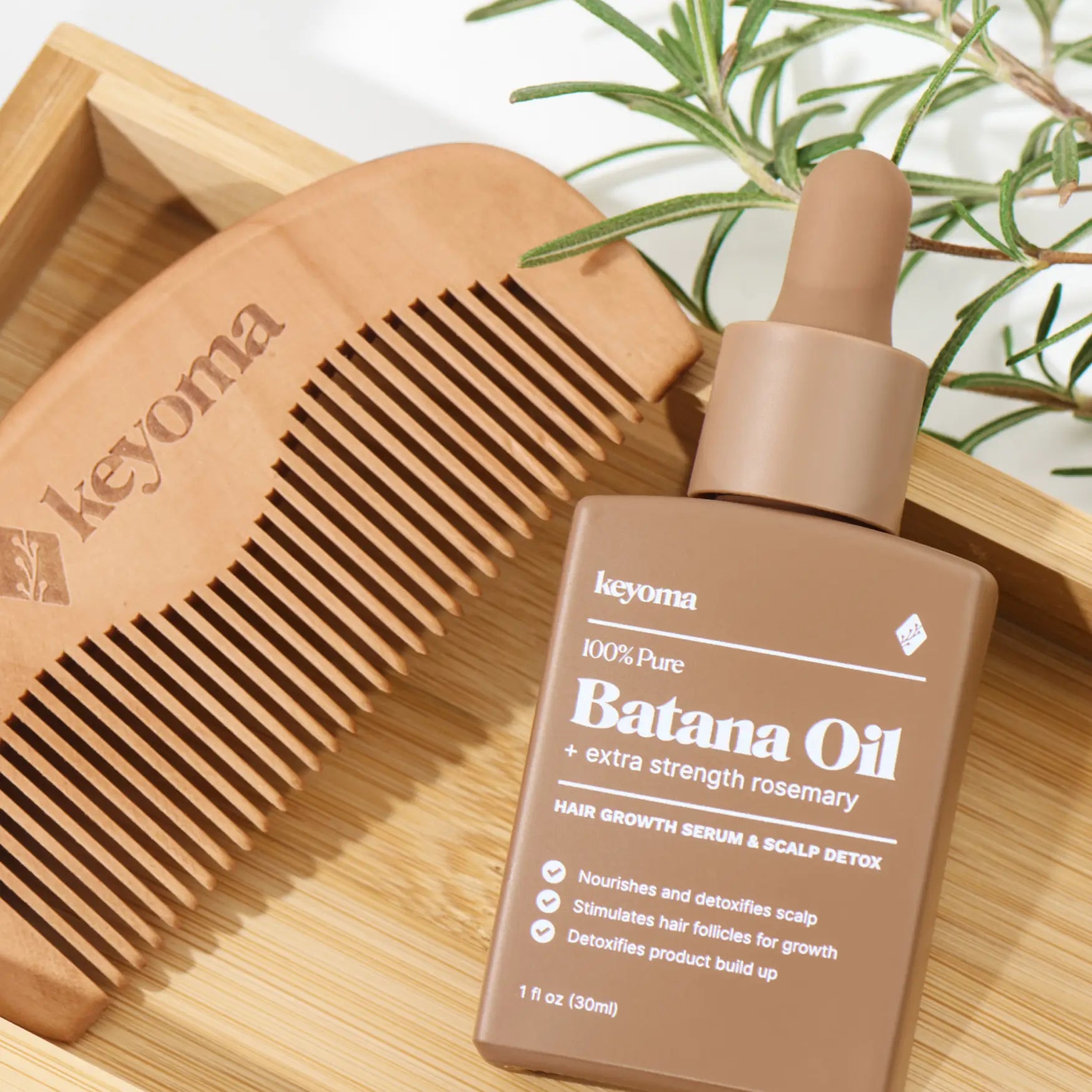
30% Off + 3 FREE Gifts
100% Pure Batana Oil + Rosemary
↓Best Batana Oil to Buy↓

1 Month
Subscribe & Save
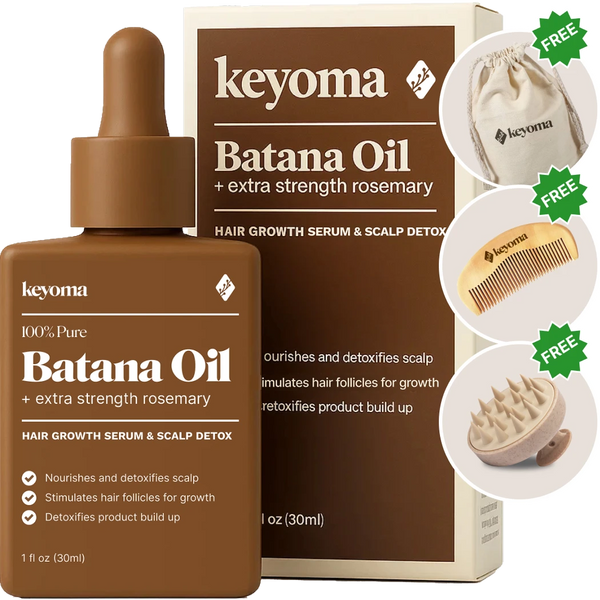


- 30-day supply delivered monthly $35
- 30% off for life $6
- Free haircare essentials kit $33
- Free custom wooden comb $10
- Free scalp massager $15
- Free eco-friendly travel bag $8
- 30-Day Money Back Guarantee
- Free Shipping
- Online portal for easy cancel, skip, or pause.
1 Month One Time Purchase
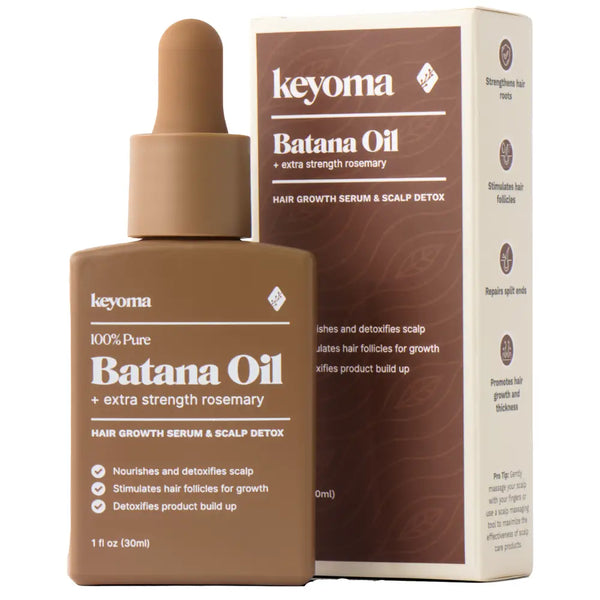
- 30-day supply $50
- 30% off for life $6
- Free haircare essentials kit $33
- Free custom wooden comb $10
- Free scalp massager $15
- Free eco-friendly travel bag $8
