Flaky Scalp: Product Buildup, Dandruff, Or Something Else?
Written by

Published on Dec 14, 2025

In this article
Skip a wash day and those shoulder flakes can show up fast. Sometimes they stick around, especially in hot summers and dry winters. Dandruff is as common as acne, but what if the shedding never lets up? A flaky scalp that won’t quit can also point to other skin issues, including scalp psoriasis or a fungal infection.
Changes on your scalp can hint at health problems that need a dermatologist’s care.
Key Takeaways
-
Persistent flaky scalp can signal dandruff, seborrheic dermatitis, or other conditions needing evaluation.
-
A common cause involves Malassezia fungus disrupting scalp balance and contributing to ongoing flaking.
-
Gels and leave in products form brittle films that crack with friction and shed flakes.
-
Prevention includes lighter product amounts, clean damp hair, minimal handling, and checking formulas for compatibility.
What Causes a Flaky Scalp
For medical causes tied to flaking—dandruff and seborrheic dermatitis are the focus here—many trace back to the Malassezia fungus.
While the exact cause-and-effect is still debated, its strong role is supported by one clear detail: most effective treatments for flaking target this fungus. Malassezia is a group of fungi that lives on human skin (and the scalp) of everyone—and many animals, too.
This lipid-loving fungus appears in different forms and species, and some have been linked to scalp flaking.
Why Hair Products Can Cause Flaking

Tried a new product and then saw flakes? It happens a lot, especially with gels, and most people run into it at some point. Still, some with curls notice flaking more often than others.
If the flakes keep coming back, a few tactics can help you manage them.
How Gel Formulas Can Lead to Flakes
Gels use polymer molecules to help your curls clump. As they dry, those polymers create a clear film or “cast” that holds your style in place. The problem is that these polymers don’t flex much. With friction or pressure, the cast can crack and turn into flakes.
Think of these polymers like a mirror. Once it shatters, you’re left with tiny glass-like “flakes.” As product sits in your hair, combs, fingers, and general wear can “break” that film and make it shed.
How Application Technique Triggers Flaking
How you apply matters a lot for gel or leave-ins. If you pile on too much, it won’t distribute through your hair. Once it dries, that thick, brittle film breaks easily and turns into visible flakes.
How to Prevent Hair Flaking

If falling white specks aren’t your thing (who wants that?), try these habits to stop the cycle.
Avoid Disturbing Set Hair
It’s tempting to touch your hair after styling or run a brush through it. Try to resist, because that extra handling often creates more flaking that’s tougher to deal with later.
Use Less Product
We mentioned this, but stick to only what your hair needs. If coverage is uneven, try applying a product on damp hair so a water-based formula spreads more easily.
Follow Product Directions
Check the label to see whether to apply on wet or dry hair. Often, using the product as directed helps you avoid flaking. Even so, sometimes a product just doesn’t suit you, and that’s fine. Keep searching until you find the results you like.
Reduce Reactions
If flaking is a frequent issue, avoid mixing brands. People often assume lines are split into leave-ins and gels just to sell more, and while that may play a role, it can also benefit your hair.
Formulas from the same brand are made to work together. We get into how products combine. Using two items from one line can remove that guesswork.
Section Hair for Even Product Distribution
If your natural hair is medium or long, sectioning usually helps. You’ll coat strands more evenly. Without it, you might glob product near the roots and starve the ends, leaving excess to dry into flakes. Working in sections also makes you more mindful of how much you’re using and where you place it.
Start on Clean, Product-Free Hair
Some products clash with others and flake more than they would on their own. To see what a single product really does, start with a thorough cleanse so you’re working from zero.
Incomplete rinsing can also leave residue that turns into flakes. Lower water heat calmed my scalp in winter, so I kept rinsing on the cooler side. Take a minute to scrub your scalp and lift what’s left from the previous week.
Be sure all shampoo and conditioner are rinsed out. If you don’t rinse well, buildup lingers and can show up later as flakes.
Apply to Damp Hair for Better Absorption
Damp hair helps products absorb. Aim for the middle ground. If hair is soaking, the product can slide off; if it’s bone dry, absorption is hard and results suffer.
Check Product Compatibility Before Layering
Layering often works best for natural hair, letting you moisturize and style together. But some formulas don’t play nicely, and constant mixing can trigger flaking when ingredients collide.
Knowing two products clash doesn’t always tell you how to fix it. The most reliable way to learn what mixes well is careful trial and error.
Tips to Minimize Product Residue

So, you're avoiding harsh sulfates but still seeing flakes? Product residue might be the culprit. Even batana with rosemary oil, if you're dandruff-prone, should stay off your scalp. Instead, warm a few drops and smooth through the lengths. Explore lighter-hold gels.
1. Use batana with rosemary oil the right way. If you’re dandruff-prone or get oily fast, keep it off your scalp. Warm a few drops in your palms and smooth through mid-lengths and ends to cut dryness and friction, which can make flakes look worse. If your scalp feels truly dry (not oily, not itchy-greasy, and flakes are small and white), use a tiny amount as a pre-wash.
Massage lightly for 5 to 10 minutes, then shampoo well so it doesn’t leave residue. Distribute product evenly and avoid heavy-handed use. As you smooth the product along, gently twist sections from roots to ends to spread it better. This often cuts the urge to layer on more.
Explore the science behind batana oil with rosemary.
2. Pick lighter-hold gels with flexible film-formers instead of very stiff ones. Balanced polymers can give hold without drying hard or shedding. If your current gel leaves residue, try a lighter option or a simple plant-based gel.
3. Rinse cleansers and conditioners completely. It sounds basic, but rushing makes residue easy to miss, especially when hair feels extra soft. Leftover products can appear later as flakes while styling. Take an extra minute to rinse so you don’t have to fix it afterward.
4. Give your leave-in time to settle, particularly in colder weather, so you’re not stacking products too fast. Applying your leave-in in the shower and letting it sit ten to fifteen minutes before gel can improve absorption and reduce buildup.
5. Cleanse well. If you use gel often, a quick conditioner rinse won’t always remove buildup. Choose a gentle cleanser that cleans hair and scalp without stripping moisture. It clears leftover stylers while keeping hair balanced and comfortable.
These steps can help you wake up without flakes, but if tiny white specks still pop up, a light oil can help pick them up or a mist of water can settle them. Just keep it light, since too much oil or moisture can leave hair greasy or weighed down.
Calm Your Flaky Scalp With a Gentle Hair Care Routine
If your flakes are tied to dryness or friction, a lighter, simpler routine can help fast. Keep oils off the scalp if you’re dandruff-prone, and focus on smoothing the lengths to reduce shedding and residue.
Ready to support drier hair without weighing it down? Shop Keyoma Pure Batana Oil Today!
Featured Product

30% Off + 3 FREE Gifts
100% Pure Batana Oil + Rosemary
↓Best Batana Oil to Buy↓

1 Month
Subscribe & Save
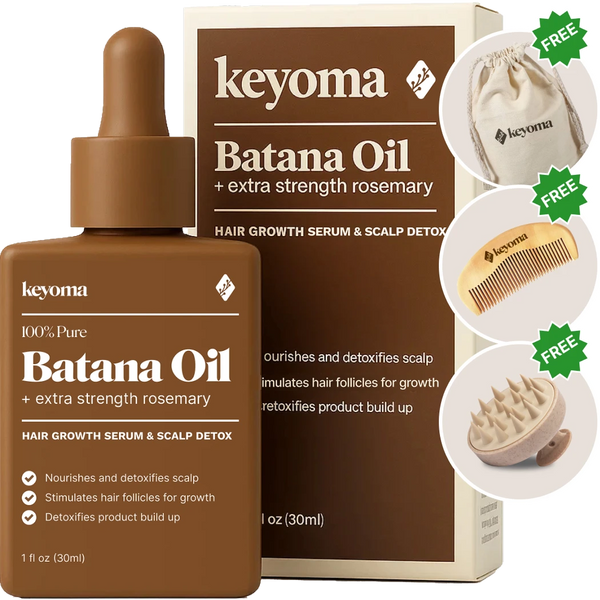


- 30-day supply delivered monthly $35
- 30% off for life $6
- Free haircare essentials kit $33
- Free custom wooden comb $10
- Free scalp massager $15
- Free eco-friendly travel bag $8
- 30-Day Money Back Guarantee
- Free Shipping
- Online portal for easy cancel, skip, or pause.
1 Month One Time Purchase
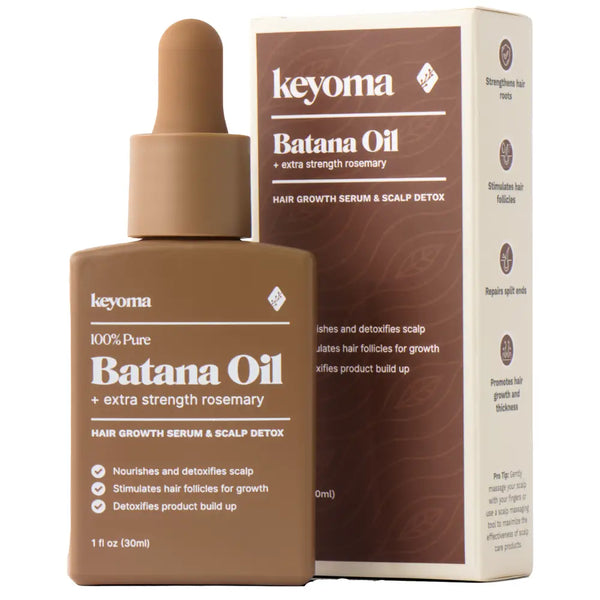
- 30-day supply $50
- 30% off for life $6
- Free haircare essentials kit $33
- Free custom wooden comb $10
- Free scalp massager $15
- Free eco-friendly travel bag $8
