

In this article
Plenty of new parents notice extra shedding a few months after delivery. That’s normal and not permanent hair loss. Dermatologists call it excessive hair shedding, and it’s tied to the drop in estrogen.
The encouraging part is that this shedding phase is temporary, and you don’t need to treat it. Most people see fullness return by their child’s first birthday, and many notice improvement even sooner.
Key Takeaways
-
Postpartum hair shedding starts months after birth, caused by estrogen drop, and usually resolves.
-
Most regain normal fullness by around twelve months, with many improving earlier without treatment.
-
Home options include rosemary oil, coconut oil, diluted vinegar rinses, honey shampoo, and masks.
-
Clinical options include platelet-rich plasma, exosome microneedling, and low-level laser therapy for regrowth.
Postpartum Hair Loss Remedies At-Home
Start with gentle steps you can manage in your routine.
You will see ideas like rosemary oil for scalp massage, coconut oil for sealing in moisture, an apple cider vinegar rinse to balance your scalp, honey shampoo for softness, and simple homemade hair masks.
Try one or two at a time for a few weeks so you can track what feels soothing and what gives your hair a little more slip and shine.

Rosemary oil
Applying rosemary oil to your scalp may increase blood flow around hair follicles, helping them stay active and keep producing growth. For me, diluting a few drops in a carrier oil like batana oil felt gentler. Hair grows about 0.5–1 cm a month, and that pace stays fairly steady.
Growth speed won’t change, but keeping follicles active helps hairs stay longer and healthier. Some studies suggest rosemary oil might aid male or female pattern hair loss by reducing sensitivity to dihydrotestosterone (DHT), a testosterone-derived hormone that miniaturizes hair. Pair with batana oil for added scalp moisture.
Coconut oil
An easy-to-find pantry staple often labeled a superfood, coconut oil can be a helpful postpartum hair addition. It’s gentle, and massaging oil into the scalp can help with blood flow, which in turn may support growth. Coconut oil also pulls double duty during pregnancy and afterward, and some people use it for stretch marks.
Apple Cider Vinegar
Vinegar has long been used at home for shinier hair, and there’s a bit of science that could explain why. The acidity in apple cider vinegar may help balance pH and add luster to dull strands.
A 2014 study found alkaline-leaning shampoos can increase dryness and breakage, and ACV’s acidity may counter that. This method is all about moderation, though. Dilute no more than five tablespoons of ACV in a pint of water, and keep rinses to a couple of times weekly.
You can fit a vinegar rinse into your usual wash day by adding it after shampoo and conditioner. Let the water/ACV mix sit briefly, then rinse with warm water.
Honey Shampoo
Honey is known for antifungal and antibacterial properties, and you can use it as a simple cleanser. A homemade wash may feel gentler than some store formulas: mix honey with water and apply in the shower as you would any shampoo.
Research on honey specifically for postpartum needs is limited, but one small study reported regular honey use helped with itching, scaling, and hair loss in both men and women.
Homemade Hair Masks
From egg to avocado to onion, DIY hair masks are everywhere. They’re a low-cost way to practice self-care. While evidence is mixed for treating postpartum shedding, carving out time for yourself can ease stress, which supports overall recovery.
Clinical Treatments for Postpartum Hair Loss
If you want options beyond home care, this section walks you through clinic treatments you can discuss with a dermatologist.
You will learn how PRP Therapy, Exoscalp Therapy, and Low-Level Laser Therapy (LLLT) are done, what to expect from sessions, and who they may suit.
Use these details to compare timelines, cost, and comfort so you can choose what fits your goals and schedule.

PRP Therapy
Platelet-Rich Plasma (PRP) therapy can be a solid choice, including for people who are breastfeeding. It uses PRP from your own blood, tapping your growth factors to stimulate follicles and promote healthy growth.
Because it relies on your blood, it’s considered a natural approach that encourages thicker, healthier-looking hair.
Exoscalp Therapy
ExoScalp is a newer option that uses exosomes to target hair loss. Exosomes are tiny vesicles involved in cell signaling and repair. In this method, a tailored serum with exosomes is applied via microneedling, combining regenerative messaging with improved absorption to refresh the scalp and support follicle regeneration.
Low-Level Laser Therapy (LLLT)
Low-level laser therapy (LLLT) is another tool used for postpartum and other forms of hair loss. It’s noninvasive and has scientific support for encouraging regrowth.
Patients can use it at home, even while moving around with a new baby. Some newer LLT devices are designed for convenience and consistent use, making it easier to work sessions into daily life.
FAQs
Can you still wash your hair often if you’re shedding more after birth?
Yes, you can keep washing your hair on your normal schedule. Washing does not cause postpartum shedding, but loose hairs that were already ready to fall may show up more in the shower, which can make it feel worse than it is. A gentle shampoo, light detangling, and less friction from rough towels can make wash days feel easier while your hair is recovering.
Is it okay to color, straighten, or heat-style your hair during postpartum shedding?
Usually, yes, but gentler styling is the better move while shedding is active. Hair coloring and heat tools do not cause postpartum shedding at the root, though they can add dryness and breakage that make your hair look thinner. If your hair feels fragile, lower the heat, space out chemical services, and focus on styles that put less stress on the hair shaft.
When should postpartum hair shedding be checked by a doctor?
You should check in with a doctor if shedding feels extreme, lasts well past the first year, or comes with symptoms that do not fit the usual postpartum pattern. A visit also makes sense if you notice bald patches, scalp pain, redness, heavy itching, or sudden thinning that keeps getting worse. Those signs can point to something other than normal postpartum shedding.
Do vitamins or supplements help postpartum hair loss?
They may help if you are low in a key nutrient, but they are not a guaranteed fix for normal postpartum shedding. This kind of shedding is often temporary, so supplements usually matter most when there is an underlying issue like low iron or poor intake during recovery. It is smarter to treat a confirmed deficiency than to take several hair supplements at random.
Can postpartum shedding happen more than once?
Yes, postpartum shedding can happen after each pregnancy, but the timing and intensity may not be the same every time. One round may feel mild, while another may seem more noticeable because of stress, sleep loss, or how you wear and care for your hair. If the pattern feels very different from a typical shed, it is worth getting it evaluated.
Start Gentle Postpartum Remedies Today With Keyoma
Now that you know why postpartum shedding happens, which home and clinic options can help, and what timeline to expect, treat it as a temporary reset after delivery and keep care gentle.
Most people regain fullness within the first year, and options range from rosemary or coconut oil and diluted vinegar rinses to clinic treatments like PRP and low level laser therapy when appropriate.
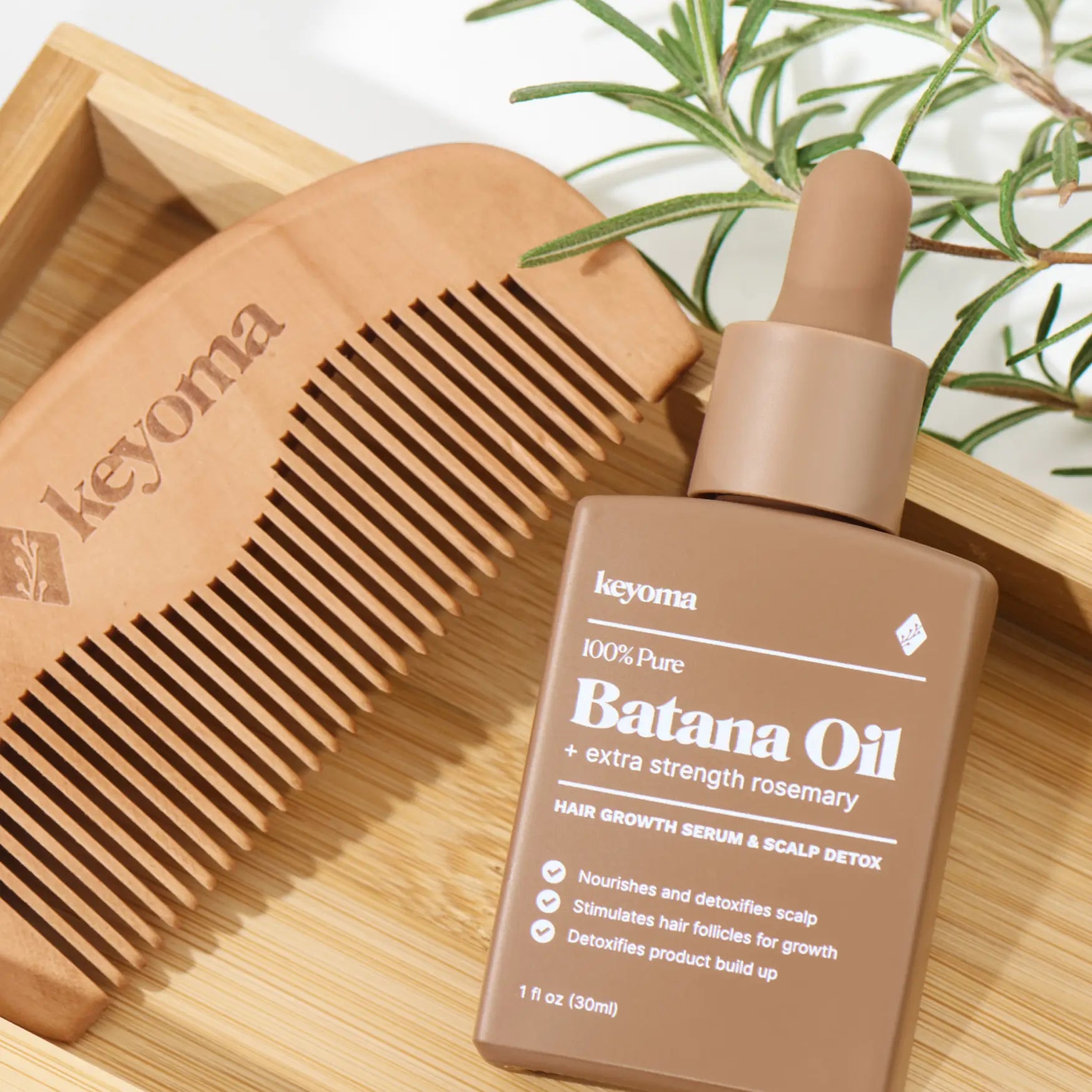
For a simple daily partner that supports hydration and scalp comfort, pair your routine with Keyoma’s Batana Oil with Rosemary. Use it alongside your chosen treatments to add moisture, slip, and consistent scalp massage.
Featured Product
30% Off + 3 FREE Gifts
100% Pure Batana Oil + Rosemary
↓Best Batana Oil to Buy↓

1 Month
Subscribe & Save
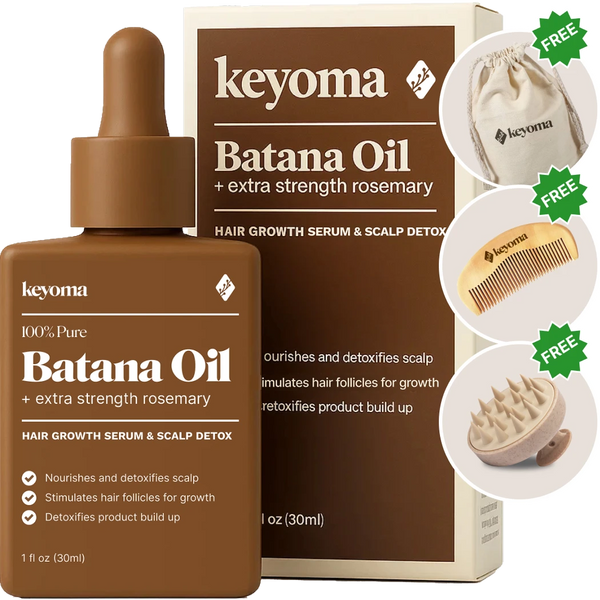


- 30-day supply delivered monthly $35
- 30% off for life $6
- Free haircare essentials kit $33
- Free custom wooden comb $10
- Free scalp massager $15
- Free eco-friendly travel bag $8
- 30-Day Money Back Guarantee
- Free Shipping
- Online portal for easy cancel, skip, or pause.
1 Month One Time Purchase
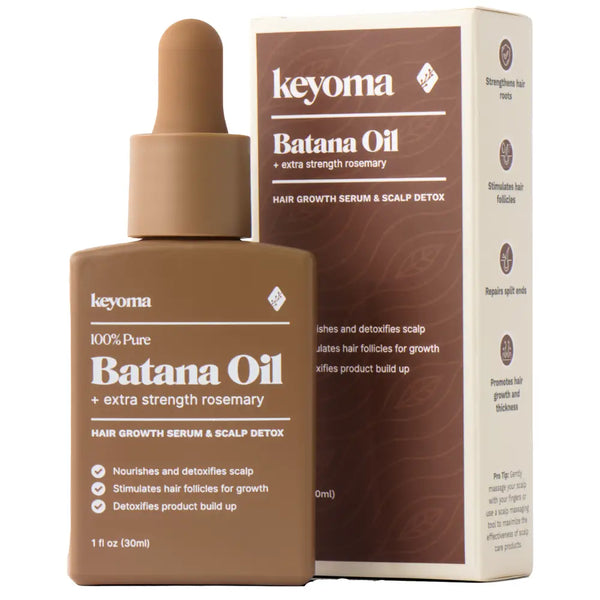
- 30-day supply $50
- 30% off for life $6
- Free haircare essentials kit $33
- Free custom wooden comb $10
- Free scalp massager $15
- Free eco-friendly travel bag $8
