Rosemary Oil vs Tea Tree Oil for Hair: Growth, Flakes, and Safe Use
Written by

Last updated May 16, 2026

In this article
Rosemary oil and tea tree oil are two essential oils that come up often in natural hair and skin routines. Both have a long track record in aromatherapy and personal care, and each one shines in different situations. If you’re trying to pick the better fit for your scalp, or you’re curious about using both in one routine in a safe way, you’re in the right place.
Here’s a clear look at the main benefits, best uses, safety tips, and key differences between rosemary and tea tree oil. By the end, you’ll know which option makes the most sense for your hair, or how to pair them in one routine.
Key takeaways
-
Diluted rosemary essential oil supports thinning routines and may help scalp comfort.
-
Tea tree oil targets dandruff, itch, and oiliness through its antimicrobial effects.
-
Small studies suggest rosemary reduces hair loss over months; tea tree improves dandruff faster.
-
Low dilution and patch testing reduce irritation risk, especially when using tea tree oil.
What’s Rosemary Oil?
Rosemary oil is a concentrated, aromatic essential oil taken from rosemary leaves (Rosmarinus officinalis), a Mediterranean evergreen with a woody, herbal scent.
It’s used in aromatherapy, skincare, and traditional medicine for benefits like boosting memory, promoting hair growth, and easing inflammation. It’s a strong extract, rich in compounds such as camphor and eucalyptol, and it’s usually diluted before topical use or added to diffusers.
It’s widely used in hair care as a natural remedy. Some people believe it can support hair growth, scalp health, and stronger strands. It may work by boosting circulation, calming inflammation, and adding antioxidants. Small studies show promise, but it must be diluted with a carrier oil, used consistently over time, and more research is still needed.
What’s Tea Tree Oil?
Tea tree oil is a natural essential oil from Australia’s Melaleuca alternifolia plant. It’s steam-distilled from the leaves and has a strong scent. It’s known for antimicrobial, anti-inflammatory, and antiseptic properties, so it’s used in skincare for acne and fungal issues like athlete’s foot. It should never be ingested and needs to be diluted for topical use.
This oil supports scalp health by targeting dandruff (yeast), helping control oil, easing itch, and keeping follicles clearer. It’s potent, so most people use it well diluted in shampoo or mixed into a carrier oil.
Rosemary Oil vs. Tea Tree Oil: Key Differences and Uses
|
Rosemary Oil |
Tea Tree Oil |
|
|
Best primary use |
Hair Regrowth Support for Pattern Thinning |
Dandruff Control and Scalp “Clean” Feel |
|
What It’s Known For |
Supporting Scalp Comfort and Follicle Support |
Antimicrobial Action (terpinen-4-ol) for Yeast-Related Flakes |
|
Evidence indicator |
6-month study compared it against 2% minoxidil in AGA |
5% shampoo study improved dandruff scores within 4 weeks |
|
Main downside |
May irritate sensitive scalps if too strong |
Higher irritation risk when too concentrated |
|
Simplest way to use |
Dilute with a carrier oil or add drops to shampoo |
Use tea tree shampoo or dilute in a gentle carrier oil |
Best Fit in a Hair Routine
Rosemary oil: Rosemary oil works best when you want thinning support and a fuller look over time. It’s usually picked for pattern-shedding routines, not fast scalp fixes. Results tend to be slow because steady use matters more than using a lot.
Tea tree oil: Tea tree oil is a better match when dandruff, itch, or quick oiliness is the main issue. It targets the scalp environment, so it can feel helpful sooner than most “growth” oils. If your hair looks fine but your scalp feels irritated, this is often the more direct option.
What Each Oil Is Known For?
Rosemary oil: It’s known for follicle support and scalp comfort in thinning-focused routines. Many people use it to keep the scalp calmer while aiming for better-looking density. It isn’t mainly used to lift heavy flakes, though it may feel soothing.
Tea tree oil: It’s known for its antimicrobial profile and that “clean scalp” feeling. A key component is terpinen-4-ol, which is part of why it’s common in dandruff products. Most people treat it as a scalp tool first, not an all-over hair oil.
What the Research Suggests:
Rosemary oil: Researchers compared rosemary oil with 2% minoxidil in androgenetic alopecia over 6 months. Both groups reported less hair loss over time, with changes showing later in the study period overall. That doesn’t make it a sure fix, but it’s one reason it’s used as a steady routine option.
Tea tree oil: A randomized study using a 5% tea tree oil shampoo found dandruff scores improved over 4 weeks versus placebo. People also reported better itch and greasiness scores. That lines up with how tea tree often works best, as a measured wash-off product.
Main Downsides
Rosemary oil: It can irritate your scalp if you use too much or skip dilution. When the scalp gets inflamed, your hair can feel worse even if the oil looks good on paper. For sensitive scalps, the issue is usually the dose, not the ingredient.
Tea tree oil: It has a higher chance of stinging or contact allergy, especially if it oxidizes or is used too strong. Patch testing matters because reactions are uncommon but real, and they can be uncomfortable. If your scalp barrier is already irritated, tea tree may feel too intense unless you go very gentle.
Simplest Way to Use Safely
Rosemary oil: Keep it straightforward with dilution and a routine you can repeat. Mix a small amount into a carrier oil or add a few drops to a single-use portion of shampoo, not the whole bottle. Start low, and only increase if your scalp stays calm.
Tea tree oil: The easiest “safe” approach is a tea tree shampoo with a set concentration. If you use the oil itself, dilute it well and avoid leaving strong mixes on your scalp for long periods. If you feel burning, stop and reset with a gentle shampoo routine for a week.
Using Rosemary and Tea Tree Oils Together

If you want one routine that helps with flakes while also supporting healthier-looking hair, using both can make sense. Rosemary oil is often used for follicle support over time, while tea tree oil is used for dandruff and that “clean scalp” feel. The key is low dilution and treating tea tree like a scalp tool, not a “more is better” oil.
Step 1: Choose a Carrier Oil That Fits Your Hair
Start with a carrier oil so the blend spreads evenly and feels gentler on your scalp. Batana oil can work well if your hair feels dry and you want a richer base, but it may feel heavy on fine or oily hair. Coconut is another common pick if you want something simple and easy to rinse.
Step 2: Keep the Dilution Low
In your palm, mix 1 tablespoon of oil with 2 drops total: 1 drop rosemary + 1 drop tea tree. For me, fewer drops rinsed out faster and left less scent. Low dilution matters because irritation usually comes from essential oils that are too strong, not the “wrong” oil. If you’re new to tea tree, keep this starter mix.
Step 3: Patch Test Before Using It
Dab a tiny amount of the diluted mix behind your ear or on your inner arm. Wait 24 hours and watch for itching, redness, or stinging. If you react, skip the blend and stick with a gentle scalp routine instead.
Step 4: Apply to the Scalp, Not the Hair Length
Part your hair and place small amounts on the scalp where you get flakes or itch. Keep it off your mid-lengths and ends unless they’re very dry, since this is mainly a scalp treatment. Use just enough to lightly coat the area, not soak it.
Step 5: Massage Gently, Then Let It Sit
Massage with fingertips for about 1 minute using light pressure. This helps spread the oils and keeps your scalp calmer. For me, light pressure helped avoid a tender scalp later. Let the blend sit 10 to 20 minutes as a pre-shampoo step.
Step 6: Shampoo and Rinse Well
Rinse well and shampoo as usual, then rinse again. If you want less guesswork, use tea tree as a shampoo add-in: mix 2 to 3 drops into a single palmful of shampoo, leave it on briefly, then rinse. Avoid adding essential oils to the whole bottle so you can stop quickly if irritation shows up.
Step 7: Keep a Simple Schedule
Start once a week for two to three weeks, then move to twice weekly only if your scalp stays comfortable.
If you get dryness or stinging, cut back on frequency or drop tea tree first. For stubborn dandruff, evidence supports a 5% tea tree shampoo used daily for 4 weeks, which is often more predictable than DIY blends.
Build a Natural Hair Routine With Keyoma That Fits Your Scalp
Choose the oil that matches your real issue, not what sounds “stronger.” Rosemary is often the better fit when you care about long-term density and scalp comfort. Tea tree fits when flakes and itch are the priority, but the irritation risk is higher if you push the dose.
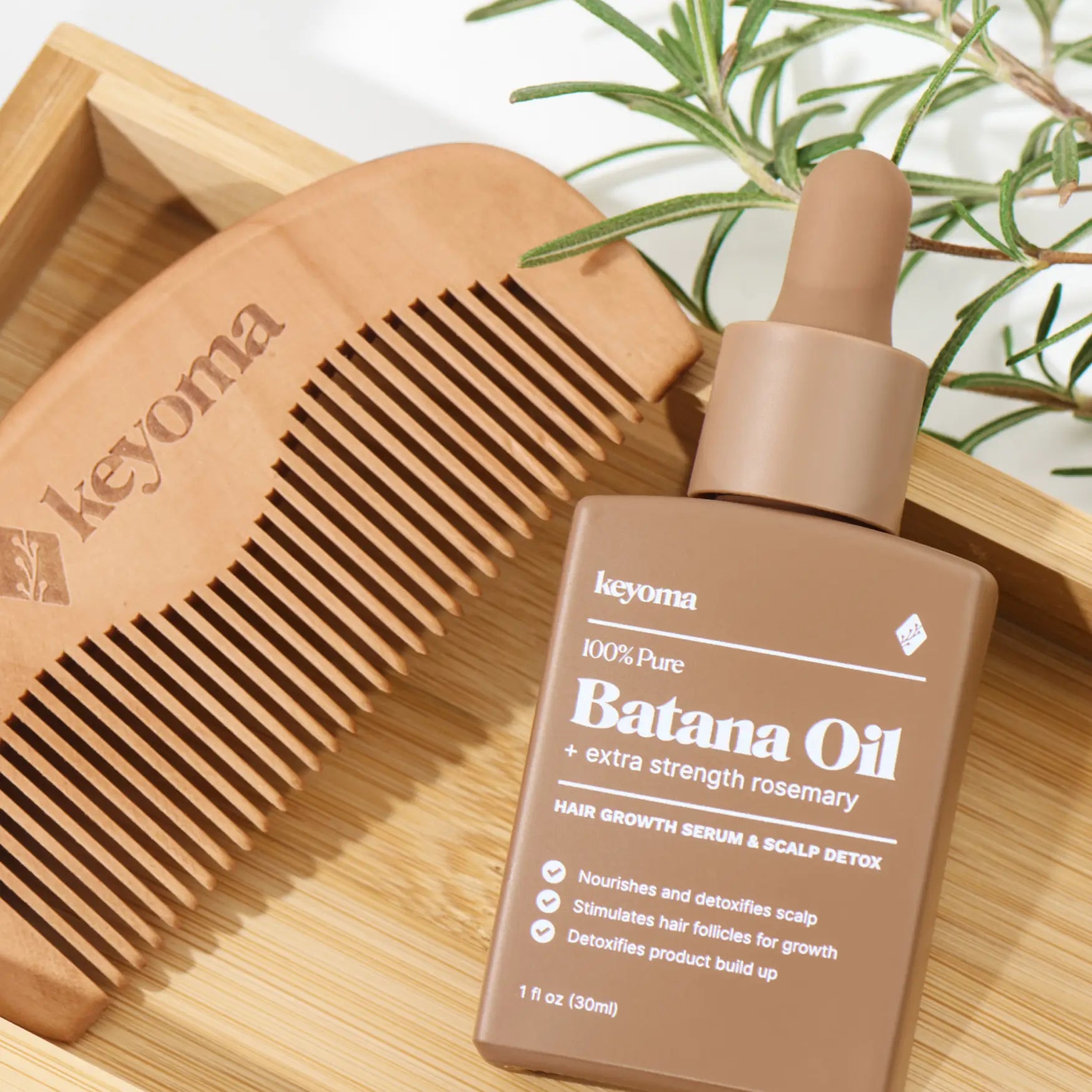
If you want both benefits, keep tea tree as the “accent” and let a richer base do the heavy lifting. Mix a small amount of Keyoma Batana Oil with Rosemary with one drop of tea tree for a low-dilution pre-shampoo, then shampoo out well so your scalp feels clean, not coated. Ready to make the routine consistent?
Buy Keyoma Batana Oil with Rosemary direct from Keyoma.
Featured Product
30% Off + 3 FREE Gifts
100% Pure Batana Oil + Rosemary
↓Best Batana Oil to Buy↓

1 Month
Subscribe & Save
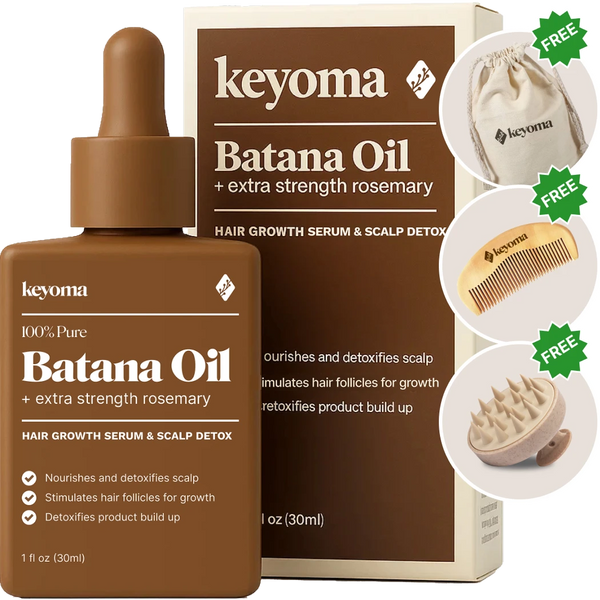


- 30-day supply delivered monthly $35
- 30% off for life $6
- Free haircare essentials kit $33
- Free custom wooden comb $10
- Free scalp massager $15
- Free eco-friendly travel bag $8
- 30-Day Money Back Guarantee
- Free Shipping
- Online portal for easy cancel, skip, or pause.
1 Month One Time Purchase
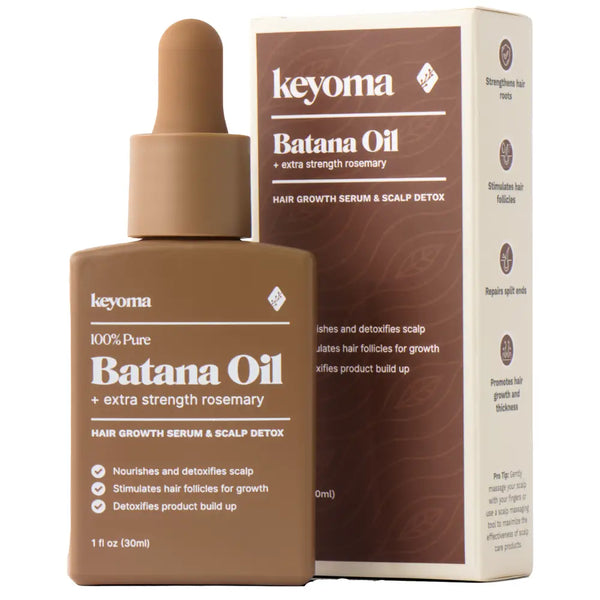
- 30-day supply $50
- 30% off for life $6
- Free haircare essentials kit $33
- Free custom wooden comb $10
- Free scalp massager $15
- Free eco-friendly travel bag $8
