10 Ways To Avoid Scratching Your Scalp And Prevent Hair Loss
Written by

Published on Nov 28, 2025

In this article
Millions of people around the world worry about losing their hair, so understanding why it happens matters for prevention and treatment. Scratching is one possible factor that often gets overlooked. The question is whether scratching itself causes hair loss or if it is a signal that something else is going on with your scalp.
This guide looks at how an itchy scalp, scratching, and hair loss can be connected and outlines ways to treat the problem and lower the risk of more damage.
Key Takeaways
-
Frequent scalp scratching damages hair cuticles, weakens strands, and inflames skin, increasing breakage.
-
Scalp itching itself does not cause hair loss, but underlying conditions can trigger shedding.
-
Managing itch includes gentle cleansing, hydration, medicated shampoos, antifungals, allergy care, and stress reduction.
-
Protective habits like avoiding scratching, nourishing oils, and early specialist visits can preserve scalp health.
How Scratching Can Damage Your Hair
Frequent scalp scratching over a long period can harm your hair strands. The outer layer of each hair is covered in cuticle scales, similar to small overlapping plates. Repeated back-and-forth scratching can chip at this protective layer, leaving the hair weaker and more likely to snap.
Scratching can also put stress on the scalp itself. When the skin is scratched again and again, it may trigger inflammation and an immune response. The area can become tender, and the skin barrier may not protect you from your environment as well. If you keep scratching, it can cause small wounds and scabs that damage the scalp even more.
Over time, the outer skin layer can weaken and hold less moisture, which can leave the scalp feeling dry.
All of this means scratching can leave your hair more fragile and your scalp less protected.
What Causes Scalp Itching?
Itching is defined as a tingling or uncomfortable sensation that makes you want to scratch. Itching on the scalp, often called “pruritus,” can come from many different causes. Even though it is annoying, it is important to remember that the itch itself does not directly cause hair loss.
However, the conditions that lead to itching can sometimes cause temporary hair loss if they are not treated, and the strong urge to scratch the skin may result in physical injury such as small cuts or bleeding.
10 Things You Can Do to Avoid Scratching Your Head

Dealing with the real cause of your scalp itch is key if you want to avoid further hair loss and problems like scarring or secondary infections. The steps below can help you calm the itch and look after your hair and scalp at the same time.
1. Wash With a Gentle, Sulfate-Free Shampoo
Pick a sulfate-free shampoo that cleans your scalp without stripping away too much of your natural oil.
Strong cleansers can leave your scalp feeling tight and uncomfortable, which often makes you want to scratch more. Focus your shampoo on the scalp, use your fingertips to build a soft lather, and rinse thoroughly so there is no product left behind.
2. Massage the Scalp Gently With Fingertips
Spend 3–5 minutes massaging your scalp once or twice each day. Use the soft pads of your fingers, not your nails, and move them in small circles across the whole scalp. This may help boost circulation, spread your natural oils, and relieve that itchy, tight feeling without scratching.
3. Stay Hydrated Throughout the Day
Dry, tight skin often starts from inside the body. Drinking enough water helps your skin and scalp feel more comfortable. Try to sip water often during the day instead of drinking a large amount all at once. You can also support hydration by eating fruits and vegetables that naturally contain a lot of water.
4. When to Use Medicated Shampoos
If dandruff or seborrheic dermatitis is behind the itch, medicated shampoos with ingredients such as ketoconazole, selenium sulfide, or zinc pyrithione can help ease both itching and inflammation.
Using these shampoos regularly can also limit the growth of the fungus linked to these conditions. When lice are present, medicated shampoos and carefully removing nits (lice eggs) can be an effective way to clear the problem.
5. Topical Steroids for Itch Control
For issues such as psoriasis or allergic contact dermatitis, topical corticosteroids can lower inflammation and reduce itching. These medicines should only be used under the supervision of a healthcare provider, because long-term or incorrect use can cause side effects.
6. Antifungal Treatments for Scalp Issues
When a fungal infection is behind the itching and hair loss, antifungal medications, whether topical or oral, can help clear the infection and ease symptoms.
7. Allergy Management for Scalp Comfort
Finding and avoiding allergy triggers in your hair care products is essential if you are dealing with allergic contact dermatitis.
In some cases, your provider may suggest hypoallergenic products to lower the chance of another reaction. Soothing lotions or antihistamines can also be used to help control the itch. As the saying goes, “prevention is better than cure.”
To lower the risk of reacting to a new hair product, it is wise to do a patch test first. Apply a small amount of the product to a hidden area of skin, such as behind the ear. If you do not see irritation or an allergic reaction after 24 hours, it is usually safe to start using it more widely.
8. Stress Reduction Strategies
Stress management methods such as mindfulness, yoga, and therapy can help reduce psychogenic itching and may limit hair loss that is linked to stress. Lower stress levels can also support overall hair and scalp health.
Did you know that stress can cause hair loss?
9. Avoid Scratching
Even though it is difficult, cutting back on scratching is important if you want to avoid more damage to the scalp and hair follicles. Keeping your nails short and, if needed, wearing gloves at night can make it harder to scratch without thinking.
10. Moisturizing and Nourishing
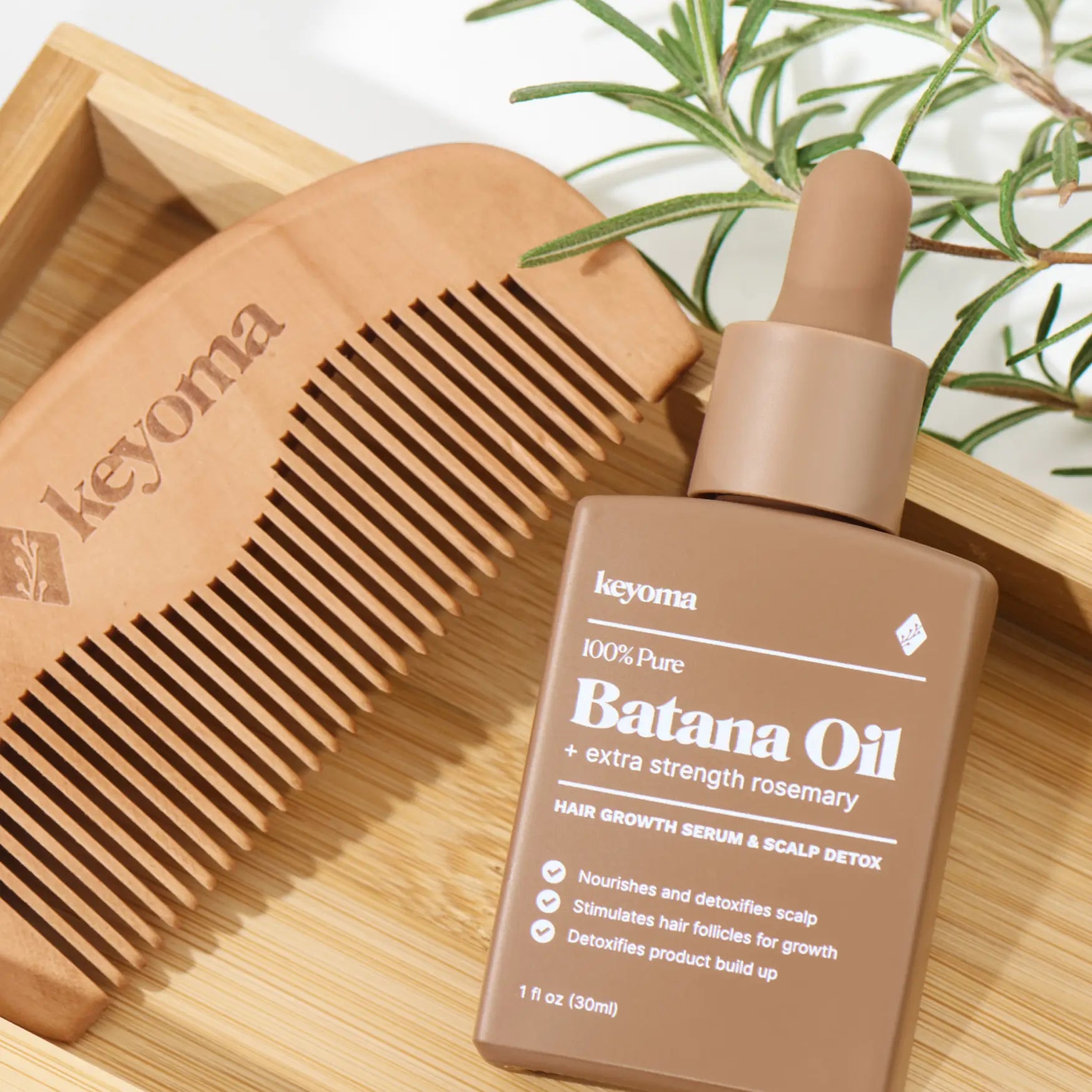
Using nourishing oils or creams on a regular basis can keep your scalp moisturised, ease dryness, and limit flaking. This helps calm itching and supports general scalp comfort. Keyoma Batana Oil with Rosemary is a rich option, as batana oil can soften a dry, tight scalp while rosemary oil is often used to help the scalp feel fresh and balanced.
Coconut oil may also help moisturise the scalp and protect it from drying out, while peppermint oil provides a cooling feel that can ease itch and support blood flow on the scalp. To use these oils, place a few drops on the scalp, gently massage them in, and leave them for at least 30 minutes before washing them out with a mild shampoo.
FAQs
Can scratching your scalp directly cause hair loss?
Scratching can contribute to hair loss, but usually by damaging hair strands and irritating the scalp rather than by directly shutting down hair growth. Repeated scratching may weaken the cuticle, increase breakage, and create small wounds, while the real trigger is often an itchy scalp condition such as dandruff, seborrheic dermatitis, psoriasis, or infection.
Why is my scalp itchy and my hair shedding at the same time?
An itchy scalp and hair shedding often happen together because the same underlying issue can cause both symptoms. Common examples include dandruff, seborrheic dermatitis, psoriasis, fungal infections, allergic reactions, and stress-related scalp irritation, all of which can lead to inflammation, more scratching, and temporary shedding or breakage.
Can dandruff make you lose hair from scratching?
Yes, dandruff can be linked to hair loss when itching leads to frequent scratching or when scalp inflammation is left unmanaged. The dandruff itself does not usually destroy follicles, but constant irritation can increase breakage and shedding, especially when flaking, oiliness, and inflammation are severe.
What helps stop scalp itching without making hair loss worse?
The best approach is to calm the itch while treating the cause. Gentle cleansing, sulfate-free shampoo, medicated shampoos for dandruff, antifungal treatment when needed, allergy avoidance, stress reduction, and using fingertips instead of nails can all help reduce scratching and protect the scalp from more damage.
Can a scalp oil help if itching is causing breakage?
A scalp oil may help when dryness and tightness are making the scalp uncomfortable, but it works best as a supportive step rather than a cure for every itchy scalp problem. Keyoma Batana Oil with Rosemary may help soften a dry scalp and make gentle massage easier, but infections, psoriasis, or allergic reactions may need more targeted treatment.
When does an itchy scalp need medicated shampoo or a prescription treatment?
An itchy scalp may need medicated shampoo when dandruff or seborrheic dermatitis is involved, and prescription treatment may be needed for psoriasis, allergic dermatitis, or fungal infection. If itching is persistent, severe, or comes with redness, scabs, pustules, or visible hair loss, it is safer to get the scalp checked instead of treating it as simple dryness.
How can you tell if scratching has caused only breakage or if something more serious is going on?
Breakage from scratching often shows up as fragile hairs, rough texture, and uneven short pieces, while a deeper scalp problem may also cause redness, scaling, tenderness, bleeding, bald patches, or shiny scar-like areas. When hair loss comes with these warning signs, the cause may be more than scratching alone.
When should you see a dermatologist for scratching and hair loss?
You should see a dermatologist when the itch does not improve, the scalp is bleeding or scabbing, or the hair loss is getting worse. Medical evaluation is especially important when you have patchy loss, pus-filled bumps, swollen lymph nodes, or signs of scarring, because some itchy scalp conditions can lead to lasting follicle damage if treatment is delayed.
Stop Scratching Your Head With Keyoma
Remember that moisturizing and nourishing your scalp can make a big difference. The biggest mistake is waiting until your scalp is already dry and flaky to start using oils or creams.
Instead, make it a regular part of your hair care routine. Now, choose a nourishing oil like Batana Oil with Rosemary.
Next, gently massage a few drops into your scalp. Later, leave it on for at least 30 minutes before washing it out with a gentle shampoo.
Featured Product
30% Off + 3 FREE Gifts
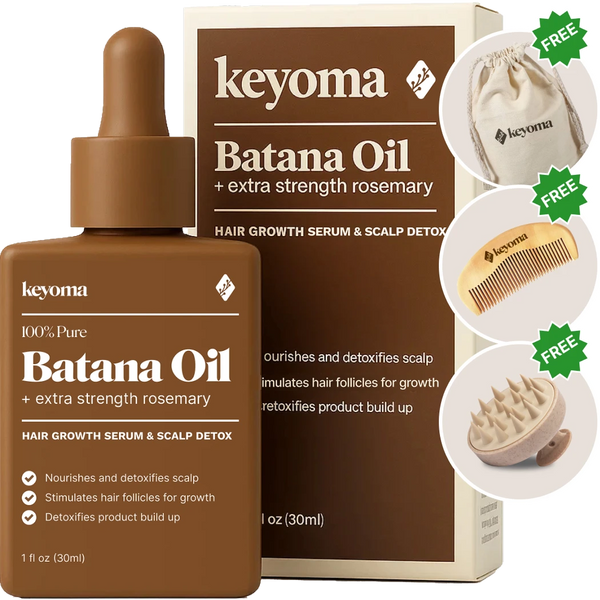
100% Pure Batana Oil + Rosemary
↓Best Batana Oil to Buy↓

1 Month
Subscribe & Save


- 30-day supply delivered monthly $35
- 30% off for life $6
- Free haircare essentials kit $33
- Free custom wooden comb $10
- Free scalp massager $15
- Free eco-friendly travel bag $8
- 30-Day Money Back Guarantee
- Free Shipping
- Online portal for easy cancel, skip, or pause.
1 Month One Time Purchase
- 30-day supply $50
- 30% off for life $6
- Free haircare essentials kit $33
- Free custom wooden comb $10
- Free scalp massager $15
- Free eco-friendly travel bag $8
