Switching Hair Loss Treatments: When and How to Change Your Routine
Written by

Published on May 11, 2026

In this article
Switching hair loss treatments can make sense when a routine is not working, irritates your scalp, or feels too hard to follow. The hard part is knowing when to change and when to give a treatment more time.
Hair growth moves slowly. If you switch products every few weeks, it becomes harder to tell what helped, what caused shedding, and what irritated your scalp. A better plan is to track your routine, give proven treatments enough time, and change one thing at a time.
Natural options like rosemary oil and batana oil can support scalp care and dry strands, but they should not be treated as direct medical replacements for minoxidil or dermatologist-led care. The safest routine matches your hair loss cause, scalp tolerance, and ability to stay consistent.
Key Takeaways
-
Give hair loss treatments enough time before switching.
-
Change one product at a time.
-
Scalp irritation is a valid reason to reassess.
-
Rosemary oil is not a direct minoxidil replacement.
When Should You Switch Hair Loss Treatments?

You may need to switch hair loss treatments when the routine has had enough time, still shows no clear benefit, or causes symptoms you should not ignore. A change may also make sense if the routine is too complicated to follow consistently.
Before switching, look at your timeline. Hair loss treatments often need months, not weeks. The American Academy of Dermatology says many people need about 6 to 12 months to see regrowth with minoxidil, and continued daily use is needed if regrowth happens.
No Results After Enough Time
A few weeks is usually not long enough to judge a hair growth treatment routine. Hair cycles move slowly, and early photos can look almost the same even when the scalp is beginning to respond.
Mayo Clinic notes that minoxidil may take at least six months to help prevent further loss and start regrowth. It may take a few more months to know whether it is working, and continued use is needed to retain benefits if it helps.
If you are comparing medical and natural options, keep expectations separate. A rosemary oil vs minoxidil comparison can help you understand why these options do not carry the same level of evidence or use pattern.
Scalp Irritation or Discomfort
Scalp irritation is a valid reason to reassess your routine. Burning, lasting redness, swelling, intense itching, pain, or flaking that worsens after a product should not be brushed off as “normal.”
Mayo Clinic lists scalp irritation as a possible minoxidil side effect and advises telling a doctor about continued itching, redness, or burning after applying topical minoxidil. Severe symptoms should be washed off and discussed with a doctor before using it again.
If irritation began after adding an essential oil, strong topical, or layered scalp product, review side effects of rosemary oil on hair before adding more products.
Hard-to-Follow Routine
A routine can fail because it is too hard to maintain. If a treatment requires frequent application, careful timing, or an uncomfortable texture, you may skip it often enough that results become hard to judge.
Consistency matters more than a perfect-looking plan. A simpler routine that you follow correctly is usually more useful than a crowded routine that changes every few days.
New Hair Loss Symptoms
New symptoms should change your decision process. Sudden shedding, patchy hair loss, scalp pain, scaling, redness, pus, infection signs, postpartum loss, medication-related loss, or ongoing thinning should be discussed with a professional.
Medical News Today notes that hair loss has many causes and advises people concerned about hair loss to speak with a healthcare professional for diagnosis and treatment options. A routine change may help comfort, but diagnosis matters when symptoms are new or worsening.
How Long Should You Try a Hair Loss Treatment?
Most hair loss treatments need a clear trial period. For minoxidil, six months is a common minimum before judging early results, and 6 to 12 months may be needed to see regrowth. Stopping too early can make a treatment look ineffective before it has had a fair chance.
Natural hair loss treatment options also need realistic expectations. Rosemary oil has some early research, but it is not a guaranteed fix for every type of hair loss. If you are using rosemary oil for hair growth, treat it as scalp-care support with limited evidence, not a promise of regrowth.
A simple timeline works better than guessing. Take baseline photos in the same light, use the product as directed, note side effects, and review changes monthly. If your scalp becomes irritated, painful, or inflamed, do not keep using a product just to finish the trial.
What Happens When You Change Hair Loss Products?

Changing hair loss products can create a confusing transition period. You may see shedding, scalp adjustment, buildup, irritation, or mixed results while your hair and scalp respond to a new routine.
Try not to change several products at once. If you stop minoxidil, add rosemary oil, switch shampoo, begin scalp massage, and start a supplement in the same week, you lose the ability to track what helped or hurt.
Temporary Shedding
Hair shedding after changing products can happen for different reasons. A growth treatment may affect the hair cycle. A scalp reaction may increase shedding. Normal shed hairs may also appear more noticeable when you massage or wash more often.
Shedding is not always harmless. If shedding is heavy, sudden, patchy, painful, or paired with scalp symptoms, do not assume it is part of the process. Use hair shedding vs hair loss as a basic distinction, then get medical guidance when the pattern feels unusual.
Scalp Adjustment
A new topical product can change how your scalp feels. Some people notice dryness, tightness, or itch after starting a new formula. Others react to fragrance, alcohol, essential oils, preservatives, or product buildup.
Mild dryness may settle with a gentler routine. Burning, swelling, rash, or lasting redness is different. Those signs should prompt you to rinse the product and stop using it until you get advice.
Buildup or Irritation
Layering too many treatments can leave the scalp coated. Oils, leave-on tonics, minoxidil, styling products, dry shampoo, and medicated shampoos can all add residue when used without a plan.
Buildup can make the scalp itchy or uncomfortable. Irritation can make the hair feel worse even if the strands are not directly damaged. Keep the scalp clean enough for your treatment to be applied properly.
Mixed Results at First
Early results can be mixed. You may see less shedding but no visible density change. You may notice softer hair from oils without seeing new growth. You may also feel better scalp comfort while the underlying hair loss continues.
Separate cosmetic improvement from hair regrowth. Softer, shinier hair is useful, but it is not the same as treating androgenetic alopecia, alopecia areata, postpartum shedding, or medication-related loss.
Is It Safe To Switch From Minoxidil to Rosemary Oil?
Switching from minoxidil to rosemary oil is a personal routine choice that depends on your hair goals, scalp comfort, and the type of hair loss you are dealing with. Minoxidil is commonly used as an over-the-counter hair loss treatment, while rosemary oil is often chosen by people who prefer a more natural scalp care routine with strand-support benefits.
Research on rosemary oil is encouraging, especially for androgenetic alopecia. In a 2015 randomized trial, rosemary oil was compared with 2% minoxidil in people with androgenetic alopecia. Neither group showed a significant hair count change at three months, but both groups had a significant increase at six months. This study does not mean rosemary oil works the same way for everyone, but it does show why many people are interested in it as part of a hair care routine.
The key is to match the approach to your situation. Medical News Today notes that rosemary oil may show some benefit for androgenetic alopecia, but it may not help every type of hair loss. If your shedding is sudden, severe, patchy, or linked to an unknown cause, it is worth speaking with a dermatologist so you understand what is happening before changing your routine.
If you want to move away from minoxidil because of scalp irritation, dryness, or routine fatigue, a dermatologist can help you decide whether to stop, taper, or adjust your use. If you plan to use topical minoxidil and rosemary oil in the same routine, apply them carefully. Hims notes that there is no clear evidence that combining both is more effective or fully safe, and oil on the scalp may affect how topical minoxidil absorbs.
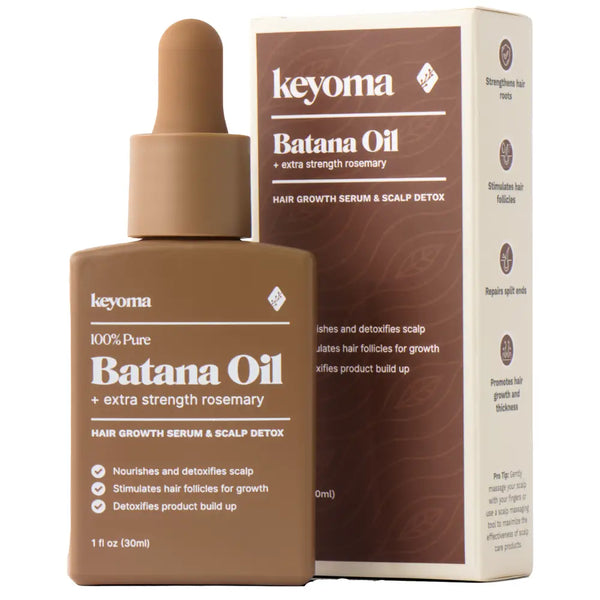
Keyoma Batana Oil with Rosemary fits well for people who want a simpler natural routine focused on scalp massage, softness, and strand nourishment. It is not about copying a medical treatment. It is about choosing a hair care approach that feels easier to maintain, gentler on the scalp, and better aligned with your routine.
How to Safely Change Your Hair Growth Routine

A safe change starts with patience and tracking. You want to know whether the new routine improves shedding, density, comfort, and tolerance without creating a new problem.
If your hair loss is sudden, patchy, painful, or linked to illness, postpartum changes, medication, or scalp symptoms, do not rely on product testing alone. A dermatologist can help identify whether the issue needs medical treatment, scalp care, or lifestyle support.
Change One Product at a Time
Change one product at a time so you can read your scalp’s response. Keep your shampoo, conditioner, styling products, and supplement habits stable while testing one new scalp or hair growth product.
This is especially important when changing hair loss treatments. If you switch several things at once, you may blame the wrong product for shedding or irritation.
Patch Test New Products
Patch test new oils, essential oil blends, and leave-on scalp products before applying them widely. This is a small step, but it can prevent a full-scalp reaction.
Rosemary essential oil should be diluted before scalp use. Healthline advises diluting rosemary essential oil with a carrier oil or product before applying it to the scalp to reduce irritation risk. For step-by-step safety, review how to dilute rosemary oil for hair before making a DIY blend.
Take Photos Monthly
Monthly photos give you a better view than daily mirror checks. Use the same lighting, part line, angle, and hair condition whenever possible.
Track the hairline, crown, part width, temples, and any thinning areas. Also track scalp comfort, shedding, and product use. Written notes make the photos more useful.
Watch for Irritation
Irritation can derail a routine even when the product seems promising. Watch for burning, lasting redness, swelling, rash, strong itching, flaking that worsens, or scalp pain.
If irritation appears after rosemary oil, reduce use or stop. If it appears after minoxidil, follow product directions and contact a clinician. For people with reactive scalps, scalp irritation from hair treatments should be treated as a reason to simplify, not layer on more products.
Review Results Before Switching Again
Review results after a realistic trial period. For minoxidil, that usually means months. For a natural support routine, review scalp comfort, shedding, breakage, and how consistently you used it.
If the routine is helping but not perfect, you may need a small adjustment rather than a full switch. If the routine is irritating, impossible to maintain, or clearly mismatched to your hair loss type, changing may be reasonable.
For broader options, non-surgical hair loss treatments can help you compare support routes without treating every option as interchangeable.
Plan Switching Hair Loss Treatments for Clearer Progress
Switching hair loss treatments should be planned, not rushed. Give proven treatments enough time, avoid panic-switching after a few weeks, and change one variable at a time so you can track shedding, irritation, density, and scalp comfort more clearly.
If you are moving toward a natural routine, Keyoma Batana Oil with Rosemary can support scalp massage, dry strands. Keep expectations realistic. It can fit a simpler support routine when used gently and consistently.
Featured Product

30% Off + 3 FREE Gifts
100% Pure Batana Oil + Rosemary
↓Best Batana Oil to Buy↓

1 Month
Subscribe & Save



- 30-day supply delivered monthly $35
- 30% off for life $6
- Free haircare essentials kit $33
- Free custom wooden comb $10
- Free scalp massager $15
- Free eco-friendly travel bag $8
- 30-Day Money Back Guarantee
- Free Shipping
- Online portal for easy cancel, skip, or pause.
1 Month One Time Purchase
- 30-day supply $50
- 30% off for life $6
- Free haircare essentials kit $33
- Free custom wooden comb $10
- Free scalp massager $15
- Free eco-friendly travel bag $8
