

In this article
Hair care products with mineral oil have sparked plenty of debate in beauty and natural hair communities. You need to look at both the facts and the different opinions people hold to get to the bottom of it. Mineral oil is a clear, odorless, tasteless liquid that comes from petroleum.
It shows up in many cosmetic and skin care items—and in quite a few hair treatments—because it can seal in moisture and create a protective layer on skin and hair.
Although it does offer perks for keeping moisture in and supporting scalp comfort, you should pick products that match your hair type and what you're trying to achieve.
Key Takeaways
-
Mineral oil is a petroleum derived occlusive that locks in moisture and smooths hair.
-
Heavier texture can weigh down fine hair, cause buildup, and leave strands dull.
-
Thoughtful use includes patch testing, small amounts, focusing on lengths, and regular cleansing.
-
Effectiveness depends on hair type, porosity, existing hydration, and pairing with nourishing treatments.
What Is Mineral Oil?
Mineral oil is also called liquid paraffin (paraffinum liquidum). It comes from petroleum. It's a blend of straight-chain hydrocarbons that form during the refining of petroleum. Pure paraffin has been part of hair care routines for many years.
It's a go-to ingredient in creams, lotions, and other face and body care items because it works as a greasy, protective barrier. Not many people realize mineral oil is also used to help with stomach issues. Cosmetic companies like it because it's affordable. The downside is that too much mineral oil can block pores, so skin doesn't get enough oxygen.
If you overdo it with mineral oil, it can clog pores and sometimes cause irritation or dryness.
Benefits of Mineral Oil for Hair Care

Mineral oil is a common ingredient in lots of hair products. It doesn't deliver nutrients to your hair, but it can still shield and improve how your hair looks and feels, especially when you use it correctly. Here are some of the main perks.
Moisture Retention
Mineral oil works as a strong occlusive agent, meaning it creates a protective coating on the hair shaft. This coating helps trap moisture from water or lightweight conditioners you've applied underneath. It can be especially useful for dry or damaged hair, since it slows down how fast water escapes and may help stop further drying over time.
Reduced Frizz
By sealing the hair cuticle, mineral oil can block out environmental humidity. This cuts down on how much water moves into and out of the hair shaft, which can lower frizz and leave hair looking smoother and more manageable, especially when the air is damp.
Check out these anti-frizz hair serums.
Shine and Smoothness
Mineral oil coats the hair's surface, giving it a glossy shine and a sleeker feel. This can make hair appear healthier, more polished, and simpler to style, even if your hair is naturally coarse or dry.
Easier Detangling
Products with mineral oil often add slip, which means they cut down on friction between strands. This can make it simpler to comb through knots and tangles with less tugging and breaking. People with thick, curly, or easily tangled hair may find this especially helpful.
Support for Scalp Comfort
When applied carefully to the scalp, mineral oil can help lock in moisture from water or a hydrating product you've put on underneath. This may help calm a dry or flaky scalp and ease feelings of tightness. But it usually works best as part of a routine that also includes gentle cleansing to prevent buildup.
Drawbacks of Mineral Oil in Hair Care

Mineral oil can make hair feel smooth and sealed, but it also has several downsides in everyday hair care. These drawbacks matter more if you have fine hair, use lots of styling products, or lean toward lighter, plant-based ingredients.
Weighing Down Fine or Thin Hair
Mineral oil is a heavy, occlusive ingredient, so it can easily weigh down fine or thin hair. This often leaves hair looking flat, greasy, or limp instead of bouncy. If you're trying to add volume or lift, products based on mineral oil may not be your best bet.
Product Buildup on Hair and Scalp
Because mineral oil doesn't dissolve in water, it can lead to product buildup when you use it often. Over time, this buildup may leave your hair looking dull, feeling heavy, and needing more frequent clarifying shampoos to strip away residue. This can be an issue if your scalp is already sensitive or tends to flake.
Incompatibility With Certain Hairstyles
The weight and slippery texture of mineral oil can work against styles that need hold, grip, or volume. For example, it may make curls drop faster or make updos harder to pin in place. People who rely on lightweight styling products or volumizing routines may find that mineral oil doesn't deliver the results they want.
Sensitivities and Mild Reactions
Although lots of people tolerate mineral oil just fine, some may notice scalp irritation, itching, or sensitivity when using products based on mineral oil. A simple patch test on a small spot of skin or scalp before full use can help you catch any adverse reaction early.
Environmental Considerations
Mineral oil is derived from petroleum, and some users prefer to steer clear of petroleum-derived ingredients because of worries about resource use, production, and disposal. For those who want more environmentally conscious options, this can be a reason to choose plant-based oils or lighter synthetic alternatives instead.
How to Incorporate Mineral Oil in Your Hair Routine

Using mineral oil in your hair routine works best when you match it to your hair type, your main concerns, and the products you pick. Below are simple steps to help you use it the right way, plus one dedicated step for Keyoma Batana with Rosemary Oil as a richer treatment.
Choose the Right Mineral Oil Products
Pick hair products that contain mineral oil and fit your needs, such as shampoos, conditioners, serums, or masks. Look for formulas that mention benefits like smoothness, frizz control, or shine and steer clear of very heavy products if your hair is fine or gets weighed down easily.
Patch Test First
Before you use a new mineral oil product, do a patch test. Put a small amount on a hidden spot on your scalp or behind your ear and wait 24 to 48 hours. If you notice redness, itching, or irritation, don't use the product on your whole head.
Use Mineral Oil in a Balanced Way
Mineral oil should be used sparingly. Too much can lead to buildup and greasiness, especially on fine or thin hair. Start with a small amount and increase only if your hair still feels dry.
Focus on Mid-Lengths and Ends
Apply mineral oil-based products mainly to the mid-lengths and ends, where hair is usually driest. Steer clear of heavy application on the scalp, since that can make your roots look oily and may increase buildup.
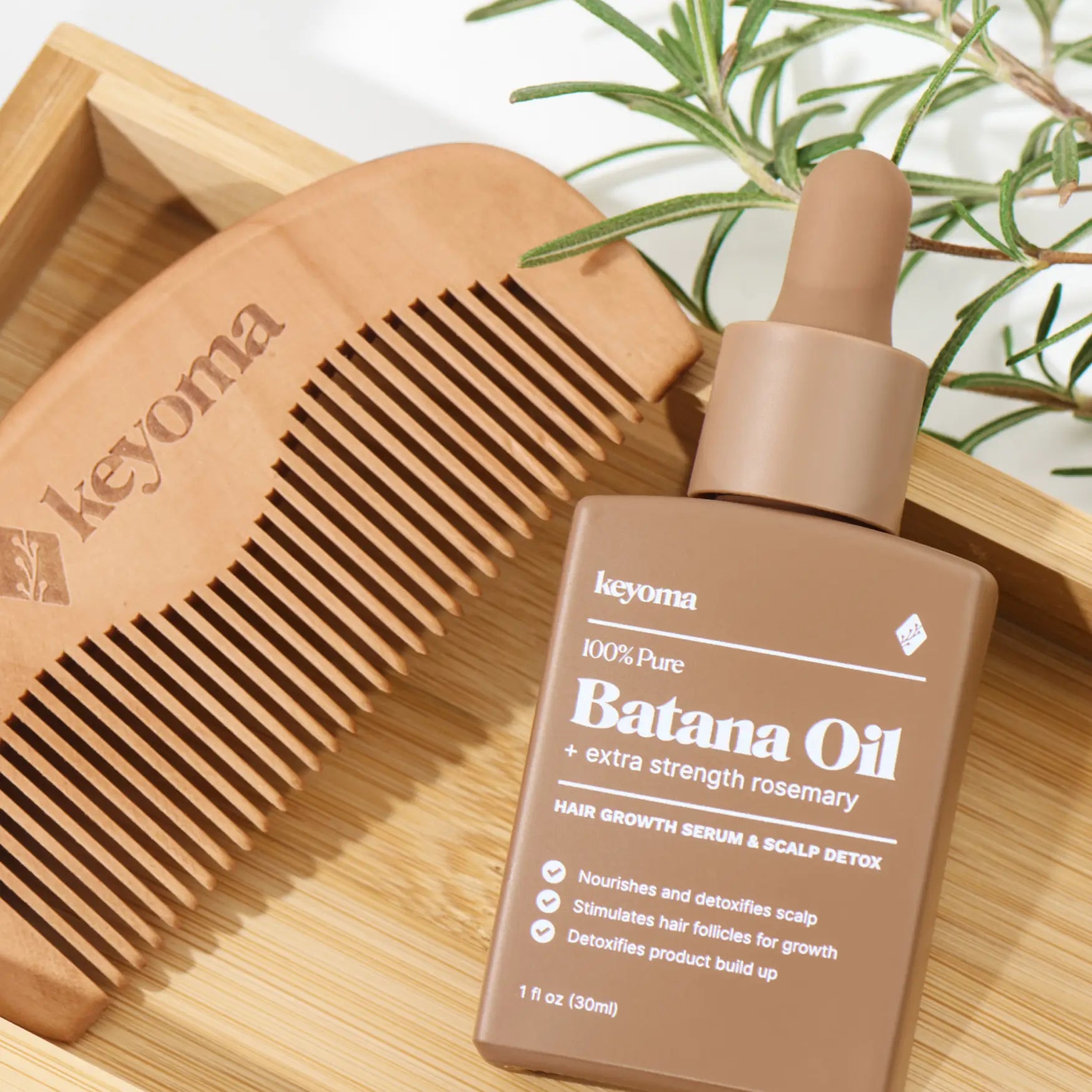
Add a Nourishing Step with Keyoma Batana with Rosemary Oil
Once or twice a week, you can boost your routine with Keyoma Batana with Rosemary Oil as a richer treatment. After washing your hair and gently towel-drying it, apply a small amount of the oil to your lengths and ends, focusing on areas that feel rough or damaged.
This can support scalp comfort, softness, and breakage reduction in a way that complements, rather than replaces, your mineral oil products. Steer clear of using too much so your hair doesn't feel heavy.
Comb Through For Even Coverage
After applying a mineral oil-based product, use a wide-tooth comb to spread it through your hair. This helps prevent patches that are too coated and makes the product work more evenly from root to tip or from mid-lengths to ends, depending on where you applied it.
Protect Your Hair From Heat
If you use heat styling tools, apply a heat protectant spray or cream as well. Mineral oil alone isn't enough to shield your hair from high temperatures. A dedicated heat protectant helps cut down on heat damage, dryness, and breakage.
Cleanse Regularly to Prevent Buildup
Include regular cleansing in your routine to remove mineral oil and other products. Use a clarifying shampoo occasionally or a sulfate-free shampoo more often, depending on how sensitive your scalp is. This keeps your hair feeling clean, light, and easier to style.
Consider Your Hair Porosity
Your hair's porosity affects how it responds to mineral oil.
-
Low porosity hair can build up product faster, so use smaller amounts and apply less often.
-
Normal or high porosity hair may handle mineral oil a bit better but can still become coated if you layer too many heavy products.
Keep Hair Hydrated and Conditioned
Mineral oil can help seal in moisture, but it doesn't add moisture on its own. Make sure your routine includes hydrating conditioners, masks, or leave-ins, and then use mineral oil-based products to lock in that hydration, especially if your hair is dry or damaged.
Ask a Professional if Needed
If you have ongoing issues like flaking, itchiness, hair loss, or severe dryness, talk to a dermatologist or professional hairstylist.
They can help you decide how often to use mineral oil and how to combine it safely with products like Keyoma Batana with Rosemary Oil in your routine.
Make Your Hair Healthier with Natural Solutions
Mineral oil seals moisture, but it can't create it. That's the gap most people miss. If your hair feels coated or dull after a few applications, you're probably sealing in dryness instead of hydration. The fix is simple: dampen your hair or apply a water-based conditioner first, then lock it in with mineral oil on your mid-lengths and ends only.
Skip your roots entirely unless your scalp is extremely dry. When buildup starts to weigh you down, reach for a clarifying shampoo and follow up with something nourishing like Keyoma Batana with Rosemary Oil to restore softness without the heaviness.
For more routines that balance sealing and feeding your strands, explore the Keyoma Hair Care blog.
Featured Product
30% Off + 3 FREE Gifts
100% Pure Batana Oil + Rosemary


