
In this article
You probably know sun exposure helps your body make vitamin D, which supports immunity, bones, and skin. But is sunlight good for your hair?
Some evidence suggests that low levels of vitamin D may contribute to hair loss. At the same time, many studies show that long time in the sun can hurt your hair, from summer hair loss, to dry, brittle hair that breaks easily, plus hair aging and discoloration.
Spending a bit of time outside can help you get your necessary 15 micrograms of vitamin D per day, but it’s still smart to protect your hair from UV radiation while you do.
Key Takeaways
-
Sunlight supports vitamin D production, but long UV exposure can harm hair structure and follicles.
-
UV radiation can increase dryness and porosity, leading to breakage, discoloration, and premature hair aging.
-
Sun exposure can lighten hair by oxidizing melanin, which means pigment loss, not healthier strands.
-
Limiting exposure, using UV-protective products, and restoring moisture can help reduce sun-related hair damage.
Is Sunlight Good for Your Hair?
Sunlight is one of the few natural sources of vitamin D. Studies show a link between low levels of this vitamin and hair loss. Also, for conditions such as scalp psoriasis, UV light therapy (phototherapy) has been found to help.
That makes it easy to assume that giving your hair more sun could support a healthier scalp and stronger hair.
However, while vitamin D matters for healthy hair, direct UV exposure can still cause real damage. A 2024 study notes that solar UV radiation can impair hair follicles, change hair texture, and trigger hair loss. Dyed or white hair may be especially vulnerable, so it may benefit most from UV hair protection.
Research from 2024 also found that UV radiation can raise hair porosity, especially when hair is also exposed to certain air pollutants. Highly porous hair can take in moisture fast, but it can also lose it quickly, leaving hair dry and more likely to break.
Can Sun Exposure Naturally Lighten Your Hair?
A common summer goal is that “perfect sun-bleached look,” but how much can sunlight really change your color? Here’s what’s going on when hair lightens in the sun.
Melanin
Hair color comes from melanin pigments inside the cortex. Dark hair has more eumelanin, while blond and red hair have less pigment. With sunlight, melanin in the hair can oxidize, which leads to depigmentation. So even untreated hair may lighten after sun exposure, but the result depends on your starting shade.
Very light or already bleached hair may brighten noticeably, sometimes turning more golden or copper. Medium-brown hair may shift a shade or two, while black hair often shows just a warmer cast. In short, lighter hair tends to show more change in the sun than darker hair.
Sun-Bleached Hair
The safest way to sun bleach is to go slowly and keep your hair’s condition in mind. Spending the whole day in direct sun without protection can dry out and weaken hair. You might get stronger highlights, but you can also end up with serious damage.
A more balanced plan is to mix short sun exposure with sun protection for hair. You might limit time in full sun and use a hair protectant spray for part of the day. After any sun-bleaching effort, follow with deep conditioning.
Potential Benefits of Sun For Your Hair
The sun brings warmth and light, and it’s often linked to a few “benefits” for hair. Still, it helps to know that these effects are cosmetic, not signs of better hair health. In many cases, they point to damage. Two common examples are:
-
The appearance of hair thickness: Does sun exposure make your hair look thicker? It can. When hair is exposed to sunlight, strands can swell. That can make hair look fuller, similar to how frizz adds volume, but it doesn’t increase the number of hairs you have.
-
Enhanced natural highlights: Ever notice your hair looking lighter after time outside in summer? That’s the sun at work. Sunlight can lift color and create a highlighted effect. If you like the look, keep in mind it’s also a sign of damage, similar to what happens with bleach.
How to Protect Your Hair from Sun Damage

Fortunately, you can take steps to help protect your hair from the sun. Try a few of these habits to cut down on UV stress.
Limit Sun Exposure
This may be obvious, but when you can, reduce long stretches in direct sun. For me, a simple cap helped my ends feel less rough after long afternoons outside. If you’ll be outdoors during peak UV hours (usually from 10 am to 4 pm), look for shade or take short breaks indoors to give your hair a break from intense light.
Invest in UV-Protective Hair Products
Plenty of products are now made to help defend against UV damage. From leave-in conditioners to serums, they’re meant to support your hair’s natural barrier, limit environmental stress, and aid repair.
Cover Up Your Locks from the Sun
You can block direct sunlight by wearing hats, scarves, or a head wrap. These options protect both scalp and strands, especially during peak UV hours.
Ways to Nourish Hair After Being in the Sun

Even with good habits, it’s hard to keep hair fully away from the sun. After sun exposure, a few steps can help your hair look and feel better again.
Restore Moisture in Your Hair
Hydration plays a big role in hair health. After sun exposure, replace lost moisture with hydrating shampoo and conditioner. Add a deep conditioning treatment for an extra boost. Treat your hair the way you treat your skin after sun time and focus on hydration at every step.
Get a Trim Haircut
Regular trims help keep hair looking healthy. Removing split ends can slow down further damage and lower the risk of breakage. It’s a simple step that can help your hair keep its shape and strength.
Nourish Your Body
Hair health also depends on what’s going on inside your body. Aim for enough key nutrients and, of course, drink enough water so your hair is supported from the inside out.
Protect Your Hair From Sun Damage With UV-Safe Habits
Limit sun exposure before the damage shows up on your strands. UV light can raise hair porosity, fade color, and weaken keratin, especially if your hair is dyed, lightened, or already dry. If you spend time outdoors, pair short sun exposure with protection like hats or lightweight leave-ins, then restore moisture the same day.
A good rule is to treat the sun the way you treat heat styling. Helpful in small doses, damaging when it happens often without care. The trade-off is subtle at first, but dryness and breakage can build over time.
Create habits that protect hair before summer stress piles up. For clear routines and ingredient guidance, use Keyoma’s hair care tips.
Featured Product
30% Off + 3 FREE Gifts
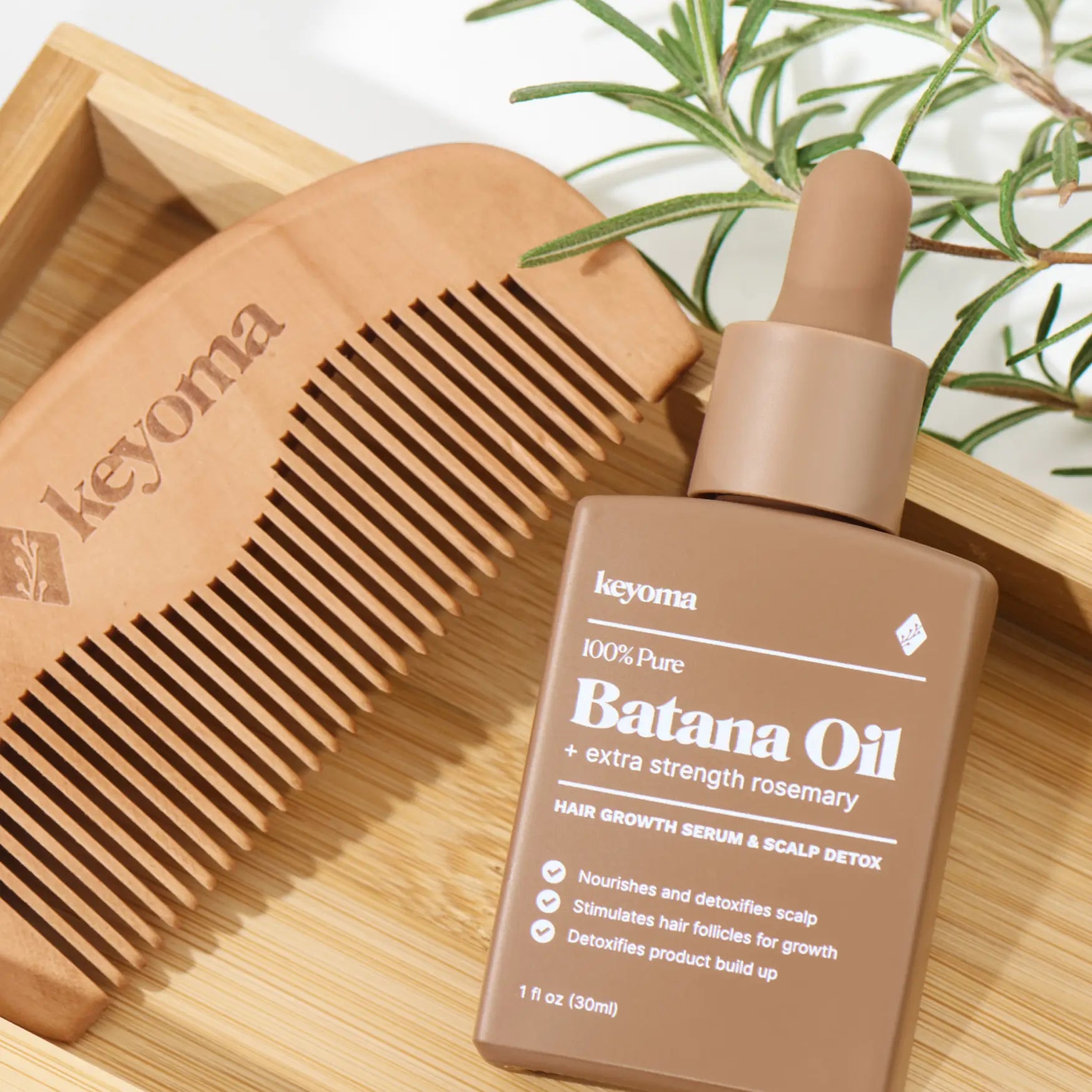
100% Pure Batana Oil + Rosemary


