How to Fix Stringy Hair From Buildup, Damage, or Excess Oil
Written by

Published on Jan 19, 2026

In this article
Stringy hair can be frustrating day to day, and it can affect your style and confidence. It often shows up in long, fine hair when oil or leftover product makes strands stick together at the ends.
Stringy hair may look greasy and flat, even when it's truly clean. We'll cover common causes and easy styling moves that help hair look fuller and healthier.
Key Takeaways
-
Stringy hair can look flat and clumped together, even when it's clean.
-
Extra oil or product buildup often makes fine strands cling together at the ends.
-
Brushing wavy or curly hair dry, plus split ends and heat damage, can worsen stringiness.
-
Helpful steps include conditioning mid-lengths, trimming regularly, using less heat, and drying for lift at roots.
What Is Stringy Hair?
Stringy hair tends to look limp, with less volume and bounce than you'd like. It can happen with any hair type, showing up as strands that stick together and sit flat, sometimes with an oily look. Often, it points to something off in your routine, hair condition, or the products you're using.
Why Causes Stringy Hair?
Stringy hair often shows up in fine hair that turns greasy, so it gathers at the ends and can look like little strings. Wavy or curly hair may also seem stringy if you brush it when it’s dry or damaged from heat styling.
Any hair type with damaged ends can look stringy because split ends make strands separate instead of lying smoothly together.
Most often, stringy hair comes from too much product or oil. Hair loss can make hair look thinner, which can also make it seem more stringy.
7 Fixes for Stringy Hair That Target Buildup, Oil, and Damage
The best fix for stringy hair usually mixes better product choices with a few technique tweaks. Here are 7 options that may help you manage limp strands and make hair look fuller.
1. Use Batana Oil
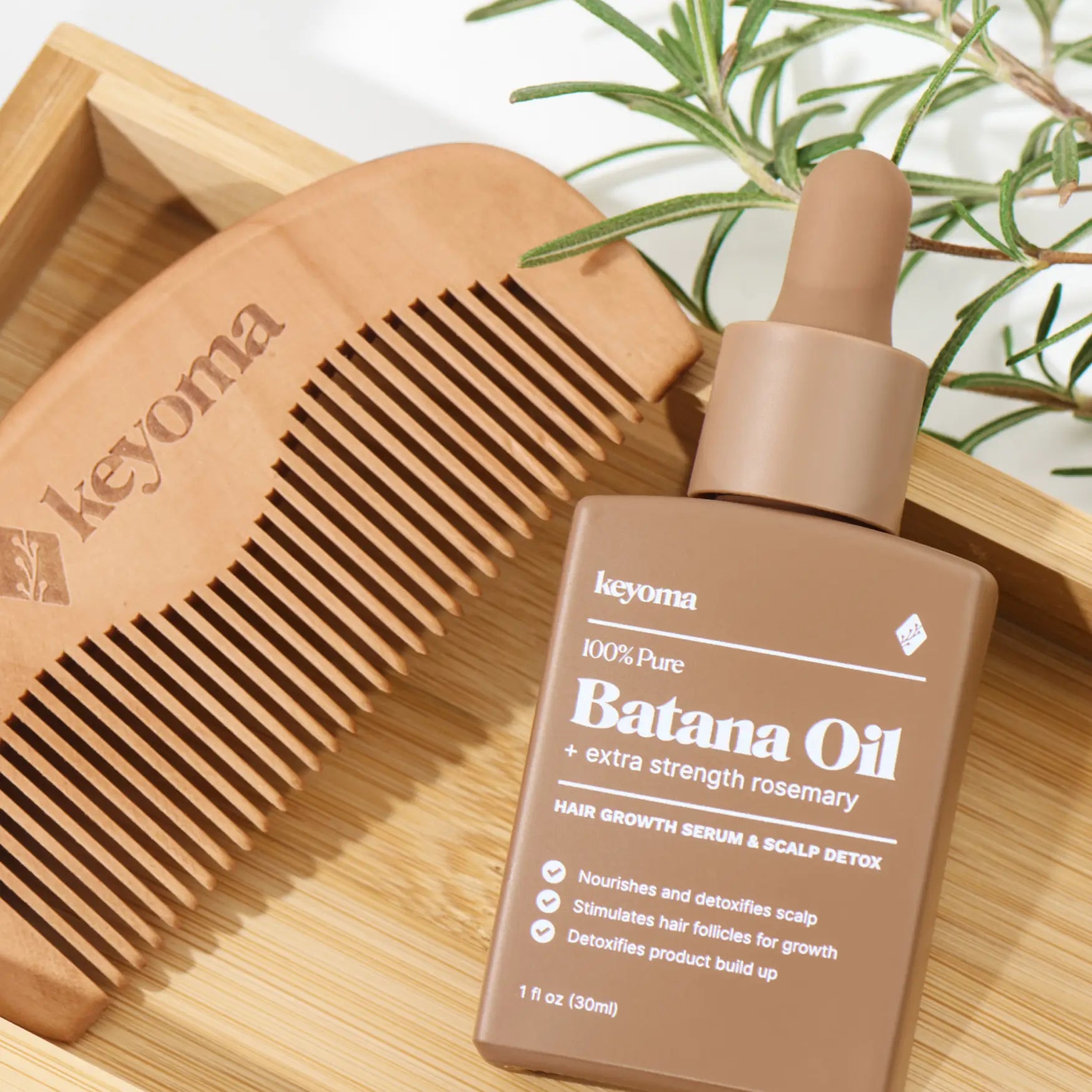
Batana oil can help dry hair feel softer and look less stringy by adding moisture and slip. It's rich in antioxidants and vitamins that may support elasticity and help restore moisture, which can add more natural body.
Rosemary oil can pair well with batana oil in a routine when you're trying to cut down on stringy-looking strands.
2. Keep Conditioner Off Roots
Conditioners matter. They add moisture and can improve how your hair feels and looks. For me, rinsing an extra 20 seconds helps keep light conditioner from lingering. When you wet your hair, condition from mid-length to the ends, not at the roots, or the top can look greasy, flat, and limp.
3. Trim Split Ends
Split ends don't seal back together. The only real fix is to cut them off. A split end keeps splitting, and that damage can travel upward into healthier hair.
If you want long, healthy hair, trims work with you, not against you. Try trimming at least every three months, and go sooner if your hair is fine or damaged easily.
4. Dry Hair Upside Down
Set the brush aside at first. When you blow-dry, start with your hands and flip your head upside down for rough drying. That lifts the roots and slightly opens the cuticle for more volume. Once your hair is almost dry, use a brush to smooth and finish.
5. Limit Heat Styling
A hot shower can feel good, but it can be rough on your hair. Keep showers shorter and lukewarm, then finish with cooler water to help hold on to moisture. The quick chill can be worth it, and your skin may feel less dry too.
Curling irons and flat irons expose hair to high heat, which can leave it dry and brittle. When hair is very straight, the iron sits closer to the scalp, so oil can spread onto your strands more easily. That can raise the amount of "grease" on your hair and make it look even stringier.
6. Dry Hair Before Sleep
Do you shower at night right before bed? If your hair is thin and fine, sleeping on wet hair often makes it look odd by morning. If you can, switch to a morning shower so your hair dries in a more controlled way.
If you prefer night showers, try braiding damp hair before you go to sleep. It can encourage waves and keep hair from "doing its own thing."
7. Skip Plastic Combs
A plastic comb may seem harmless, but it can work against your hair. Plastic doesn't conduct, so static builds more easily. A wooden or metal brush doesn't have that issue as much, so it can help keep flyaways calmer.
Now you know why static gets worse with plastic, and you can choose a tool that behaves better.
FAQs
Is my hair damaged if it's stringy?
Your hair might be damaged if it’s stringy because stringy strands, pin-straight ends, and looser curls can signal a real shift in your hair’s texture. That kind of change is often a warning sign.
Too much heat is usually the main cause, but bleach or color processing, dryness, and over-handling your hair can also play a role. If you’ve been using hot tools a lot or coloring recently, you’re not imagining it, your hair may be reacting to that stress.
Why is my hair growing stringy?
Your hair may be growing stringy because your scalp makes oil quickly, and that oil travels down each hair strand, making pieces stick together and look flat. If it gets greasy and stringy after just one day, it often points to fast oil production from your scalp.
Fixing it usually means working on how much oil your scalp puts out, plus your washing routine, product use, and styling habits. Sometimes it’s simply your natural scalp type and overactive oil glands are part of your baseline.
Can you save stringy hair?
Yes, you can save stringy hair by clearing out buildup and switching to a routine that keeps your roots lighter. A clarifying shampoo can help remove residue that makes hair clump together. Then, adjust how you condition by putting conditioner on your mid-lengths and ends only, not your scalp.
Adding volume-boosting products and trying a double-wash approach can also make a big difference. With lightweight products like Keyoma’s Pure Batana Oil with Rosemary and better styling habits, your hair can start looking fuller and less stuck-together again.
What is the best treatment for stringy hair?
The best treatment for stringy hair is usually a mix of repair, shape, and prevention, depending on what’s causing it. If breakage is part of the problem, using batana oil, argan oil or castor oil can help soften the look of split ends so hair appears healthier.
If your ends look thin and stringy, a trim or haircut can instantly make hair look thicker and more even.
You’ll also want to avoid frequent heat styling, since hot tools can make stringiness worse over time. And if oiliness is a big factor, apply conditioner only to the ends, not the scalp, so you don’t add extra heaviness where you’re already getting oily.
Reset Stringy Hair at Your Next Wash With Keyoma
If your ends look thin and separated, split ends may be adding to that “string” look. Trimming about every three months can help hair look fuller quickly.
For softness without a heavy finish, use a small pre-wash amount of batana oil so hair feels smoother after shampoo, not coated. Fix stringy hair using Keyoma Batana Oil with Rosemary today!
Featured Product
30% Off + 3 FREE Gifts
100% Pure Batana Oil + Rosemary
↓Best Batana Oil to Buy↓

1 Month
Subscribe & Save
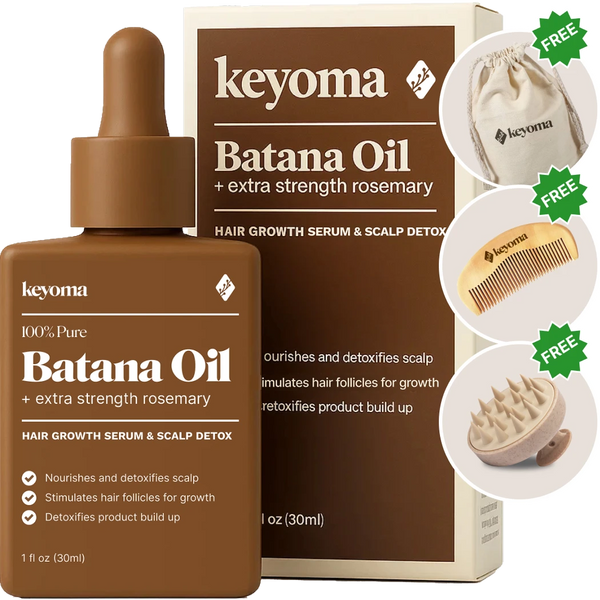


- 30-day supply delivered monthly $35
- 30% off for life $6
- Free haircare essentials kit $33
- Free custom wooden comb $10
- Free scalp massager $15
- Free eco-friendly travel bag $8
- 30-Day Money Back Guarantee
- Free Shipping
- Online portal for easy cancel, skip, or pause.
1 Month One Time Purchase
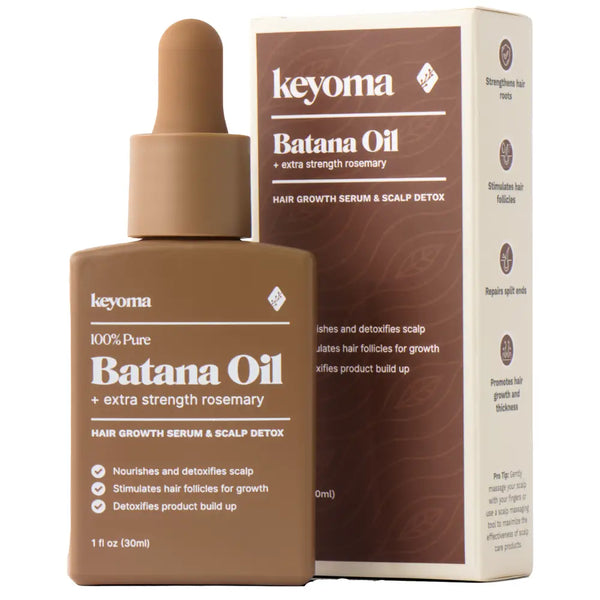
- 30-day supply $50
- 30% off for life $6
- Free haircare essentials kit $33
- Free custom wooden comb $10
- Free scalp massager $15
- Free eco-friendly travel bag $8
