

In this article
Some mornings, Jenny catches her reflection and wonders why her hair looks exactly the same as it did months ago. Same spot on her shoulders, same length at the ends, same everything, almost as if her hair decided to stop trying.
She starts pouring in twice, even thrice, the effort to care for it the best way she knows how. New shampoos, conditioners, and topicals. Yet nothing changes, and now a question keeps circling in her head: Why has my hair stopped growing?
Seems familiar?
In this guide, I’ll walk you through why stunted hair growth happens and the steps that help your hair break past that plateau.
Understanding the Hair Growth Cycle
If you’re wondering why hair stops growing at a certain point, it all traces back to the hair growth cycle. There are four main stages:
-
Anagen (growth): This is when your hair actively grows. It can last anywhere from two to six years or more, depending on your genetics.
-
Catagen (transition): A short phase, typically two to three weeks, where growth stops and the follicle shrinks slightly.
-
Telogen (rest): A resting stage that lasts around three months. The hair remains in the follicle but no longer grows.
-
Exogen (shedding): The phase where the hair strand falls out, often triggered by brushing, washing, or natural release.
The main difference between people who grow long hair and those whose hair is stuck at the same length no matter how much effort they've put into taking care of it all comes down to the duration of their anagen phases.
To put it simply, some people have a naturally short growth phase, which means their hair won’t grow very long before shedding starts. Others have a longer anagen phase, sometimes stretching to six or even eight years.
That explains why person A might have flowing, waist-length hair while person B stays just near the shoulders.
Still, even if person A seems like the lucky one in this scenario, that luck isn’t guaranteed forever. The anagen window isn’t fixed. Factors like stress, aging, hormone shifts, chronic illness, or scalp inflammation can all throw your hair cycle off balance over time.
Why Won't My Hair Grow Past a Certain Point?
If your hair can't grow past a certain length no matter what you try, you’re not imagining it. There are several factors that can slow growth or stop it altogether, even when you’re doing everything "right."
Genetics
Some people are genetically predisposed to have a shorter anagen phase, which means their hair grows for a limited period before it stops. That’s to say genetics is one of the most common reasons hair can’t grow past a certain length, in the same way it is for how thick or fast your hair grows.
Age
As you age, your hair follicles gradually shrink, a process called follicle miniaturization. This leads to thinner strands that shed more easily and grow back weaker with each cycle.
The anagen phase also shortens over time, which means your hair spends less time growing and more time resting or shedding.
These age-related changes are normal, sure, but there's no denying they can make it feel like your hair has stopped growing, or that it can’t get past a certain length anymore.
Poor Scalp Health
A healthy scalp is the foundation of steady hair growth, and when your scalp isn’t in good condition, it becomes harder for follicles to function properly.
One of the most common issues is scalp buildup. This refers to a mix of sebum, dead skin cells, sweat, and leftover hair products—often the result of poor hygiene or straight-up neglect—that clog the follicles and block new growth from pushing through.
On top of buildup, scalp conditions like seborrheic dermatitis, psoriasis, or fungal infections can create inflammation, itchiness, and flaking. These don’t just feel uncomfortable, but they also create an unhealthy environment that encourages thinning or stunted growth.
Overprocessing and Styling Habits
Overprocessing happens when your hair goes through repeated exposure to harsh treatments, such as:
-
Frequent heat styling: Flat irons, curling wands, and blow dryers at high heat levels
-
Chemical processing: Bleach, perms, relaxers, and hair dyeing
-
Layering treatments without rest: Doing back-to-back color, straightening, or chemical services with no downtime
One of the biggest consequences? Hair breakage. That means while the root continues to grow, the ends keep snapping off, which makes your length appear stuck and stunts your overall growth.
On top of those, your everyday styling routine can lead to the same issues, such as:
-
Tight ponytails and braids, which create constant tension at the roots
-
Elastic hair ties, especially the thin ones that can snap strands clean off
-
Overbrushing, which causes tiny tears in the cuticle and raises the chances of breakage
-
Shampoos and gels with harsh ingredients, like drying alcohols or sulfates
Pattern Baldness
Pattern baldness is a genetic condition common in men (although many women experience it too) that causes progressive shrinking of hair follicles.
This condition is driven by hormones, particularly a sensitivity to dihydrotestosterone (DHT). Over time, DHT causes affected follicles to shrink until they eventually stop producing visible strands.
While new hairs may still emerge, they tend to come in thinner and shorter with each cycle. The result is a slow, steady form of hair loss that often makes it look like the hair has simply stopped growing.
Stress
Whether it’s from long stretches of heavy work hours or a major emotional setback, stress signals your body to produce more cortisol. This spike disrupts the natural growth cycle and pushes follicles into the resting stage earlier than usual.
This process is known as telogen effluvium, a condition where more hairs than usual shift into the shedding phase at the same time.
The result is often thinner, patchy-looking hair, but it’s also possible for your length to look “stuck in place” because the new hairs aren’t growing in fast enough to replace what’s being shed.
And It’s not always easy to trace the cause right away. The visible shedding often appears long after the stressful event has passed. That delay is what makes stress-related hair loss confusing and frustrating for many.
Autoimmune Conditions
Autoimmune conditions cause the body’s immune system to mistakenly attack its own healthy tissues, including hair follicles.
One of the most recognized examples is alopecia areata. When this happens, existing hair strands fall out faster than usual (and often unexpectedly), and new ones stop emerging, stunting overall hair growth.
For some, it shows up as a bald patch that seems to appear overnight, while others deal with thinning that slowly spreads across the scalp.
Hormonal Imbalances
Hormones affect nearly every part of the hair growth cycle. When they fall out of balance, your follicles can get thrown off track, leading to stalled growth, thinning, or even shedding.
One major cause of hormone disruption is thyroid dysfunction. Both hypothyroidism (underactive thyroid) and hyperthyroidism (overactive thyroid) can interfere with the timing of your hair growth cycle.
Other hormonal shifts can also slow things down. These include:
Nutritional Deficiencies
If you’ve ever asked yourself, “What am I lacking if my hair isn’t growing?” the answer may be the very nutrients your strands rely on every day.
Hair is made of keratin, a type of protein, and like any other tissue in your body, it depends heavily on what you eat. Without the right fuel, hair growth slows down, weakens, or stalls altogether.
Apart from protein, iron is another major player. In fact, a 2006 dermatology review highlights that iron deficiency is one of the most commonly suspected nutritional factors tied to hair thinning.
What to Do if Your Hair Isn't Growing? Fixes and Remedies
If you're wondering how to fix stunted hair growth, the good news is that progress is possible—but only when you address the root cause.
These fixes won’t all work overnight, and not every one will apply to your situation. Still, with consistency and the right approach, you can create an environment where your hair has a better chance of growing stronger and longer.
Scalp Massage
Scalp massage works by increasing blood flow to the scalp. That means your follicles get more oxygen and nutrients, which are the exact resources they need to grow stronger strands.
When doing so, use your fingertips (not nails), and make small circular motions across your scalp for about two to five minutes. It's something you can do while watching TV, standing in the shower, or right before bed.
Botanical Hair Oils
Botanical oils are one of the most effective natural remedies you can add to any hair-growth routine. They help nourish the scalp, lock in moisture, and create a protective layer that keeps strands from breakage, which can stop your hair from growing longer.
A few great nourishing oils include:
-
Rosemary oil
-
Peppermint oil
-
Castor oil
-
Argan oil
Consistent Scalp Care
Scalp care is something that often gets mentioned in hair-growth conversations, but it’s consistent scalp care that makes a real difference.
That means it’s not just about doing a one-off exfoliation or trying a clarifying shampoo once in a while. It’s the steady habit of keeping your scalp clean and nourished week after week, through regular washing, gentle exfoliation, and choosing products that won’t clog or irritate your skin.
Check out our full guide on building a scalp care routine for more steps and examples.
Fixing Unhealthy Lifestyle Habits
Sometimes it’s not one major mistake but a string of daily habits that compound and cause the damage over time. Here are the key areas to focus on:
-
Eat a healthy, balanced diet: Make sure you’re getting enough protein, iron, zinc, and healthy fats. These are the nutrients your follicles need to stay active and strong.
-
Get enough sleep: Deep rest is when the body repairs itself, including the cells around your hair follicles. Poor sleep leads to higher stress hormones and slower growth.
-
Dial back on heat: Frequent high-heat styling dries out your strands and weakens the cuticle. If you use heat, try to keep it on low settings and give your hair days off whenever possible.
These lifestyle changes may seem basic, but layered consistently over time, they create a real shift in how your hair looks and grows.
How Can I Speed Up Hair Growth?
If you’ve been asking yourself how can I activate my hair to grow, there are a few science-backed tools and treatments that may help. These options are especially useful when hair growth feels stalled even with consistent care.
-
Minoxidil: A topical treatment that helps extend the anagen phase and improve blood flow to the follicles. Available over the counter.
-
Finasteride: A prescription pill for men that lowers DHT, the hormone responsible for shrinking follicles in cases of pattern baldness.
-
Hair Vitamins: Supplements that include biotin, iron, zinc, and other nutrients that support growth when your diet isn’t covering all bases.
-
Microneedling: A process that involves using tiny needles on the scalp to stimulate collagen production and improve product absorption.
Why Is My Hair Not Growing?
Hair growth issues can look different depending on where or how they show up. For some females, it’s stalled growth after a haircut. For some males, it’s patchiness in one area or uneven length from side to side.
Hair Not Growing in One Spot
When hair isn’t growing in one specific area, it’s usually a sign that something is blocking or damaging the follicles in that region. The most common reasons hair stops growing in one spot fall into a few categories:
-
Chronic tension: Repeated pulling from tight ponytails or braids can lead to traction alopecia, a form of localized hair loss that builds slowly over time.
-
Scalp inflammation: Conditions like fungal infections or scalp psoriasis create irritation and swelling that can weaken follicles and pause growth.
-
Underlying skin conditions: In some cases, patchy hair loss could be linked to alopecia areata, an autoimmune response where the body attacks its own follicles, often starting with a single bald patch.
Hair Not Growing on One Side
Uneven hair growth is more common than most people think. Reasons that may be causing it include:
-
Dominant styling habits: If you always tie, brush, or part your hair the same way, one side may experience more tension or friction, leading to slower growth or breakage.
-
Sun exposure or damage: One side might get more exposure to sun or heat tools, which dries out strands and weakens the cuticle.
-
Circulation differences: Even slight variations in blood flow from one side of your scalp to the other can affect how well follicles are nourished.
Hair Not Growing After a Stressful Event
Stress sends your body into a survival mode that redirects energy away from non-essential functions like hair growth. This leads to a condition called telogen effluvium, where a large number of strands enter the shedding phase earlier than usual.
It’s a normal response, and in most cases, the follicles bounce back once your stress levels settle. Still, recovery takes time, and the delay between stress and shedding can make it feel like your hair just stopped growing out of nowhere.
Frequently Asked Questions (FAQs)
Can some people just not grow hair long?
Yes. Some people are born with a shorter anagen phase, which means their hair naturally grows for a limited time before shedding. That can make it feel like their hair stays stuck at the same length no matter what they do.
Could there be medical reasons why my hair won't grow?
Absolutely. Hormonal imbalances, thyroid disorders, autoimmune conditions like alopecia areata, or even chronic stress can all interfere with normal hair cycling and limit growth. A proper medical evaluation can help rule out these causes.
Why is my hair taking so long to grow?
Hair growth is slow by nature, typically around half an inch per month. If it feels even slower than that, it could be due to nutrient deficiencies, poor sleep, overstyling, or ongoing breakage that makes it hard to see real progress.
Rehydrate Your Hair and Get Growth Back on Track
Hair slows or stops growing for a lot of reasons, from poor scalp hygiene and overprocessing to stress and nutritional deficiencies.
But one of the most overlooked causes? Dryness, which leads to breakage that undoes your growth at the roots and leaves your length looking frustratingly the same no matter what you do.
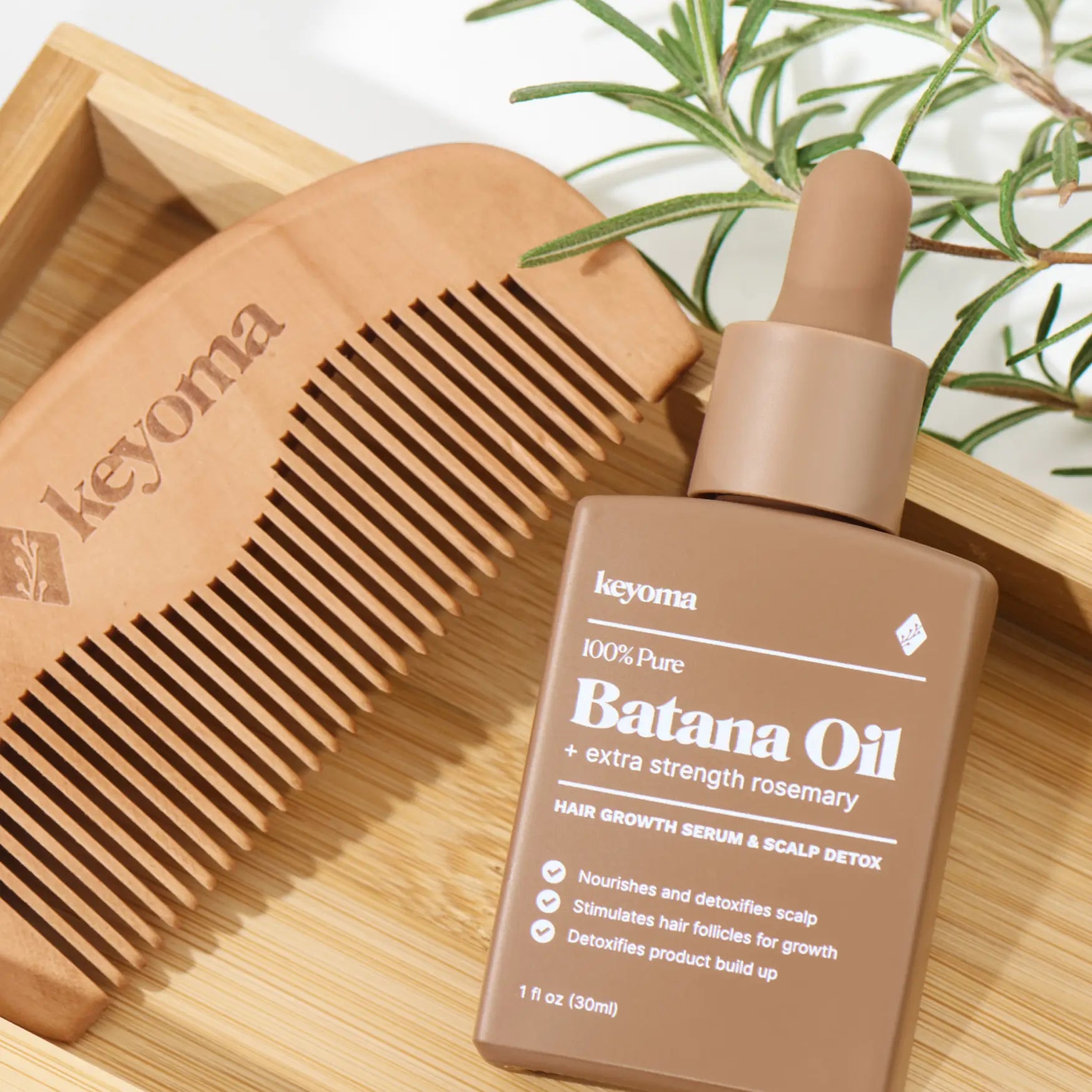
That’s where a hair oil like Keyoma’s Batana Oil can make a real difference. It nourishes both scalp and strands, seals in moisture to keep damage at bay, and gives your hair a renewed chance to finally grow past the length where it’s been stuck.
Try it today and see how steady moisture can help your hair stay soft, strong, and growing.
Featured Product
30% Off + 3 FREE Gifts
100% Pure Batana Oil + Rosemary
↓Best Batana Oil to Buy↓

1 Month
Subscribe & Save
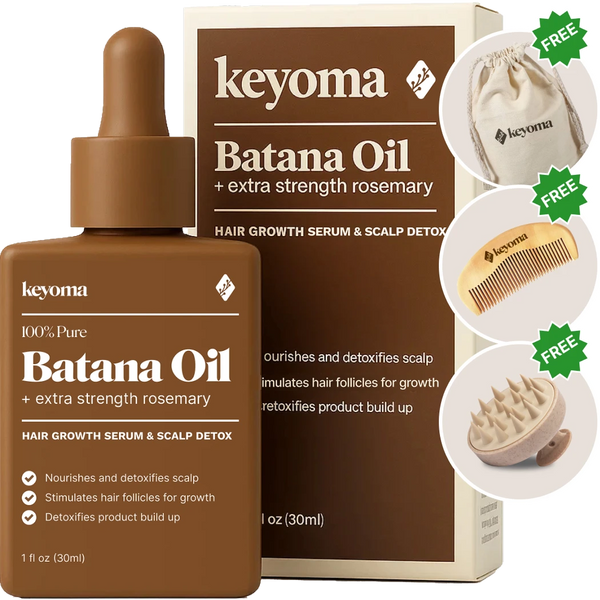


- 30-day supply delivered monthly $35
- 30% off for life $6
- Free haircare essentials kit $33
- Free custom wooden comb $10
- Free scalp massager $15
- Free eco-friendly travel bag $8
- 30-Day Money Back Guarantee
- Free Shipping
- Online portal for easy cancel, skip, or pause.
1 Month One Time Purchase
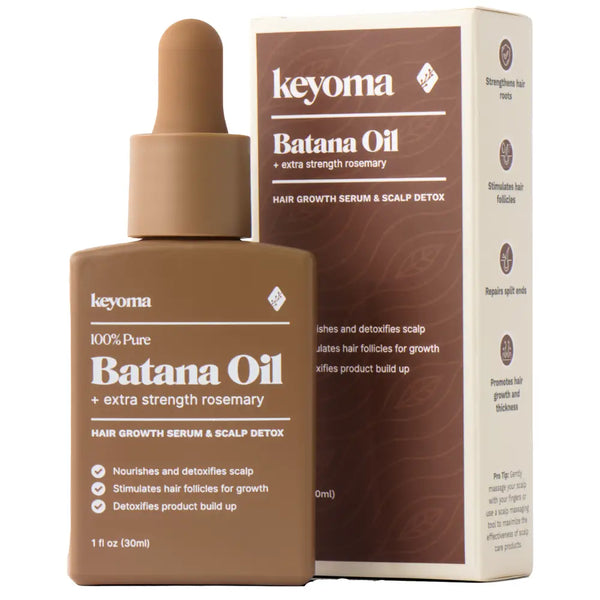
- 30-day supply $50
- 30% off for life $6
- Free haircare essentials kit $33
- Free custom wooden comb $10
- Free scalp massager $15
- Free eco-friendly travel bag $8
