Rosemary Oil vs Saw Palmetto: Which Is Better for Hair?
Written by

Published on Jun 15, 2026

In this article
Rosemary oil and saw palmetto are often compared because both sit in the “natural hair support” category. They are not the same type of ingredient, though. Rosemary oil is usually used on the scalp. Saw palmetto is usually used as an extract or supplement with a stronger focus on DHT-related thinning.
That difference matters when you are deciding what belongs in your routine. If your main concern is scalp comfort, oiling, and a simple topical habit, rosemary oil usually makes more sense. If your concern looks more like pattern thinning linked to hormones or family history, saw palmetto may feel more relevant, but it also needs more caution.
Neither option should be treated as a guaranteed hair regrowth solution. A better decision starts with your goal, your scalp tolerance, your health history, and whether you want a topical product you can patch test or a supplement that may affect the body more broadly.
Key Takeaways
-
Rosemary oil fits topical scalp care better than DHT support.
-
Saw palmetto is more focused on DHT-related thinning.
-
Topical routines are easier to adjust or pause.
-
Sudden, patchy, or painful hair loss needs medical guidance.
What Is Rosemary Oil?

Rosemary oil is an essential oil from the rosemary plant. In hair care, it is usually diluted into a carrier oil or blended into a scalp product before use. Most people use it as part of a topical scalp routine rather than as an oral supplement.
Its appeal comes from a mix of traditional use, scalp-care benefits, and early research around androgenetic alopecia. A 2015 randomized trial compared rosemary oil with 2% minoxidil in 100 people with androgenetic alopecia over 6 months. The study found no significant hair-count change at 3 months, but both groups improved by 6 months, with no significant hair-count difference between the two groups.
How Rosemary Oil Works for Hair
Rosemary oil is usually discussed for scalp circulation, comfort, and scalp environment. In the 2015 trial, the authors noted rosemary’s potential effect on microcapillary perfusion, which is one reason it is often framed as a topical scalp-support ingredient.
That does not make rosemary oil a proven DHT blocker. Some experts describe a possible limited role in hair support, but dermatologists quoted by The Washington Post also caution that rosemary oil is unlikely to promote major regrowth on its own and should not replace clinically proven treatments.
For a deeper ingredient overview, Keyoma’s guide to rosemary oil is a better next step than jumping straight into a supplement-style routine.
Key Benefits for the Scalp and Hair
Rosemary oil’s best fit is a topical routine where scalp care is the priority. It may help make the scalp feel more refreshed, support a consistent massage habit, and add a plant-based step to a pre-wash or diluted leave-on routine.
It may also support the look and feel of the hair indirectly. A scalp oiling routine can help some people feel more consistent with massage, pre-wash care, and strand protection. That is different from claiming that rosemary oil reverses hair loss.
Rosemary oil should be diluted before use. Verywell Health notes that rosemary oil can be mixed with a carrier oil or hair product and should not be applied undiluted directly to the hair or scalp.
Best Use Cases
Rosemary oil is strongest when your goal is a simple topical scalp routine. It suits people who want to start slowly, patch test first, and stop quickly if the scalp feels itchy, greasy, or irritated.
It can also fit people who want a pre-wash scalp massage step. If you are still adjusting how often to oil your scalp, a guide to hair oiling frequency can help you avoid overuse.
Rosemary oil may be a reasonable option when you want:
-
A topical ingredient instead of an oral supplement.
-
A scalp massage step you can control.
-
A plant-based oil routine that is easy to pause.
-
A diluted blend rather than a strong essential oil applied alone.
If your scalp is sensitive, the safer move is to start with dilution and a patch test. Keyoma’s page on how to dilute rosemary oil for hair fits that part of the decision.
Main Limitations
Rosemary oil has promising but limited evidence. The 2015 trial is useful, but it was small, lasted 6 months, and did not include a placebo group. Experts quoted by The Washington Post point out that this makes it hard to know how much of the change came from the oil itself versus natural hair-cycle changes.
Rosemary oil can also irritate the scalp, especially when used too strong or too often. It should not be treated like a stronger formula will work faster. A mild, consistent, diluted routine is usually safer than applying more oil because you are worried about shedding.
What Is Saw Palmetto?

Saw palmetto is an extract from the fruit of the Serenoa repens plant. In hair conversations, it is usually discussed as a DHT-focused ingredient. DHT, or dihydrotestosterone, is an androgen linked to follicle miniaturization in androgenetic alopecia.
Unlike rosemary oil, saw palmetto is often taken orally as a supplement, though topical forms also exist. That difference changes the safety conversation. A topical oil mainly affects the area where it is applied. An oral supplement is processed by the body, so medication use, pregnancy, breastfeeding, and hormone-related concerns matter more.
How Saw Palmetto Works for Hair
Saw palmetto is usually discussed for its possible effect on 5-alpha reductase, the enzyme involved in converting testosterone into DHT. That is why people compare it with other natural DHT blockers, especially when the concern is pattern thinning rather than general scalp dryness.
The evidence is still limited. NCCIH says only a few small studies have tested oral or topical saw palmetto for male-pattern hair loss, and the evidence is too limited to reach firm conclusions.
A PubMed-indexed systematic review on saw palmetto in alopecia reported positive findings from several small studies using topical and oral saw-palmetto-containing products, but the research involved different formulas, conditions, and outcomes.
Key Benefits for DHT-Related Thinning
Saw palmetto’s main appeal is its DHT angle. If your thinning follows a pattern, such as a widening part, crown thinning, or gradual hairline recession, a DHT-focused ingredient may feel more relevant than a basic scalp oil.
Still, it should be framed as support, not treatment. Saw palmetto is not the same as a prescription hair-loss medication. It also should not be called “natural finasteride” without caution because the research quality, potency, dosing, and oversight are not equivalent.
For readers comparing DHT-focused choices, Keyoma’s saw palmetto vs finasteride article gives a more direct comparison between a supplement-style option and a medical treatment.
Best Use Cases
Saw palmetto fits readers who are looking at androgen-related thinning and want to understand supplement-style support. It may also interest people comparing botanical extracts, hair supplements, and topical oils before choosing a path.
It is not the best first step for every hair concern. If your issue is dry scalp, product buildup, oiling mistakes, or brittle ends, saw palmetto may be too indirect. A topical routine may be simpler and easier to evaluate.
For a broader comparison between topical and ingestible options, the hair supplements vs hair oils page can help separate routine fit from ingredient hype.
Main Limitations
Saw palmetto has more safety considerations than rosemary oil because it is often taken as an oral supplement. NCCIH says saw palmetto is generally well tolerated in research, but adverse effects may include digestive symptoms, dizziness, and headache. NCCIH also says it may be unsafe during pregnancy or breastfeeding.
Dietary supplements are also regulated differently from drugs. NCCIH notes that dietary supplements are not approved by the FDA before being sold, and manufacturers are responsible for evaluating safety and labeling before marketing.
Healthline also flags that saw palmetto may interact with blood thinners and oral contraceptives. That is a good reason to speak with a clinician before using it, especially if you take medication, have hormone-sensitive concerns, are trying to conceive, or are pregnant or breastfeeding.
Rosemary Oil vs Saw Palmetto: Side-by-Side Comparison
Rosemary oil and saw palmetto overlap in the natural hair-support conversation, but they answer different questions. Rosemary oil asks, “Can a topical scalp routine support a healthier scalp environment?” Saw palmetto asks, “Could DHT-focused support help with pattern thinning?”
The best choice depends less on which ingredient sounds stronger and more on what problem you are trying to solve. If your scalp feels dry, tight, or neglected, rosemary oil may fit better. If your thinning looks gradual and patterned, saw palmetto may be worth discussing with a healthcare provider.
|
Criteria |
Rosemary Oil |
Saw Palmetto |
|
Mechanism |
Mainly topical scalp support, with possible circulation and scalp-comfort benefits |
DHT-focused support through possible 5-alpha-reductase activity |
|
Common Form |
Diluted essential oil, scalp oil, pre-wash blend, serum |
Oral supplement, extract, capsule, or topical formula |
|
Best Use Case |
Scalp routine, massage, beginner topical care, oiling support |
Pattern thinning, DHT-related concerns, supplement comparison |
|
Evidence |
One small 6-month comparative trial is often cited, but evidence remains limited |
Several small studies and reviews exist, but formulas and outcomes vary |
|
Timeline |
Often judged after consistent use over several months |
Usually discussed over months, but no universal timeline applies |
|
Safety |
Main concern is irritation from poor dilution or overuse |
More supplement-related concerns, including pregnancy, breastfeeding, and medication use |
|
Routine Fit |
Easier to patch test, adjust, reduce, or pause |
Harder to self-adjust safely because oral use may affect the body more broadly |
Hair Growth Support
Rosemary oil has more visibility as a topical hair-growth trend, but the evidence should be read carefully. The 2015 study found improvement at 6 months, not 3 months, and compared rosemary oil with 2% minoxidil without a placebo group.
Saw palmetto also has early evidence, but it is not a guaranteed regrowth solution. The studies are relatively small, and many use combination products. That makes it harder to isolate saw palmetto as the reason for any improvement.
If you want a broader ingredient view, Keyoma’s guide to ingredients that boost hair growth can help you compare scalp oils, supplements, and other common actives without treating them as equal.
DHT Support
Saw palmetto is the clearer fit for DHT support. It is commonly discussed because of its possible role in reducing the conversion of testosterone into DHT, which is relevant to androgenetic alopecia.
Rosemary oil is weaker on this point. It may have a limited anti-androgen angle in early research discussions, but it should not be treated as a proven DHT blocker. For a direct DHT-focused routine, saw palmetto is more aligned with the mechanism.
Scalp Health
Rosemary oil is the better match for scalp care. It is applied directly to the scalp, usually with massage, and can be adjusted based on how your scalp responds.
Saw palmetto may be part of a hair-support plan, but it is not mainly a comfort or scalp-feel ingredient. If your biggest issue is dryness, tightness, flaking from buildup, or oiling confusion, a topical routine is usually easier to troubleshoot.
Ease of Use
Rosemary oil is usually easier to test. You can dilute it, apply it to a small area, reduce the frequency, or stop if your scalp reacts. That control is useful for beginners.
Saw palmetto requires more thought. Capsules, extracts, and supplement blends may vary in strength and quality. You also cannot judge supplement tolerance only by how your scalp feels.
Safety
Rosemary oil’s main safety issue is local irritation. Poor dilution, heavy use, or applying it to an already inflamed scalp can make itching or burning worse.
Saw palmetto has broader safety concerns because of oral supplement use. NCCIH says people should talk with healthcare providers about complementary health approaches, especially when using medicines, because some herbs and medicines can interact in harmful ways.
Best Fit
Choose rosemary oil if you want a topical scalp routine that is simple, adjustable, and easy to stop. It fits scalp massage, pre-wash oiling, and diluted blends.
Choose saw palmetto if your concern is more DHT-related and you are comfortable discussing supplements with a clinician. It may also make sense if you are comparing botanical extracts, but it should not replace medical advice for active hair loss.
For readers comparing oil-based support with saw palmetto, Keyoma’s batana oil vs saw palmetto page gives a more product-aware angle.
Can You Use Rosemary Oil and Saw Palmetto Together?
Some people use rosemary oil and saw palmetto together because they target different parts of the hair-support conversation. Rosemary oil supports the topical scalp routine. Saw palmetto focuses more on DHT-related thinning.
A combined approach may make sense when your scalp needs care and your thinning looks patterned. Even then, it is smarter to introduce one change at a time. Start with the lower-risk, easier-to-adjust step first, especially if you are new to hair oils.
For the topical side, rosemary oil should be diluted into a carrier. A richer oil like batana oil can fit that role when your goal is a scalp or pre-wash oiling step, but the blend still needs careful use. More oil is not better if your scalp already feels greasy, itchy, or clogged.
A gentle routine could look like this:
-
Patch test your diluted rosemary blend before scalp use.
-
Use it as a pre-wash scalp massage rather than leaving it on too long.
-
Track shedding, scalp comfort, and oiliness for several weeks.
-
Consider saw palmetto only after checking medication and health concerns.
-
Stop or simplify the routine if irritation starts.
Medical support matters when hair loss changes quickly. AAD says effective hair-loss treatment starts with finding the cause, and a board-certified dermatologist can help diagnose different causes of hair loss. Mayo Clinic also advises talking with a doctor for sudden or patchy hair loss, or more-than-usual shedding while washing or combing, because sudden hair loss can signal an underlying condition.
Choose Natural Haircare With Confidence
Rosemary oil is the better fit when you want a topical scalp routine that you can dilute, patch test, adjust, and pause. It is best viewed as scalp-care support, not a guaranteed regrowth treatment.
Saw palmetto is the more DHT-focused option, especially for people thinking about androgen-related thinning. It may be relevant in that context, but it carries more supplement-related cautions and should be handled with more care.
The clearest choice comes from your goal. For scalp comfort and beginner-friendly oiling, lean rosemary oil. For pattern thinning and DHT-focused support, discuss saw palmetto with a healthcare provider. For both concerns, keep the routine simple and introduce changes one at a time.
Featured Product
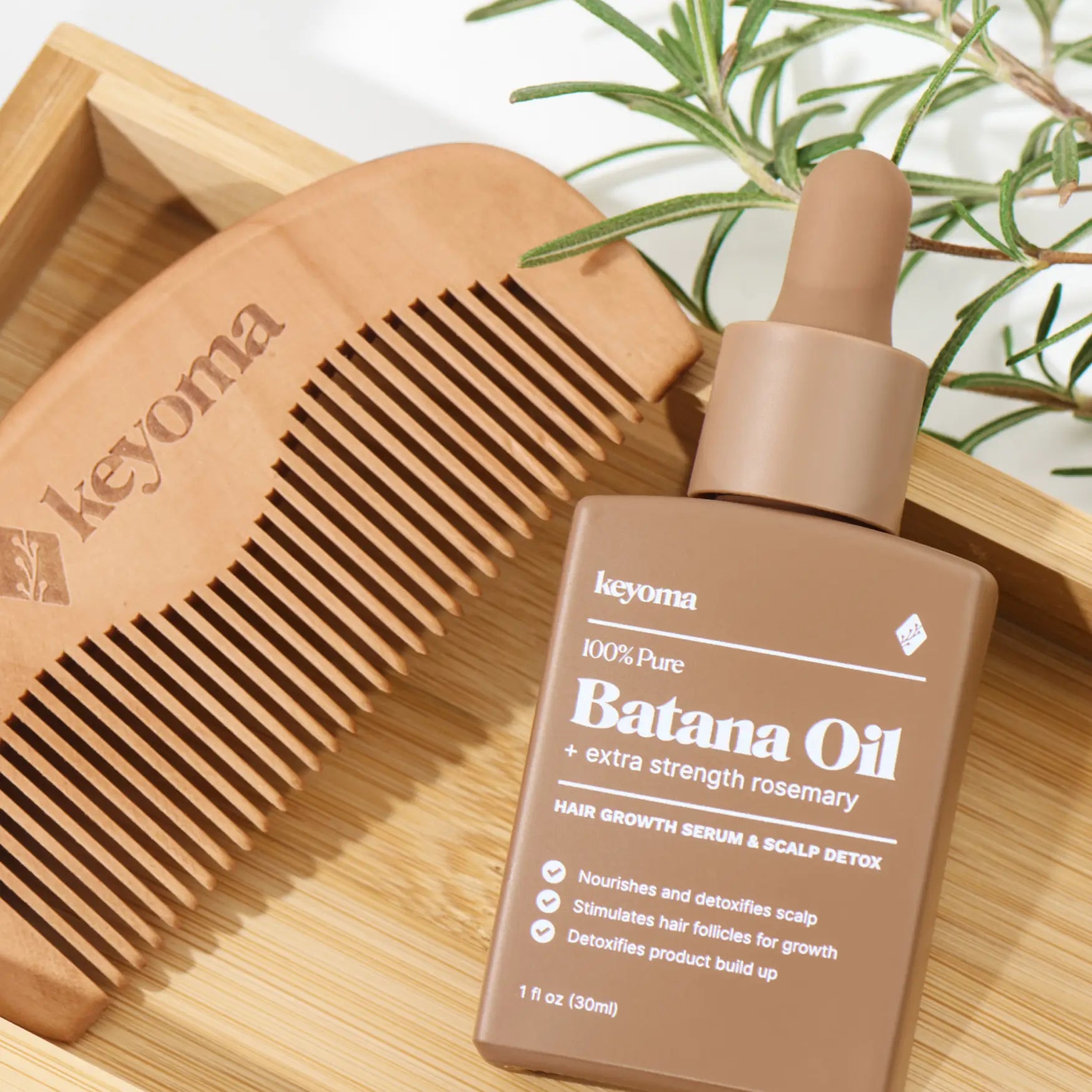
30% Off + 3 FREE Gifts
100% Pure Batana Oil + Rosemary
↓Best Batana Oil to Buy↓

1 Month
Subscribe & Save
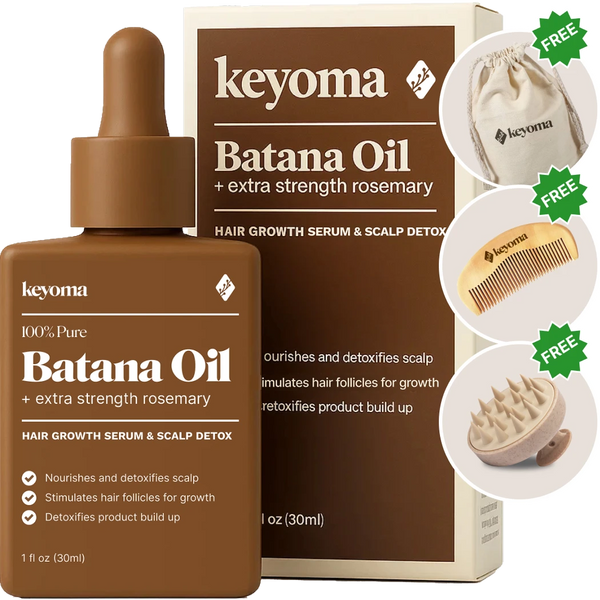


- 30-day supply delivered monthly $35
- 30% off for life $6
- Free haircare essentials kit $33
- Free custom wooden comb $10
- Free scalp massager $15
- Free eco-friendly travel bag $8
- 30-Day Money Back Guarantee
- Free Shipping
- Online portal for easy cancel, skip, or pause.
1 Month One Time Purchase
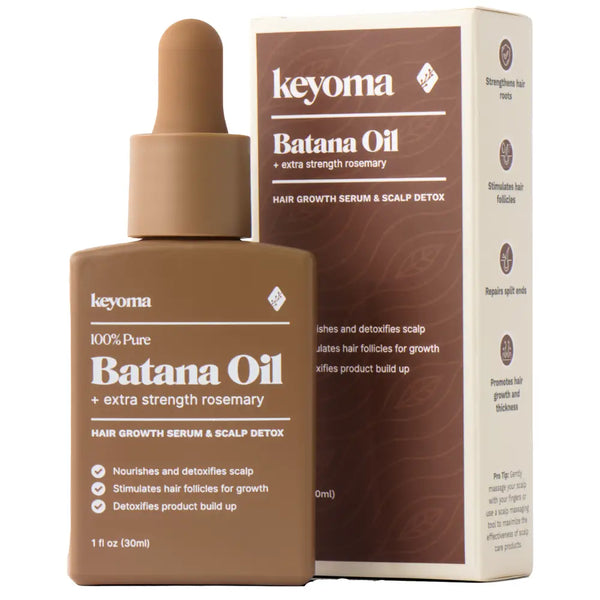
- 30-day supply $50
- 30% off for life $6
- Free haircare essentials kit $33
- Free custom wooden comb $10
- Free scalp massager $15
- Free eco-friendly travel bag $8
