

In this article
Rosemary essential oil is concentrated, so it should be diluted before you use it on your scalp. A safe blend lowers the chance of irritation, redness, itching, burning, or a sensitive scalp reaction.
For beginners, a 1% dilution is a good starting point for sensitive scalps. A 2% dilution may suit many adult scalps when tolerated well. These ratios are practical home-use estimates, not medical measurements, because drop size can vary by bottle and dropper.
Rosemary essential oil should be mixed into a carrier oil before it touches your scalp. After mixing, patch test the blend and use only a small amount at first. A pre-diluted rosemary hair oil is different from pure rosemary essential oil, so it can be a simpler choice if you want rosemary in your routine without measuring drops.
Key Takeaways
-
Rosemary essential oil should be diluted before scalp use.
-
A 1% blend is best for sensitive scalps.
-
A 2% blend may suit many adult scalps.
-
Patch test before applying rosemary oil widely.
Why Does Rosemary Oil Need to Be Diluted for Hair?
Rosemary essential oil needs dilution because essential oils are highly concentrated plant extracts. A few drops can contain a strong amount of aromatic compounds, which may irritate the scalp if applied directly.
We recommend mixing rosemary oil with a carrier oil, such as batana, coconut, or jojoba oil, to help prevent skin irritation. She also advises testing a small scalp area first, especially if you have fine hair or atopic dermatitis, and stopping use if irritation or side effects appear.
A carrier oil spreads rosemary essential oil across a larger amount of oil. That makes the blend easier to apply and less harsh on the skin. For hair, carrier oils also add slip, which can make scalp massage feel smoother and less scratchy.
If you are still comparing rosemary options, it helps to separate pure essential oil from ready-made hair oil. Pure rosemary essential oil must be diluted. A rosemary-infused or pre-diluted hair oil is already blended for topical use, though you should still patch test.
Can You Put Rosemary Oil Directly on Your Scalp?
You should not put undiluted rosemary essential oil directly on your scalp. A direct application can raise the risk of burning, redness, itching, irritation, and discomfort.
Medical News Today says rosemary oil should not be applied undiluted directly to the skin, and it should be mixed with a carrier oil before scalp massage. It also warns that essential oils may not be safe for everyone and can cause side effects, especially for people with skin sensitivities or skin conditions.
This does not mean rosemary oil is unsafe for every scalp. It means the format and strength matter. A diluted blend, used in a small amount, is much different from placing pure essential oil straight onto the scalp.
If your scalp is reactive, itchy, flaky, recently irritated, sunburned, or broken, be extra careful. A rosemary oil patch test is the safer first step before applying rosemary oil more widely.
What Is the Best Rosemary Oil Dilution Ratio for Hair?
The best rosemary oil dilution ratio for hair is usually 1% to 2% for adult scalp use. Start lower if your scalp is sensitive, your skin reacts easily, or you are new to essential oils.
The National Association for Holistic Aromatherapy lists dilution rates by drops per ounce of base oil and notes that dilution rates describe the amount of essential oil added to base oil. Its adult facial oil guidance includes 0.5% to 1% for sensitive skin and 1% to 2.5% for normal skin. Since the scalp can also be sensitive, a conservative 1% to 2% range is a practical beginner range.
|
Goal |
Approximate Dilution |
Best For |
Practical Use |
|
Very cautious blend |
1% |
Sensitive scalps, first use, patch testing |
Start here if you react easily |
|
Standard beginner blend |
2% |
Most adult scalps when tolerated |
Use only after patch testing |
|
Stronger blends |
Above 2% |
Not ideal for beginners |
Use only with professional guidance |
A higher ratio is not automatically better. More rosemary oil can increase the chance of irritation without guaranteeing better results. For scalp care, comfort and consistency matter more than making the blend stronger.
How Many Drops of Rosemary Oil Should You Use?
Drop counts are estimates because droppers vary. A thick oil, a narrow dropper, and a wide dropper can all create different drop sizes. Still, simple ranges can help you mix more safely at home.
For most beginners, keep the math easy:
|
Carrier Oil Amount |
Light 1% Blend |
Stronger 2% Blend |
|
1 teaspoon carrier oil |
About 1 drop |
About 2 drops |
|
1 tablespoon carrier oil |
About 2 to 3 drops |
About 5 to 6 drops |
If you are wondering how many drops of rosemary oil for hair is enough, start with the lowest useful amount. One teaspoon of carrier oil with 1 drop of rosemary essential oil is a safer test blend than jumping to a stronger mix.
For small scalp areas, you may not need a full tablespoon. Mix only what you will use soon, especially if you are new to essential oil blending. If you feel warmth, tingling that grows stronger, burning, or itching, rinse and stop.
Benefits of Rosemary Oil With Batana Oil
Rosemary oil with batana oil can make sense when your hair feels dry, rough, brittle, or textured. Batana oil is rich, so it can work as a carrier oil for people who want more softness and slip than a lighter oil gives.
This pairing should still be safety-led. Batana oil can dilute rosemary essential oil, but the rosemary still needs correct measuring. If you do not want to handle essential oil drops, Keyoma’s batana and rosemary hair oil is a simpler option because it removes the home-mixing step.
Helps Dilute Rosemary Oil
Batana oil can act as a carrier oil because it helps spread rosemary essential oil across a larger amount of oil. That matters because rosemary essential oil is too concentrated to use alone on the scalp.
If you prefer a rich carrier oil, pure batana oil can be used for dry or rough-feeling hair routines. Mix carefully, use a low rosemary ratio, and patch test before applying the blend across your scalp.
Supports Dry, Brittle Hair
Batana oil is best suited for hair that needs a richer feel. Dry, brittle, rough, or textured hair may tolerate it better than fine or oily hair.
Use it with realistic expectations. Batana oil can help strands feel softer and more nourished, but it does not permanently repair split ends or reverse medical hair loss. If dryness is your main concern, batana oil for dry hair can fit better than using a scalp-heavy oiling routine.
Makes Scalp Massage Easier
A diluted rosemary blend can support scalp massage because the carrier oil adds glide. That makes it easier to move your fingertips gently instead of dragging or scratching the scalp.
Keep the pressure light. Massage with the pads of your fingers, not your nails. For technique support, scalp massage techniques can help you keep the movement gentle and controlled.
Reduces DIY Guesswork
Mixing rosemary essential oil yourself requires measuring, patch testing, and watching for irritation. A ready-made rosemary and carrier oil blend can be easier for people who do not want to calculate drops.
A pre-diluted rosemary and batana oil option is not the same as buying pure rosemary essential oil. It is a more routine-friendly format, especially if you want rosemary benefits without mixing a fresh blend each time.
How to Use Diluted Rosemary Oil on Your Scalp
Diluted rosemary oil should be used slowly and carefully. Treat it like a scalp product, not a hair perfume or a styling oil for the full length.
Cleveland Clinic notes that rosemary oil should be worked into the scalp if the goal is scalp support, and warns that overusing it may lead to scalp irritation, redness, burning, damaged follicles, or inflammation. A small amount is enough for a first application.
Patch Test First
Patch test before full scalp use. Apply a small amount of diluted rosemary oil behind the ear, along the inner arm, or on a small scalp area. Wait at least 24 hours and watch for redness, burning, itching, swelling, bumps, or discomfort.
Do not skip this step if you have a sensitive scalp. Natural products can still cause reactions. A patch test does not guarantee you will never react, but it lowers the chance of applying an irritating blend everywhere at once.
Apply to the Scalp
Apply the diluted oil directly to the scalp in small sections. Use your fingertips or a dropper, but avoid flooding the scalp.
Focus on scalp areas where you want massage support. Avoid the eyes, mouth, and broken skin. If oil runs down your face or neck, you used too much.
Massage Gently
Massage gently for a few minutes with your fingertips. The goal is even distribution and scalp comfort, not aggressive rubbing.
A light massage can help the blend spread. It can also make the routine feel more relaxing. Avoid scratching, pressing hard, or using tools that irritate your scalp.
Leave On as Tolerated
Leave diluted rosemary oil on only as long as your scalp tolerates it. Some people prefer a short pre-wash treatment. Others leave a small amount on longer if the blend feels comfortable.
If your hair gets greasy fast, use rosemary oil before shampoo instead of as a leave-in. For timing help, when to oil hair before shampooing can help you choose a shorter contact window.
Rinse if Irritated
Rinse right away if your scalp burns, stings, swells, itches strongly, or stays red. Do not reapply the same blend to “push through” irritation.
If discomfort continues after rinsing, avoid rosemary oil and speak with a dermatologist or healthcare professional. Scalp pain, swelling, rash, or lasting irritation needs more caution than routine dryness.
Can You Add Rosemary Oil to Shampoo?
You can add rosemary essential oil to shampoo, but it should be done carefully. The safer approach is to mix a tiny amount into a single wash portion, not pour unmeasured essential oil into a full shampoo bottle.
Medical News Today suggests starting with five drops or less per ounce of shampoo when mixing rosemary oil into shampoo, while also warning that essential oils can cause side effects and may not be suitable for everyone. For beginners, an even more cautious method is to mix one drop into the shampoo amount in your palm, use it once, and watch how your scalp responds.
Do not add rosemary oil to a harsh shampoo and assume the oil makes it gentle. Shampoo still needs to suit your scalp. If your scalp is sensitive, choose a mild, fragrance-free base when possible. Cleveland Clinic also notes that fragrances can raise irritation risk when adding rosemary oil to products.
If you want a rosemary wash product but dislike DIY mixing, a formulated product may be easier than guessing. For more options, rosemary oil application methods can help you compare scalp oiling, shampoo use, and other formats.
Avoid Guesswork With Keyoma Batana Oil With Rosemary
Rosemary essential oil should always be diluted before scalp use. A 1% blend is a safer starting point for sensitive scalps, while 2% may work for many adult scalps after a patch test. Use about 1 to 2 drops in 1 teaspoon of carrier oil, or about 2 to 6 drops in 1 tablespoon, depending on your dilution goal.
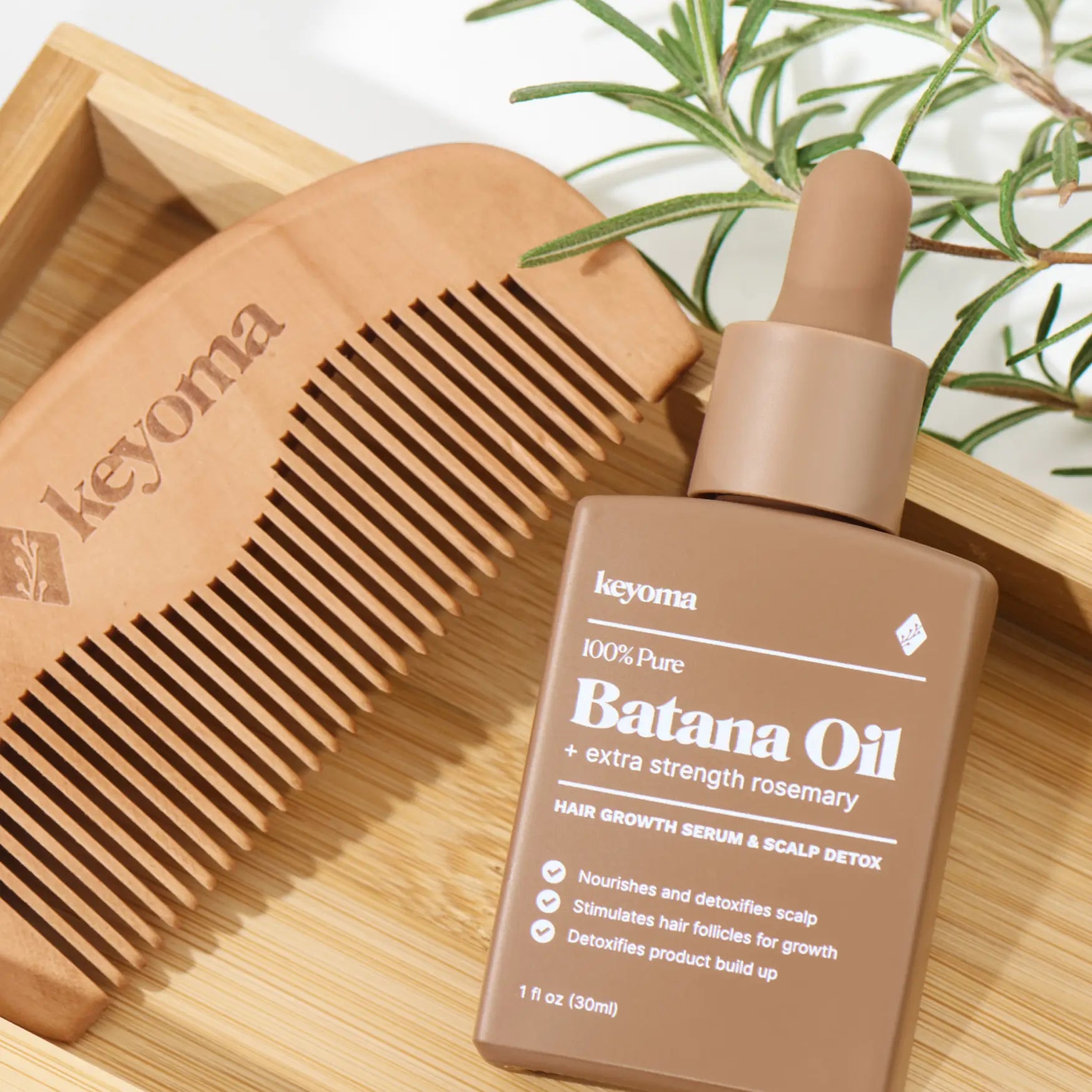
If measuring drops feels too complicated, Keyoma Batana Oil with Rosemary gives you a simpler way to add rosemary to your hair care routine without mixing essential oils yourself. Use it as a scalp and hair oil support step, apply a small amount first, and rinse if your scalp feels irritated. Keep the routine gentle, consistent, and focused on comfort rather than stronger DIY blends.
Featured Product
30% Off + 3 FREE Gifts
100% Pure Batana Oil + Rosemary


