

In this article
Hair that feels manageable when dry can suddenly stretch, snag, or break once it is wet. You may notice short pieces in your hands during shampooing, around the sink after detangling, or clinging to your towel. The water did not necessarily cause all that damage. More often, washing reveals weak areas that were already created by heat, chemical processing, split ends, friction, or repeated rough handling.
That distinction matters. If you only add another “repair” product without finding where the force occurs, the snapping may continue. Start by confirming that you are seeing breakage, then trace it to the exact part of your wash routine where the strand loses the fight.
Key Takeaways
-
Short pieces of different lengths usually point to breakage, while full-length strands released from the scalp may be shedding.
-
Wetness changes how hair stretches and handles tension, but existing damage and handling force often determine whether it snaps.
-
The safest detangling timing depends on your hair type. Straight hair and tightly curled hair should not automatically follow the same rule.
-
Conditioner, gentler handling, and light surface lubrication can limit further damage, but no cosmetic product can permanently reconnect a strand that has already broken.
First, Confirm That It Is Breakage
Breakage and shedding can happen on the same wash day, but they are not the same process. Breakage occurs somewhere along the hair shaft. Shedding releases an entire strand from the follicle as part of the hair cycle or for another underlying reason.
Look at the overall pattern instead of examining every strand. Short pieces in several lengths, rough ends, and fragments without an obvious root are more consistent with breakage. A full-length strand may have a small pale or translucent bulb at one end, which can indicate natural shedding. The bulb is not always easy to see, so its absence alone does not prove breakage.
|
What You Notice |
What It May Suggest |
|
Short pieces in different lengths |
Hair-shaft breakage |
|
Pieces without a visible root bulb |
Often breakage, though not definitive by itself |
|
Full-length strands released from the scalp |
Shedding may be involved |
|
A widening part, bald areas, or reduced density |
A concern beyond a damaged-hair routine |
If the evidence points to snapped lengths, use these ways to manage and prevent hair breakage to understand the broader problem. For now, stay focused on what happens while your hair is wet.
Why Hair Can Snap More Easily When Wet
Hair does not simply become “weak” the moment water touches it. Its physical behavior changes. Water enters the fiber, the shaft swells, and temporary bonds within the strand shift. Hydrated hair can extend differently under tension, which means a pull that seems harmless may travel through the strand before a damaged section gives way.
The outer cuticle also matters. A relatively smooth cuticle allows neighboring strands to move past each other more easily. When chemical treatments, heat, UV exposure, or everyday weathering have worn that surface, the raised or damaged areas create more friction. Wet strands catch against one another, tangles tighten, and the force from your fingers or comb becomes concentrated in a small area.
This is why water is often the reveal, not the original cause. A scientific review of hair-fiber structure, damage, and cosmetic care describes how water, chemical treatments, and mechanical forces affect the shaft. In practical terms, wet hair is most likely to snap when three factors overlap: an already vulnerable area, resistance between strands, and enough pulling force.
Find the Point Where the Snapping Starts

“My hair breaks on wash day” is still too broad to guide a useful change. Watch what happens at each stage. The location and timing of the breakage often tell you more than the number of products in your routine.
It Snaps While Shampooing
If the pieces appear before you reach for conditioner, look at how you cleanse. Piling the lengths on top of your head, scrubbing the strands against one another, or dragging your fingers through compacted tangles can turn shampooing into a high-friction step.
Concentrate your fingertips on the scalp. Let the cleanser and rinse water travel down the lengths instead of aggressively washing the ends as if they were fabric. If the hair is heavily tangled before the shower, separate obvious knots gently before saturating it rather than relying on shampoo to loosen them.
The goal is not to avoid cleansing. It is to remove buildup without adding unnecessary friction to the oldest and most weathered part of the strand.
It Snaps During Detangling
Detangling is where a small knot can become a breakage point. Starting at the roots pushes several tangles into one dense stop. Large sections make it harder to see where resistance begins. Continuing to pull after the hair bunches or stretches transfers more force to the weakest fibers.
Apply enough rinse-out conditioner to give the section slip, then divide the hair into manageable sections. Support each section above the tangle so the pulling force does not travel through the entire length. Begin at the ends and move upward only after the lower section releases easily.
Do not apply one detangling rule to every texture. The American Academy of Dermatology advises people with straight hair to let it dry somewhat before gently combing, while tightly curled or textured hair is generally easier to comb while damp. Its guidance on hair-care habits that can cause damage also emphasizes using conditioner and a wide-tooth comb. For curls and coils, damp, conditioned sections usually offer more control than waiting until the hair is completely dry.
It Snaps While Towel Drying or Styling
Hair that survives detangling can still break during drying. Rubbing with a bath towel, wringing the lengths, or twisting them tightly concentrates friction and tension. Pulling saturated hair into a firm ponytail or bun can do the same, especially around the hairline and wherever an elastic sits.
Gently squeeze out excess water. Blot or wrap the hair with an absorbent towel rather than rubbing it back and forth. Keep early styling loose, and avoid repeatedly rearranging wet hair while it dries. If you use heat, remove excess water first and choose the lowest effective setting. The AAD’s healthy hair tips for gentler drying and styling support minimizing rubbing and limiting heat exposure.
Look at What Happened Before the Breakage Began
The wash-day step tells you where the strand snapped. Your recent hair history may tell you why that section could no longer tolerate normal handling.
Breakage that begins after bleaching, highlights, relaxing, perming, or permanent color deserves special attention. These services alter the hair fiber, and overlapping a chemical onto previously processed hair can leave a distinct weak band. If pieces break around the same height rather than only at the ends, think about where the last service was applied.
An increase in flat ironing or blow-drying can also reduce the strand’s tolerance for wet handling. If that timing fits, compare what you see with the signs of heat-damaged hair and protective next steps before adding more high-temperature styling.
Breakage concentrated at the ends often reflects cumulative wear. The ends are the oldest part of your hair, so they have experienced the most washing, brushing, sun exposure, clothing friction, and heat. A recent change in your brush, towel, detangling tool, or styling tension may be the final stressor rather than the only cause.
Change one or two variables at a time. If you replace your conditioner, brush, drying technique, and styling routine all at once, you may reduce breakage but never learn which change made the meaningful difference.
Reset Your Routine for the Next Three Washes
You do not need a complicated recovery schedule to learn whether handling is part of the problem. Use the next three wash days as a controlled reset:
-
Pause bleach, relaxers, permanent color, and high-temperature tools on the affected hair.
-
Cleanse the scalp without piling up or scrubbing the lengths.
-
Apply conditioner as directed and give tangled areas enough slip before working through them.
-
Detangle in small sections, beginning at the ends and stopping when you meet firm resistance.
-
Squeeze or blot away water instead of rubbing or wringing the hair.
-
Keep wet styling loose and limit unnecessary touching while the hair dries.
-
Compare ordinary outcomes across the three washes instead of repeatedly stretching individual strands.
Useful progress looks like fewer short pieces in your hands, less resistance at the ends, fewer knots that require force, and a gradual decline in snapping. Avoid turning a stretch test into a daily check. Repeatedly pulling a vulnerable wet strand can create the very breakage you are trying to measure.
If the hair continues to snap under gentle handling, the problem may be less about technique and more about severely compromised sections that need a professional assessment or trim.
Choose Products by Their Job, Not the Repair Promise
Product labels often use the word “repair” broadly. A better approach is to ask what each formula can realistically do during a vulnerable part of your routine.
-
Rinse-out conditioner improves slip and helps reduce friction during detangling.
-
Leave-in conditioner can support manageability after washing when the formula suits your texture and does not create excessive buildup.
-
Strengthening or protein treatments may temporarily improve how some processed hair behaves, but snapping does not automatically prove that your hair “needs protein.”
-
Bond-building treatments may support certain types of chemically processed hair depending on the formula, but they should not be treated as a permanent reconstruction of broken strands.
-
Hair oil can lubricate a rough surface, improve softness, and reduce friction. It cannot reconnect split or snapped fibers, and it should not replace conditioner during detangling.
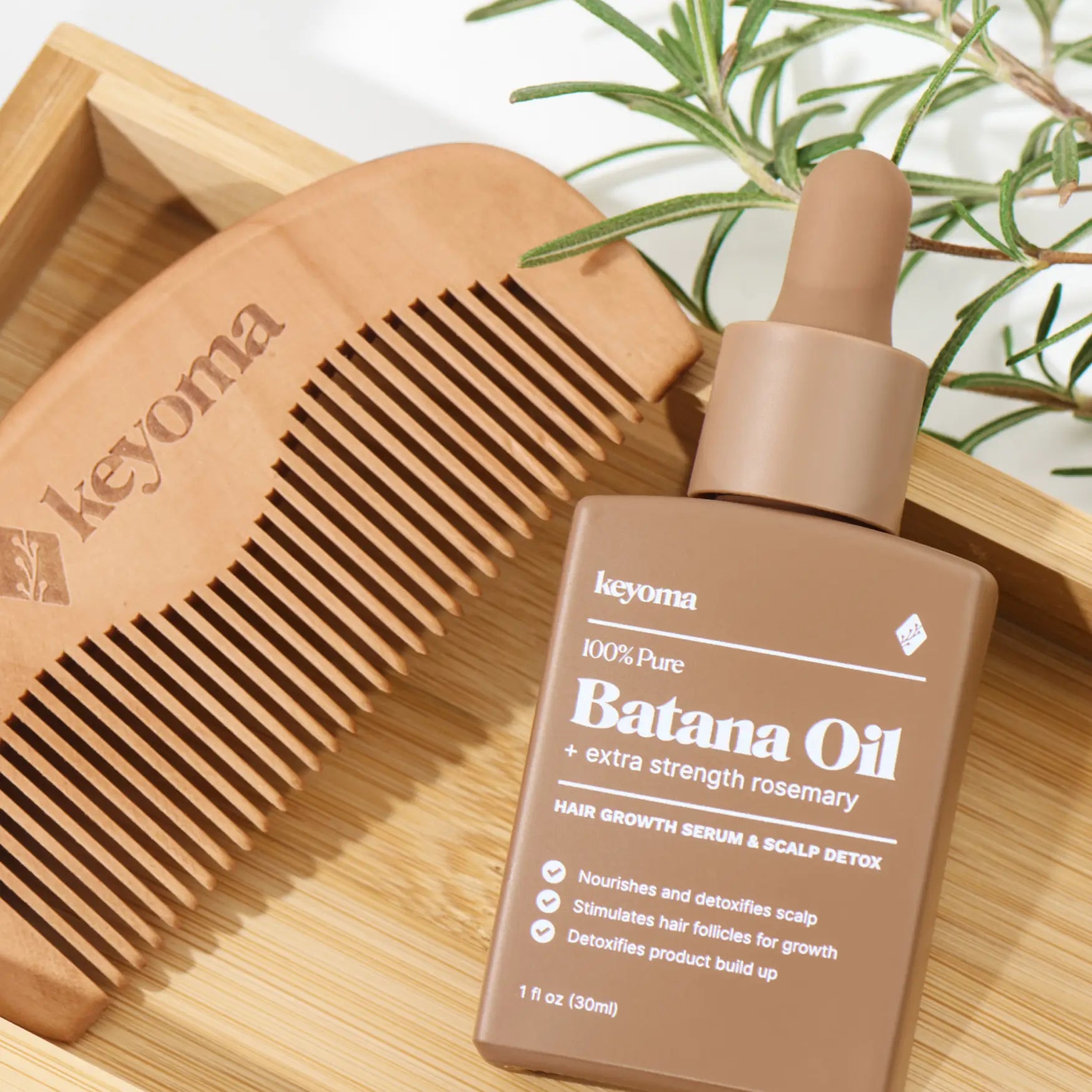
For rough, dry lengths, a small amount of Keyoma Pure Batana Oil with Rosemary can work as a finishing step after you remove excess water. Warm a small amount between your palms, smooth it lightly over the mid-lengths and ends, and add more only if your hair still feels rough. This gives the oil a clear job: supporting surface softness and reducing friction after washing.
Keep the application light. Coating severely compromised or gummy wet hair with a heavy layer can make its condition harder to assess, and oil alone will not stabilize a section that is already splitting or stretching excessively.
Know When a Trim or Professional Assessment Is Smarter
Gentle care can preserve the length that remains, but it cannot make every damaged end worth keeping. A trim may be the more practical choice when translucent, split, stringy, or severely rough ends repeatedly knot and then snap above the damaged area. Holding onto unstable ends can create more tangling farther up the shaft.
An experienced stylist or colorist can help identify a safe trim point when breakage is uneven or follows bleach, a relaxer, a perm, or corrective color. They can also assess whether another chemical service should be delayed.
See a dermatologist when the pattern does not look like simple shaft breakage. Sudden density loss, bald patches, a widening part, scalp pain, burning, sores, inflammation, or large numbers of full-length strands coming from the root warrant a different kind of evaluation.
Protect Weak Hair Before the Next Wash Day
When hair snaps while wet, the most useful first move is not adding the strongest treatment you can find. Confirm that the pieces are broken lengths, identify the exact moment they snap, and remove force from that step. Then pause the likely source of damage and give the remaining hair more slip, support, and time.
Conditioner and careful handling do the essential work during detangling. A light finishing layer of batana oil can support softness and reduce surface friction once excess water is gone. If the same sections keep breaking despite those changes, a trim or professional assessment will protect more of your length than repeatedly forcing damaged ends through another wash day.
Frequently Asked Questions
Is it normal for some hair to break when wet?
Occasional breakage can happen, especially at old or split ends. Repeated snapping during gentle handling suggests that your technique, recent damage, or the condition of the strand needs attention.
Does hair snapping when wet mean it needs protein?
Hair snapping when wet does not automatically prove a protein deficiency. Consider chemical history, heat exposure, stiffness, buildup, and how the hair responds to conditioner before adding a strengthening treatment.
Should I brush my hair when it is wet?
The safest timing depends partly on your hair type. Straight hair may be easier to comb after partial drying, while curly or coily hair is often best detangled while damp, conditioned, and divided into sections.
Can damaged hair be repaired without cutting it?
Products can improve slip, softness, and manageability and help limit additional breakage. They cannot permanently reconnect a strand that has already split or snapped, so severely unstable ends may need trimming.
Why does my hair snap during conditioning?
Hair may snap during conditioning when tangles are pulled apart with too much force, the sections are too large, or the fibers were already weakened by chemicals, heat, or weathering. Conditioner adds slip, but it cannot make severely damaged hair tolerate unlimited tension.
Featured Product
30% Off + 3 FREE Gifts
100% Pure Batana Oil + Rosemary


