

In this article
Apply hair oil after a sauna if you plan to use it on your scalp. By waiting until your scalp has cooled and you have rinsed away the sweat, you avoid layering oil over salt, sebum, and product residue.
Applying oil before a sauna can work when your mid-lengths and ends feel dry. In that case, use a small amount and treat it as a pre-shampoo step rather than a scalp treatment. You should plan to wash your hair afterward.
The right timing depends on where you apply the oil, whether you will wash your hair, and how your scalp reacts to heat and sweat.
Key Takeaways
-
Applying scalp oil after the sauna helps you avoid mixing it with sweat and existing buildup.
-
A small amount of oil before the sauna may help dry lengths feel softer when you shampoo afterward.
-
Fine, oily, or buildup-prone hair usually needs less oil or a separate oiling session.
-
Hair oil does not make sauna heat harmless or turn the sauna into a hair treatment.
Should You Apply Hair Oil Before or After a Sauna?
For most people, after the sauna is the better time to apply oil to the scalp. Let your body and scalp cool, rinse or wash away the sweat, and then follow your usual oiling routine.
Before-sauna oiling is more useful when you want to coat dry mid-lengths and ends before washing. The goal is not to help the heat push oil deeper into your hair. It is simply a controlled pre-shampoo step that may reduce the rough or stripped feeling some people notice after cleansing.
You may also decide to skip oil around the session. This can be the better choice when your scalp is already oily, itchy, irritated, or covered with styling products.
The decision becomes easier when you separate scalp oiling from oiling the hair shaft. Your scalp produces sebum naturally, while your lengths depend on the products you apply and the oil that travels down from the roots. These areas may need different treatment during a sauna routine.
Choose the Timing Based on Where You Apply the Oil
Applying oil to your roots and applying it to your ends are not interchangeable steps. One affects the scalp environment, while the other changes how the hair shaft feels and behaves.
Apply Scalp Oil After the Sauna
Sweating can leave salt, sebum, and product residue around your roots. Applying more oil before you remove that layer may make the scalp feel coated, especially if your hair is fine or your scalp becomes oily quickly.
The sebaceous glands connected to hair follicles produce sebum, while sweat comes from a separate system of glands. Although oil and sweat are different substances, they can collect together with dead skin and styling residue at the scalp.
A practical post-sauna sequence looks like this:
-
Leave the sauna and allow your scalp to cool.
-
Rinse or gently shampoo your hair based on the amount of sweat and residue.
-
Dry your scalp instead of leaving it dripping wet.
-
Apply your usual amount of scalp oil according to its directions.
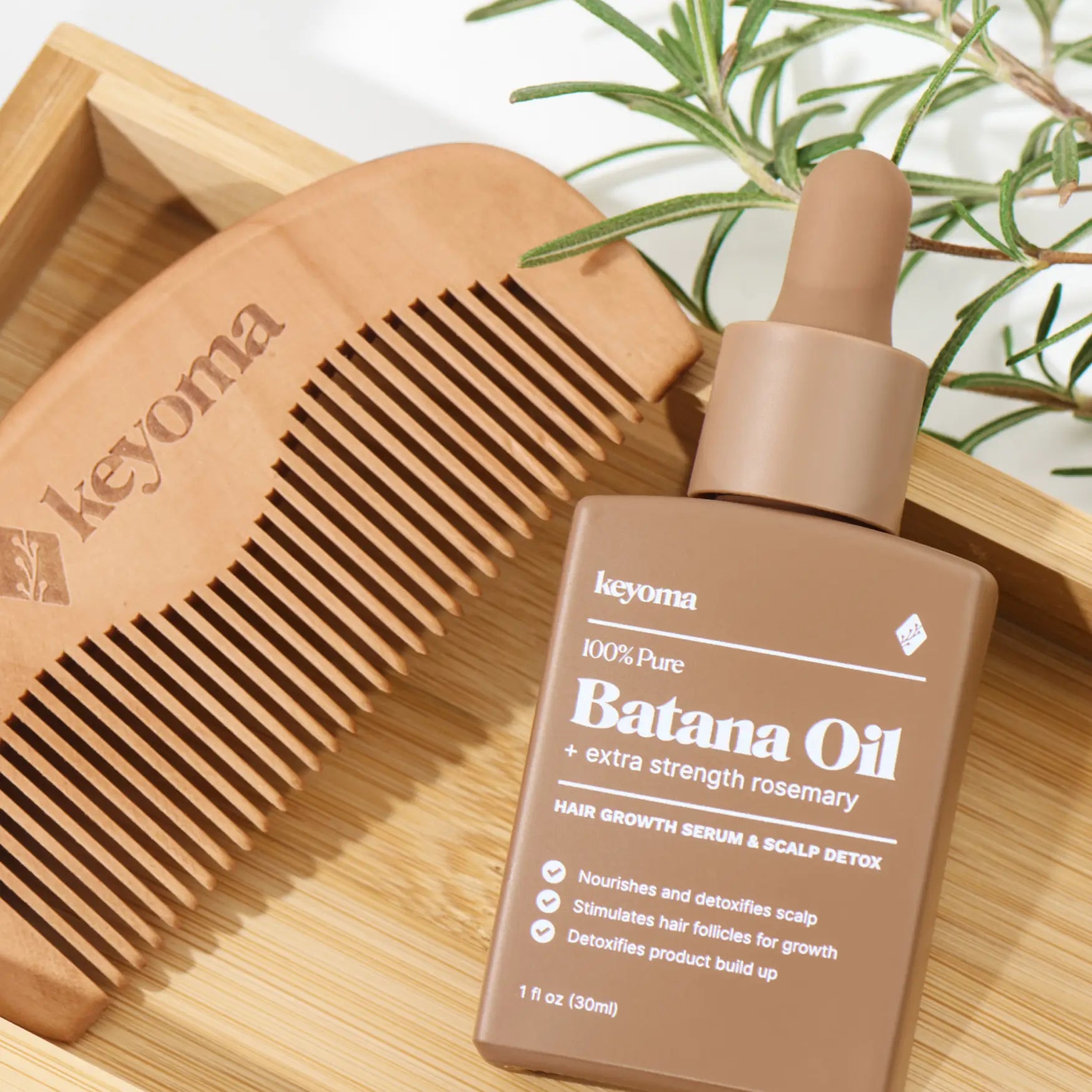
This is the best place to include Keyoma Batana Oil with Rosemary in your routine. Apply it after the scalp has cooled and been cleansed as needed, then give the oil its normal contact time rather than relying on sauna heat.
Using the sauna and oil as two separate steps also makes it easier to tell how your scalp responds. If discomfort develops, you will have fewer overlapping factors to sort through.
Apply a Small Amount to Dry Lengths Before the Sauna
Pre-sauna oiling can make sense when the ends feel dry and you plan to shampoo immediately afterward. Apply a thin layer from the mid-lengths down, concentrating on the driest areas.
Do not soak the hair. Heavy application may require repeated shampooing, which can work against the softness you wanted to preserve.
Keep the oil away from your roots if your scalp becomes oily easily. You can then secure long hair in a loose braid or bun to limit tangling without pulling tightly at the hairline.
After the session, shampoo the scalp and let the lather move through the lengths. Follow with conditioner if the ends still feel rough. If your hair remains greasy or requires a second wash, reduce the amount of oil during your next session.
Use This Sauna Hair-Care Decision Guide
Your scalp type, hair texture, and wash schedule matter more than a universal rule.
|
Situation |
Better Timing |
Why It May Work Better |
|
Oily or buildup-prone scalp |
After cleansing |
Avoids adding oil over sweat, sebum, and residue |
|
Dry mid-lengths and ends |
Before, if washing afterward |
Creates a controlled pre-shampoo step |
|
Fine hair that becomes flat easily |
After, using very little |
Gives you better control over placement and amount |
|
Thick, curly, or coily hair |
Before on the lengths or after on dry ends |
Lets you target dryness without coating the entire scalp |
|
Sensitive or irritated scalp |
Skip oil until the scalp feels calm |
Heat and fragranced products may increase discomfort |
|
No plan to wash after the sauna |
After or on another day |
Reduces the chance of leaving sweat trapped under a heavy layer |
|
Frequent sauna use |
Separate oiling from some sessions |
Helps prevent repeated buildup |
Treat these as starting points rather than fixed rules. Two people with similar curl patterns can have very different scalp oil levels, product routines, and responses to heat.
Follow a Simple Before-and-After Sauna Routine
You do not need to turn every sauna visit into a full hair-care treatment. A few intentional steps can make the routine easier to repeat.
Before Entering the Sauna
Detangle your hair gently before the session. Trying to remove knots once the hair is sweaty may create more pulling and friction.
Remove tight hair ties and avoid styles that place constant pressure along the hairline. If you need to secure long hair, use a loose braid, bun, or soft tie.
Decide in advance whether you plan to shampoo afterward. If the answer is no, skip a heavy pre-sauna oil treatment. If you will shampoo, you can apply a small amount to dry-prone lengths while leaving the scalp alone.
You should also check the facility’s rules. Some public saunas do not permit oils because they can transfer onto benches and other surfaces.
During the Session
Keep your hair loosely secured and avoid repeatedly twisting or pulling it. Hair that is damp with sweat may be more difficult to handle without creating tangles.
Follow the sauna facility’s guidance for temperature, session length, cooling, and hydration. Hair oil does not protect your body or scalp from excessive heat. Leave the sauna if you feel dizzy, weak, nauseated, confused, or unwell. The National Weather Service advises acting quickly when symptoms of heat illness appear.
Do not add more oil while you are inside the sauna. More product will not create more protection, and it may make the eventual cleansing step harder.
After the Sauna
Let yourself cool down before starting your post-sauna hair routine. If the scalp feels salty, oily, or uncomfortable, rinse it thoroughly or wash it with a gentle shampoo.
Condition the lengths after shampooing, particularly when the hair is curly, color-treated, or already prone to dryness. Blot away excess water instead of rubbing the hair roughly with a towel.
Apply scalp oil only once the scalp has reached the level of dryness recommended for the product. If you use a finishing oil on the ends, start with a trace amount and add more only when needed.
Adjust the Routine to Your Hair and Scalp
A routine that works after an occasional sauna visit may become too heavy if you use a sauna several times each week. Watch how your roots and ends respond instead of increasing the amount of oil automatically.
If Your Scalp Becomes Oily Quickly
Rinse or cleanse the scalp after the sauna before adding any oil. If the roots still look flat or feel coated after washing, move your scalp-oiling routine to a different day.
You can also reduce the amount and apply it only to areas that tend to feel dry. A full-scalp application is not required every time you use oil.
This matters because scalp condition can influence hair quality and comfort, but a healthy scalp does not depend on covering it in oil after every exposure to sweat. A review of scalp health research emphasizes maintaining a balanced scalp environment rather than relying on a single cosmetic step to address every concern (International Journal of Cosmetic Science).
If Your Ends Feel Dry After Every Session
Run a simple comparison across two sauna visits.
During the first visit, apply a small amount of oil to your ends before entering, then shampoo and condition afterward. During the second visit, skip the pre-sauna oil and apply conditioner after washing, followed by a trace of oil once the ends are mostly dry.
Compare softness, tangling, heaviness, and how easily the hair cleanses. This can show whether your hair benefits more from pre-shampoo oil, post-wash conditioning, or a combination of both.
If the ends still feel rough after you apply more oil, dryness may not be the only issue. Split or weathered ends cannot be permanently repaired by coating them, so a trim may provide a cleaner result than continued product layering.
If Your Hair Is Color-Treated or Already Fragile
Handle the hair gently before and after the session. Avoid tight styles, aggressive detangling, and unnecessary additional heat on the same day.
Use conditioner after cleansing and detangle with enough slip. Start at the ends and move upward rather than pulling a brush from the roots through every knot.
Oil can improve softness and reduce friction, but it should not serve as your only protection plan. Shorter sessions, gentle cleansing, careful handling, and less direct styling heat may make a greater difference than applying a heavier layer of oil.
Watch for Signs That the Timing Is Not Working
Your routine should leave your scalp comfortable and your hair manageable. Adjust it if you notice that:
-
Your roots still feel greasy immediately after washing.
-
You need multiple shampoos to remove the oil.
-
Your scalp becomes itchy, tender, or unusually coated.
-
Fine hair looks flat or separates into oily sections.
-
Your ends remain rough even as you use more oil.
Start by reducing the amount rather than replacing the entire routine. You can also keep oil off the scalp, apply it only to the ends, or move oiling to a non-sauna day.
Stop applying products to an irritated scalp until it settles. Persistent itching, sores, marked flaking, pain, or sudden hair loss deserves guidance from a qualified healthcare professional rather than repeated experimentation with oil.
Build a Lighter Sauna Hair Routine
Use post-sauna oiling as the default when your goal is scalp care. Cool down, remove sweat and residue as needed, and apply a measured amount to a clean scalp.
Reserve pre-sauna oil for dry mid-lengths and ends when you plan to wash afterward. This keeps the step focused and prevents a simple sauna session from becoming an unnecessarily heavy treatment.
If you want to add oil after your next session, apply Keyoma Batana Oil with Rosemary once your scalp is cool and ready for your regular oiling routine.
Frequently Asked Questions
Should I oil my hair before going into a sauna?
You can oil your hair before going into a sauna if you apply a small amount to dry mid-lengths and ends and plan to shampoo afterward. Avoid heavily coating the scalp because the oil can mix with sweat, sebum, and product residue.
Is it better to oil the scalp after a sauna?
It is generally better to oil the scalp after a sauna once you have cooled down and rinsed away the sweat. This timing gives you more control over the amount and reduces unnecessary layering at the roots.
Do I need to wash my hair after a sauna?
You may need to wash your hair after a sauna if your scalp feels oily, itchy, salty, or coated. A thorough rinse may be enough when you used no styling products and your scalp still feels comfortable.
Can sauna heat help hair oil penetrate better?
Sauna heat should not be used as a method for making hair oil penetrate better. Different oils interact with the hair shaft differently, and a hot environment does not automatically make an oil more effective.
Can I use hair oil after every sauna session?
You can use hair oil after every sauna session if your scalp and hair remain comfortable, but frequent use may cause heaviness or buildup. Reduce the amount or move some oiling sessions to non-sauna days if your roots become greasy.
Featured Product
30% Off + 3 FREE Gifts
100% Pure Batana Oil + Rosemary


