

In this article
A tapered cut can include exposed scalp, close stubble, a clipped transition, and longer curls within a small area. Applying the same amount of oil everywhere can leave the shaved sides greasy while the longer top still feels dry.
You can use batana oil on a tapered cut, but placement matters more than full-head coverage. Divide your style into three zones and give each one a different amount. Most of the oil should go on the longer curls, coils, or ends. Freshly shaved or irritated skin may need no oil at all.
Key Takeaways
-
Divide tapered cuts into shaved, transition, and longer-hair application zones.
-
Keep rich oil away from freshly shaved, irritated, or broken skin.
-
Start with fingertip residue before adding oil to exposed scalp areas.
-
Concentrate most of your application on longer curls and dry ends.
Can You Use Batana Oil on Shaved Hair?
Yes, but “shaved hair” can describe several different lengths. You may have smooth skin from a razor, short stubble, clipper-cut sides, or a fade that gradually connects to a longer top.
These areas do not have the same conditioning needs.
Longer strands have enough surface area for oil to coat. A smooth or closely shaved section is mostly exposed skin. Applying several drops directly to that area may create visible residue without providing the same benefit it would give dry hair.
Batana oil can temporarily improve softness, shine, and manageability on existing strands. It does not make shaved hair grow back faster or treat razor bumps, folliculitis, irritation, or unexplained hair loss. Current evidence does not establish batana oil as a proven hair-growth treatment, according to WebMD’s review of batana oil.
The practical goal is to condition the hair that is present without overloading the exposed scalp.
Divide Your Tapered Cut Into Three Application Zones

Before opening the bottle, look at your haircut as three separate zones. This takes only a few seconds and helps prevent one heavy application from spreading across the entire style.
Zone 1: Shaved or Exposed Scalp
A smoothly shaved area should be treated as skin rather than as longer hair.
Check the skin before applying anything. If you see cuts, active razor burn, swelling, painful bumps, or broken skin, skip the oil. Applying a rich product over irritated skin may increase discomfort or trap more residue around the follicles.
If the skin is calm and the product directions allow scalp use, begin with the trace left on your fingertips after treating the longer hair. Do not place drops directly on the shaved area.
Spread that light residue over a small section and watch for redness, itching, or burning. Stop using the product on the area if irritation develops. The American Academy of Dermatology also recommends testing new skin care products before wider use when you are concerned about a reaction.
Exposed scalp also needs sun protection. Hair oil is not sunscreen and should not be treated as a substitute for a broad-spectrum SPF product or protective headwear.
Zone 2: The Clipped Transition Area
The transition zone sits between the shaved sides and longer top. It may include a low fade, temple fade, tapered neckline, or gradually increasing clipper lengths.
This zone has hair, but the strands are too short to hold much oil. A direct drop can spread across several inches and make a clean fade look dark, patchy, or wet.
Rub the oil between your hands first. After applying it to the longer sections, press nearly dry fingertips over any rough part of the transition. Avoid sweeping your palm across the side of your head.
Check the result in natural light. If the fade looks darker or shinier than usual, do not add more.
Zone 3: Longer Curls, Coils, or Ends
The longer top usually needs most of the application. These strands have more surface area, and their ends may feel rough even when they sit close to the scalp.
Start with the driest section rather than the roots. Spread a small amount across your fingers, then lightly pinch, smooth, or scrunch it into the ends. Work through one section before moving to another.
Avoid pressing an oily palm over the top of the style. That places too much product near the roots and may reduce volume.
Dense, coarse, or tightly coiled hair may accept more oil than a fine or loosely curled top. Add it in small stages instead of choosing an amount based only on hair length.
How to Apply Batana Oil Without Blurring the Taper
A clean taper depends on contrast. The sides should remain neat while the longer section keeps its shape and texture. A controlled application preserves that contrast.
Follow this routine:
-
Start with clean, dry, or slightly damp hair.
-
Check the shaved areas for cuts, tenderness, or active bumps.
-
Dispense the smallest amount you can control.
-
Rub it across your fingers until your hands look conditioned, not wet.
-
Apply it to the longer top and driest ends first.
-
Use only the remaining fingertip residue on clipped areas if needed.
-
Leave freshly shaved or irritated skin untreated.
-
Wait several minutes before deciding whether to add more.
There is no universal number of drops for every tapered cut. The dispenser, oil thickness, hair density, strand diameter, styling products, and length of the top all change how far one drop spreads.
Use an amount ladder instead:
-
Shaved or closely clipped areas: No direct application or fingertip residue only
-
Short or fine top: One small, controlled amount
-
Dense or coarse curls: A second trace applied only where dryness remains
-
Pre-wash treatment: A larger but unsaturated amount that will be shampooed out
If your entire cut has a similar short length, the broader guide to using hair oil on short hair explains how to adjust the amount based on texture and strand thickness. A tapered cut needs a more divided approach because the exposed sides and longer top behave differently.
Adjust Your Routine Around Haircut and Shave Days

Your oiling routine should change as the haircut grows. A fade that exposes skin on haircut day may contain enough hair for light conditioning two weeks later.
On a Fresh Haircut Day
Remove loose clipped hairs before applying styling products. Small pieces of cut hair can mix with oil and collect along the hairline, neck, or behind the ears.
Inspect the scalp for nicks and irritated patches. Do not apply batana oil over broken or tender skin. Follow your barber’s aftercare instructions if the area was shaved closely.
Avoid layering several fragranced or active products on newly shaved skin. If you use an aftershave or scalp moisturizer, give the skin time to settle before deciding whether another product is needed.
Freshly shaved skin may feel tight, but that does not mean it needs a rich hair oil. Choose care based on the condition of the skin rather than the appearance of the haircut.
Between Haircuts
Recheck the zones as the sides grow. Clipped areas may begin to feel rough or dry once there is more strand length to coat.
Increase the amount only where the hair now needs it. Do not continue treating the sides as fully shaved if visible hair has grown back. At the same time, avoid moving directly from fingertip residue to several drops.
Watch the line where the longer top meets the fade. Oil, styling cream, and pomade often collect in this area because products move downward during application.
Before Washing
If batana oil makes the longer top look flat as a leave-in finish, move it to the pre-wash stage.
Apply a controlled amount to the longer curls and dry ends before shampooing. Give the oil enough time to spread across the strands, then wash it out according to your normal routine. The hair does not need to look saturated.
A pre-wash approach lets you use a richer oil without carrying its full weight into the finished style.
How to Prevent Greasy Sides and a Flat Top
Tapered cuts show excess oil quickly. There is little hair on the sides to absorb or disguise an uneven application.
Common mistakes include:
-
Dropping oil directly onto exposed scalp
-
Using the same amount on every section
-
Pressing a wet palm over the whole haircut
-
Adding more before the first amount settles
-
Applying oil over layers of pomade, gel, or edge control
-
Treating visible shine as proof of hydration
-
Using oil to manage persistent bumps or flaking
If the sides look greasy, blot them gently with a clean, absorbent cloth. Avoid rubbing, which can spread the oil farther across the scalp.
Restyle the longer top with clean fingers. If the hair still feels coated or collapses at the roots, shampooing may be the most effective correction.
The next time, begin with less product and apply it farther from the roots. Oil is easier to add than remove.
When You Should Skip Scalp Oiling
A cosmetic oil is not the right response to every scalp concern. Skip application on areas with:
-
Fresh cuts or abrasions
-
Active razor burn
-
Painful or pus-filled bumps
-
Unexplained redness or swelling
-
A known sensitivity to an ingredient
-
An active scalp condition with separate care instructions
Folliculitis can involve inflamed or infected hair follicles. Dermatology guidance recommends avoiding shaving and potentially occlusive products when this condition is active. Oil should not be used to diagnose or treat these bumps. See DermNet’s folliculitis guidance for more information.
Seek professional care if symptoms persist, spread, become painful, or show signs of infection.
Try a More Controlled Batana Oil Routine
The best way to use batana oil on a tapered cut is not to coat every visible area. Give each zone only what it needs.
Start with the longer curls and dry ends. Use less on the clipped transition, and leave freshly shaved or irritated skin alone. As the sides grow, reassess the amount instead of following one fixed routine.
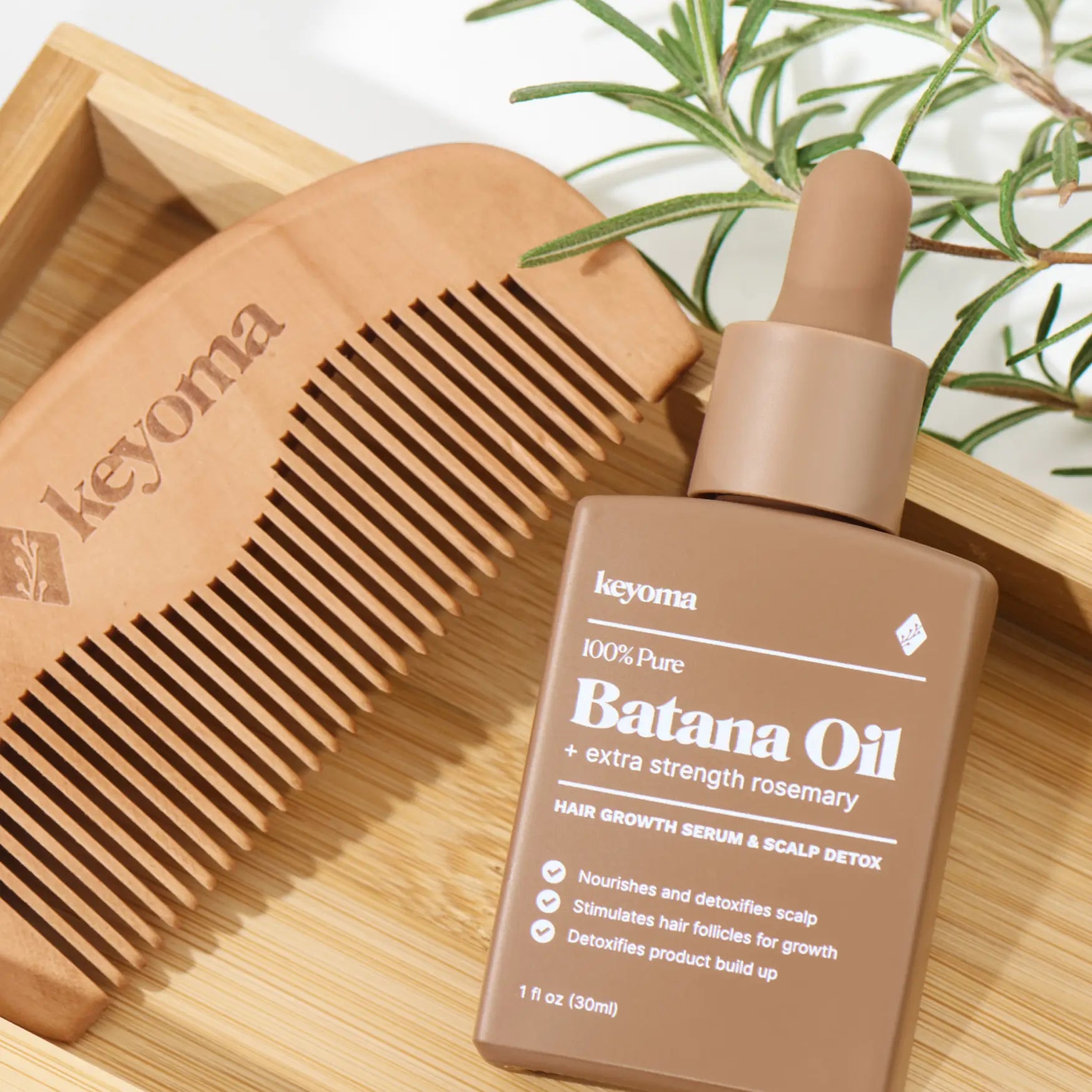
Keyoma Batana Oil with Rosemary can fit into this zone-based approach when used according to its directions. Warm a controlled amount between your fingertips, apply it where the strands need softness and shine, and let the clean shape of your taper remain visible.
Frequently Asked Questions
Can I apply batana oil immediately after shaving my head?
Skip batana oil if the skin feels tender, cut, inflamed, or irritated after shaving. Wait until the area feels calm and follow any aftercare instructions provided by your barber or dermatologist. When you resume use, test a small area before applying it more broadly.
How much oil should I use on shaved sides?
Begin with no direct application. If the skin is calm and the product is suitable for scalp use, try only the light residue left on clean fingertips. The shaved sides should not look wet or heavily coated.
Will batana oil make shaved hair grow faster?
There is no reliable evidence that batana oil makes shaved hair grow faster. It can support temporary softness, shine, and manageability on existing strands, but it should not be presented as a hair-growth treatment.
Can batana oil help with razor bumps?
Batana oil is not a treatment for razor bumps. Avoid applying it over painful, inflamed, or pus-filled bumps. Persistent or worsening symptoms need appropriate evaluation rather than heavier oiling.
Should I oil the shaved sides or only the longer top?
Prioritize the longer top, dry curls, and rough ends. Apply anything to the shaved sides only when the skin is calm, the product directions allow scalp use, and a small test does not cause irritation.
How often should I oil a tapered cut?
Base the frequency on dryness, buildup, your wash schedule, styling products, and the changing length of each zone. Reduce the frequency if the sides look greasy, the roots lose volume, or residue remains between washes.
Featured Product
30% Off + 3 FREE Gifts
100% Pure Batana Oil + Rosemary


