

In this article
Dry ends can start looking rough or frizzy before your scalp is ready for another wash. A full oiling routine is unnecessary in this situation. You can use one drop of batana oil as a targeted finishing layer instead.
Warm the drop between your palms, then press the lightest remaining layer onto the last few inches of dry hair. Keep the oil away from your scalp and wait before deciding whether your ends need more.
This small-step approach can improve softness and shine without making your roots greasy or leaving your hair coated.
Key Takeaways
-
Start with one drop to refresh dry ends without coating the surrounding hair.
-
Warming oil between your palms helps prevent concentrated, greasy-looking patches.
-
Apply oil only where your ends feel rough, dull, or frizzy.
-
Stringy or coated ends usually signal that you applied too much oil.
Can You Use Batana Oil on Dry Ends Between Washes?
You can apply a small amount of batana oil to dry ends between wash days. The goal is to smooth the surface and reduce the rough feeling that develops as hair rubs against clothing, bedding, and itself.
This method is different from applying oil before shampooing. It is also different from a scalp treatment. You are not saturating the hair or preparing to rinse the oil away. You are leaving behind a thin finishing layer, so the amount matters.
The Cleveland Clinic’s hair-oiling guidance recommends starting with a small amount and notes that oil affects hair types differently. Dry, coarse, or tightly curled hair may tolerate oil well, while fine or straight hair can become weighed down faster.
Oil can help the ends look smoother and feel softer, but it does not permanently repair damage. It may temporarily improve the appearance of split ends, but it cannot join a divided strand back together.
Check Whether Your Ends Need Oil or Moisture
Dry-looking hair does not always need more oil. First, look at how your ends feel and what products are already on them.
A small amount of oil may help when the ends look dull, fuzzy, or slightly rough but still feel flexible. It can also help when strands catch against one another or lose their polished appearance a day or two after styling.
Oil is less helpful when the hair feels stiff, brittle, or coated. Those signs may point to a lack of conditioning, accumulated product, continuing damage, or split ends that need trimming.
Moisture and oil play different roles. Conditioner and leave-in products improve softness, slip, and manageability. Oil creates a light surface layer that can smooth the hair and slow moisture loss. Adding more oil will not correct an under-conditioned strand.
If your hair feels dry immediately after every wash, review your shampoo, conditioner, heat habits, and handling before layering on more oil.
How to Apply One Drop of Batana Oil to Dry Ends

The best between-wash application gives you control over the amount and placement. Pouring oil directly onto your hair makes both harder to manage.
Start With Dry, Gently Detangled Hair
Separate your ends with your fingers or a wide-tooth comb. Work from the bottom upward if you need to remove tangles.
Look for the specific areas that appear rough or frizzy. Your entire length may not need oil simply because the last inch feels dry.
Avoid pulling through knots or brushing aggressively. The American Academy of Dermatology recommends gentle handling because repeated tugging and friction can contribute to breakage.
Place One Drop in Your Palm
Begin with one drop of batana oil. Fine, short, or straight hair may need less, so you can touch the drop lightly and use only part of it.
Do not place the drop directly onto one section of hair. This can create a dark or greasy patch that is difficult to distribute without spreading oil farther up the length.
Thick, dense, curly, or coily hair may need more than one drop. Still, apply the first drop before increasing the amount.
Spread the Oil Across Both Hands
Rub your palms and fingertips together until the oil forms a thin film. The drop should no longer sit visibly in one place.
This step prevents a small group of strands from absorbing most of the product. It also lets you apply the oil with the lightest part of your hands rather than pressing a concentrated drop onto the ends.
If your hair becomes greasy easily, rub your hands together longer and use the residue left on them.
Press the Oil Into the Last Few Inches
Start at the oldest and driest tips. Lightly press or smooth the oil over the last few inches rather than dragging your hands from the roots downward.
For straight or wavy hair, glide your palms lightly over the ends. For curly or coily hair, press or scrunch individual sections to preserve the curl pattern.
Keep the product below the mid-lengths unless you can see dryness higher on the strand. Do not move leftover oil onto your scalp. If you have an oily scalp with dry ends, treating the two areas separately helps prevent flat roots and coated hair.
Wait Before Adding More
Give the oil several minutes to settle before assessing the result. The ends should feel smoother while remaining light and separate.
If thick or textured ends still feel rough, spread another small amount across your hands and apply it only where needed. Avoid treating the second application as the beginning of a full oiling session.
When the ends look stringy, darker, or wet, stop. Those signs mean the hair has more surface oil than it needs.
Adjust the One-Drop Method for Your Hair

One drop is a starting point, not a universal dose. Hair length, density, texture, porosity, and existing styling products all affect how much oil the ends can handle.
Fine or Straight Hair
Fine or straight strands often show excess oil quickly. Use less than one full drop when possible and focus on the final inch or two.
Apply with your fingertips or the residue on your palms. If the ends lose movement or separate into oily pieces, use less during the next application.
Thick, Curly, or Coily Hair
Divide the ends into two or more sections so the first drop does not stay on one side. Press or scrunch the oil into each section without pulling the curl pattern apart.
Dense or porous ends may absorb the first application without looking coated. Add another small amount only after checking the result.
Braids, Twists, and Protective Styles
Use the residue from your palms on exposed ends rather than coating the full style. Focus on areas that rub against clothing or feel rough when touched.
Repeated oil application can accumulate on both natural hair and extension hair. If the style starts feeling tacky or attracts lint, more oil is unlikely to improve it.
How Often Should You Refresh Dry Ends?
Apply batana oil based on how your ends feel, not according to an automatic daily schedule.
Fine hair may only need an occasional refresh. Coarse, curly, or porous hair may tolerate more frequent use. Weather, heat styling, hair length, and contact with clothing can also change how quickly the ends begin to feel rough.
Watch how the hair responds over several wash cycles. If one small application keeps the ends comfortable until your next wash, there is no reason to add more.
Needing oil several times each day points to a broader routine issue. Your ends may need a richer conditioner, a leave-in product, less heat, gentler handling, or a trim. Oil can support those steps, but it should not hide an ongoing source of damage.
How to Tell When You Used Too Much
Overapplication changes the appearance and movement of the hair. Common signs include:
-
Ends clump into narrow or stringy sections
-
Hair looks darker instead of softly polished
-
The lower length loses movement or volume
-
Strands feel tacky, waxy, or coated
-
Dust and lint collect more easily
If you used too much, blot the ends lightly with a clean, absorbent cloth. You can also spread the excess across a wider section using clean hands.
Do not keep adding products to counteract the oil. If the coating remains uncomfortable, wash or condition the affected length during your next routine.
What Batana Oil Can and Cannot Do for Dry Ends
Batana oil can make rough ends feel softer, add shine, and help strands glide past one another with less friction. It can also make frayed tips appear neater for a short time.
These are cosmetic and protective benefits. They do not reverse structural damage.
Oil cannot permanently fuse split ends, replace conditioner, or restore a heavily damaged strand to its original condition. If a strand has split, trimming removes the damaged portion. If the hair keeps breaking, reducing heat, chemical processing, tight styling, and rough handling matters more than applying a heavier layer of oil.
The same boundary applies to length retention. Gentler care may help you preserve more of the length you grow, but one product cannot guarantee that your hair will stop breaking.
Common Questions About Batana Oil for Dry Ends
Can I put batana oil on dry hair?
Yes. Apply a small amount to the dry ends as a finishing layer. Start with one drop or less, spread it across your hands, and keep it away from the roots.
How much batana oil should I use on my ends?
Begin with one drop. Fine or short hair may need less, while thick or textured hair may need an additional small amount. Wait several minutes before adding more.
Will batana oil fix split ends?
No. Batana oil may make split ends look smoother temporarily, but it cannot reconnect a divided strand. Trimming is the only way to remove an existing split end.
Can I use batana oil on my ends every day?
Daily use may suit some thick or porous hair, but it can cause buildup on other hair types. Reapply when your ends feel rough rather than using it automatically.
Should I wet my hair before applying batana oil?
You do not need to wet your hair for this between-wash method. If your ends need moisture rather than surface smoothing, use an appropriate leave-in conditioner before considering more oil.
Refresh Your Ends With Less Oil
Between-wash care should not leave you choosing between dry ends and greasy roots. A one-drop application gives you enough control to treat the oldest part of your hair without coating the rest.
Warm the oil across both hands, begin at the tips, and stop once the ends feel smoother. If your hair looks stringy or loses movement, reduce the amount during your next application.
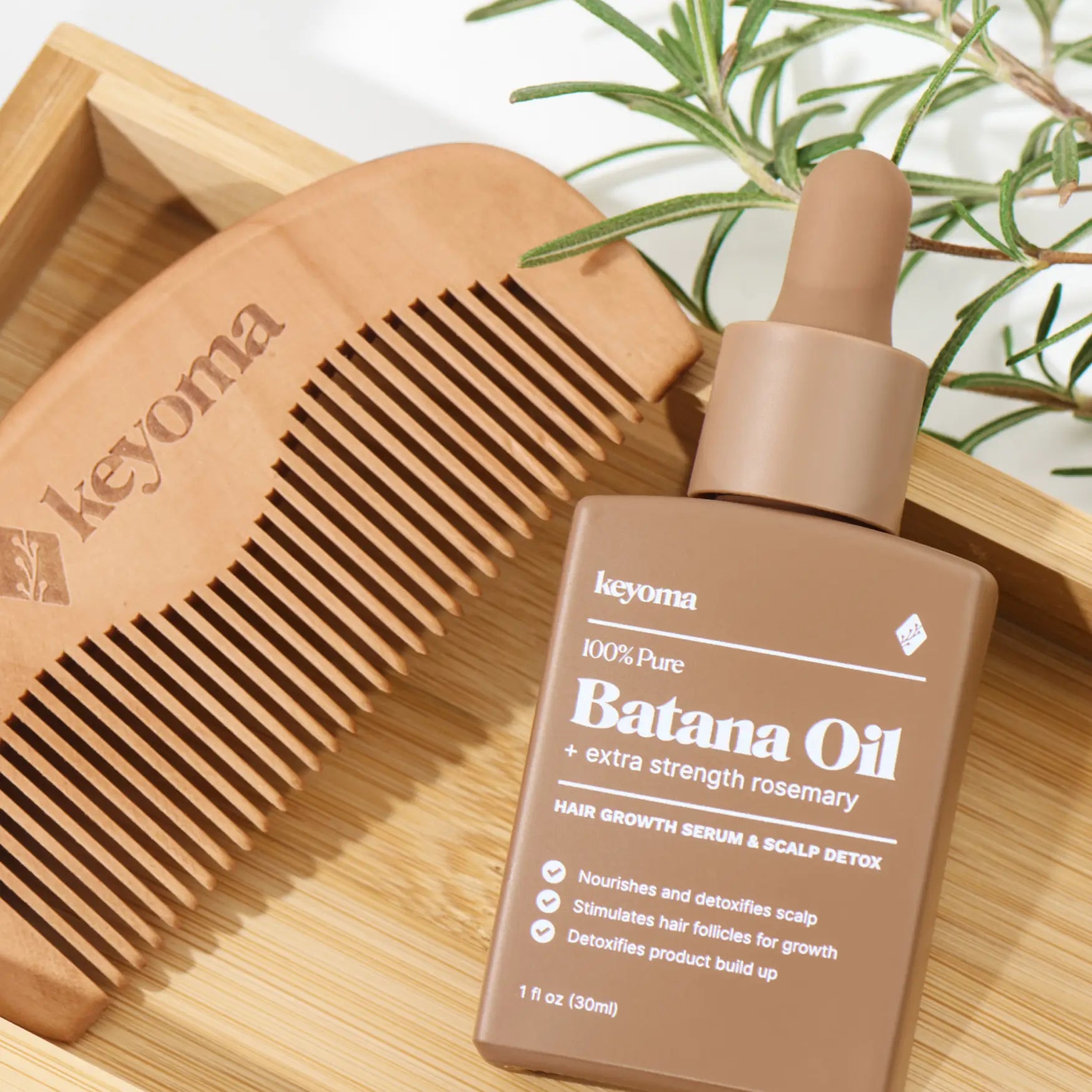
When you want a simple oil for targeted end care, apply one drop of Keyoma Batana Oil with Rosemary and assess your hair before using more. A small, careful application is often all dry ends need between wash days.
Featured Product
30% Off + 3 FREE Gifts
100% Pure Batana Oil + Rosemary


