

In this article
Fine curls can look glossy after oiling and still lose the shape you wanted to protect. The problem is not always the oil itself. A light oil used too close to the roots or layered over a rich styling routine can flatten curl clumps, while a richer oil used sparingly before shampooing may rinse away without affecting the finished style.
Argan, grapeseed, and jojoba oils are practical starting points when you want a light finishing touch. Sweet almond and rosehip oils can work when the ends need more softness, while batana oil fits better as a controlled pre-wash option. The right choice depends on the job, but the amount, placement, timing, and full formula decide whether your curls keep their movement.
Key Takeaways
- Fine describes the diameter of each strand, not how much hair you have or how porous it is.
- Argan, grapeseed, and jojoba oils are useful starting points for a light finishing layer on the lengths and ends.
- Test one drop after your hold product sets, then judge the result by movement, clump shape, lift, and residue.
- Reserve richer oils for pre-wash use if they make finished curls look flat, stringy, or coated.
What Makes an Oil Work for Fine Curly Hair
Fine curly hair has a small strand diameter. That detail matters because a thin strand needs less product to change how it bends, separates, and moves. A few extra drops can turn soft curl clumps into sections that look shiny but hang together with less bounce.
Fine is not the same as thin. Fine describes one strand, while density describes how many strands grow across the scalp. A person can have fine strands and high density, or coarse strands and low density. If you need help separating those terms, read Keyoma’s guide to fine vs. thin hair.
Porosity is another separate variable. It affects how readily hair takes in and loses water, but it does not change strand diameter. Density and porosity can influence how much oil you use and when you use it. They should not replace the first question: How easily does this individual strand lose movement under product?
Oil also has a limited job. It can lubricate the strand, reduce friction, smooth the surface, add shine, and help slow moisture loss. It does not add water to dry hair, create styling hold, or permanently repair split ends. Fine curls usually respond better when oil supports a water-based conditioner and a hold product instead of trying to replace either one.
The Best Oils for Fine Curly Hair
No botanical oil is automatically non-greasy. Texture gives you a starting point, but the finished formula, dose, and product layers determine the result. Use the list below as a job guide, then confirm the fit with the one-drop test later in this article.
|
Oil |
Works Well When |
Watch For |
|
Argan |
You want light smoothing and shine after styling |
Too much near the scalp or roots |
|
Grapeseed |
You want a thin sealing layer over a water-based leave-in |
Adding more when hair still needs water |
|
Jojoba |
You want controlled softness on lengths or ends |
Assuming it suits every scalp |
|
Sweet almond |
Dry fine curls need slightly more softness |
Nut allergy concerns and overapplication |
|
Rosehip |
Dry ends need targeted shine and smoothing |
Using it as a growth or repair treatment |
|
Batana |
You want a richer pre-wash treatment that will be shampooed out |
Leaving it in as a heavy finisher |
Argan Oil for Lightweight Smoothing
Argan oil is the strongest all-around starting point when you want to soften the finish without taking away all the lift. A trace amount can smooth surface frizz, add shine, and help dry ends look more polished.
Cleveland Clinic notes that argan oil can calm frizz while staying light on the strands. It also warns that scalp use may not suit everyone, especially people with oily hair or dandruff concerns. Keep the first test on the lower lengths and ends instead of treating it as an automatic scalp oil. Read the Cleveland Clinic guidance on argan oil.
Grapeseed Oil for a Light Seal
Grapeseed oil has a thin feel that makes it useful over a water-based leave-in or on ends that need a small amount of slip. Apply it only after the hair has received moisture. If the strand feels rough beneath a glossy layer, more oil is unlikely to solve the problem.
This option works especially well when your main goal is to reduce a dry finish without changing the shape of the curl. Start with one drop across both palms. Fine waves may need even less.
Jojoba Oil for Controlled Softness
Jojoba is technically a liquid wax, but in a routine it can serve the same practical role as a light finishing oil. Use it on the lengths or ends when you want softness with a clean, flexible feel.
Do not rely on the common claim that jojoba perfectly copies human sebum. Your result still depends on the formula and the amount. A blend labeled with jojoba can feel heavier than pure jojoba if richer oils or conditioning ingredients dominate the product.
Sweet Almond Oil for Dry Fine Curls
Sweet almond oil can suit fine curls that remain dry after conditioning and need slightly more cushion than grapeseed or jojoba provides. Keep it low on the hair and use a smaller amount than you would on coarse strands.
If you have a known nut allergy, check the ingredient source and ask a qualified medical professional whether the product is appropriate for you. Patch-test any new formula and stop using it if irritation develops.
Rosehip Oil for Dry Ends and Shine
Rosehip oil makes the most sense as a targeted ends product. Use a trace amount to soften the look of dry tips and add shine after the style has dried. Keep the claim cosmetic. It cannot mend a split end or act as a scalp-growth treatment.
Because the ends are older and often receive less natural oil from the scalp, they give you a safer testing area than the roots. If the tips look separated or stringy, reduce the amount rather than spreading it higher.
Batana Oil as a Pre-Wash Option
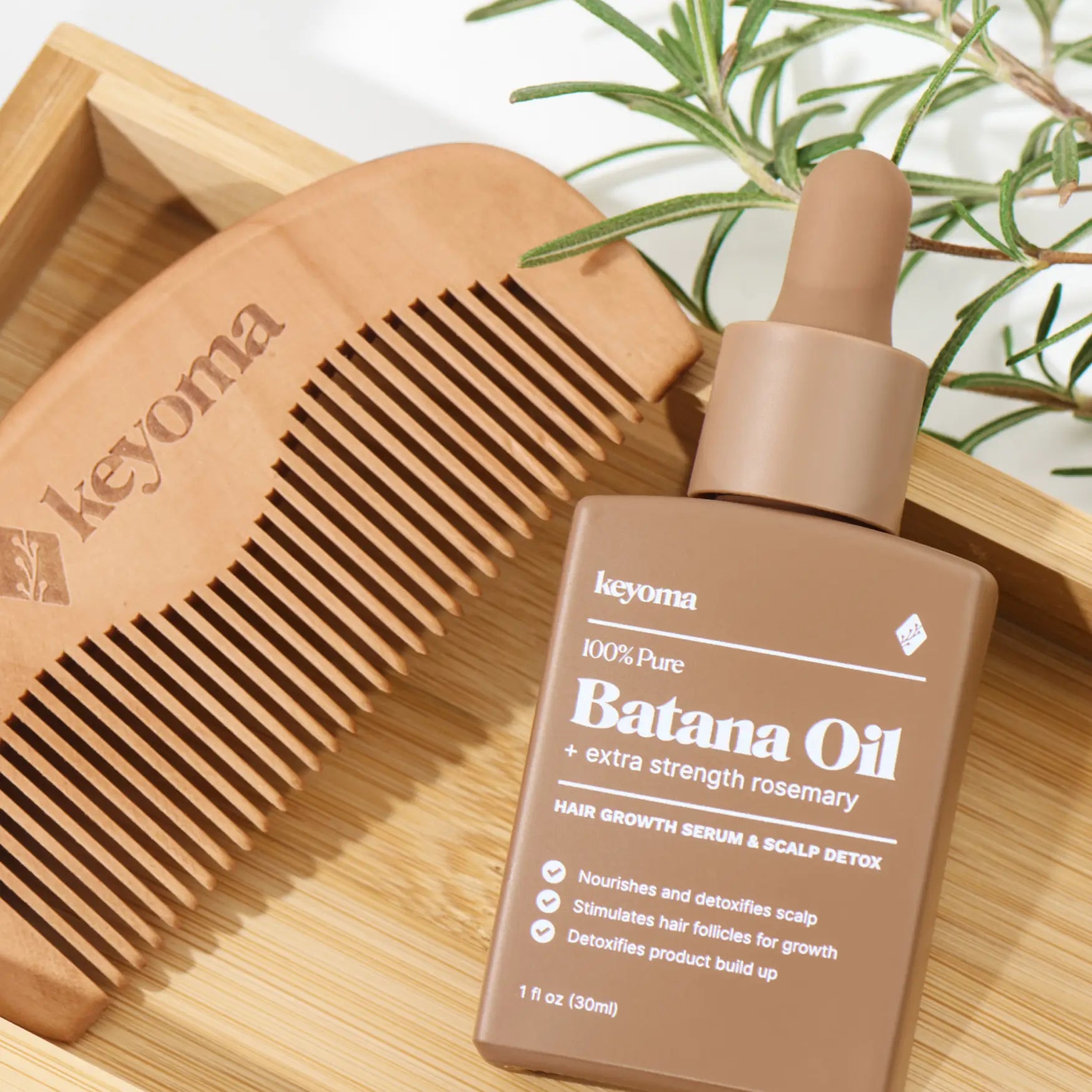
Batana oil is richer than the other options in this list, so it should not be treated as a universal lightweight finisher. Fine curls can still use it in a different role. Warm a fingertip amount between your hands, smooth it over dry lengths or ends before shampooing, and wash it out before styling. This gives the hair contact with the oil without asking the finished curls to carry the full weight.
If your ends need more slip before wash day, use Keyoma Pure Batana Oil with Rosemary only in this controlled pre-wash step. Keep it away from the roots during the first test and shampoo thoroughly before applying your curl products.
Choose by Strand Diameter Then Adjust for Density and Porosity
Start with strand diameter because it tells you how easily product weight can change each curl. Then adjust the amount for density. Fine, high-density hair may need more total product than fine, low-density hair because there are more strands to cover, but each section still needs a light hand.
Use porosity to adjust timing. More porous ends may benefit from a trace of oil after a water-based conditioner because they tend to lose water more readily. Lower-porosity hair may show residue sooner when several conditioning products sit on the surface. Neither pattern proves that an oil is good or bad. It tells you how cautiously to test it.
Damage and styling layers matter too. Bleached ends may tolerate a little more lubrication than healthy roots. A curl cream, leave-in, gel, and oil used together may feel heavy even when every individual product is marketed as lightweight. Judge the complete routine, not the ingredient name alone.
Use the One-Drop Curl Definition Test
A controlled test gives you a clearer answer than switching oils every wash day. Keep the rest of your routine the same, then change only the oil step.
1. Style your hair as usual with your water-based conditioner and hold product.
2. Let the hair dry completely or wait until the gel or mousse has formed a cast.
3. Place one drop of finishing oil across both palms and rub your hands together until they look nearly clean.
4. Glaze or lightly scrunch the lower lengths and ends. Do not start at the roots.
5. Let the curls settle, then assess movement, clump shape, root lift, shine, and residue.
6. Repeat the same amount across two or three wash days before increasing it.
Apply Oil After Hold Products Set
When definition is the priority, test oil after your gel or mousse has done its job. Once the hair is fully dry, a tiny amount of oil can help soften a cast as you scrunch. Applying oil earlier may interfere with the way some styling products group and hold the curls.
Oil does not create hold. If curls look soft but lose their shape quickly, the problem may be an insufficient hold product rather than a lack of oil.
Reduce the Amount Before Replacing the Oil
If the first result looks flat, cut the amount in half before buying something new. You can also keep the product below the ears, touch only the ends, or move it to a pre-wash step. These changes tell you whether the problem is the ingredient or simply its role in your routine.
Signs an Oil Is Costing You Definition
The clearest sign of excess oil is not shine. It is a loss of movement. Fine curls may look darker, group into stringy sections, or sit closer to the scalp. They may also take longer to dry, feel coated, or need washing sooner than usual.
Dryness can look different. Hair that needs water may feel rough, expand into frizz, or lose flexibility without developing an oily film. Weak hold usually shows up as curls that form after styling but relax quickly. Adding more oil to either problem can hide the texture for a short time without addressing the cause.
If you are unsure whether the formula, amount, or placement is causing the issue, compare your symptoms with these signs that hair oil is too heavy.
Build a Lightweight Oil Routine for Fine Curls
A simple sequence makes it easier to see what each product contributes. Start with a water-based conditioner or leave-in on damp hair. Add the gel or mousse that gives your curl pattern enough hold. Let the style dry fully. Use oil only if the ends need more softness, the cast needs gentle scrunching, or the finish needs a small amount of shine.
Refresh days need even more restraint because yesterday’s product is still present. Try water or a light refresher first. Reapply oil only to ends that feel rough, and do not make daily oiling automatic. If the hair becomes dull or coated, wash away the buildup instead of layering another product over it.
Also review the full ingredient list when a product feels unexpectedly rich. A bottle promoted around one light oil may contain silicones, butters, or heavier oils that change the finish. Formula matters more than the ingredient printed largest on the front label.
Frequently Asked Questions
What oil is best for fine curly hair?
Argan, grapeseed, and jojoba oils are practical starting points for fine curly hair because they can provide light smoothing when used sparingly. The best match is the one that preserves movement and curl shape at the smallest useful dose.
Is argan oil too heavy for fine curls?
Argan oil is not automatically too heavy for fine curls, but excess product can still flatten them. Start with one drop on dry lengths and ends and avoid the roots during your first test.
Can fine curly hair use oil every day?
Fine curly hair can use oil as needed, but daily use may create buildup or reduce lift. Check the ends first and reapply only when they need softness, not simply because another day has passed.
Should I apply oil before or after curl cream?
Apply curl cream and a hold product first, then test a tiny amount of oil after the hair dries. This order lets the styling products form the curl pattern before oil is used to soften the finish.
Why does hair oil make my curls look stringy?
Hair oil can make curls look stringy when too much product separates or weighs down the clumps. Use less, keep it lower on the hair, and confirm that your conditioner or curl cream is not already providing enough richness.
Keep Definition While Adding Softness
Start with argan, grapeseed, or jojoba oil when you want a light finishing touch. Move sweet almond or rosehip into a targeted ends role when fine curls need more softness. Keep richer oils for controlled pre-wash use if they reduce bounce after styling.
Most importantly, evaluate oil by what your curls do after application. Healthy-looking shine matters, but movement, clump integrity, root lift, and a clean feel give you a better answer. One careful drop will teach you more than a long list of oils applied without a clear job.
Featured Product
30% Off + 3 FREE Gifts
100% Pure Batana Oil + Rosemary


