

In this article
You should not automatically oil your scalp or new growth before a relaxer touch-up. Your relaxer instructions and stylist’s directions should determine what products belong on your hair before the service.
If those directions allow it, you may apply a light coating of oil to previously relaxed lengths. This can help you keep the processed hair separate from the untreated new growth. However, hair oil does not prevent chemical burns, neutralize relaxer, or replace the protective base included with some relaxer systems.
The safest approach starts with recognizing that your scalp, new growth, and previously relaxed lengths have different needs.
Key Takeaways
-
Ordinary hair oil cannot replace the protective base specified by your relaxer manufacturer.
-
Keep heavy oil away from untreated new growth unless the directions permit it.
-
Lightly coat previously relaxed lengths only when your stylist or instructions approve.
-
Postpone your touch-up if your scalp feels scratched, inflamed, sore, or irritated.
Should You Put Hair Oil on Before a Relaxer?
Whether you should use hair oil before a relaxer depends on where you plan to apply it.
A touch-up is intended to process new growth. The hair beyond that new growth has already been chemically straightened and does not need another full application. Applying relaxer over previously treated hair is known as overlapping, which can leave those lengths weaker and more prone to breakage.
Some stylists apply a light coating of oil, conditioner, or another product to the previously relaxed lengths. This can make the sections easier to manage and help distinguish processed hair from new growth.
That does not mean you should cover your whole head with oil before every touch-up. Heavy oil on the untreated roots may affect how evenly the stylist applies the relaxer. Oil on the scalp can also create a false sense of protection around a chemical service that still requires careful application.
Always follow the exact directions provided with your relaxer system. If you visit a salon, ask your stylist whether they want your hair free from oils, leave-ins, edge products, or other buildup before your appointment.
Treat Your Scalp, New Growth, and Relaxed Lengths Differently

The phrase “oil your hair” can refer to several application areas. That lack of detail is where much of the confusion begins.
Scalp and Hairline
Do not treat an ordinary cosmetic hair oil as a chemical barrier.
Some relaxer kits include a protective base or instruct you to use a specific barrier around the hairline, ears, nape, or other exposed skin. These products should be applied according to the manufacturer’s directions. A general hair oil is not necessarily formulated or tested for this purpose.
Your scalp should also be free from scratches, sores, active irritation, and broken skin before the service. Avoid scratching, picking, or brushing the scalp aggressively while preparing for your appointment.
If your scalp is inflamed, tender, or affected by an active condition, postpone the service instead of trying to cover the area with oil.
Untreated New Growth
New growth is the section the touch-up is meant to process. Keep this area free from unnecessary heavy buildup unless your relaxer instructions or stylist say otherwise.
Applying a thick layer of oil to the roots may make it harder to see the line between new and previously relaxed hair. It may also affect product placement or create uneven conditions across different sections.
Do not use oil as a reason to extend processing time or change the application method. Only the directions for your chosen relaxer system should guide those decisions.
Previously Relaxed Lengths
Previously relaxed hair does not need to be relaxed again.
If your stylist or product instructions allow it, a small amount of oil may be applied to the processed lengths before a touch-up. Focus on the hair beyond the visible new growth rather than the scalp or untreated roots.
The goal is controlled placement, not saturation. Hair that feels wet or heavily coated can become harder to section and handle.
Oil may coat the hair, but it does not guarantee that relaxer will not reach the processed lengths. Careful sectioning and controlled application remain necessary.
For more guidance on using oil outside the chemical service itself, read where to apply batana oil on relaxed hair.
How to Prepare Hair for a Relaxer Touch-Up

Preparation should keep your scalp calm and make the line between your new growth and processed hair easier to manage. It should not involve experimenting with products or changing the relaxer formula.
Several Days Before
Read the complete instructions included with your relaxer, including its warnings, skin or strand testing requirements, application limits, rinsing directions, and neutralizing steps.
If a stylist will perform the service, ask what they want you to avoid beforehand. Their answer may depend on the relaxer system, your scalp condition, and the amount of new growth present.
Avoid introducing a new hair oil, scalp treatment, or styling product close to the appointment. A new product may cause irritation or leave unexpected buildup that makes it harder to assess your scalp.
This is also the time to check for:
-
Scratches or scabs
-
Persistent itching
-
Redness or swelling
-
Tender areas
-
Flaking linked with irritation
-
Unusual breakage near the roots
-
A recent reaction to another product
Do not proceed until an irritated scalp has recovered. Ongoing or severe symptoms should be evaluated by a dermatologist.
The Day Before
Keep manipulation gentle. Avoid tight hairstyles, aggressive detangling, hard brushing, or using your nails against the scalp.
Many relaxer systems advise against shampooing immediately before application because washing and manipulation may leave the scalp more sensitive. However, there is no universal no-wash schedule for every formula. Follow the instructions provided with your specific product.
You do not need to make your hair intentionally dirty. The goal is to avoid unnecessary irritation, not to build up days of sweat, oil, and styling products.
On Touch-Up Day
Tell your stylist what products are already on your hair, including oils, leave-ins, edge control, dry shampoo, and scalp treatments.
If you are completing the service at home, do not improvise with the relaxer formula or mix products from different systems. Use the gloves, barrier products, timing limits, neutralizing shampoo, and aftercare steps directed by the manufacturer.
Work with a trained stylist if you cannot clearly identify the new growth, have uneven growth across your head, or have experienced previous scalp reactions.
Can Oil Prevent Relaxer Burns?
No. Hair oil should not be described as protection against chemical burns.
Relaxers alter the structure of the hair through a strong chemical process. Improper application can contribute to scalp irritation, burns, dryness, brittleness, and breakage.
According to Head & Shoulders’ relaxer safety guidance, relaxer users should follow the manufacturer’s instructions closely, avoid applying relaxer to previously straightened sections, protect exposed skin as directed, and rinse the product thoroughly before using the required neutralizing shampoo.
A protective base may help limit unwanted contact when a relaxer system calls for one, but no barrier makes careless application safe. An ordinary oil also cannot stop relaxer from processing hair or neutralize chemicals that have already reached the strand or skin.
Do not continue through burning because you think the relaxer needs more time. Follow the product’s instructions for rinsing if you experience burning or significant discomfort.
When Should You Postpone the Touch-Up?
A scheduled appointment is not a reason to process a scalp that is already irritated.
Postpone the touch-up if you notice:
-
Scratches, cuts, scabs, or sores
-
Redness, swelling, or tenderness
-
Persistent burning or itching
-
An active scalp flare
-
An unresolved reaction from another product
-
Heavy breakage or unusually weak hair
-
Uncertainty about where the new growth ends
-
Damage from a recent chemical treatment
These signs may increase the risk of further irritation or damage. Adding oil does not make it safe to proceed.
Hair that feels rough, thin, gummy when wet, or prone to snapping may already be chemically stressed. Review the signs of overprocessed hair before scheduling another service.
Contact a dermatologist if you have persistent scalp pain, open sores, swelling, discharge, or signs of infection. A licensed stylist can help assess whether the hair is strong enough for another chemical service, but scalp injuries and ongoing skin symptoms need medical attention.
Where Batana Oil Fits Around a Relaxer
Batana oil belongs in a conditioning routine between chemical services. It should not be treated as part of the relaxer system.
Before a touch-up, only apply oil to previously relaxed lengths when your stylist or product instructions allow it. Keep the amount light and avoid coating the scalp or new growth unless directed.
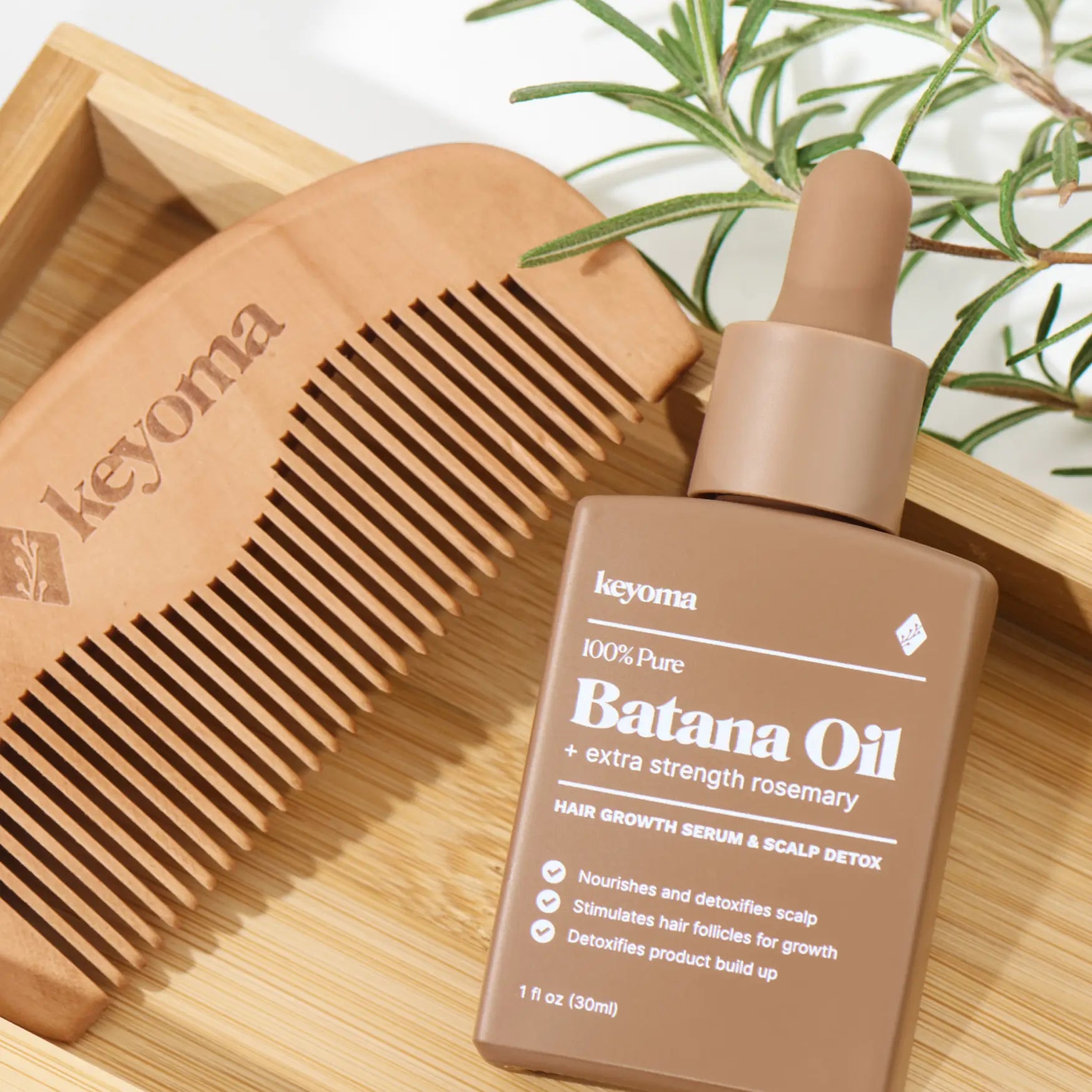
Keyoma Batana Oil with Rosemary is normally used as a scalp and hair oil. Because a relaxer service requires a calm scalp and controlled product placement, you may need to pause scalp application before the appointment. Follow the timing given by your stylist or relaxer manufacturer.
After the touch-up, complete the required rinsing, neutralizing, and conditioning steps first. Wait until your scalp feels normal and shows no burning, tenderness, sores, or irritation before returning to your regular oiling routine.
When normal product use can safely resume, apply a small amount of Keyoma Batana Oil with Rosemary according to its directions. Treat it as between-service conditioning care, not protection during chemical processing.
Care for Previously Relaxed Hair Between Touch-Ups
A good between-service routine helps you reduce avoidable stress on hair that has already undergone permanent chemical processing.
Focus on gentle habits:
-
Condition regularly based on how dry or rough your hair feels.
-
Detangle slowly, especially where the new growth meets relaxed hair.
-
Limit high heat and repeated passes with hot tools.
-
Avoid stacking several chemical services close together.
-
Protect the hair from excessive friction during sleep.
-
Use small amounts of oil instead of repeatedly coating dry hair.
Pay close attention to the line where your natural texture meets your relaxed lengths. The difference in texture can make this area harder to detangle and more vulnerable to mechanical breakage.
Oil may improve softness, shine, and manageability, but it cannot reverse structural damage caused by overprocessing. Hair that continues to split or snap may need a trim and a simpler routine rather than more product.
Protect Your Hair Before the Next Touch-Up
You do not need to cover your entire scalp and hair with oil before a relaxer. Start by reading the relaxer instructions and separating your scalp, untreated new growth, and previously processed lengths into three different care areas.
Use only the protective base specified for the chemical service. If your stylist approves oil on the relaxed lengths, keep the application light and away from the new growth.
Between touch-ups, Keyoma Batana Oil with Rosemary can support a simple conditioning routine once your scalp feels comfortable and your aftercare instructions allow normal product use.
Frequently Asked Questions
Should I oil my scalp before a relaxer?
Do not automatically apply ordinary hair oil to your scalp before a relaxer. Follow the relaxer instructions and your stylist’s guidance. If the system calls for a protective base, use the product and placement method it specifies.
Can I put oil on previously relaxed hair before a touch-up?
You may apply a small amount to previously relaxed lengths if your stylist or product instructions permit it. Keep the oil away from untreated new growth unless directed otherwise.
Does oil stop relaxer from burning the scalp?
No. Hair oil does not prevent chemical burns. Safe application depends on following the product directions, avoiding irritated skin, limiting scalp contact, observing processing limits, and rinsing as instructed.
Should hair be dirty before a relaxer?
Your hair does not need to be intentionally dirty. Many relaxer systems advise against shampooing immediately before the service because washing and manipulation may irritate the scalp. Follow the schedule provided with your specific product.
What should I do if a relaxer starts burning?
Follow the relaxer’s safety directions and rinse it out thoroughly rather than waiting for the planned processing time. Seek medical attention for severe or persistent pain, blistering, open sores, swelling, or other concerning symptoms.
When can I use hair oil after a relaxer?
Follow the aftercare instructions included with the relaxer or provided by your stylist. Wait until your scalp feels normal and has no burning, sores, or irritation before resuming scalp oiling.
Featured Product
30% Off + 3 FREE Gifts
100% Pure Batana Oil + Rosemary


