

In this article
Hair oil should leave your hair softer, smoother, and easier to manage. When it feels too heavy, roots may look greasy, strands may fall flat, or ends may still feel dry under a shiny coating.
That does not mean the oil is bad. A rich oil can work well for dry, curly, coily, or damaged hair, but feel wrong as a leave-in or root product.
Find whether the issue is oil, amount, placement, or timing. Once that is clear, you can keep softness without making hair limp.
Key Takeaways
-
Hair oil is too heavy when hair feels greasy, flat, coated, or hard to rinse.
-
A rich oil may work better as a pre-wash treatment than a leave-in.
-
Ends-first oiling often helps prevent greasy roots and flat strands.
-
Use less oil first, then adjust by hair type and wash schedule.
What Does It Mean When Hair Oil Feels Too Heavy?
A hair oil feels too heavy when it sits on the hair more than it supports it. Instead of adding softness, it creates weight and can make hair look stringy or oily at the root.
Heaviness often comes from fit and dose together. A thick oil may be perfect for wash day, while the same oil may feel greasy after styling. If you are dealing with too much hair oil, the first fix is usually a smaller amount.
Placement also changes the result. Ends can handle more oil because they are older, drier, and farther from natural scalp oils. Roots already receive sebum, so added oil there can quickly look heavy.
Signs Your Hair Oil Is Weighing Your Hair Down

A heavy hair oil problem usually shows up in how your hair moves, feels, and holds style. The clearest signs appear after washing or styling, when hair should feel clean but looks coated or limp.
Your Roots Look Greasy Soon After Washing
Greasy roots are one of the fastest signs that oil is too close to the scalp or too rich for your wash rhythm. If hair looks oily within hours, placement may be the problem.
Dermatologist Shilpi Khetarpal, MD, notes that hair oiling does not work the same for every hair type, and fine, straight hair may feel weighed down. She also advises caution with direct scalp oiling when dandruff is a concern.
If your scalp gets oily but your ends feel rough, treat the areas differently. A routine for oily scalp and dry ends usually works better when oil stays away from the roots.
Your Hair Looks Flat Instead of Soft
Soft hair still has movement. Heavy hair loses lift. If your hair looks smoother but flatter, the oil may be forming a film that pulls strands together instead of letting them separate naturally.
Flatness is more common when oil touches the top layers, the part, or hair that was already heavily conditioned. Even a good oil can collapse volume when it is spread too high.
Your Ends Still Feel Dry Under the Oil
Dry ends under oil can feel confusing because hair may look shiny while still feeling rough. Oil can help seal and soften, but it does not replace moisture or repair split ends permanently.
When ends feel dry under a slick layer, you may be using oil too late. Try applying it before washing, or use less after conditioner.
Your Hair Feels Coated or Hard to Rinse
Coated hair feels resistant to water and harder to shampoo clean. It may also look dull because residue stops light from reflecting evenly.
Cleveland Clinic notes that styling products can build up on hair and scalp, which can make hair feel oily and may call for occasional clarifying shampoo. If oil adds to that buildup, a page on product buildup can help you spot the residue pattern.
Why Does Oil Make Hair Look Flat?
Oil can make hair look flat when it reduces separation between strands. Instead of each strand moving on its own, the oil groups sections together, making hair look thinner, heavier, or less airy.
Hair type affects how noticeable this looks. Fine hair takes less product to change the way it moves. Straight hair also lets oil travel from root to tip more easily than tightly curled hair, so the same oil can feel light on one person and heavy on another.
Timing matters too. A rich oil used before shampoo may soften the hair and rinse away cleanly. The same oil used after styling may sit on top and flatten the finish. A comparison of pre-wash vs post-wash hair oil can help readers decide when a heavier oil fits best.
Is Batana Oil Too Heavy for Some Hair Types?
Batana oil can be too heavy for some hair types, especially when too much is used or placed near the roots. It behaves like a richer oil, so it needs the right role.
Trichologist Hannah Gaboardi describes batana oil as thick and buttery, with better fit for dry, brittle, chemically damaged, thick, curly, or coily hair. She also notes that fine or oily hair can feel weighed down.
For that reason, Pure Batana Oil makes the most sense as a richer wash-day oil for many people. Use it when hair needs softness and slip, then shampoo it out instead of treating it like a light finishing serum.
If you are comparing richer hair support with a scalp-focused option, rosemary and batana oil may fit when the product purpose, dilution, and scalp tolerance match your needs. Keep scalp use conditional. Sensitive or flaky scalps may not respond well to direct oiling.
Should You Oil Your Scalp or Ends?
For many people, ends-first oiling is safer. The ends are usually the driest part of the hair, while the scalp already produces oil. Starting there lets you test the benefit without making roots greasy.
Cleveland Clinic’s hair oiling guidance supports using a small amount on the ends and washing it out after several hours. That keeps oiling controlled when you are not sure how your hair will respond.
Maria Nila also recommends focusing hair oil on the mid-lengths and ends, and avoiding the scalp unless the product is designed for that purpose. That placement helps add shine without losing lift at the crown.
Scalp oiling is not automatically wrong, but it should have a clear reason. If the product is meant for scalp use, apply a small amount, watch for itching or flakes, and avoid layering it too often. A balanced scalp care routine should still prioritize cleanliness and comfort.
How to Use Hair Oil Without Losing the Benefit

A lightweight hair oil routine does not always require a lighter oil. Sometimes it means using a richer oil in a lighter way.
Start With Less Than You Think You Need
Use the smallest amount that can coat your palms lightly. For many people, that means a fingertip amount for a rich oil or one small drop for a finishing oil. Warm it between your hands before touching your hair.
Work from the ends upward and stop before your roots. I’ve noticed that rubbing the oil into my palms first prevents one shiny patch. If your hair still feels dry, add a little more only to the ends.
If batana oil feels heavy even when you like the softness, adjust the dose first. A practical page on how much batana oil to use can help you keep the amount closer to your hair density and texture.
Keep Rich Oils for Wash Day
Rich oils often behave better before shampoo than after styling. Apply them to dry hair, focus on the lengths and ends, leave them on for a set period, then wash thoroughly. This gives the hair contact time without leaving all the weight behind.
Wash-day oiling is useful if your ends feel rough, your hair is thick, or your curls need more slip before detangling. It is less useful when your roots get oily quickly.
Apply to Mid-Lengths and Ends First
The middle and ends are the best test area for hair oils. They show whether the product adds softness without affecting scalp volume.
Use a praying-hands motion or light squeezing motion rather than rubbing aggressively. If your hair is curly or coily, apply in sections so the oil reaches dry areas without pooling in one place.
Frequency matters as much as placement. If your hair still looks heavy after using less, reduce how often you oil and compare two or three wash days. A page on hair oiling frequency can help you match your texture and scalp.
Reset With a Clean Rinse When You Overdo It
When hair already has too much oil, prevention is easier than rescue. Hairstylist Nathaniel Hawkins notes that dry shampoo can absorb some excess, but removing all the oil may require washing.
If you overdo it, avoid adding more styling products to cover the shine. Tie hair back if needed, then wash when you can. Next time, cut the amount in half and apply it lower.
For readers unsure whether they need a richer oil, a rosemary option, or a more controlled starter amount, the Keyoma Starter Kit supports amount, placement, and frequency decisions together.
Fix Hair Oil Too Heavy for Hair and Keep Softness
If your oil feels too heavy, you may not need to quit hair oil. You may need a better match between the product, amount, placement, and timing.
Keep rich oils lower on the hair, use less than you think, and save heavier textures for wash day when needed. With a careful routine, hair can feel softer without looking greasy, coated, or flat.
Featured Product
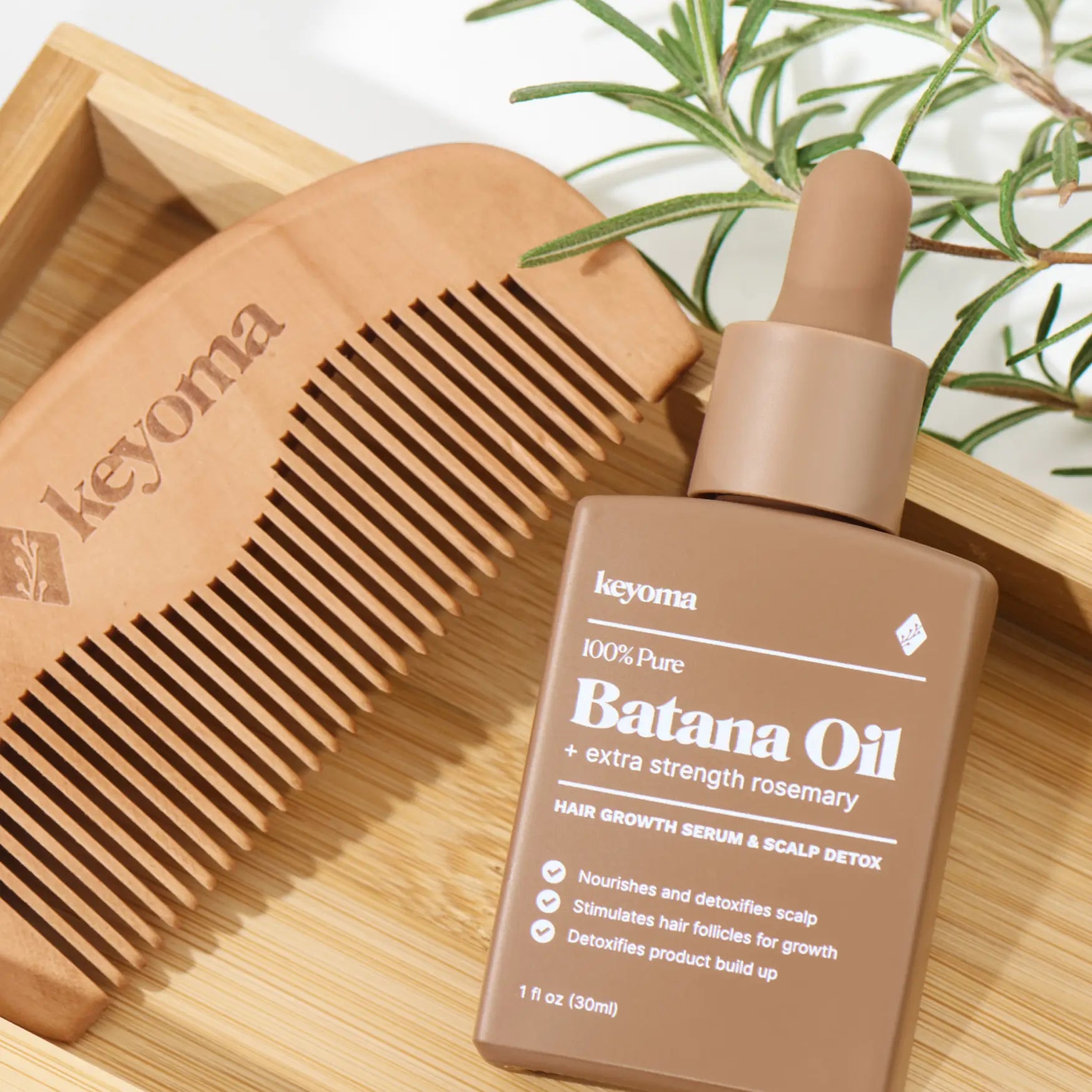
30% Off + 3 FREE Gifts
100% Pure Batana Oil + Rosemary


