

In this article
For most hair oils, the safer answer is after blow-drying. Use oil as a finishing step to soften dry ends, smooth flyaways, and add shine once the heat work is done. Before blow-drying, use oil only when the product is clearly labeled for heat styling or paired with a real heat protectant.
The confusion comes from treating every oil the same way. A pure oil, a silicone-based finishing oil, and a heat-protectant oil do not do the same job. Some are made to polish dry hair. Some are made to reduce friction. Some are formulated with ingredients that help buffer heat. The label matters more than the word “oil.”
A better rule is simple: protect before heat, polish after heat. That keeps hair oil useful without asking it to do a job it may not be designed to do.
Key Takeaways
-
Use most hair oils after blow-drying for shine and softness.
-
Use oil before heat only if it is heat-protectant safe.
-
Keep oil on mid-lengths and ends, not roots.
-
Start small to avoid greasy, flat hair.
Why Timing Changes the Result
Hair behaves differently when it is damp, hot, dry, or freshly styled. Damp hair needs slip and protection before heat touches it. Dry hair usually needs finishing, not another heavy layer that can collapse volume or make the roots look oily.
The American Academy of Dermatology recommends limiting blow-drying, using low or medium heat, and applying a product made to protect hair from heat. That wording is important. A product “made to protect hair from heat” is not automatically the same as any oil in your cabinet.
|
Goal |
Use Oil When |
What Else to Use |
Where to Apply |
|
Protect damp hair before blow-drying |
Only if labeled for heat styling |
Heat protectant |
Mid-lengths and ends |
|
Smooth frizz after blow-drying |
After hair is fully dry |
None, unless restyling with heat |
Surface flyaways and ends |
|
Add softness to dry ends |
After styling or between wash days |
Light leave-in if hair feels rough |
Ends first |
|
Avoid flat roots |
After blow-drying, sparingly |
Volumizing prep if needed |
Keep away from scalp |
Damp Hair Needs Heat Protection First
Before a blowout, the main job is protection. Wet or damp hair is easier to stretch, rough up, or break during brushing, and hot airflow can make already fragile strands feel rougher. The AAD’s styling guidance also advises letting hair partially air dry before styling and reducing how often you blow-dry.
If you like oiling before a blowout, check the product instructions first. Look for language such as “heat protectant,” “thermal protection,” or a stated heat-protection claim. If the oil does not say that, treat it as a conditioning or finishing product instead.
Some heat protectants use film-forming ingredients that coat the strand more evenly. A Journal of Cosmetic Science study indexed in PubMed found that selected polymer pretreatments reduced thermal breakage in tested hair samples. That does not mean every oil protects from heat. It means formulation matters.
Dry Hair Needs Finishing, Not More Heat
After blow-drying, oil can help the style look smoother because it adds slip and shine to the outer surface of the hair. This is where many pure or finishing oils fit best. You are not asking the oil to defend hair from heat. You are using it to make the finished style feel softer and look less frizzy.
Dry application also gives you more control. You can see where the hair looks rough, where the ends separate, and where flyaways catch the light. If the roots already look shiny, skip them. If only the ends look dull, oil only the ends.
For dry lengths that regularly feel rough after styling, check whether the pattern matches heat-damaged hair, especially if the hair also tangles more, loses shine quickly, or has split-looking ends.
How to Use Hair Oil Before a Blowout

Using hair oil before blow-drying is not always wrong. The problem is using the wrong kind of oil, using too much, or layering it in a way that leaves the hair coated before heat. Before a blowout, think of oil as optional support, not the main protective step.
If your hair is dry, coarse, curly, or high-porosity, a tiny amount of oil can sometimes help reduce roughness before styling. Fine or oily hair usually does better with a lightweight heat protectant first, then oil after the blowout if the ends still need polish.
Start With Towel-Dried, Detangled Hair
Do not apply oil to dripping-wet hair and immediately start blow-drying. Gently squeeze out water with a towel or soft T-shirt, then detangle with care. Hair should be damp enough to style but not so wet that you need a long blast of heat to dry it.
Work from the ends upward when detangling. If the comb snags near the ends, oil may make the surface feel smoother, but it will not remove the underlying knot. For hair that tangles because of repeated rubbing, friction damage may need gentler brushing, softer accessories, and less tension during styling.
Layer Heat Protectant Before or With the Oil
If you use a separate heat protectant, apply it according to the product directions before blow-drying. Some formulas go on damp hair. Some work on dry hair before hot tools. Follow that label rather than guessing.
Hair oil can come after the heat protectant if the product combination does not make your hair sticky or heavy. For fine hair, this may be too much. For thick or porous hair, a small amount on the ends may help reduce roughness.
If you want more detail on product order, Keyoma’s guide to layering hair oil with leave-in conditioner is a better place to go deeper without turning this blow-drying article into a full layering routine.
Keep Oil on Mid-Lengths and Ends
Before a blowout, roots rarely need oil. Oil at the scalp can make clean hair look greasy faster, flatten volume, and transfer to the hairline. Start below ear level and move downward.
Use less than you think. Warm a small amount between your palms, glide it over the mid-lengths and ends, then check the hair under normal lighting. If the strands clump together, you used too much or placed it too high.
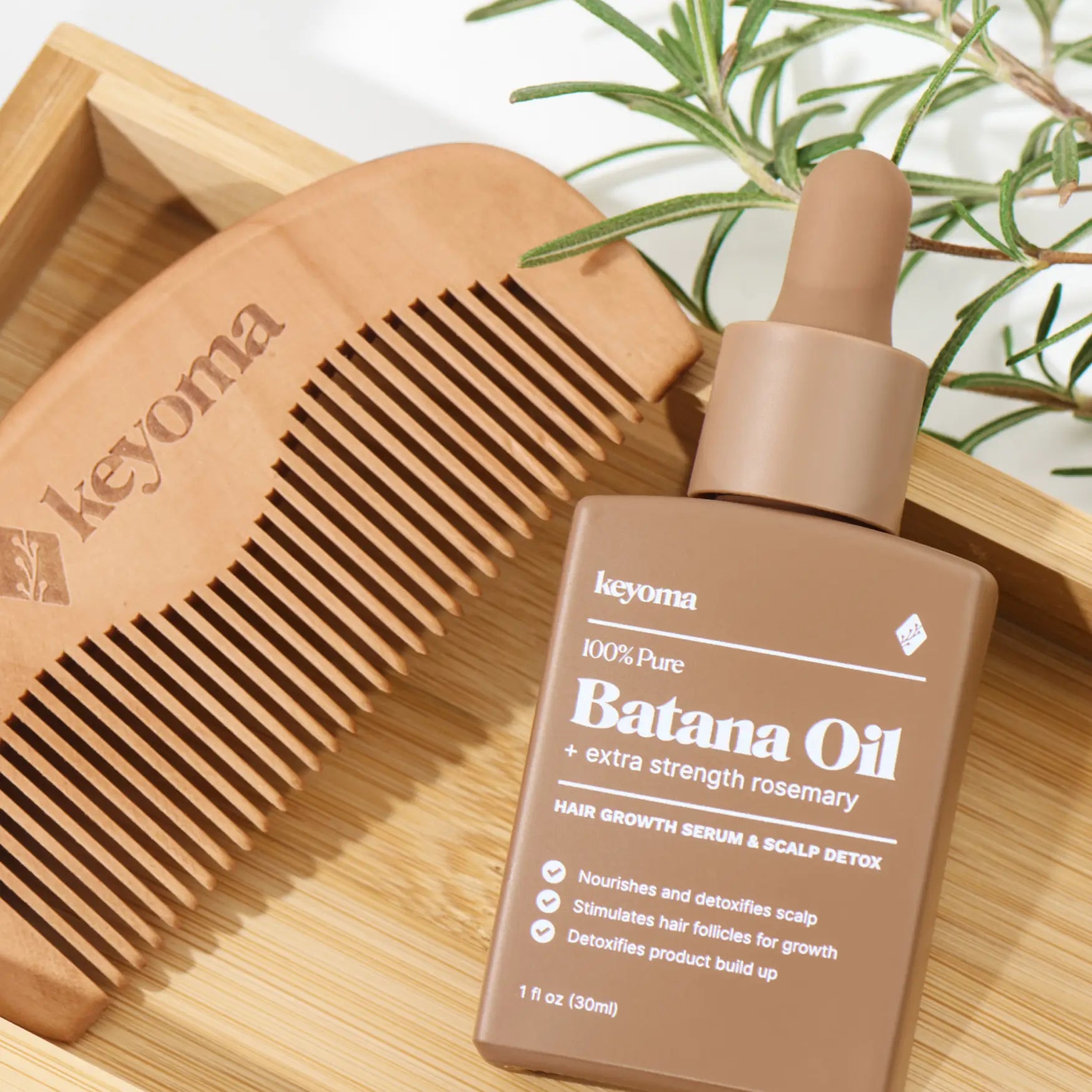
Pure batana oil can fit this kind of routine as a conditioning oil for dry lengths and ends, especially when hair needs extra softness. Keep it separate from heat-protection claims unless the product itself is formulated and labeled for that purpose.
How to Use Oil After Blow-Drying

Oil after blow-drying is usually the cleaner choice because you can target only the areas that need it. A good finish should make the hair look smoother without making it look wet, stringy, or coated.
Wait until the hair is fully dry and slightly cooled. Freshly heated hair can feel different from how it will sit a few minutes later. Once the shape settles, you can see whether the ends need oil or whether the style already has enough shine.
Start With Less Than You Think
The most common mistake is applying the amount you would use before shampooing or overnight oiling. A finishing step needs much less. The goal is a thin surface layer, not saturation.
Rub the oil between your palms first so it spreads evenly. Then lightly press or skim over the hair instead of dragging your hands through the same section again and again. If your palms still look very shiny after application, blot them before touching the crown.
Focus on Rough Ends and Flyaways
Look for the parts of the hair that actually need help. Rough ends, halo frizz, and dry-looking outer layers usually benefit most from a finishing oil. The healthiest-looking parts of the hair often need nothing.
For frizz after blow-drying, oil works best when the style is already dry and smooth but needs polish. If frizz appears because the hair was blow-dried too hot, dried too quickly, or brushed with too much tension, oil can soften the look, but it will not solve the styling cause.
A small amount of pure batana oil may be useful on dry ends when the goal is softness and shine. Keep the claim cosmetic: smoother feel, more slip, and a less rough finish.
Stop Before the Roots Look Shiny
Roots show oil quickly because they sit close to the scalp’s natural sebum. Once the crown or part line looks shiny, the style can shift from polished to greasy. Fine hair may show this after one extra pass.
If you accidentally overdo it, do not keep brushing the oil through the whole head. That can spread the weight. Instead, use a clean dry towel to lightly press the oily area, or refresh the roots with a product designed for oil control.
For repeated buildup, greasy roots, itching, or scalp discomfort, review the side effects of hair oiling before increasing how often you oil.
Match the Timing to Your Hair Type

Hair type changes how much oil you can use and where it should go. Timing still follows the same basic rule, but the amount and placement should match how your hair responds after styling.
Instead of copying someone else’s routine, check the result. Hair that looks shiny but still moves freely can usually tolerate the amount you used. Hair that separates into oily pieces, loses volume, or feels sticky needs less oil or later application.
Fine or Oily Hair
Fine or oily hair usually does best with oil after blow-drying, not before. The roots already get natural oil faster, and a pre-blow-dry oil layer can make the style fall flat.
Use a lightweight finishing approach. Touch only the ends or outer flyaways. If the hair looks greasy within a few hours, skip oil before heat entirely and use a dedicated heat protectant as your prep step. The oil can wait until the very end, and even then, it may not be needed every time.
Dry, Coarse, Curly, or High-Porosity Hair
Dry, coarse, curly, and high-porosity hair often tolerates oil better because the lengths may feel rougher or lose softness faster. These hair types may benefit from a tiny amount before styling when paired with heat protection, then a second light touch after blow-drying if the ends still look dry.
Be careful with layering. Leave-in conditioner, cream, heat protectant, and oil can work together, but too many rich products before a blowout can slow drying and leave the finish heavy. If your hair feels coated, simplify the prep.
Research on oils is ingredient-specific. For example, a Journal of Cosmetic Science study found coconut oil reduced protein loss compared with mineral and sunflower oils in tested conditions. That finding should not be stretched to every oil or every styling routine.
Heat-Damaged or Color-Treated Hair
Heat-damaged or color-treated hair may look better with oil after blow-drying, but oil cannot undo structural damage. It can soften the feel, add shine, and reduce friction during handling. It cannot permanently mend split ends or reverse breakage.
If your hair feels rough even after oil, the bigger issue may be repeated heat exposure, chemical processing, or worn ends. Lower heat, more careful drying, conditioning, and trims may matter more than adding more oil. A heat protectant should stay non-negotiable when you blow-dry fragile hair.
Common Mistakes That Cause Grease or Damage
The biggest mistake is using hair oil as if it can replace every other styling product. Oil can be helpful, but it is not automatically a detangler, moisturizer, heat shield, frizz cure, and repair treatment in one.
Another common mistake is applying oil too close to the roots before using a dryer. Warm airflow can spread product through the hair faster than expected. By the time the style is dry, the crown may look oily even if the ends still feel rough.
Watch for these patterns:
-
If the hair feels soft but looks flat, use less oil or apply it only after styling.
-
If the ends still look dry, apply oil lower and focus on the last few inches.
-
If frizz returns quickly, review your heat setting, brush tension, and humidity exposure.
-
If the scalp itches or flakes after oiling, pause scalp application and keep oil on the lengths.
-
If the hair feels sticky, wash out buildup before adding more styling products.
A separate heat protectant is still the better first step before blow-drying. Some oils can be part of a heat-styling product, but plain oil should not be assumed to provide the same protection as a tested formula. If you are unsure, use a dedicated protectant and save oil for the finish.
Use Hair Oil Before or After Blow Drying for Shine
Choose the timing based on the job. Before blow-drying, hair needs heat protection. After blow-drying, hair may need polish. Most pure or finishing oils belong after the dryer, especially if your goal is smoother ends, less frizz, and a softer finish.
Use oil before a blowout only when the label supports heat styling or when it sits lightly over a proper heat protectant. Keep it away from the roots, use the smallest effective amount, and stop adding more once the hair moves smoothly.
The best result is not the oiliest result. It is hair that feels soft, looks clean, and keeps its shape without extra heat or unnecessary weight.
Featured Product
30% Off + 3 FREE Gifts
100% Pure Batana Oil + Rosemary


