

In this article
Human hair wigs can become dry because the strands no longer receive natural oils from the scalp. Friction, washing, coloring, heat styling, and repeated wear can also make the lengths feel rough or difficult to manage.
You can use batana oil for human hair wigs, but placement matters more than quantity. Keep it on the dry mid-lengths and ends. Do not apply it to the lace, knots, wefts, adhesive, or cap construction.
Think of the wig as two separate care zones. The human hair may tolerate a light finishing layer of oil. The materials holding that hair together need to remain clean and oil-free.
Always check the wig maker’s care instructions first. Those directions take priority over general oiling advice, especially for custom-colored, hand-tied, or adhesive-based units.
Key Takeaways
-
Apply batana oil only to confirmed human hair lengths and dry ends.
-
Keep oil away from lace, knots, adhesive, wefts, and cap materials.
-
Begin with one drop and add more only after checking the finish.
-
Clean or condition rough strands instead of repeatedly layering more oil.
Can You Use Batana Oil on a Human Hair Wig?
Batana oil can work as a light finishing aid on a human hair wig. A thin coating may make dry ends feel smoother, reduce the appearance of frizz, and add temporary shine.
It does not hydrate the strands by adding water. It also cannot make wig hair grow or permanently repair damage. Wig strands are no longer connected to living follicles, so oil only changes how the existing hair looks, feels, and moves.
Not every human hair wig responds the same way. Density, processing, color treatment, porosity, texture, and existing product residue all affect the result.
A dense, coarse-textured unit may handle a small amount more easily than a fine, silky wig. A blonde or heavily processed unit may show uneven darkening or separation after oiling. Test the product on a hidden section near the nape before applying it to visible areas.
Wait until the test section settles, then inspect it in natural light. If the hair looks darker, stringy, dull, or greasy, do not continue across the rest of the wig.
Where Batana Oil Can and Cannot Go

The safest rule is simple: apply oil to the hair, not the construction.
A wig can contain lace, hand-tied knots, machine-sewn wefts, polyurethane sections, clips, elastic, silicone, tape, or bonding adhesive. These materials have different care requirements, and they do not benefit from hair oil.
Use It on Dry Mid-Lengths and Ends
Focus on the parts that show clear signs of dryness. The ends often need the most attention because they experience repeated brushing, contact with clothing, and heat styling.
Long wigs may also develop rough sections around the shoulders and upper back. High collars, scarves, jackets, and textured fabrics create friction in these areas. Smooth a trace of oil over the affected strands instead of coating the entire unit.
Length does not automatically mean you need more oil. A longer wig often needs better distribution rather than a larger starting amount.
Apply the product to your hands first. This gives you more control and prevents a concentrated spot from landing on the hair.
Keep It Away From Lace, Knots, and Adhesive
Do not apply oil along the part, hairline, lace, closure, frontal, or hand-tied knots. Even when oil begins on the strands, a heavy application can migrate toward the base.
Residue on lace may create a greasy or discolored appearance that becomes more visible against the skin. Oil around hand-tied knots can also make the base harder to clean without disturbing delicate construction.
Keep the product away from glue, tape, bonding areas, and the adhesive perimeter. Adhesive systems vary, so it is not accurate to say that every oil dissolves every adhesive. However, oily residue may weaken the hold, cause lifting, or complicate cleaning and reinstallation.
If you wear an attached unit, remove it according to the installer’s or manufacturer’s directions before treating the hair. Do not push oil through the lace to reach dry-looking sections.
The care routine for the detachable wig should also remain separate from oiling your natural hair under a wig. The hair beneath the unit and the wig itself have different needs.
Avoid Saturating Wefts and the Wig Cap
Heavy oil near machine-sewn wefts may collect dust and leftover styling products. That buildup can make the base harder to clean and leave the hair flat near its attachment points.
Keep oil away from the interior cap, clips, elastic bands, silicone strips, polyurethane sections, and wig grips. These components control the wig’s fit and stability. They do not need conditioning.
If oil reaches the construction, do not experiment with harsh cleaners or adhesive solvents. Follow the wig maker’s approved cleaning method or ask the seller or wig professional for guidance.
How to Apply Batana Oil Without Weighing Down the Wig
Remove the wig before applying oil whenever the construction allows it. Working on a stand lets you see the lace, wefts, and dry areas clearly.
Use this controlled method:
-
Place the wig securely on a clean, stable stand.
-
Detangle the ends with a wide-tooth comb or suitable wig brush.
-
Work upward in small sections without pulling at the base.
-
Place one drop, or the smallest dispensable amount, on your palm.
-
Spread the oil across both palms or fingertips until no pooled product remains.
-
Smooth it over the driest ends using light downward passes.
-
Use only the residue left on your hands for the mid-lengths.
-
Keep several inches of distance from lace, knots, and wefts.
-
Let the hair settle before deciding whether it needs more.
-
Stop as soon as the strands feel smoother without looking separated.
Do not place a full dropper directly onto the wig. The scalp directions provided for Keyoma Batana Oil with Rosemary are intended for natural hair and scalp use. A detachable wig needs a much smaller, surface-level application.
Check the hair from several angles after the oil settles. Too much product often leaves visible finger tracks, gathers strands into oily sections, reduces movement, or attracts lint.
If you see these signs, adding more styling product will usually make the finish worse.
When Oil Is the Wrong Fix for Dry Wig Hair
A wig can feel dry for several reasons. Oil helps only when the strands need a small amount of surface lubrication. It cannot replace washing, conditioning, careful detangling, or damage prevention.
Wig Feels Coated but Still Rough
Roughness beneath a waxy or greasy layer points toward residue rather than a lack of oil. Shine sprays, serums, leave-ins, dry shampoo, and repeated oil applications can build up on the strands.
Clean the wig according to its care instructions before assessing the texture again. Layering more oil over the coating can make the hair heavier without improving softness.
The broader signs of hair oil overuse can help you recognize when a routine has shifted from light conditioning to excess layering.
Ends Tangle After Every Wear
Frequent tangling may come from friction rather than dryness alone. Long hair rubbing against collars, scarves, car seats, or bedding can knot quickly.
Detangle the wig before and after wear, beginning at the ends. Store it so the lengths are not folded, crushed, or pressed against a rough surface.
A trace of oil may improve slip, but it will not correct severe matting or damaged ends. If tangles return immediately after careful detangling, the unit may need professional maintenance or trimming.
Strands Feel Brittle After Heat Styling
Oil cannot reverse heat damage. Repeated use of flat irons, curling tools, and hot blow-dryers can make human hair brittle and harder to style.
The American Academy of Dermatology recommends limiting excessive heat and using the lowest effective temperature because high heat can damage human hair. Apply that same conservative approach to a human hair wig while also following its stated heat limit. American Academy of Dermatology
Let the wig air-dry when its instructions permit. Use heat protectant only if it is compatible with the unit, and avoid running hot tools over areas that already feel stiff or fragile.
Hair Feels Stiff After Washing
Review the washing routine before adding oil. Excess shampoo, inadequate rinsing, hot water, or an unsuitable conditioner can leave the hair stiff.
Product residue may remain hidden until the wig dries. Rinse thoroughly without scrubbing the lace or tangling the lengths. Follow the manufacturer’s guidance for shampoo and conditioner placement.
Oil may soften the surface after washing, but it should not be used to conceal a rinsing or product-fit problem.
Lace or Hairline Feels Greasy
Stop applying oil until you identify where the residue came from. Oil may have migrated from the hair, transferred from your hands, or mixed with products used near the adhesive perimeter.
Clean the unit only with its approved method. Aggressive rubbing can stretch lace, loosen knots, or alter the hairline.
Wig Has Severe Matting or Shedding
Heavy matting, visible knot loss, thinning sections, or rapid shedding need more than another layer of oil. These signs may reflect wear, friction, processing damage, poor construction, or an unsuitable cleaning method.
Contact the seller, installer, or a wig professional before trying an intensive oil soak. More product can hide the problem temporarily while making the base harder to inspect.
How to Prevent Buildup Between Wig Washes
Apply oil according to the wig’s condition, not a fixed daily schedule. If the hair still feels soft and moves freely, it does not need another layer.
Keep the routine simple:
-
Choose one lightweight finishing product at a time.
-
Avoid combining oil with several shine sprays, serums, and leave-ins.
-
Detangle gently after wear before storing the wig.
-
Use a clean stand that supports the unit without stretching the cap.
-
Keep the wig away from dust, steam, direct sunlight, and high heat.
-
Reduce contact with rough collars, scarves, and bedding.
-
Wash it according to wear frequency, construction, and product use.
-
Avoid sleeping in the wig unless it is designed for extended wear.
Pay attention to movement as well as shine. Healthy-looking wig hair should separate naturally and respond to brushing. A glossy finish is not useful when the strands feel tacky or hang in stiff sections.
Do not wait for heavy buildup before adjusting the routine. If the hair begins attracting lint, losing volume, or looking darker in isolated areas, pause the oil and reassess.
Use Batana Oil as a Targeted Finishing Step
Batana oil works best on a human hair wig when it has a narrow job. Use it to smooth a dry section or finish rough ends, not as an automatic full-unit treatment.
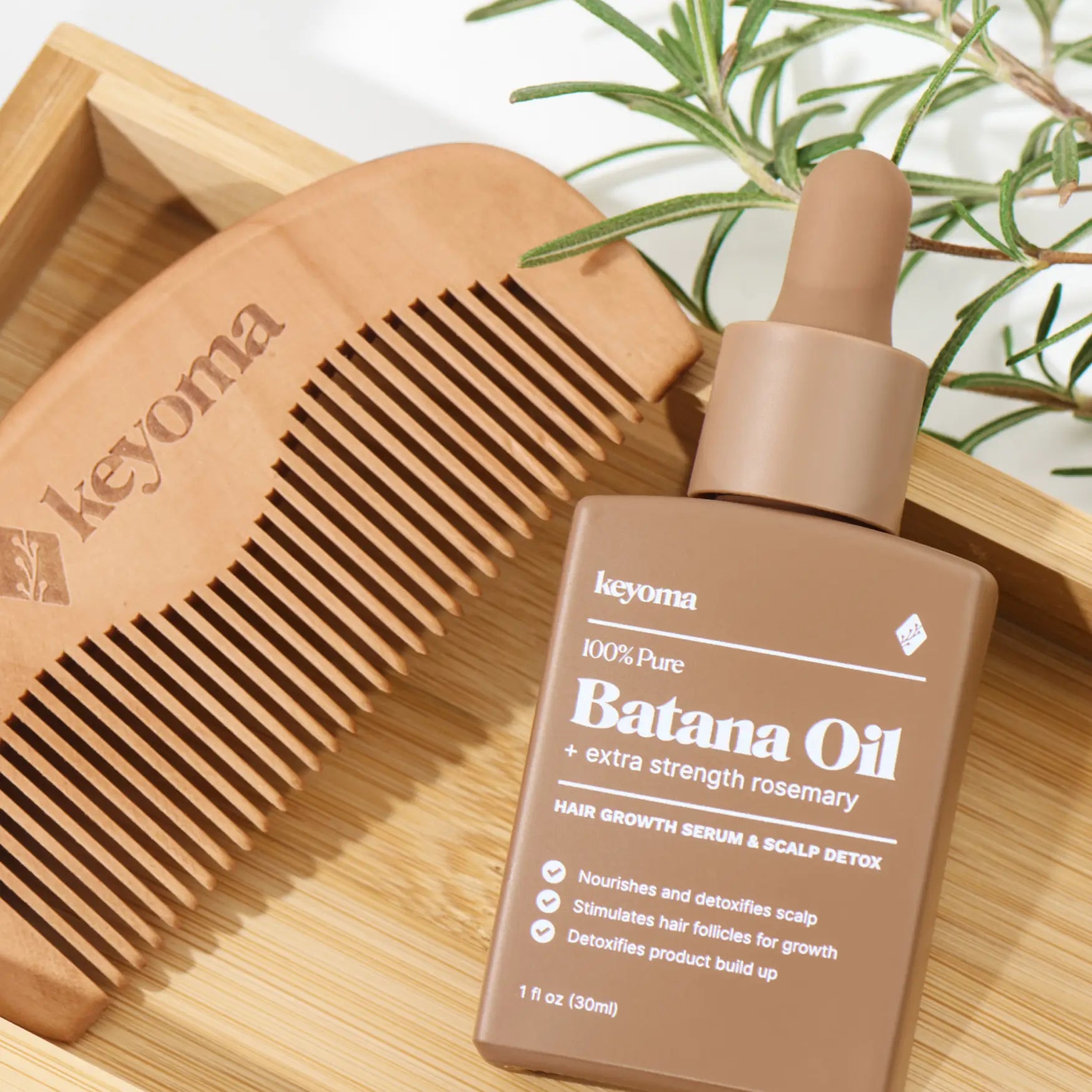
Start with one drop of Keyoma Batana Oil with Rosemary, spread it thinly across your hands, and apply it only to suitable human hair lengths. Keep the product well away from the lace, knots, wefts, adhesive, and cap.
Then watch how the wig responds. Stop adding oil if the hair becomes heavy, separated, dull, or difficult to style. Protecting an expensive unit often comes down to using less product in the right place.
Frequently Asked Questions
Can batana oil make a human hair wig grow?
No. Wig strands are detached from living follicles, so batana oil cannot produce new growth. It can only change how the existing human hair looks or feels.
Can I put batana oil on a lace-front wig?
You may use a small amount on suitable human hair lengths and ends. Do not let it touch the lace, knots, hairline adhesive, tape, or cap.
How much oil should I use on a human hair wig?
Begin with one drop or the smallest amount you can dispense. Spread it across your hands before touching the wig, then add more only if the strands still need it after settling.
Can I leave batana oil on a human hair wig overnight?
A light finishing amount may remain on the lengths if the wig tolerates it. Do not soak the unit overnight unless the manufacturer specifically approves an oil treatment.
Can I use batana oil on a synthetic wig?
Do not assume a product intended for human hair is compatible with synthetic fibers. Follow the synthetic wig manufacturer’s care instructions instead.
Featured Product
30% Off + 3 FREE Gifts
100% Pure Batana Oil + Rosemary


