

In this article
You can use hair oil and a bond builder in the same routine, but they do not always belong in the same step.
The right order depends on the bond builder. Some treatments go on before shampooing. Others replace a conditioner, rinse out after several minutes, or remain in the hair before styling. Follow the bond builder’s directions first. Once that step is complete, decide whether your hair still needs oil.
The two products also have different jobs. A bond-focused formula works according to its specific ingredients and instructions. Hair oil mainly supports the surface of your strands by improving slip, softness, shine, and manageability. Adding oil does not make a bond treatment repair more damage.
This distinction matters when you are already managing overprocessed hair. Fragile hair may benefit from both steps, but too many rich layers can leave it flat, coated, or harder to style.
Key Takeaways
-
Follow the bond builder’s label before deciding where your hair oil belongs.
-
Complete the treatment step before adding oil unless its instructions say otherwise.
-
Use less oil when several conditioning products share the same wash-day routine.
-
Coated, limp, or sticky hair signals that you should simplify your layers.
Start With the Type of Bond Builder You Use
“Bond builder” describes several types of hair products. It does not refer to one standard formula or application method.
Before adding oil, check whether your product is a pre-shampoo treatment, rinse-out treatment, leave-in, or styling oil. Its format tells you where it belongs in your routine.
Pre-Shampoo Bond Treatment
A pre-shampoo bond treatment needs direct, even contact with your hair in the condition specified on its label. That may mean applying it to dry, damp, or freshly rinsed hair.
Avoid coating your strands with oil first unless the manufacturer says the products can be combined. An oil layer may change how easily the treatment spreads or reaches the areas you are trying to cover.
Apply the bond treatment first, wait for the stated contact time, and shampoo or rinse as instructed. You can assess the need for oil later, after conditioning or styling.
If you enjoy pre-wash oiling, use it during a different wash cycle. Separating the two treatments often makes it easier to judge how each product affects your hair.
Rinse-Out Bond Treatment or Mask
Rinse-out treatments commonly follow shampoo. Some replace your regular conditioner, while others sit between shampoo and conditioner.
Apply the product to clean hair, leave it on for the stated time, and rinse thoroughly. Do not mix a separate oil into the mask unless the label specifically allows it. Changing the formula can affect its spread, consistency, and intended use.
After rinsing, check how your hair feels. If it is already soft and easy to detangle, you may not need more conditioning layers. If the ends still feel rough, add a small amount of oil later rather than repeating a rich treatment.
Leave-In Bond Treatment
A leave-in bond builder usually goes on clean, damp hair. Apply it before your separate oil unless its directions provide another order.
Spread the leave-in evenly, paying attention to the damaged lengths instead of saturating the roots. If the label gives a waiting time, honor it before adding another product.
Many leave-in bond formulas also contain conditioning or styling ingredients. Let your hair’s response guide the next step. When the leave-in already provides enough slip and softness, adding oil may give you weight without a noticeable benefit.
Bond-Building Styling Oil
Some formulas combine bond-focused ingredients with the finish of a styling oil. Treat this as one complete product, not as an invitation to layer another oil over it.
Start with the recommended amount and assess the finished result. A second oil only makes sense when specific areas still feel rough and the added layer does not leave them greasy or separated.
Claims also vary between products. Use only the heat-protection, repair, or styling benefits stated on that product’s label. The words “bond-building oil” do not make every formula interchangeable.
Use This Order for a Bond Treatment and Oil Routine
When the label does not provide a complete routine, use this sequence as a starting point:
-
Cleanse your hair as required by the bond treatment.
-
Apply the bond product to dry, damp, or wet hair as directed.
-
Leave it in place for the full processing time on the label.
-
Rinse it out or leave it in according to the instructions.
-
Add conditioner, leave-in conditioner, or heat protectant when needed.
-
Apply a small amount of oil only where your hair still needs softness.
This sequence gives the treatment room to work as designed. It also keeps oil in a supporting role instead of treating it as another repair layer.
Hair oils and conditioners can reduce friction and make strands easier to comb, according to a scientific review of hair cosmetics and conditioning. That surface support is useful for rough hair because less friction can mean fewer snags during detangling. It does not prove that the oil rebuilt damaged bonds.
If you plan to blow-dry or use a hot tool, apply a tested heat protectant according to its label. Do not assume a regular oil provides heat protection. You can review the difference between applying hair oil before or after blow-drying when deciding where it belongs in a heat-styling routine.
Adjust the Oil Layer to Your Hair
The best amount is the smallest dose that changes how your hair feels without making it look coated.
That amount varies with strand thickness, density, curl pattern, damage level, and the other products in your routine. Count the full product load instead of judging the oil alone.
Fine or Easily Weighed-Down Hair
Begin with one drop or the smallest amount your dispenser allows. Rub it between your palms, then lightly touch the final few inches of your hair.
Keep oil away from the roots unless the product is intended for scalp use. Fine hair can lose movement quickly when oil, leave-in conditioner, styling cream, and bond treatment collect on the same strands.
If your bond builder already leaves your hair smooth, skip the oil for that wash day. You do not need every product in every routine.
Thick, Coarse, Curly, or Coily Hair
Thicker and more textured hair may tolerate a richer finishing layer, especially when the lengths feel rough after chemical processing.
Work in sections so you can distribute a thin film instead of pouring more oil into one area. Begin with the ends, then move upward only if the middle lengths still need slip.
The American Academy of Dermatology notes that people with curly hair may apply oil or leave-in conditioner after washing and conditioning to assist with moisture. Its curly hair care guidance also stresses careful detangling and keeping the hair conditioned.
Even when your hair tolerates rich formulas, buildup can still collect over repeated wash days. Judge the routine after the hair is fully dry, not while it is still damp and compressed.
Highly Porous or Chemically Damaged Ends
Damaged ends often absorb products unevenly. One section may feel dry while another becomes coated.
Apply oil to the roughest areas instead of covering every strand. A targeted layer can reduce catching and make the ends feel smoother during handling.
A better finish does not mean the missing cuticle or damaged internal structure has returned. Oils can support the look and feel of damaged hair, but they cannot permanently fuse split ends or reverse severe chemical damage. This difference is also important when choosing an oil for damaged hair.
If the ends remain stiff, tangled, or easy to snap despite gentler care, more oil may hide the texture without solving the cause. Review your heat use, chemical schedule, detangling method, and whether the weakest ends need trimming.
Oily Roots With Dry Lengths
Oily roots and damaged ends need different treatment.
Keep the bond product within its labeled application area. Then apply oil below the ears or only to the last few inches. You do not need to coat your scalp to support dry lengths.
This targeted approach also preserves volume near the roots. It prevents one concern from turning into two, where the ends remain rough but the upper hair looks greasy.
Know When You Have Layered Too Much
A routine can feel balanced on the first wash day and become heavy after several applications. Watch how your hair behaves instead of adding more product whenever it looks dull.
Signs that your routine has too many layers include:
-
Hair feels coated after it dries
-
Fine sections separate or look stringy
-
Roots lose volume sooner than normal
-
Hair remains sticky or dull after washing
-
Curls or waves stop holding their shape
-
Each wash day seems to require more product
-
The bond treatment becomes harder to distribute evenly
These changes do not prove that the bond builder stopped working. The total product load may be too high, especially when oil sits alongside masks, leave-ins, creams, silicone serums, and styling products.
Hair that stays flat, sticky, or coated after washing may also show signs of product buildup. Look at the entire routine before blaming the most recent product.
Hard water adds another variable. Minerals and product residue can create a waxy or rough finish that resembles dryness. If this pattern returns after washing, compare your symptoms with hair oil and hard-water buildup.
Reset the Routine Without Abandoning Both Products
You do not need to throw away your bond builder or hair oil after one heavy result. Simplify the routine and change one variable at a time.
Start with these adjustments:
-
Cut the oil amount in half.
-
Limit oil to the ends instead of the full length.
-
Remove one extra leave-in, cream, or finishing serum.
-
Use the bond treatment and oil on different wash days.
-
Cleanse based on your residue level and color-care needs.
-
Reintroduce each product separately to find the heavy layer.
Changing one factor at a time gives you a clearer answer. If you reduce the oil, change the shampoo, remove the leave-in, and switch the bond treatment together, you will not know which change improved the result.
Avoid clarifying on a fixed schedule simply because you use oil. Some routines need a stronger wash sooner, while others remain balanced for several wash cycles. Your product load, scalp oil, wash frequency, water quality, and hair condition all influence the timing.
Fragile or color-treated hair may feel rough after aggressive cleansing. Use the level of cleansing needed to remove residue, rinse well, and restore conditioning without immediately rebuilding the same heavy stack.
If your hair feels stiff rather than greasy, do not assume oil is the missing step. A routine containing several strengthening or protein-rich formulas may need to be simplified. Use the broader signs in this guide to oil, protein, and moisture needs before adding another treatment category.
Build a Routine That Protects Hair Beyond Products
Bond builders and oils cannot compensate for repeated damage faster than your routine creates it.
The American Academy of Dermatology recommends conditioning after shampooing, reducing heat, using hot tools less often, and handling hair gently. It also recommends spacing chemical services and avoiding unnecessary pulling during styling.
Build those habits around your product routine:
-
Add more time between coloring, relaxing, perming, or bleaching
-
Avoid stacking strong chemical services close together
-
Condition after shampooing
-
Let hair air-dry when your texture and schedule allow
-
Use the lowest effective temperature for heat styling
-
Limit repeated passes over the same section
-
Detangle gently with an appropriate wide-tooth comb
-
Reduce tight styles and unnecessary pulling
These changes protect more of the hair you already have. They also reduce the pressure on any single product to make damaged hair look untouched.
When ongoing breakage does not improve after you reduce damaging habits, or when it appears with scalp symptoms or noticeable thinning, speak with a board-certified dermatologist. The issue may extend beyond product layering.
Layer for Softness Without Overloading Your Hair
Let the bond builder control the order. Complete its required application, processing, and rinsing steps before deciding what your hair still needs.
Use oil as a separate support step for softness, shine, and easier handling. Keep the amount small, concentrate it on rough lengths, and skip it when the rest of your routine already provides enough conditioning.
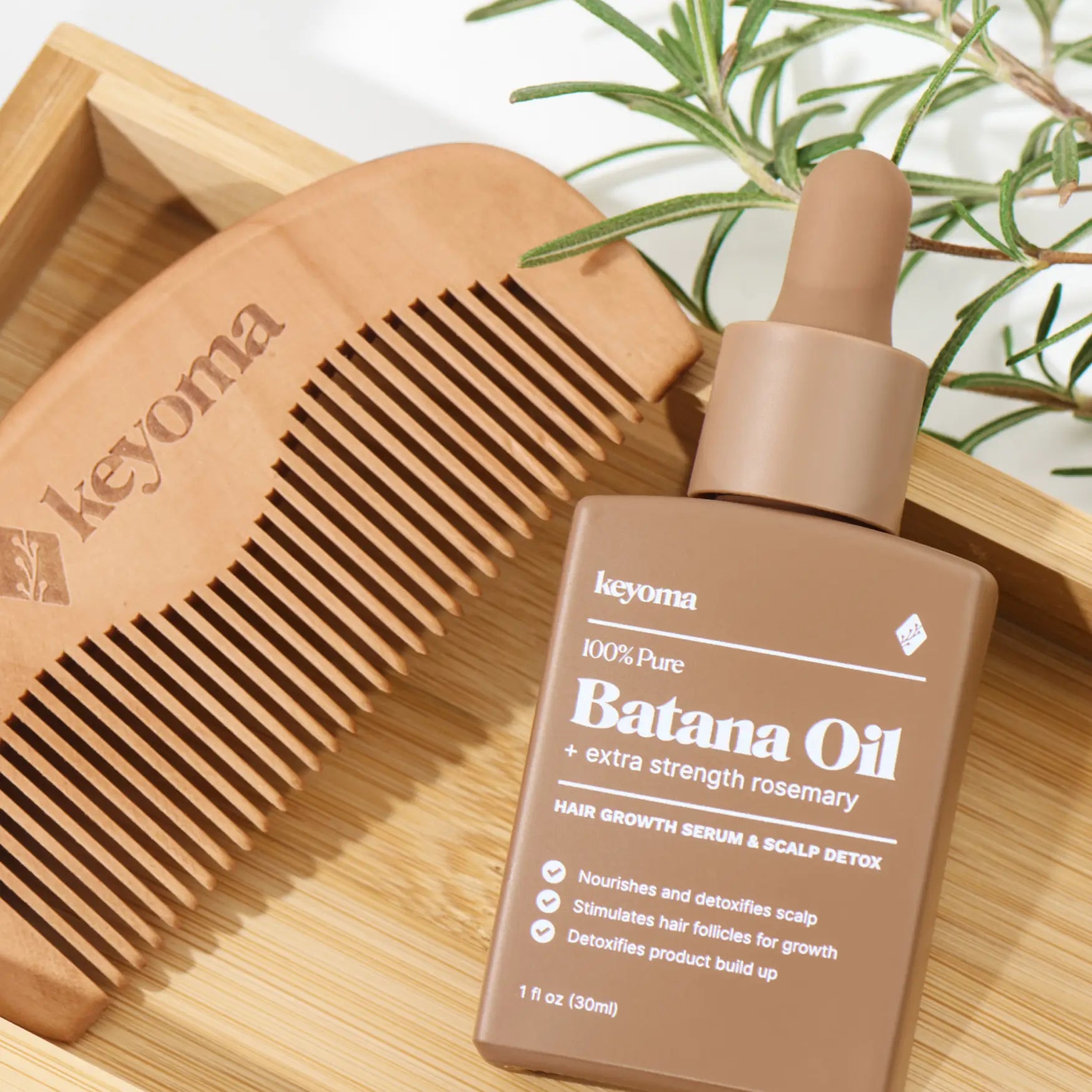
If you want a focused oil step, Keyoma Batana Oil with Rosemary can be used according to its label rather than mixed into your bond treatment. Keeping each product in its own role helps you protect damaged hair without turning every wash day into a stack of competing layers.
FAQs
Can I apply hair oil before a bond builder?
Apply the bond builder to the hair condition specified on its label. Avoid putting oil underneath it unless the manufacturer states that the products can be combined. You can complete the bond treatment first and use oil later for softness or slip.
How long should I wait before applying oil after bond repair?
There is no universal waiting time. Finish the product’s required processing, rinsing, or leave-in steps before adding oil. If the label tells you to wait before applying another product, follow that timing.
Can I mix hair oil into a bond treatment?
Do not mix the formulas unless the manufacturer explicitly allows it. Adding oil may change the treatment’s consistency, distribution, or intended contact with the hair.
Do I need hair oil if my bond builder is already moisturizing?
No. If the bond builder leaves your hair soft, manageable, and easy to style, another oil layer may add weight without providing a useful change.
Why does my hair feel greasy after using both products?
The combined amount may be more than your hair can tolerate. Reduce the oil first, place it only on the ends, and remove other rich leave-ins before changing the bond treatment.
Featured Product
30% Off + 3 FREE Gifts
100% Pure Batana Oil + Rosemary


