

In this article
Hard water does not make hair oil harmful. The problem is that mineral residue can coat the hair before oil is added, while incomplete cleansing can leave some oil behind after washing.
Your roots may look greasy while the lengths feel waxy, rough, or flat. Shampoo may also seem less effective even though your products have not changed. Adding more oil to fix the roughness can make the coating feel heavier.
A useful reset starts by separating excess oil from mineral residue. Once you identify the stronger pattern, you can choose the right cleanser, reduce unnecessary oil, and condition only where your hair needs it.
Key Takeaways
-
Hard water can make leftover hair oil feel heavier after washing.
-
Greasy roots suggest excess oil, while dull rough lengths suggest minerals.
-
Clarifying shampoo removes oil and products, while chelating formulas target minerals.
-
Use less oil, cleanse the scalp well, and condition the lengths.
Why Hair Oil Feels Heavier in Hard Water?
Hard water contains more dissolved calcium and magnesium. The U.S. Geological Survey’s explanation of water hardness notes that these minerals can react with soap, leave residue, and increase the amount of cleanser needed. The same water can affect how easily shampoo spreads, lathers, and rinses from hair.
Hair can also take up hardness minerals. A study of chemically treated human hair found calcium and magnesium uptake after tap-water exposure, with greater uptake in chemically treated fibers. Another microscopy study of hard-water-treated hair found more mineral deposition than distilled-water exposure. These findings support mineral buildup as one contributor, not proof that hard water causes every greasy or damaged-hair complaint.
Oil, conditioner, styling cream, and dry shampoo can sit over that mineral film. The combined coating may darken the roots, separate strands, flatten volume, or leave the lengths rough even after washing.
For broader water-quality effects, compare how hard water and soft water affect hair. Here, the practical question is whether the current coating is mainly oil, minerals, or both.
Is It Oil Buildup or Hard Water Buildup?
No single sign confirms the cause. Greasy roots can reflect sebum or overapplication, while mineral residue can make clean hair feel dull, stiff, or waxy. Compare your scalp, lengths, wash performance, and bathroom fixtures.
|
What You Notice |
Excess Oil |
Mineral Buildup |
Combined Buildup |
|
Feel |
Slick, soft, or stringy |
Rough, stiff, or waxy |
Slick roots and rough lengths |
|
Appearance |
Shiny roots and flat sections |
Dullness and rough ends |
Greasy-looking but dull overall |
|
Shampoo lather |
Often improves on a second cleanse |
May remain weak |
Improves, but coating remains |
|
Scalp |
Oily or heavy |
Tight, dry, or coated |
Greasy with itch or flakes |
|
Bathroom clues |
None required |
Scale on faucets or glass |
Hair symptoms plus fixture scale |
The table helps sort patterns, but styling waxes, silicones, sweat, dry shampoo, and scalp conditions can create similar signs. Broader causes of product buildup in hair deserve consideration when the water clues are weak.
Signs the Problem Is Excess Oil
Excess oil is more likely when the roots turn shiny soon after application, the hair separates into thin pieces, and the heaviness closely follows the amount used. If skipping oil once lets your normal shampoo restore movement, application technique was likely the main issue.
Placement also matters. Oil applied to an already oily scalp will flatten the crown faster than oil pressed onto dry ends. Reduce the amount, keep it away from the roots, and use it before washing when leave-in use stays greasy. Review the broader side effects of over-oiling when residue comes with limpness, hairline breakouts, or irritation.
Signs Minerals Are Part of the Problem
Minerals are more likely when hair stays dull, rough, or waxy despite moderate oil use and thorough washing. Weak lather, white scale around faucets, and a clear change after moving or traveling support the hard-water explanation.
Color-treated, bleached, relaxed, or damaged hair may show more deposition because altered fibers can take up more hardness metals. Still, deposition does not automatically mean severe damage. One small tensile-strength study found no significant difference between hard-water-treated and distilled-water-treated hair during its test period. Avoid blaming every breakage problem on water alone.
A greasy scalp with stiff ends often points toward combined buildup. Remove both product and mineral residue, then reduce oil placement.
How to Clarify Hair After Oiling in Hard Water

A reset wash should remove the coating without turning every wash into a stripping treatment. Match the cleanser to the residue, your hair condition, and the directions on the label.
Choose Clarifying or Chelating Based on the Residue
Clarifying shampoos use stronger cleansing systems to remove oil, styling products, and general residue. Chelating formulas contain ingredients that bind certain metal ions so mineral deposits can rinse away. Some formulas do both, but “clarifying” alone does not guarantee mineral removal.
Board-certified dermatologist Angela Brimhall, DO, explains how chelating ingredients bind minerals. Check for hard-water, mineral, or metal-removal claims instead of assuming every detox shampoo works the same way.
Choose clarifying when heaviness follows heavy oil, dry shampoo, wax, or several leave-ins. Choose chelating when fixture scale, weak lather, and rough coated lengths point toward minerals. For a mixed pattern, look for a formula labeled for both rather than stacking aggressive cleansers.
Wet and Shampoo the Scalp Thoroughly
Saturate the hair before adding shampoo, especially if it is dense. Apply cleanser mainly to the scalp, including the crown, hairline, and behind the ears.
The American Academy of Dermatology recommends shampooing mainly at the scalp to remove built-up products, dead skin, and excess oil without needlessly drying the lengths. Let the rinse carry the lather downward unless the product says otherwise.
Weak lather is not a reason to scrub harder. Add water, massage with fingertips, and follow the label. A second gentle cleanse may help after heavy oiling, but repeated washing can leave dry or processed hair rougher.
Rinse Well and Condition the Lengths
Rinse thoroughly through dense areas and the nape. Leftover shampoo or conditioner can imitate the coating you are trying to remove.
Condition after deeper cleansing. Fine or straight hair may need conditioner mainly on the ends, while dry or curly hair may need it through more of the length. Avoid replacing removed buildup with another heavy oil layer.
When the ends need extra slip, compare pre-wash and post-wash hair oil. A light pre-wash application is often easier to remove and assess than repeated leave-in layering.
Reassess Before Repeating a Deep Clean
Judge the result only after the hair is dry. If movement and lather improve but the roots still become greasy, reduce oil. If the roots feel clean but the lengths remain stiff and dull, a product labeled for hard-water minerals may be more appropriate.
Do not follow a universal clarifying schedule. Use the product directions, then adjust for hair type, color treatment, dryness, water hardness, and how quickly residue returns.
Prevent the Coating From Coming Back
Change one variable at a time. Use the smallest amount of oil that softens dry areas, keep it away from oily roots, and stop once the strands feel smooth rather than visibly coated.
Next, adjust your hair oiling frequency according to how quickly heaviness returns. A lighter hair oiling routine is usually easier to manage than alternating heavy applications with harsh reset washes.
Water treatment also needs precise expectations. Under NSF standards, water softeners reduce calcium and magnesium ions, while certified shower filters are generally tested for free-chlorine reduction, not full hardness removal. Check the device’s certification and reduction claims before assuming it softens water.
Stop experimenting and speak with a dermatologist if residue comes with persistent redness, pain, sores, marked itching, significant scaling, burning, or unexplained shedding.
Reduce Hair Oil Hard Water Buildup for Cleaner Hair
Match the next step to the pattern. Greasy, separated roots after oiling call for less product and lower placement. Rough, dull lengths with fixture scale call for a cleanser labeled for mineral removal. A mixed pattern needs both changes, not more oil or repeated harsh washing.
After the reset, keep the simplest approach that works: targeted oil on dry areas, thorough scalp cleansing, a complete rinse, and conditioner where the hair needs softness. Cleaner hair should move freely without leaving the ends stripped or the scalp uncomfortable.
Featured Product
30% Off + 3 FREE Gifts
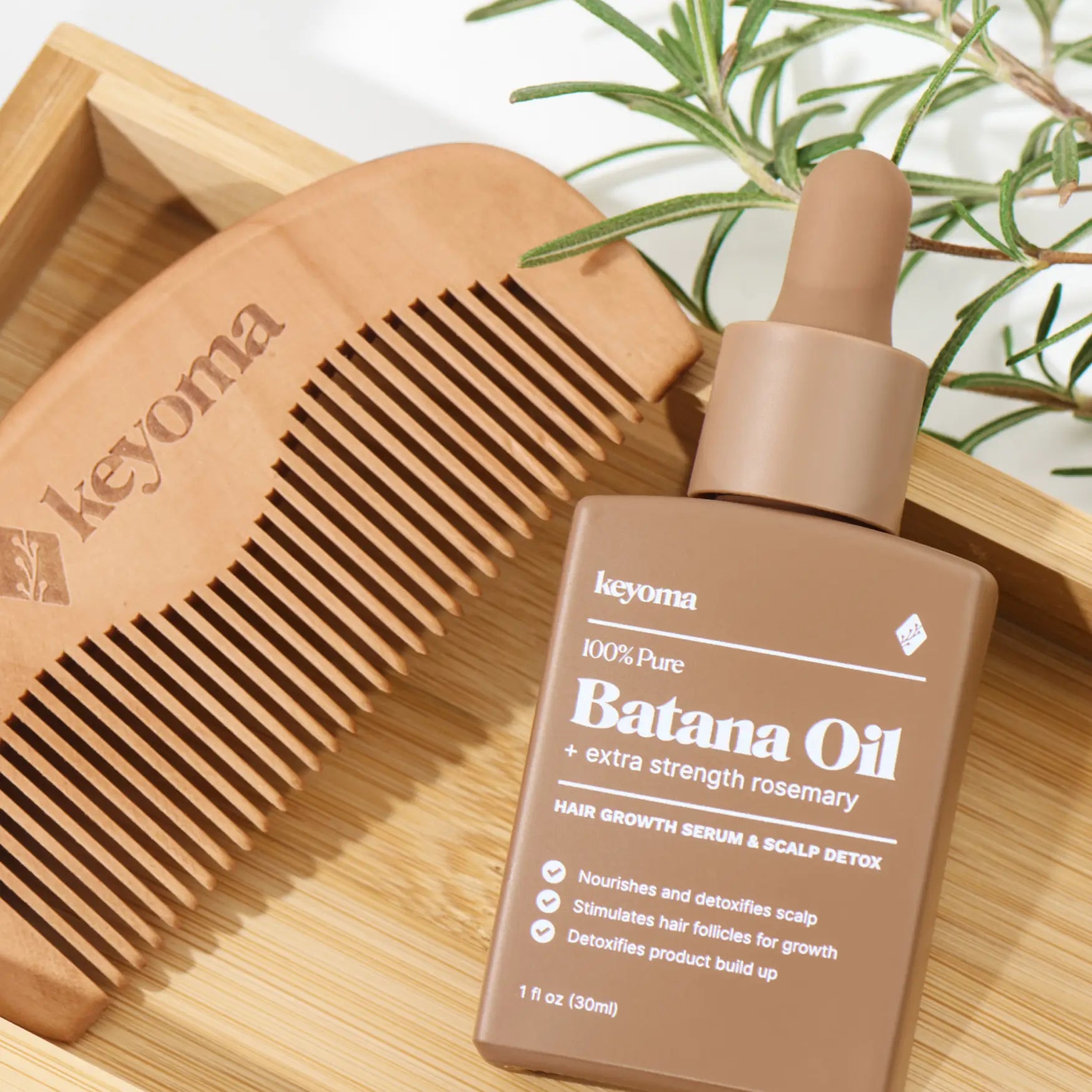
100% Pure Batana Oil + Rosemary


