

In this article
You can use batana oil on an acne-prone scalp, but heavy scalp use is not the safest default. If your scalp breaks out easily, treat batana oil like a rich conditioning oil, not a leave-on acne treatment.
The better question is not “Is batana oil bad?” It is “Where should I apply it, how much should I use, and what should make me pause?” Rich oils can soften dry lengths and reduce a rough feel, but they can also sit on oily roots, move toward the hairline, mix with sweat, and make bumps harder to sort out.
This guide helps you decide when scalp use makes sense, when to keep oil on your lengths and ends, and when bumps need a dermatologist instead of more oil.
Key Takeaways
-
Batana oil is not automatically wrong for acne-prone scalps.
-
Heavy scalp oiling can worsen clogged pores for some people.
-
Apply less oil and keep it away from the hairline first.
-
Pause oiling if bumps, tenderness, or itching increase.
Can You Use Batana Oil on an Acne-Prone Scalp?
Batana oil can fit an acne-prone scalp routine when your scalp is calm, your roots are not overly oily, and you use it sparingly. It is less sensible when you already have tender bumps, greasy buildup, inflamed follicles, or breakouts along the forehead, temples, or back of the neck.
An acne-prone scalp is already easier to overwhelm. Extra oil, sweat, dead skin cells, styling residue, hats, pillowcases, and friction can all blur the picture. A new bump after oiling does not prove batana oil caused it, but it does tell you to slow down and compare the pattern.
Use this decision table before you apply oil directly to your scalp:
|
Scalp pattern |
Safer choice |
Why |
|
Calm scalp, dry-feeling roots, no active bumps |
Try a small scalp amount |
Lower risk when the scalp is not already inflamed |
|
Oily roots, forehead acne, hairline bumps |
Use oil on lengths and ends only |
Oil can move from hair to skin |
|
New bumps after oiling |
Pause and cleanse |
The pattern may point to product buildup |
|
Painful, spreading, itchy, or pus-filled bumps |
Ask a dermatologist |
It may not be simple scalp acne |
If your main goal is softness or shine, you do not always need scalp application. Using a small amount on mid-lengths and ends can give the hair a conditioned feel while reducing contact with acne-prone skin.
Why Hair Oils Can Trigger Scalp or Hairline Breakouts
Hair oils can affect more than your hair. Oil can spread from the scalp to the forehead, temples, neck, pillowcase, headwear, or face. The American Academy of Dermatology explains that oil-containing hair products can move onto the skin, clog pores, and trigger acne, often as whiteheads or small bumps around the hairline, forehead, or back of the neck.
That does not mean every oil clogs every person’s pores. “Comedogenic” risk is not a fixed label you can apply to every scalp. Amount, cleansing, sweat, hair density, skin oiliness, product layering, and how close the oil sits to the hairline all affect the outcome.
For a deeper ingredient-focused look, use this separate guide on whether batana oil is comedogenic. Keep the current page focused on your scalp decision: use, avoid, or pause.
Oil, Sweat, and Product Residue
A breakout risk usually increases when oil becomes part of a buildup pattern. Think of a workout day, a leave-in styling cream, dry shampoo, sunscreen near the hairline, and oil on the scalp. Each layer may be fine alone, but together they can trap residue around follicles.
Cleveland Clinic lists product buildup, sweat, oil, dead skin cells, and microorganisms among factors linked with scalp pimples. That makes cleansing and timing important if your scalp already reacts easily.
A useful self-check is location. Bumps near the forehead, temples, or back of the neck after oiling point more toward product transfer. Bumps spread across the scalp after several products may point more toward buildup, irritation, or another scalp condition.
Scalp Acne vs. Acne Cosmetica
Scalp acne usually refers to clogged, inflamed follicles on the scalp. Acne cosmetica is acne caused by products applied to the hair or skin. The two can overlap because hair products can reach scalp skin and nearby facial skin.
Product-related acne often looks like small, similar bumps rather than one random pimple. It may appear where products collect: the hairline, forehead, temples, nape, or behind the ears. If you only break out after adding a heavy oil, pomade, wax, or leave-in, the product pattern matters more than the ingredient name alone.
Stopping the suspected product helps clarify the cause. The AAD notes that when a pore-clogging hair product is stopped, acne can slowly clear, but it may take several weeks.
Scalp Acne vs. Folliculitis
Not every scalp bump is acne. Folliculitis can look acne-like because it affects hair follicles, but it is often linked to infection or follicle damage. The AAD describes folliculitis as a common skin infection in hair follicles, sometimes with a red ring around each spot, itching, or pain.
Oil will not fix folliculitis. If bumps are painful, spreading, crusting, or filled with pus, pause scalp oiling and get medical advice. Adding oil to an irritated or infected area can make it harder to see what is happening and may delay the right treatment.
Dandruff, Flakes, and Oily Scalp Conditions
Flakes can mislead people into using more oil. A dry-feeling scalp and a flaky scalp are not always the same problem. Seborrheic dermatitis, for example, can cause greasy scaling and itching on the scalp, and Cleveland Clinic notes that it often affects areas with many oil glands.
If your scalp has yellowish flakes, greasy patches, redness, or recurring itch, more oil may not be the best first step. A medicated dandruff shampoo or dermatologist-guided plan may fit better than repeated oiling.
Who Should Be Careful With Batana Oil?
Be more cautious with batana oil if your scalp is already oily, congested, itchy, flaky, or actively breaking out. Rich oils are easier to tolerate when the scalp barrier is calm and the main issue is dry-feeling hair, rough ends, or frizz.
Caution does not always mean you must avoid batana oil completely. It may mean you should change the placement. For many acne-prone readers, the safest compromise is simple: scalp use only when calm, ends-only use when reactive.
Be careful if you notice any of these patterns:
-
Your roots look greasy soon after washing.
-
Your forehead breaks out after hair products touch it.
-
Your scalp bumps feel sore or itchy.
-
You wear tight hats, helmets, or head coverings after applying oil.
-
You already use leave-ins, gels, waxes, or dry shampoo near the roots.
The most important boundary is active inflammation. If your scalp has painful bumps or irritated patches, do not try to “balance” it with more oil. Calm the scalp first, then reconsider oil placement later.
How to Test Batana Oil Before Scalp Use
Testing matters more for acne-prone readers because a reaction can look like acne, irritation, or both. A careful test will not guarantee perfect tolerance, but it gives you a cleaner signal than applying oil all over your scalp on the first try.
Keep the test simple. Use one new product at a time, avoid layering it with heavy styling products, and watch where bumps appear. If you change shampoo, oil, styling cream, and wash frequency at once, you will not know what caused the issue.
Patch Test First
Apply a small amount to a discreet skin area before scalp use. The inner arm is commonly used because it is easy to observe. Watch for redness, itching, burning, swelling, or rash.
A patch test checks irritation or allergy risk. It does not fully predict clogged pores on the scalp, because scalp conditions involve sweat, sebum, hair density, and cleansing habits. Still, it is a smart first filter before putting oil near sensitive skin.
Start Away From the Hairline
Your forehead and temples are often more breakout-prone than the middle of your scalp. If you want to test batana oil, keep it away from the hairline at first. Apply only a tiny amount to a small scalp area or skip the scalp and use the lengths.
If oil transfers to your face while you sleep, work, or exercise, the test becomes less useful. Tie hair back loosely, avoid letting oiled sections touch your forehead, and change pillowcases if oil gets on them.
Wash Out Residue Well
Residue control matters more than using a large amount. Heavy application can leave oil behind even after a quick rinse, especially if your hair is dense, curly, or coated with styling products.
Use a gentle but thorough wash after scalp oiling. If your roots still feel coated after washing, reduce the amount next time or move the oil to your ends. For broader application steps, the guide on how to apply batana oil can help, but acne-prone scalps should stay more conservative than a general routine.
How to Use Batana Oil If Your Scalp Breaks Out Easily
If your scalp breaks out easily, use batana oil as a targeted conditioning step. The goal is not to cover every inch of scalp. The goal is to support softness, shine, and smoother-feeling hair while limiting residue where bumps tend to form.
For readers who still want to try a product, choose a simple option such as pure batana oil and keep the routine minimal around it. Do not add several new products at the same time.
Use Less Than You Think
A small amount is easier to control and easier to wash out. If your hair looks wet, stringy, or greasy at the roots, you used more than your scalp needed.
Apply with clean hands. Avoid dripping oil onto the forehead. Keep it away from areas that already break out. If you sweat heavily during the day, avoid scalp oiling before exercise or under tight headwear.
Focus on Lengths and Ends When Needed
Lengths and ends usually need cosmetic conditioning more than the scalp does. If your scalp is oily but your ends feel rough, place the oil where the dryness shows.
This approach also protects your acne-prone zones. You can smooth dry ends, reduce friction, and add shine without coating the follicles most likely to clog.
Pause If Bumps Increase
A clear pattern is more useful than a guess. If bumps appear or worsen after oiling, pause scalp use. Keep your routine simple for a few weeks and watch whether the bumps calm down.
Do not keep increasing oil because your scalp feels “unbalanced.” More product can make the cause harder to identify. If you want to keep using batana oil during the pause, apply it only to the lower lengths and ends where it does not touch the scalp or face.
What to Do If Batana Oil Seems to Clog Your Pores
If batana oil seems to clog your pores, stop applying it to the scalp and hairline first. You do not have to throw out the whole routine immediately. Remove the most likely trigger, simplify the rest, and watch the pattern.
Wash your scalp thoroughly but gently. Avoid harsh scrubbing, picking, or over-washing. Irritation can make acne-prone skin angrier. The AAD also advises choosing products labeled non-comedogenic or “won’t clog pores” when acne is a concern.
Use this short reset:
-
Pause scalp oiling and keep oil off the hairline.
-
Wash pillowcases, hats, bonnets, scarves, or headbands that touched oiled hair.
-
Skip heavy leave-ins near the roots.
-
Cleanse after sweating.
-
Track whether bumps improve after removing the oil from the scalp.
If the same oil works well on your ends but not your roots, you have your answer. Your hair may like batana oil, while your scalp does better with less direct contact.
For more general oiling issues, see the separate guide on side effects of hair oiling. Keep this article’s decision focused on acne-prone scalp use.
Use Batana Oil Acne Prone Scalp Safely with Less Buildup
Batana oil can be part of a hair routine for acne-prone readers, but scalp placement should be earned, not assumed. Try it only when your scalp is calm, use a small amount, keep it away from the hairline first, and wash residue out well.
Use it on lengths and ends if your roots are oily or your breakouts cluster around the forehead, temples, or neck. Pause scalp use if bumps increase. Ask a dermatologist if bumps are painful, spreading, pus-filled, crusting, or paired with heavy itching, flakes, or redness.
The safest decision path is simple: use on scalp when calm, use on ends when reactive, pause when bumps rise, and get help when symptoms look inflamed or persistent.
Featured Product
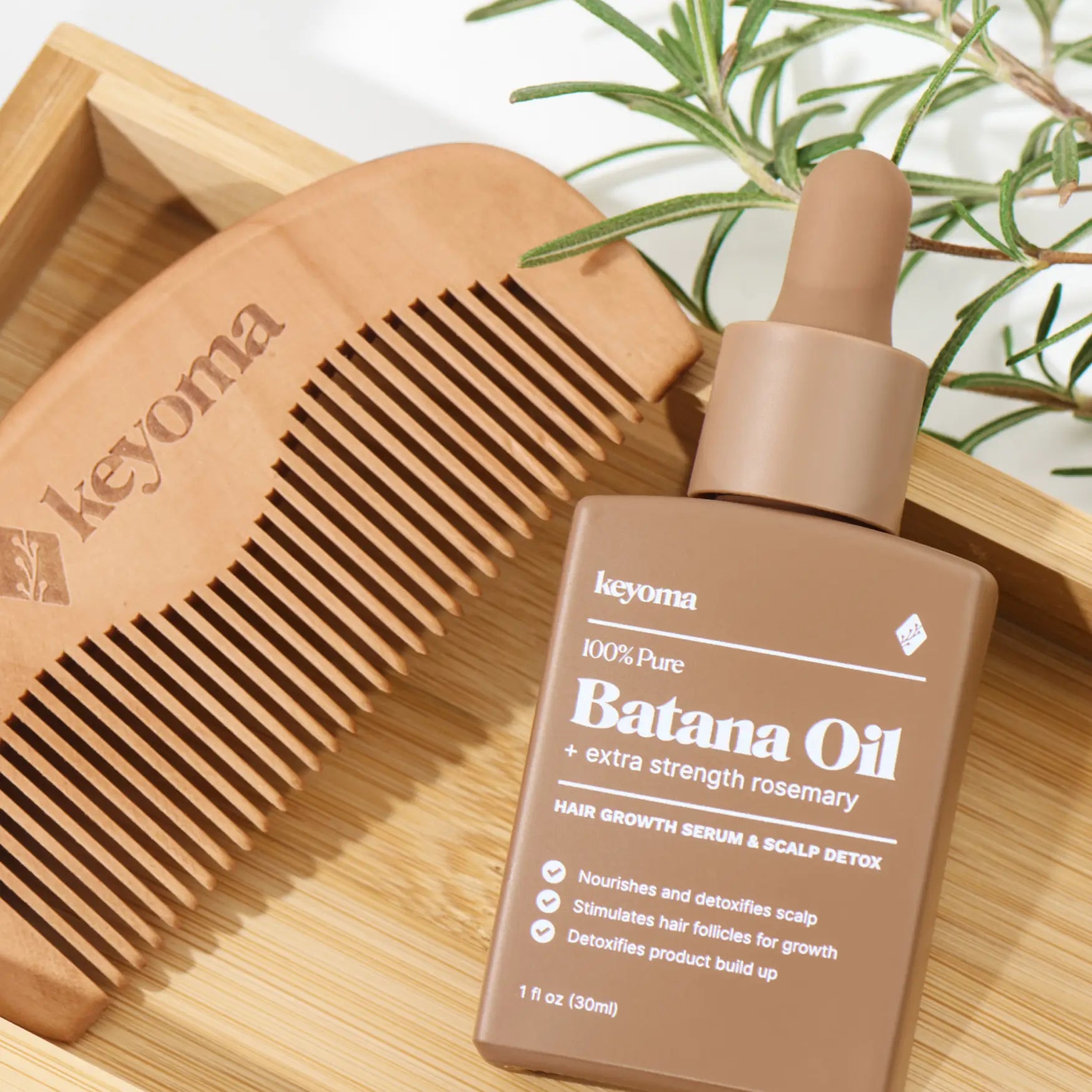
30% Off + 3 FREE Gifts
100% Pure Batana Oil + Rosemary


