

In this article
Your hair feels manageable before you step into the shower. Then you apply shampoo, and suddenly your fingers meet knots at the ends, nape, or middle of your hair.
When hair tangles while shampooing, the cleanser is not always the sole cause. Existing knots, trapped shed hairs, uncontrolled movement, and rough handling can all turn washing into a high-friction process. Applying shampoo throughout the lengths or piling wet hair on top of your head can make the problem worse.
The most useful solution is not simply buying a different shampoo. First, identify exactly when and where the knots form. That tells you which part of your wash-day technique needs to change.
Key Takeaways
-
Hair can knot during shampooing when existing tangles, shed strands, and repeated movements pull neighboring hairs together.
-
Detangling before washing and dividing long, dense, curly, or coily hair into sections can limit unnecessary movement.
-
Shampoo should generally be concentrated on the scalp instead of scrubbed through the lengths.
-
Rinse the hair in its natural direction, then apply conditioner before trying to separate any new snags.
Why Does Hair Tangle While Shampooing?
Water gives hair more freedom to move. Shampooing adds hand movement, and loose strands begin passing over and around one another. If the hair already contains small knots or trapped shed hairs, that movement can tighten them.
This is why the timing matters. A knot that was already present before the shower has a different solution from one that appears only after you start rubbing shampoo through the ends.
Existing Knots and Shed Hairs Tighten During Washing
Small tangles can hide inside the hair, especially near the nape or within dense interior layers. They may not feel serious while the hair is dry, but water and repeated movement can pull more strands into them.
Shed hair can also remain caught between attached strands. This is common in long, curly, coily, and high-density hair because the released strand does not always fall away immediately. During washing, it can wind around neighboring hairs and create a knot.
Hair collected in your hands during wash day is not necessarily all breakage. Some may be naturally shed hair that remained trapped until washing released it. Broken pieces tend to be shorter and may not have a visible bulb at one end.
Scrubbing the Lengths Creates Extra Friction
Shampooing the hair does not require rubbing every strand between your hands. The scalp is usually where oil, sweat, dead skin, and product buildup need the most attention.
Circular scrubbing through the lengths makes strands cross in several directions. Piling long hair on top of your head creates even more opportunities for the ends to wrap around other sections.
The American Academy of Dermatology recommends applying shampoo primarily to the scalp instead of washing the entire length directly. The diluted lather can move through the rest of the hair as you rinse.
Rough or Weathered Ends Catch More Easily
Healthy-looking hair can still have areas that experience more friction than others. The ends are the oldest part of the hair and have usually faced more washing, brushing, heat, weather exposure, and contact with clothing.
Bleaching, coloring, frequent heat styling, and split ends can make these areas feel rougher. Instead of sliding past neighboring strands, the ends begin to catch.
Tangling alone does not confirm that your hair is severely damaged or has a particular porosity. But if knots repeatedly begin at the ends, inspect how those ends feel. A rough, frayed, or straw-like texture may mean they need more conditioning, gentler handling, or a trim.
Your Product Amount May Be Increasing the Work
More shampoo does not automatically produce a cleaner scalp. Using too much can require longer massaging and rinsing, creating more opportunities for tangles.
Placement matters as much as quantity. Pouring shampoo into one area encourages you to spread it by dragging your hands through the hair. Distributing a smaller amount across several scalp areas can reduce that movement.
Pay attention to how your hair feels after rinsing. A rough feeling can suggest that the cleanser or washing frequency does not suit the lengths. A sticky or coated feeling may point toward incomplete rinsing or product residue. Neither observation proves that a particular ingredient category is bad. The complete formula, amount, frequency, and your hair’s needs all affect the result.
Find the Exact Point Where the Tangles Begin
Treat your next wash as a friction audit. Do not change every product at once. Instead, observe the hair at each stage:
|
What You Notice |
What It May Suggest |
|
Knots are present before wetting |
Existing tangles or trapped shed hair |
|
Knots begin while you scrub |
Too much circular movement or contact between sections |
|
Tangles collect at the ends |
Rough ends, dryness, damage, or shampoo applied too broadly |
|
The nape knots repeatedly |
Friction, trapped shed hairs, or insufficient sectioning |
|
Hair tangles while rinsing |
Flipping, twisting, or uncontrolled movement |
|
Hair feels sticky instead of rough |
Residue or incomplete rinsing may be contributing |
Location offers another clue. Knots at the nape often relate to friction from collars, bedding, and daily movement. Tangles concentrated inside dense hair may mean water, shampoo, or conditioner is not reaching each section evenly.
If the hair remains fairly smooth until you pile it on top of your head, that movement is probably the main problem. If the ends feel tangled before shampoo even touches them, preparation and end care deserve more attention.
This is not a diagnostic test. It is a simple way to stop blaming the entire routine when one specific movement may be responsible.
How to Wash Hair Without Creating More Tangles
A lower-friction wash does not have to be complicated. The goal is to keep the hair controlled, cleanse the scalp, and avoid forcing the lengths to move against one another.
Remove Loose Tangles Before the Shower
Check the ends, nape, and interior layers before wetting your hair. Use your fingers to separate loose tangles, beginning at the ends and gradually moving upward.
If your texture responds well to a wide-tooth comb, hold the hair above the section you are working on so you do not pull directly against the scalp. Do not start at the roots and drag the tool through every knot below.
There is no universal rule that everyone must detangle completely dry or soaking wet. Straight or fine hair may be easier to prepare while dry or slightly damp. Curly and coily hair may need added moisture and slip. Use the condition in which your hair bends and separates without excessive resistance.
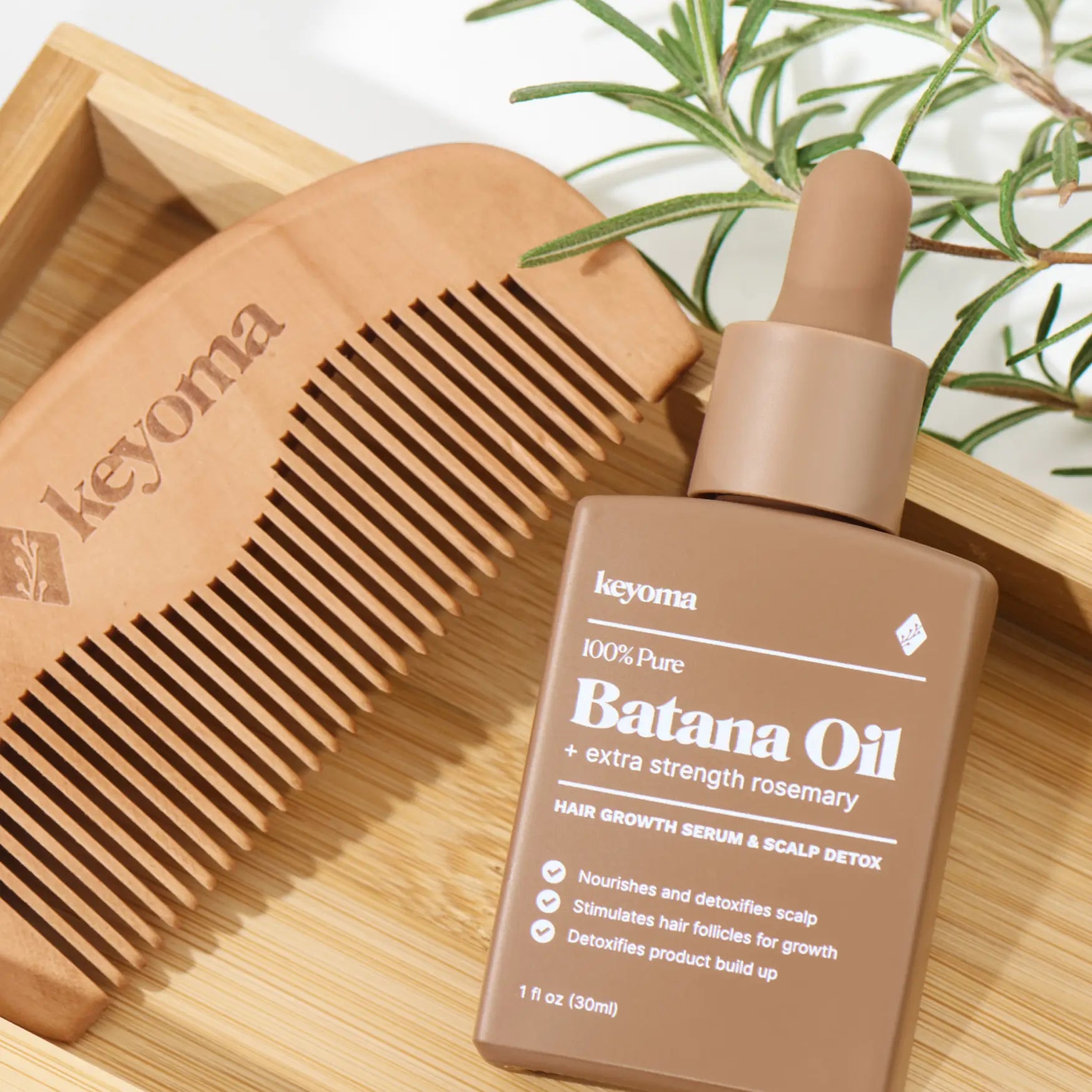
A small amount of pure batana oil with rosemary oil can be smoothed over dry, friction-prone ends before washing if they respond well to oil. Keep the amount light. The purpose is to give rough ends a little surface lubrication before shampooing, not to soak the hair or force apart a compacted knot.
Use Sections When Your Hair Moves Easily
Sectioning is useful for long, dense, curly, coily, or highly tangle-prone hair. It limits how many strands can cross over one another while you wash.
Divide the hair into a manageable number of sections and secure them with loose twists or clips. Open one section enough to cleanse its scalp area, then keep the lengths pointing downward.
The sections should control movement without creating tension. Tight twists or clips placed too close to the scalp can make washing uncomfortable and prevent you from cleansing thoroughly.
Saturate the Hair in Its Natural Direction
Let the water run from the roots toward the ends. If your hair is dense, gently open each section with your fingers so the water reaches the scalp.
Avoid flipping the hair forward and backward. Frequent flipping changes the direction of the strands and lets the ends wrap around one another. Do not wring the hair or gather it into a ball to force water through it.
Give water enough time to saturate the scalp and hair before applying cleanser. Thorough wetting can help shampoo spread with less product and less manipulation.
Apply Shampoo Mainly to the Scalp
Emulsify shampoo between your palms, then place it across several scalp areas. You might begin near the hairline, crown, sides, and back rather than pouring the full amount into one spot.
Massage with the pads of your fingertips using small, controlled movements. Clean the scalp beneath each section without dragging your fingers down through the loose lengths.
If you use a scalp-cleansing tool, keep its movement limited to the scalp. Do not pull it through the hair, where its teeth may collect strands and create knots.
The lengths usually do not need a separate scrubbing session. Let the diluted shampoo move downward while you rinse. If a particular area has substantial product buildup, cleanse it deliberately without bunching the rest of the hair around it.
Keep the Lengths Aligned While Rinsing
Rinse in the same direction the hair naturally falls. Support long hair with one hand if the water pressure causes it to swirl or wrap around itself.
Use a gentle squeezing motion to move water through the lengths. Do not twist the hair as if you were wringing out fabric.
Before moving on, check whether the water runs clear and whether the scalp feels free of cleanser. Incomplete rinsing can leave hair tacky, but excessively moving the hair in pursuit of a “squeaky” feeling may create more friction than necessary.
Apply Conditioner Before Separating New Snags
If you feel a new knot after rinsing, resist the urge to pull it apart immediately. Shampooed hair may not have enough slip for safe detangling.
Apply conditioner first. Fine or straight hair may need it mainly through the ends, while dry, curly, or coily hair may benefit from conditioner along the full length. The AAD notes that conditioner can moisturize, detangle, and make hair more manageable. It also recommends that people with thick, curly hair consider combing in the shower before rinsing out their conditioner.
Let the conditioner spread around the snag. Support the hair above it, loosen the outer strands with your fingers, and work upward from the free ends. Stop if the hair begins stretching excessively, feels gummy, or repeatedly snaps.
Adjust the Routine to Your Tangle Pattern
The same shampooing technique will not work equally well for every head of hair. Use the pattern you observed to make a targeted change.
For Curly, Coily, or High-Density Hair
Smaller sections can prevent released hairs from migrating into neighboring curls. Keep each section separate through cleansing and conditioning, especially if tangles form in the interior layers.
Avoid repeatedly combing hair while shampoo is present. Wait until conditioner provides enough slip, then use your fingers or a suitable wide-tooth tool. Work carefully enough to remove released strands rather than pushing them deeper into the section.
Heavy product is not automatically the answer. Too much oil or conditioner can make the next cleansing session more demanding. Use enough to improve manageability without creating unnecessary residue.
For Fine, Straight, or Easily Weighed-Down Hair
Fine hair can tangle even when it does not feel dry. Lightweight strands move easily, and long ends can wrap around one another during circular scrubbing.
You may only need two or three controlled sections rather than numerous twists. Focus conditioner on the areas that catch instead of coating the roots to solve a problem at the ends.
Fine hair can also become difficult to separate when overloaded with oils or rich conditioners. Begin with small amounts and judge the result after the hair dries, not only by how slippery it feels in the shower.
For Bleached, Colored, or Heat-Stressed Hair
Reduce the number of passes you make through vulnerable areas. Avoid aggressive scrubbing, rapid finger-combing, and repeatedly squeezing the same section.
Conditioning products can improve slip and temporarily smooth the hair’s surface, but they cannot permanently rejoin split ends. When the same ends knot every wash despite gentler handling, trimming the most weathered areas may be more effective than continually adding richer products.
What to Do If Shampoo Has Already Created a Knot
Stop shampooing the affected section as soon as you notice resistance. Continuing to massage can pull more loose hair into the knot.
Rinse the shampoo away and apply conditioner around the tangled area. Hold the hair above the knot to reduce tension on the scalp. Begin at the outer edges with your fingers instead of pushing a comb into the center.
Once the outside strands loosen, work from the free ends upward. Add more water or conditioner if the hair loses slip, but do not keep pulling harder.
A compacted clump needs a different approach from an ordinary wash-day snag. If the knot feels dense, painful, or difficult to separate, follow a dedicated method for detangling matted hair without unnecessary breakage rather than trying to finish it quickly in the shower.
When Shampoo Tangles May Point to a Bigger Problem
Occasional wash-day knots are common. A sudden or persistent change deserves more attention, particularly if gentler technique does not help.
Look for patterns such as:
-
Many short pieces appearing during every wash
-
Hair that feels unusually gummy or overly stretchy when wet
-
Dense matting close to the scalp
-
Tangles becoming significantly more frequent without a routine change
-
Scalp pain, sores, bleeding, swelling, or persistent irritation
-
Continued snapping even when the hair has conditioner and adequate slip
Do not assume that all hair in the drain represents loss from the root. However, if you see repeated short pieces or thinning alongside the tangles, investigate the possible causes of hair breakage instead of treating the knots as an isolated shampoo problem.
Pause forceful detangling when the scalp hurts or the hair keeps snapping. A stylist experienced with your hair texture can help with severe tangling, while a dermatologist can assess significant scalp symptoms or an unexplained change in shedding.
Make Your Next Shampoo a Controlled Wash
The best way to wash hair without tangles is to reduce movement before resistance begins.
Remove loose knots and trapped shed hairs before the shower. Use sections if your hair is long, dense, or prone to wrapping around itself. Let water and cleanser travel from the scalp toward the ends instead of flipping, piling, and scrubbing the lengths.
Most importantly, change one part of the routine at a time. If sectioning solves the problem, you do not need to replace every product. If the ends still knot while the rest of the hair stays smooth, focus on their conditioning, handling, and condition.
A calm, controlled wash gives you better information than an aggressive one. It also gives your hair fewer opportunities to turn a small snag into a wash-day knot.
Frequently Asked Questions
Why does my hair knot as soon as I apply shampoo?
Hair may knot as shampooing moves existing tangles, trapped shed hairs, and neighboring strands together. Rubbing shampoo through the lengths or piling wet hair on top of the head can increase this friction.
Should I detangle my hair before shampooing?
Removing loose tangles before shampooing can prevent them from tightening during washing. Choose a moisture level and tool that let your hair separate without excessive pulling or snapping.
Should shampoo be applied to the ends?
Shampoo should generally be concentrated on the scalp, where excess oil and buildup collect. Diluted lather can travel through the ends during rinsing without vigorous scrubbing.
Can I detangle my hair while shampoo is still in it?
Avoid forcing a tool through shampooed hair when it has little slip. Rinse the cleanser, apply conditioner, and then detangle gently using a method suited to your texture.
Why does my hair tangle more at the nape during washing?
The nape experiences friction from clothing, bedding, and everyday movement. Shed hairs can also remain trapped there, then tighten into knots once water and shampooing movement are introduced.
Featured Product
30% Off + 3 FREE Gifts
100% Pure Batana Oil + Rosemary


