

In this article
Squalane usually makes more sense when your hair is fine, loses volume easily, or only needs a light layer of shine. Batana oil has a richer texture that works well when dry, rough, or porous lengths need more concentrated conditioning.
But that does not mean everyone with fine hair should avoid batana oil. Fine describes the diameter of each strand, not how dry the hair is. You can have delicate strands that still feel brittle after coloring, heat styling, or regular exposure to dry air. In that situation, the better question is not simply which oil is lighter. It is where, when, and how much oil your hair can handle.
Batana oil and squalane can also play different roles in the same routine. One can work as a targeted pre-wash treatment, while the other provides a lighter finishing layer.
Key Takeaways
-
Squalane has a light, fluid texture that suits fine hair and frequent finishing applications.
-
Batana oil offers a richer conditioning layer for dry, coarse, porous, or damaged-feeling lengths.
-
Fine but dry hair can use batana oil as a micro-dose or rinse-out treatment without coating the roots.
-
The correct application area and amount can matter as much as the oil you select.
Batana Oil vs Squalane at a Glance
Batana oil and squalane are both emollients, meaning they can soften the hair and improve its surface feel. The difference becomes more noticeable after application.
Batana oil feels dense and buttery. It leaves a richer layer that can help dry lengths feel smoother and more flexible. Squalane is fluid and silky. It spreads easily and leaves less noticeable residue when used sparingly.
|
Decision Factor |
Batana Oil |
Squalane |
|
Relative texture |
Rich, dense, and buttery |
Light, fluid, and silky |
|
Typical finish |
Noticeable softness and coating |
Lightweight gloss and slip |
|
Useful starting role |
Pre-wash treatment or ends-focused conditioner |
Leave-in finisher or lightweight smoother |
|
Application area |
Dry mid-lengths and ends |
Mid-lengths, ends, or targeted dry areas |
|
Fine-hair approach |
Micro-dose or rinse out |
Start with one or two drops |
|
Dry-hair approach |
Useful for persistent roughness and dryness |
Useful when dryness is mild or weight is a concern |
|
Main sign of overuse |
Coated, limp, or separated strands |
Slick ends or reduced volume |
These are tendencies rather than fixed rules. Hair length, porosity, styling products, and wash frequency all affect how an oil behaves.
A person with short, fine hair may find one drop of squalane sufficient. Someone with long, fine hair and bleached ends may prefer a tiny amount of batana oil only on the most fragile section. Hair type gives you a starting point, but the finished result tells you whether the dose was right.
How Batana Oil and Squalane Feel Different on Hair

The clearest difference between these oils is not a long list of nutrients. It is the combination of weight, spread, and residual finish.
That difference affects where each oil belongs in a routine.
Batana Oil Leaves a Richer Conditioning Layer
Batana oil comes from the American palm and commonly has a thick or butter-like texture. It softens as it warms between your hands, but it still feels richer than lightweight finishing oils.
That extra weight can be helpful on hair that feels rough even after conditioning. Coarse strands, porous ends, curls, and chemically processed sections may tolerate a more substantial coating because those areas often need additional lubrication and softness.
Fine hair requires more restraint. Too much batana oil can group delicate strands together, reduce movement, and make clean hair appear oily. This does not automatically mean the oil is incompatible with fine hair. It may mean the amount was too large or the application area was too broad.
For fine strands, batana oil works better as a targeted product than an all-over coating. The last few inches may need it, while the roots do not.
Squalane Gives Slip With Less Residual Weight
Squalane is the stable, hydrogenated form of squalene, a lipid also found naturally in human sebum. It is commonly derived from plant sources such as olives or sugarcane for cosmetic use.
According to the Cleveland Clinic’s explanation of squalane, it sits on the outer surface of the hair, helping smooth the strands and create a glossy finish. Its fluid texture also allows a small amount to spread across a relatively large area.
That makes squalane useful when you want polish without a dense oil layer. A drop or two can help soften dry ends, reduce a fuzzy appearance, and add slip before gentle detangling.
Still, lightweight does not mean unlimited. Applying several drops close to the roots can flatten fine hair, especially when the hair already has leave-in conditioner or styling cream on it. Squalane gives you a wider margin for error, but the dose still matters.
Which Oil Should You Choose?

Choose based on the problem you want the oil to solve at that moment. Your answer may change between wash day and the days that follow.
Choose Squalane When Preserving Volume Is the Priority
Squalane is the more practical starting point when your strands collapse under creamy leave-ins or conventional hair oils.
It works well when:
-
Your hair is fine, straight, or easily flattened.
-
Your roots become oily faster than your ends.
-
You want a small amount of shine after styling.
-
Your dryness is mild or limited to the ends.
-
You want an oil that can be applied more frequently.
Squalane is especially useful as a finishing product. Apply it after your other products have settled so you can see whether the hair actually needs more slip or shine.
If your hair already looks smooth, skip it. An oil does not need to appear in every routine simply because it feels light.
Choose Batana Oil When Dryness Needs More Weight
Batana oil is the stronger option when a barely noticeable finishing oil does not provide enough softness.
It can work well when:
-
Your lengths remain rough after regular conditioning.
-
Your ends feel stiff, coarse, or weathered.
-
Your hair is porous from coloring or repeated heat styling.
-
You want an oil for a short pre-shampoo treatment.
-
Your curl pattern or strand texture tolerates richer products.
The goal is not to saturate every strand. It is to place the richer oil where friction and dryness are most noticeable.
If your ends feel soft but your roots look flat, the oil may be working in the wrong area. That is an application problem, not proof that your entire head needs a different product.
For Fine and Dry Hair, Change the Method Before Rejecting Batana
Fine hair and dry hair are not competing categories. Fine describes strand diameter, while dryness describes the hair’s condition. Keyoma’s guide to the difference between fine and thin hair can help you separate small strand diameter from low overall density.
If your hair is both fine and dry, test batana oil with a controlled method:
-
Warm a trace amount between both palms until it spreads into a thin film.
-
Press it onto the final inch or two of the hair instead of dragging it from the roots downward.
-
Let the hair dry completely before judging the amount.
-
If the ends feel softer but look heavy, move the oil to a pre-wash treatment.
-
Use squalane for leave-in finishing when you want to preserve more movement.
This approach gives the richer oil a fair test without sacrificing volume across the rest of your hair.
How to Apply Each Oil Without Weighing Hair Down
Product choice only solves half of the problem. The other half is controlling the dose and placing it where the hair actually needs help.
Use Batana Oil as a Targeted Treatment
For fine or fine-dry hair, start with less than you think you need. Warm a small amount between your palms, then press it only into dry ends. Avoid adding more until you have checked the result under normal lighting and after the hair is fully dry.
You can also use batana oil before shampooing. Apply a thin layer to the dry sections, leave it on for a short period, and wash it out. This method gives the hair a richer conditioning step without requiring you to wear the oil as a leave-in.
For coarse or very dry hair, apply a small amount to damp mid-lengths and ends. Dampness helps distribute the oil across more hair, reducing the chance that it will collect in one spot.
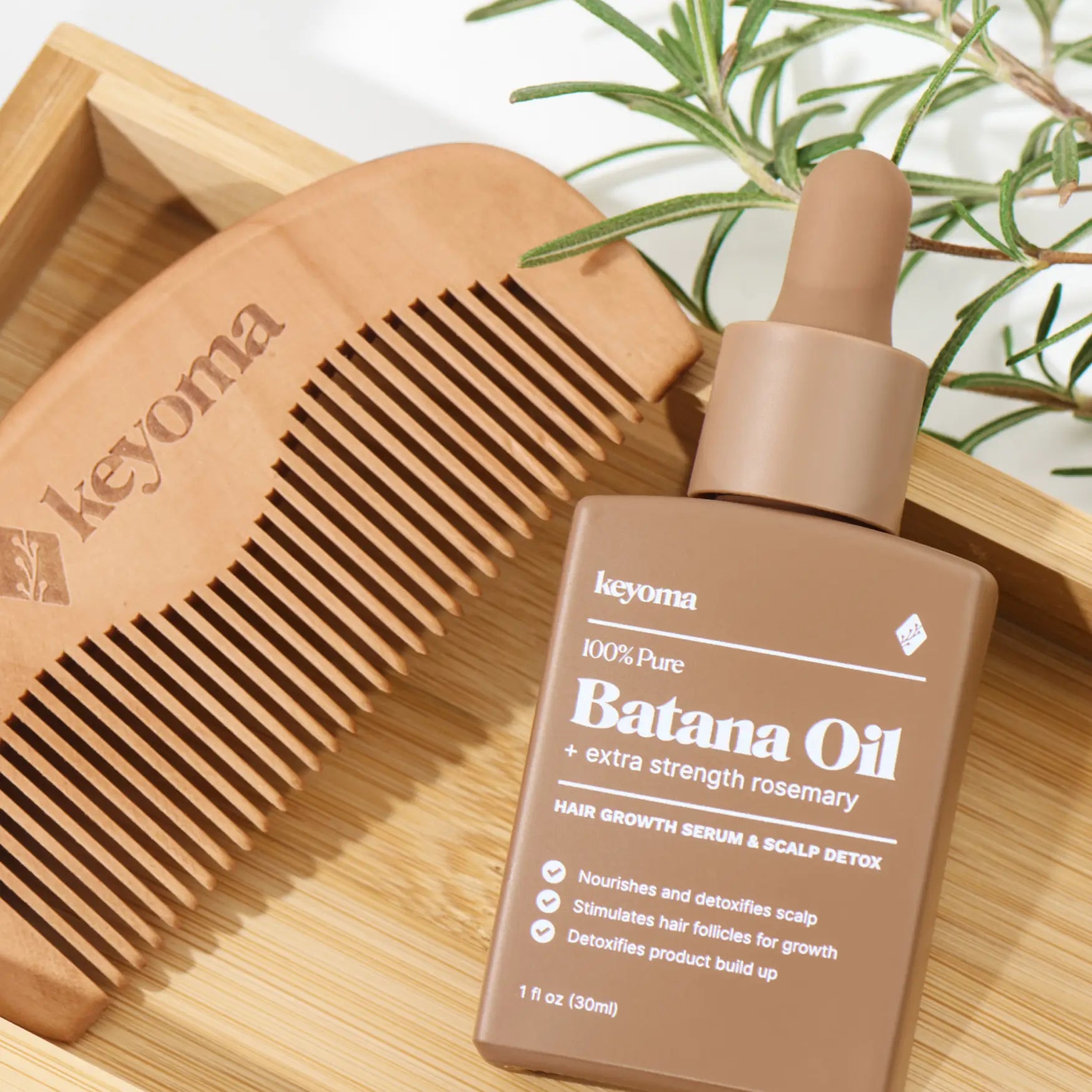
If you want a richer option for this step, Keyoma Batana Oil with Rosemary can be warmed between the hands and concentrated on the areas that need the most softness. Start with a small amount, especially if your hair is fine or becomes coated easily.
Use Squalane as a Lightweight Finisher
Begin with one drop on damp or dry hair. Rub it across both palms, then lightly press or skim your hands over the ends. Add a second drop only if the hair still feels rough.
Damp application helps the oil spread evenly. Dry application gives you more control when you only want to smooth flyaways or add polish to the ends.
The American Academy of Dermatology recommends choosing leave-in products for your hair type and applying only the smallest amount needed. Its guidance for fine hair also advises keeping leave-in conditioning products on the hair rather than the scalp to reduce buildup and greasiness.
If your roots lose volume easily, apply squalane below ear level. The scalp already produces sebum, so the top section may not need additional oil.
Signs You Chose the Wrong Weight or Used Too Much
Heavy-looking hair does not always mean you selected the wrong oil. It may mean you used the right oil at the wrong dose.
Look at what happens after the hair dries:
-
Your strands lose movement. Reduce the amount before switching products.
-
Clean hair looks separated or stringy. Keep the oil farther away from the roots and upper lengths.
-
The ends look shiny but still feel rough. Oil may be creating surface gloss without addressing the need for water-based conditioning.
-
Your hair becomes dull or waxy after repeated use. Product buildup may require a thorough shampoo before you test the oil again.
-
One section feels soft while the rest looks flat. Apply only to that dry section next time instead of distributing the oil everywhere.
Oil adds lubrication and helps reduce surface friction, but it does not replace every part of a balanced routine. Hair that feels persistently dry may still need a suitable rinse-out conditioner, gentler heat habits, or less frequent chemical processing.
Choose the Finish Your Hair Actually Needs
Choose squalane when you want light shine, easy spread, and minimal interference with volume. Choose batana oil when dry lengths need a richer conditioning layer and your routine has room for a more targeted treatment.
If your hair is both fine and dry, you do not have to eliminate richer oils. Change the dose, placement, or timing first. A small amount on the last few inches or a short pre-wash application may give you the softness you want without leaving the entire style flat.
The better oil is not the one with the longest list of claimed benefits. It is the one that leaves your hair soft, movable, and comfortable after the routine is complete.
Frequently Asked Questions
Is batana oil or squalane better for fine hair?
Squalane is generally easier to use on fine hair because it has a lighter finish. Batana oil can still work when you apply a micro-dose to dry ends or use it as a rinse-out pre-wash treatment.
Is squalane good for dry hair?
Squalane is good for dry hair when you want surface smoothness and shine without a rich oil layer. Very coarse, porous, or persistently dry hair may need a heavier conditioning product or a more substantial treatment.
Can I use batana oil and squalane together?
You can use batana oil and squalane in the same routine, but avoid applying a full amount of both at once. Try batana oil as a pre-wash or targeted treatment, then use one drop of squalane as a finisher only if the dry ends still need it.
Should I apply hair oil to wet or dry hair?
You can apply hair oil to damp or dry hair. Damp hair helps a small amount spread more evenly, while dry application gives you precise control over shine, flyaways, and rough ends.
Does squalane help hair grow?
Squalane is better understood as a conditioning emollient than a hair-growth treatment. Its practical role is to improve surface smoothness, shine, and slip.
Featured Product
30% Off + 3 FREE Gifts
100% Pure Batana Oil + Rosemary


