

In this article
A deep conditioner is supposed to leave your hair softer and easier to manage. When your hair feels rough, stiff, coated, or tangled instead, it is natural to question the product.
However, a disappointing result does not always mean your hair needs more conditioner. The formula may not fit your hair, residue may be affecting the finish, or the treatment may not have reached every section. Existing heat or chemical damage can also remain noticeable after conditioning.
The most useful clue is when the dry feeling appeared. Compare how your hair felt while the conditioner was on, immediately after rinsing, and once it was fully dry. This timeline can help you change the right part of your routine without labeling the problem as “protein overload” or replacing every product after one wash.
Key Takeaways
-
Dryness after conditioning does not always mean the treatment lacked moisture.
-
Residue and uneven rinsing can make conditioned hair feel rough or coated.
-
Heat, chemicals, and friction may leave damage that conditioning cannot reverse.
-
Change one wash-day variable at a time before replacing the entire routine.
Why Can Hair Feel Dry After Deep Conditioning?
Conditioner mainly helps improve lubrication, detangling, softness, and surface manageability. It can make strands feel smoother and reduce some of the friction that contributes to breakage.
That does not mean every treatment will produce the same result on every head of hair. Your texture, density, current damage, product amount, and application method all affect the finish.
It also helps to describe the result more precisely. Dry hair may feel like it needs more flexibility or lubrication. Rough hair may have raised or weathered areas along the shaft. Coated hair may feel dull, heavy, waxy, or unresponsive. Tangled hair points more directly to insufficient slip or excess friction.
Those sensations can overlap, but they do not always need the same solution.
The Formula May Not Fit Your Hair
A rich treatment can be useful for coarse, textured, or chemically processed hair, yet leave fine hair limp or coated. A lightweight conditioner may rinse cleanly from fine strands but provide too little slip for dense curls or weathered ends.
That is why formula fit matters more than a simple list of ingredients to seek or avoid. A conditioner containing oils, proteins, silicones, or fatty alcohols is not automatically good or bad. What matters is whether the complete formula, amount, and application method suit your hair.
If your hair is fine and loses movement after conditioning, try a lighter formula or a smaller amount. If thick or damaged sections still tangle while the product is on, look for a treatment designed for dry, textured, or chemically treated hair.
It may also help to determine whether you need a hair mask or deep conditioner. Using both during the same wash can make it harder to tell which product helped and which one left an unwanted finish.
Residue Can Feel Like Dryness
Sometimes, the problem is not a lack of conditioning. It is too much material left on the hair.
Old styling products, mineral deposits, oils, creams, and previous conditioning treatments can combine with your current mask. Using a large amount or rinsing too quickly may add another layer. The result can feel dull, coated, rough, or harder to style.
This distinction matters because applying more conditioner to coated hair may make the problem worse. Look for related signs of product buildup, such as flat roots, reduced movement, a waxy finish, poor curl definition, or hair that still feels coated after washing.
Residue does not prove that your hair is dry underneath, nor does it mean a specific ingredient is to blame. It tells you that your next wash should focus on appropriate cleansing and fewer overlapping layers.
The Product May Not Have Reached Every Section
A thick mask can sit on the outside of a large section without reaching the strands inside it. This often leaves the top layer slippery while the underneath sections or ends still feel tangled.
Hair density matters here. A small amount may be enough for short, fine hair but difficult to distribute across long, dense curls. Applying extra product to the surface will not fix poor distribution.
Divide your hair into manageable sections if needed. Work the treatment through the mid-lengths and ends with your fingers. If the product provides enough slip, you can use a suitable wide-tooth comb gently, starting at the ends and moving upward.
Pay attention to the oldest or driest areas, but follow the amount and placement directions on the label. More product is not always better.
Existing Damage May Still Feel Rough
Bleaching, coloring, relaxing, high styling heat, rough towel drying, brushing, and repeated friction can weather the hair shaft. Deep conditioning may improve its slip and appearance, but it cannot permanently restore a split end or rebuild a severely damaged strand.
This can explain why hair that feels like straw may feel softer when wet but rough again after drying. The conditioner created temporary surface smoothness, while the underlying weathering remained.
That does not mean conditioning failed. A realistic goal is better detangling, lower friction, and improved manageability. Damaged ends may still require gentler styling, regular trimming, or less exposure to the process causing the damage.
Use the Timing of the Dry Feeling as a Clue
Instead of judging the result only after styling, trace the feeling across your wash day. Each stage narrows the list of variables worth testing.
These observations are clues, not diagnoses. They help you choose what to adjust first.
Hair Felt Rough While the Conditioner Was On
A deep conditioner should normally provide enough slip to help you handle the hair without forcing apart tangles. If your hair felt rough while the treatment was still on, consider whether:
-
The product was distributed unevenly
-
You used too little for your length or density
-
The hair was not wet enough for even application
-
The formula offered too little slip for your texture
-
The hair was heavily tangled before application
Do not compensate by pulling a comb through resistant sections. Add the treatment where it is missing, work in smaller sections, and detangle gently. If the same formula repeatedly provides poor slip despite careful application, it may not suit your hair.
Hair Felt Coated Immediately After Rinsing
A coated feeling that appears before your hair dries points more strongly toward excess product, incomplete rinsing, or residue from earlier products.
Check whether you stacked a rinse-out conditioner and mask, applied the treatment near buildup-prone roots, or shortened the rinse because the hair already felt slippery. Some treatments need a thorough rinse to leave the intended finish.
On your next wash, cleanse appropriately and use one rinse-out treatment. Rinse according to the label, then evaluate your hair before adding a leave-in or styling cream. If it feels cleaner and more responsive, the previous issue was more likely related to layering or rinsing than insufficient conditioning.
Hair Felt Soft Wet but Rough Once Dry
When hair feels soft during rinsing but rough after drying, look beyond the deep conditioner.
Rubbing with a towel, detangling without enough slip, using high heat, or repeatedly touching the hair during drying can increase friction. Damaged ends may also lose the smooth wet feeling as water evaporates.
Your finishing routine matters too. Some hair benefits from a small amount of leave-in conditioner applied to damp mid-lengths and ends. The American Academy of Dermatology recommends choosing a leave-in made for your hair type and using the smallest amount that does the job. Fine hair generally needs less, while thick hair may need more.
Use only products designed to remain in the hair. A rinse-out conditioner should not be repurposed as a leave-in.
How to Reset Your Next Deep-Conditioning Wash
A reset should simplify the routine enough to reveal what changed. It should not strip your hair repeatedly or introduce several new products at once.
Cleanse According to the Residue You Notice
Start with a regular cleanser suited to your scalp and product use. Concentrate shampoo where oil and residue collect, then allow the rinse to move through the lengths.
Consider a clarifying shampoo when you have a credible reason to suspect heavier product buildup. Chelating products are more relevant when hard-water minerals are the concern. Follow the label and avoid aggressive or repeated clarifying, especially if your hair is color-treated or already prone to dryness.
The goal is to remove the residue affecting the test, not to make the hair feel squeaky or stripped.
Use One Conditioning Treatment
During the troubleshooting wash, choose either your regular rinse-out conditioner or deep conditioner based on what your hair needs. Avoid stacking a conditioner, mask, leave-in, cream, and heavy oil before you have assessed the result.
This does not mean every layered routine is harmful. It means overlapping conditioning products create too many variables when you are trying to identify why your hair felt wrong.
A simpler wash gives you a clearer comparison.
Follow the Product’s Directions
Apply the recommended amount, distribute it evenly, and leave the product on for the stated time. If it is designed to be rinsed out, rinse it out thoroughly.
Leaving a mask on longer does not guarantee a better result. It may only extend your wash day or leave some formulas harder to rinse cleanly.
Treat the instructions as part of the formula. Product amount, timing, placement, and rinsing all influence how the treatment performs.
Adjust the Formula Before Abandoning Conditioner
If your hair felt coated, limp, or slow to dry, test a smaller amount or a lighter formula. Keep rich treatments away from the roots unless the label specifically directs scalp application.
If the hair felt rough during application and lacked slip, try a formula intended for dry, curly, coarse, or chemically treated hair. Apply it in smaller sections so the driest areas receive even coverage.
Change one of these factors at a time. Switching the cleanser, mask, leave-in, oil, and styling method together may give you a better result, but it will not tell you which change mattered.
Protect the Result After Rinsing
Blot excess water with a soft towel or smooth fabric instead of rubbing. Detangle gently, starting at the ends, and reduce styling heat where possible.
Apply a suitable leave-in only where your hair needs extra support. If you have oily roots and dry ends, treat them as separate zones. Keep conditioning and finishing products focused on the mid-lengths and ends instead of coating the scalp.
A small amount of oil can add lubrication and reduce a rough surface feel. Oil does not hydrate hair on its own, so use it as a finishing layer rather than a replacement for water-based conditioning.
When Dryness Points Beyond the Conditioner
One rough wash does not usually call for professional assessment. A pattern of worsening breakage, severe tangling, scalp irritation, or hair that remains difficult to style deserves more attention.
First, compare the result across several simplified washes. Use appropriate rinse-out care, add a suitable leave-in if needed, reduce friction, and pause the styling practice that appears to worsen the problem.
If breakage continues or your hair remains unmanageable after using both rinse-out and leave-in conditioning care, the American Academy of Dermatology recommends seeing a board-certified dermatologist. Seek help sooner if the change appears alongside scalp pain, persistent irritation, sores, or sudden hair loss.
Give Your Routine One Controlled Reset
Do not replace your entire routine after one disappointing deep-conditioning session. Remove overlapping treatments, follow the product directions, and adjust one variable at a time.
Compare how your hair feels while wet, after rinsing, and once dry over the next two or three washes. That pattern will tell you more than assigning one dramatic label to a rough result.
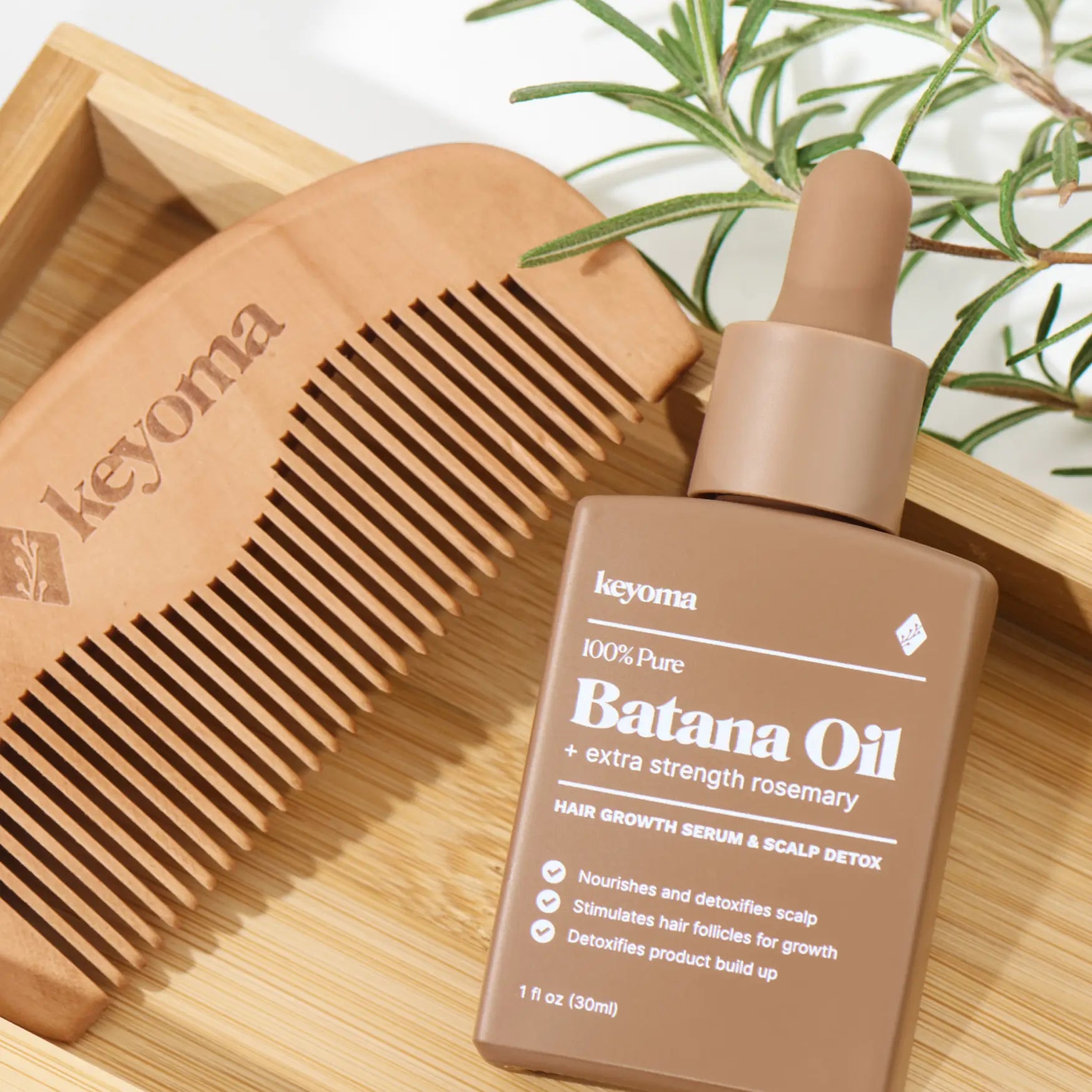
If your ends still need extra slip after conditioning, warm a small amount of Keyoma Batana Oil with Rosemary between your palms and apply it lightly to damp or dry ends. Keep the amount modest and away from buildup-prone roots.
The oil can support surface smoothness and lubrication. It does not replace conditioner or repair structural damage, but used with restraint, it can give dry ends a more comfortable finish.
Featured Product
30% Off + 3 FREE Gifts
100% Pure Batana Oil + Rosemary


