

In this article
Your hair feels rough, dull, or strangely coated. Should you clarify it, add moisture, or treat it as damage?
The texture alone will not give you a reliable answer. Product residue and structural damage can both make hair tangle, lose shine, and resist styling. They can also exist on the same strand.
You cannot confirm raised cuticle scales by looking at or touching your hair. That type of inspection requires specialized imaging. What you can do is compare your recent product use, exposure to damaging practices, breakage patterns, and how your hair responds after one controlled wash.
That gives you a safer direction without turning every rough strand into a repair project.
Key Takeaways
-
Buildup often changes after cleansing, while structural roughness usually remains.
-
Product history and damage history provide stronger clues than texture alone.
-
Persistent breakage and split ends point beyond a removable surface coating.
-
Buildup and cuticle damage can affect the same hair at once.
Why Coated Hair and Damaged Hair Feel Similar
Product coating sits on the surface of your hair. It can come from oils, creams, waxes, silicones, dry shampoo, minerals, or products that were not rinsed away completely.
As these materials collect, hair may feel waxy, sticky, stiff, or heavy. Strands can lose movement, curls may stop grouping normally, and conditioner may seem less effective.
Structural damage creates some of the same complaints for a different reason. Heat, chemical processing, sunlight, friction, and rough handling can weaken the hair surface. As the surface becomes less even, friction between strands increases. That can lead to roughness, dullness, snagging, and more difficult detangling.
A scientific review of hair care explains that chemical, thermal, and mechanical stress can alter the cuticle and increase fiber damage. Conditioners help by lubricating the surface and reducing friction, but their effect is mainly protective and cosmetic rather than biological healing. Read the hair-care physicochemistry review.
This is why roughness does not automatically prove that the cuticle is damaged. A residue layer can change how the surface feels, while conditioning ingredients can make damaged hair feel smoother for a limited time.
The most useful clues come from patterns, not one sensation.
Compare the Clues Before You Clarify
Start with the two or three weeks before the roughness appeared.
Did you add a new gel, oil, silicone serum, dry shampoo, or leave-in? Did you increase the amount used? A coated feeling that follows product layering supports buildup.
Now consider structural stress. Recent bleaching, coloring, relaxing, perming, high heat, tight styling, or rough detangling gives you a stronger reason to suspect damage.
Use the comparison below to organize those clues.
|
What You Notice |
Product Coating Is More Likely |
Structural Damage Is More Likely |
|
Recent history |
Heavy oils, creams, waxes, silicones, dry shampoo, or incomplete rinsing |
Bleach, dye, relaxers, perms, repeated high heat, or rough handling |
|
Surface feel |
Waxy, sticky, greasy, heavy, or filmy |
Rough, brittle, frayed, or persistently dry |
|
Hair movement |
Limp, flat, separated, or unable to hold volume |
Frizzy, uneven, stiff, or difficult to detangle |
|
Breakage |
No clear increase in snapping |
More broken strands, split ends, or thinning ends |
|
Distribution |
Strongest where you repeatedly place products |
Strongest on older ends or processed sections |
|
Response to washing |
Movement and softness improve after proper cleansing |
Roughness and breakage remain after residue is removed |
None of these clues proves the condition of the cuticle. Look for several details pointing in the same direction.
For example, dull hair with flat roots after several days of dry shampoo fits a coating pattern better than damage on its own. Rough ends that continue splitting after cleansing, especially following bleach or flat-ironing, fit a structural-damage pattern more closely.
Hard water adds another complication. Mineral deposits can leave lengths dull, stiff, or waxy even when you are not applying heavy products. Weak shampoo lather, scale around faucets, or a noticeable hair change after moving may support this pattern. Keyoma’s guide to hair oil and hard-water buildup explains how to separate excess oil from mineral residue.
Run a One-Wash Reset and Observe the Result
A controlled wash gives you more useful information than layering another treatment over the problem.
The goal is not to strip the hair until it squeaks. You are removing enough residue to see what remains underneath.
-
Review your recent routine. List the oils, creams, gels, sprays, shampoos, and conditioners used during the previous several wash days.
-
Choose one appropriate cleanser. Use a clarifying formula when heaviness follows styling products or oil. If the pattern points to hard-water minerals, select a product labeled for mineral or metal removal.
-
Cleanse without rough scrubbing. Saturate the hair and massage the cleanser mainly into the scalp. Let the lather and rinse move through the lengths unless the label instructs otherwise.
-
Rinse thoroughly. Pay attention to dense areas, the crown, behind the ears, and the nape, where leftover cleanser or conditioner may remain.
-
Use a familiar conditioner. Apply a product you already understand. This prevents cleansing-related dryness from confusing the result.
-
Keep the rest of the routine simple. Skip unfamiliar masks, oils, serums, and stylers during the observation period.
-
Wait until the hair is dry. Wet hair behaves differently, so assess movement, roughness, volume, and breakage only after it has dried.
The American Academy of Dermatology recommends focusing shampoo on the scalp, allowing it to flow through the lengths, and using conditioner after washing. It also advises gentle detangling and limiting damaging heat and friction. Review the AAD hair-care recommendations.
Signs the Coating Was the Larger Problem
Product buildup was likely the stronger factor if your hair feels lighter and moves more freely after washing.
You may also notice:
-
Less waxiness, stickiness, or heaviness
-
More normal volume at the roots
-
Better curl grouping or style response
-
Cleaner separation between strands
-
Improved conditioner performance
-
Less need for styling product
Focus on the size of the change rather than expecting perfect hair after one wash. A clear improvement in movement and surface feel tells you that residue contributed to the problem.
If the coating returns soon, the issue may be application amount, product placement, incomplete rinsing, or the cleanser not matching the residue.
Signs Structural Damage May Be the Larger Problem
Damage becomes more likely when the removable coating is gone but the hair still feels persistently rough, brittle, or snag-prone.
Look for a combination of:
-
Split or frayed ends
-
White points along weakened strands
-
Short pieces breaking during gentle detangling
-
Roughness concentrated on bleached or heat-styled areas
-
Ends that catch against neighboring strands
-
Stiffness that remains after conditioning
-
Reduced elasticity followed by snapping
Breakage and split ends carry more weight than dullness alone. Product coating can reduce shine, but it does not normally create an ongoing pattern of frayed ends and snapping by itself.
Frequent heat, coloring, perming, relaxing, tight styling, and forceful brushing all place extra stress on hair. The AAD recommends reducing these practices and changing the routine when hair becomes brittle or starts breaking. See how to stop damaging your hair.
Signs Both Problems May Be Present
Sometimes the reset improves one part of the problem but exposes another.
Your roots may regain volume while the ends remain rough. A waxy film may disappear, yet processed sections still tangle and snap. This does not mean the wash failed. It means the residue was removable, while the structural wear underneath needs a different response.
Heavy products may also temporarily mask roughness by coating the strand. Once they are washed away, existing damage can feel more obvious.
Address the coating first, then judge the hair that remains. Adding more heavy product immediately makes that distinction harder.
Choose the Next Step Based on What Changed

Your next move should match the result of the reset. More treatment is not always better.
If the Hair Improved After Cleansing
Simplify your routine before buying something new.
Use smaller amounts and introduce only one product change at a time. Rinse longer through dense sections and avoid placing several heavy formulas over the same area.
A clarifying shampoo can help when residue returns, but it should not become an automatic step at every wash. Follow the label and adjust the frequency based on your hair texture, color treatment, dryness, and product use.
For a complete removal and prevention routine, read Keyoma’s guide to removing product buildup from hair.
If Roughness and Breakage Remained
Shift your focus from removing residue to reducing further wear.
Pause or reduce high heat and chemical services. Use conditioner consistently, detangle gently, and avoid rubbing wet hair with a rough towel. If you use hot tools, choose the lowest effective temperature and reduce repeated passes over the same section.
Conditioners, masks, and oils can add slip, lower friction, and make worn strands easier to handle. They cannot permanently rebuild cuticle material that has already eroded or restore split ends into intact fibers.
Trim ends that continue splitting or catching. Removing a badly weathered section can prevent it from tangling with healthier hair and creating more mechanical stress.
Keyoma’s guide to the signs of overprocessed hair offers a more complete routine for hair affected by repeated heat or chemical treatments.
If the Result Is Still Unclear
Do not respond with several strong clarifying washes in a row. That can leave dry or processed hair feeling rougher and make the pattern harder to read.
Return to your regular wash schedule and change one variable at a time. Track:
-
What you applied
-
Where you applied it
-
How much you used
-
Whether the hair improved after cleansing
-
Where breakage or roughness remained
-
Whether the problem followed a heat or chemical service
A few consistent observations are more useful than switching between clarifying, protein, oil, and moisture treatments during the same week.
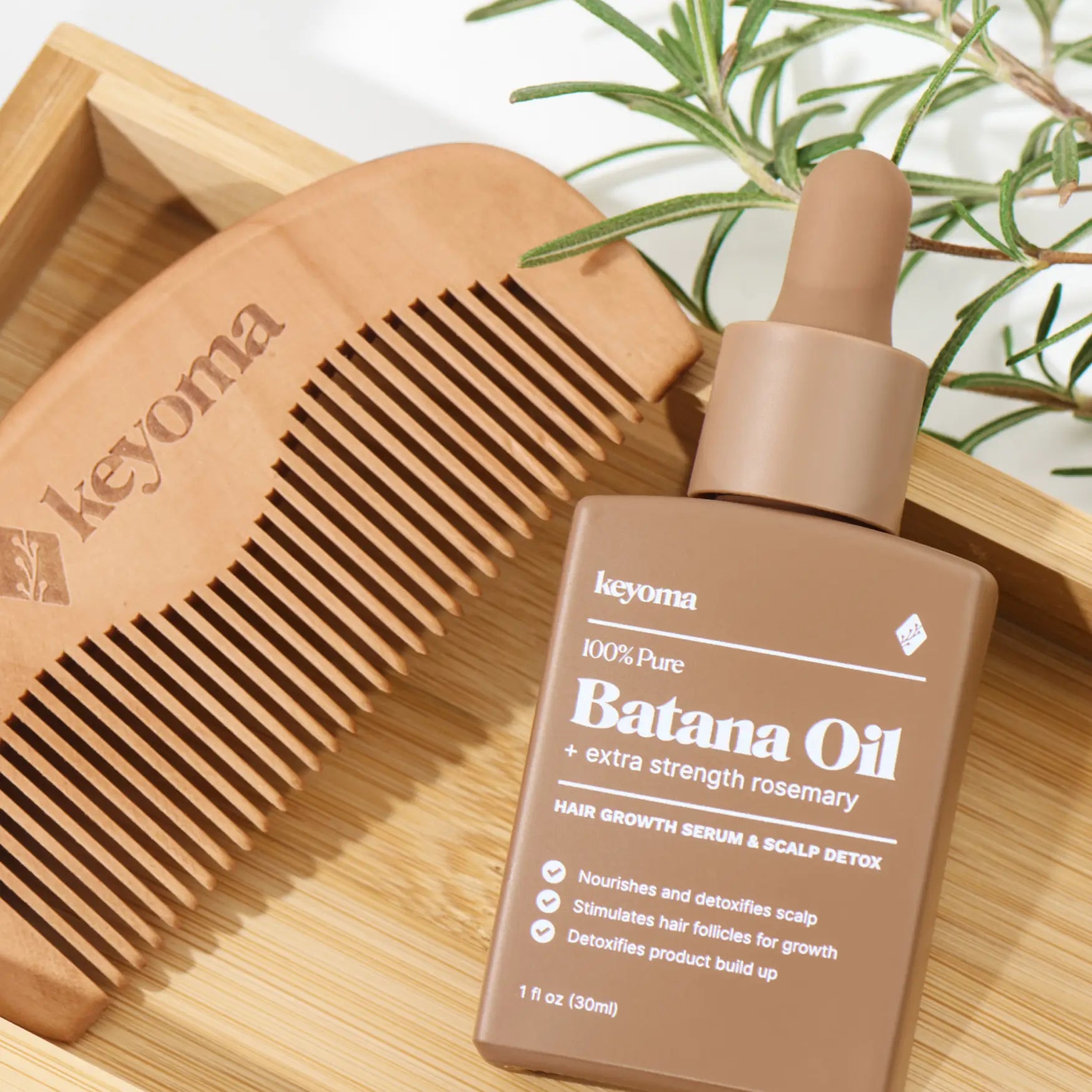
If you later use Keyoma Batana Oil with Rosemary, begin with a small amount on the dry areas rather than coating the entire head. Oil can improve slip and reduce a dry surface feel, but it should not replace cleansing when residue is present or be treated as structural repair.
Speak with a dermatologist if the problem includes unexplained shedding, thinning, scalp pain, burning, sores, marked itching, or persistent scaling. Those signs extend beyond a simple comparison between coating and hair-shaft damage.
Match the Treatment to What Your Hair Shows You
Rough hair does not need the same response every time.
If movement and softness return after cleansing, simplify the products and improve rinsing. If roughness, split ends, and breakage remain, reduce damaging practices and focus on gentle handling. If the hair feels cleaner but still damaged, address both problems separately.
The goal is not to identify microscopic cuticle scales at home. It is to make a better routine decision from the changes you can observe.
Remove what is removable. Protect what remains.
Featured Product
30% Off + 3 FREE Gifts
100% Pure Batana Oil + Rosemary


