

In this article
Crown breakage happens when formed hair strands snap along the shaft. Crown thinning happens when fewer, finer, or less densely distributed hairs grow from the scalp. Both can make the crown look sparse, but they point to different problems.
Breakage more often creates uneven short pieces, roughness, frizz, and damaged ends. Thinning more often creates a gradually wider or more visible area of scalp, even when the remaining strands feel smooth. Neither pattern can be confirmed from one sign alone.
Compare strand length, ends, texture, density, progression, styling history, and scalp symptoms. Breakage and thinning can also appear together.
Crown Breakage vs Thinning at a Glance
Use this table to identify the stronger pattern, not diagnose the cause. Lighting, wetness, styling, and the crown whorl can change scalp visibility.
|
Feature |
Crown Breakage |
Crown Thinning |
|
Origin |
Damage along the formed hair shaft |
Changes at the follicle or growth cycle |
|
Length |
Many uneven, shorter pieces |
Hairs may be full length but fewer or finer |
|
Ends |
Blunt, frayed, split, or irregular |
Often normal unless breakage is also present |
|
Texture |
Rough, dry, tangled, or frizzy |
May feel normal, though strands can become finer |
|
Density |
Looks reduced because strands snap |
Fewer hairs or smaller strand diameter |
|
Scalp visibility |
Often shifts with styling |
Usually increases gradually across the crown |
|
Progression |
Follows repeated damage |
May widen or become more visible over time |
|
Common triggers |
Heat, chemicals, tension, friction |
Pattern loss, shedding, alopecia, inflammation |
|
Next step |
Reduce damage and protect new length |
Identify the cause, especially if it spreads |
A widening part or gradual loss of coverage can be an early hair-loss sign, while damaged hair tends to become fragile and break. The American Academy of Dermatology’s early hair-loss signs support watching progression rather than judging one photograph.
What Crown Breakage and Thinning Look Like

Short hairs at the crown can represent breakage, new growth, or finer growth. Their ends, texture, distribution, and change over time provide better context.
Hair Length and Broken Ends
Breakage often leaves mixed lengths, including pieces far shorter than the surrounding hair. The ends may look blunt, frayed, split, or feathered, and the crown may struggle to retain length.
Thinning can also produce short hairs because new growth is short and miniaturized hairs can be finer. Keyoma’s comparison of hair growth or breakage explains why length alone cannot settle the question.
Density and Scalp Visibility
With breakage, hairs may still emerge at normal density, but snapped lengths create uneven coverage. Rearranging the hair may make the crown look fuller.
With thinning, scalp visibility tends to increase across a broader or widening area. Cleveland Clinic notes that female pattern hair loss can widen the center part and thin the top of the head. Bright light, wet hair, product separation, and a strong whorl can still exaggerate visibility.
Overall hair density separates the number of hairs from the thickness of each strand.
Texture and Strand Thickness
Broken hairs often feel rougher, drier, or more tangled than nearby lengths. Damaged cuticles increase friction, so the crown may catch during combing or look frizzier.
Thinning is more closely linked to fewer hairs or finer growth. The surface can remain smooth. Pattern hair loss involves gradual follicular miniaturization, which produces thinner and shorter strands.
Shedding and Hairs Found After Styling
Breakage tends to leave short pieces in the sink, on clothing, or near the styling area. Shed hairs are often closer to full length because the whole strand has released from the follicle.
A pale club-shaped end may suggest a shed telogen hair, but it is not a diagnosis. Cleveland Clinic describes telogen effluvium as increased shedding that can thin the top of the head after a physical or emotional stressor.
See hair shedding vs hair loss for a closer comparison of falling strands and reduced density.
How Breakage and Thinning Change Over Time

Progression often separates crown hair loss vs breakage better than one close-up. Review changes across several months.
The Typical Pattern of Crown Breakage
Breakage often worsens after repeated flat ironing, bleaching, relaxing, tight updos, rough detangling, or friction during sleep. Short, frizzy pieces accumulate while the crown falls behind the surrounding length.
After the damaging habit changes, new growth can remain intact, but severely weakened sections cannot be permanently repaired. Conditioning can improve their feel and reduce more snapping. Broader signs of damaged hair can show whether the same texture appears elsewhere.
The Typical Pattern of Crown Thinning
Thinning more often becomes wider, less dense, or more visible under the same conditions. Consistent photographs may show the crown opening expanding even when the hairstyle and lighting stay similar.
Pattern hair loss usually changes gradually, while telogen effluvium can cause faster, more diffuse shedding. The visual pattern confirms that density may be changing, not the underlying cause.
When Both Patterns Appear Together
Thinning hair can also break, especially when finer strands face heat, chemicals, or forceful styling. Repeated tension can snap shafts while also stressing follicles.
Clues from both columns include expanding scalp visibility with rough short pieces, increased shedding with frayed ends, or crown thinning after months of tight styling. Address fragility while a clinician evaluates the density change.
Crown Breakage vs Thinning Causes

Breakage centers on damage to the shaft. Thinning centers on changes in growth, shedding, follicle size, inflammation, or follicle loss.
Heat, Chemicals, Tension and Friction
High heat, bleach, relaxers, rough towel drying, repeated brushing, and tight styles can weaken or stress hair. Research on heat and hair-shaft damage identifies friction as a major source of surface damage, especially when hair is wet. The AAD recommends lower heat, conditioner, gentle detangling, and looser styles.
Compare repeated heat exposure with the signs of heat-damaged hair. Tight ponytails, buns, braids, or extensions deserve special attention because they can contribute to both breakage and traction-related loss.
Pattern Hair Loss, Shedding and Scalp Conditions
Thinning crown causes include androgenetic alopecia, telogen effluvium, alopecia areata, traction alopecia, and inflammatory or scarring conditions. Similar-looking changes can require very different treatment.
Seek prompt assessment when crown loss spreads outward, feels smooth, or occurs with itching, burning, tenderness, bumps, or scaling. The AAD explains that central centrifugal cicatricial alopecia often begins at the crown and can destroy follicles, making early treatment important.
How to Check Your Crown at Home

Home checks reveal patterns but cannot confirm the cause of thinning. Keep lighting and styling consistent.
Inspect Short and Shed Hairs
Compare several loose hairs with your usual length. Look for frayed, split, tapered, blunt, or club-shaped ends. Short rough pieces support breakage, while many full-length hairs may suggest shedding. Fine tapered hairs may be new growth or miniaturized hairs.
Compare the Crown With Surrounding Areas
Separate the hair at the crown, sides, and back. Compare coverage, strand thickness, texture, and uneven short pieces. Breakage may feel rough despite similar root coverage. Thinning may reveal more scalp or finer hairs without the same damage.
Track Changes With Consistent Photographs
Take photos about once every four weeks with dry hair, the same part, distance, and overhead light. Look for widening, reduced coverage, or more damaged pieces. Photos can document progression for a dermatologist, but they cannot identify the condition.
Check for Scalp Symptoms
Pain, burning, intense itch, scaling, redness, pustules, or tenderness raise the need for medical assessment. The AAD’s CCCA symptom overview notes that itch, pain, tenderness, burning, and bumps can accompany crown-centered loss.
Stop products that worsen irritation rather than continuing to test oils or active ingredients on an inflamed scalp.
What to Do for Breakage vs Thinning

Match the first response to the likely pattern. Shaft care can reduce more breakage, but it cannot diagnose or reverse a follicular disorder.
If the Signs Point Mainly to Breakage
Reduce the main source of stress. Lower heat, space out chemical services, loosen repeated crown styles, detangle with more slip, and limit rough rubbing. These ways to reduce further hair breakage provide a broader prevention plan.
Conditioning can smooth the cuticle temporarily, improve manageability, and reduce friction. Hair-cosmetics research also notes that regular oil use can improve shaft lubrication and may help limit breakage.
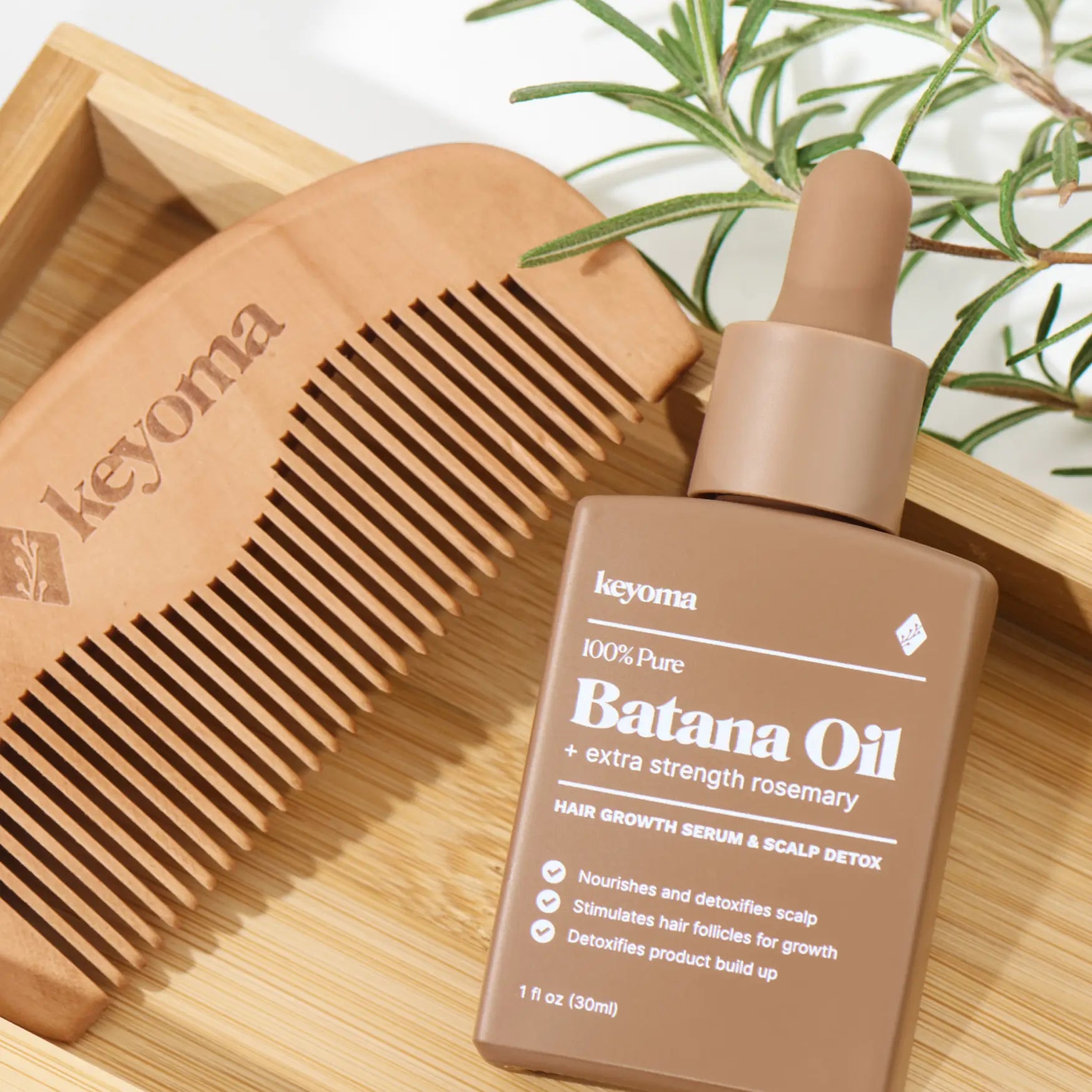
As an optional pre-wash or ends-focused step, a small amount of Keyoma Pure Batana Oil may help with softness, lubrication, and manageability. Its role is cosmetic. It does not treat pattern thinning, excessive shedding, scalp inflammation, or scarring alopecia.
If the Signs Point Mainly to Thinning
Arrange an evaluation when the crown keeps widening, the change is sudden, shedding persists, or scalp symptoms appear. A dermatologist can examine the pattern, review your history, and order tests when appropriate.
Do not assume that oils, masks, rosemary products, or supplements can restore follicular density. Treatment depends on the diagnosis. Review when to see a hair-loss doctor if you are unsure when professional care is warranted.
If the Difference Is Unclear
Use gentle care while gathering better evidence. Pause aggressive heat and tension, take consistent photos, save a few representative hairs, and note recent illness, major stress, medication changes, hormonal shifts, or scalp symptoms.
Do not delay care if the area enlarges or feels smooth, or if burning, itching, pain, bumps, or scaling develop.
Start Using a Natural Targeted Care with Keyoma
Crown breakage usually shows uneven lengths, rough texture, damaged ends, and a connection to heat, chemicals, tension, or friction. Crown thinning more often shows declining coverage, finer growth, a widening area, or greater scalp visibility under consistent conditions.
Use several signs together and allow for overlap. Protect fragile strands when breakage is likely, but seek professional evaluation when density keeps declining, shedding persists, or the scalp develops symptoms. The right distinction prevents a follicle problem from being treated like cosmetic damage, or damaged lengths from being mistaken for medical hair loss.
Featured Product
30% Off + 3 FREE Gifts
100% Pure Batana Oil + Rosemary


