

In this article
Batana oil and moringa oil can both soften dry strands, add shine, and help rough ends feel more manageable. The better choice depends less on which oil sounds more impressive and more on how your hair responds to weight.
Batana oil usually fits routines that need richer conditioning, particularly when the hair feels coarse, brittle, porous, or difficult to detangle. Moringa oil often works better when you want a lighter finishing layer for flyaways, dull ends, or hair that loses volume easily.
Neither category is fixed. A refined batana blend can feel lighter than raw batana, while a heavy moringa formula can still flatten fine hair. The amount, placement, added ingredients, and condition of your strands often change the result more than the oil name on the label.
This comparison will help you choose based on how your hair behaves before and after oiling.
Key Takeaways
-
Batana oil generally suits richer wash-day conditioning and dry, coarse strands.
-
Moringa oil often fits lighter finishing and small leave-in applications.
-
Amount and placement can make either oil feel heavier than expected.
-
Choose by strand size, dryness, density, and styling needs, not curl pattern alone.
Batana Oil vs Moringa Oil at a Glance
Batana and moringa oils overlap in purpose, but they often occupy different spaces in a hair routine. Batana tends to make more sense when your hair needs substantial slip and a cushioned, conditioned feel. Moringa often suits someone who wants surface smoothing without turning oiling into a full treatment step.
|
Comparison Point |
Batana Oil |
Moringa Oil |
|
Relative feel |
Often richer and more substantial |
Often lighter and easier to spread |
|
Best placement |
Mid-lengths, dry ends, or pre-wash treatment |
Ends, flyaways, and light finishing |
|
Hair characteristics |
Coarse, dry, curly, coily, or processed |
Fine, medium, dull, or easily flattened |
|
Buildup risk |
Higher when overapplied or placed near roots |
Lower in small amounts, but still possible |
|
Typical role |
Wash-day conditioning and targeted nourishment |
Between-wash smoothing and shine |
Use the table as a starting point, not a strict rule. Formulation changes texture. Raw, unrefined oil may feel different from a refined oil, serum, or blend containing botanical extracts.
Texture and Weight
Batana oil is commonly described as rich, dense, or buttery, especially in less-refined forms. That texture can be useful when the hair needs extra slip before detangling or feels rough even after conditioner.
Moringa seed oil is rich in oleic acid and has a history of use in cosmetic formulations. Its composition gives it emollient properties, meaning it can help smooth and condition the surface of hair and skin. Reviews of moringa seed oil also note its oxidative stability, which helps explain its use in cosmetic products.
Still, chemical composition does not tell you exactly how an oil will feel on your head. Strand diameter and dosage create the more useful test. A single drop can look polished on fine hair, while a full palmful of the same oil can make it limp.
Softness, Shine, and Frizz Control
Both oils can improve the way the hair surface feels and reflects light. They coat rough areas, reduce some friction between strands, and help dry ends lie more smoothly.
Batana usually creates a more noticeable conditioned finish. That can be helpful when curls feel rough, ends tangle together, or chemically processed sections lack flexibility.
Moringa often works well as a narrower finishing step. Pressing a trace amount over the ends can reduce a dry, fuzzy appearance without changing the whole style. It may be a better first choice when your main concern is polish rather than deep conditioning.
Oil can make split ends look smoother, but it does not fuse damaged ends back together. Trim severely split areas and use oil to limit friction around the remaining length.
Best Placement in a Hair Routine
Batana usually earns its place before shampooing, during sectioned oiling, or on the driest parts of the hair. Moringa more naturally fits after styling or between washes when used sparingly.
Think about the result you want:
-
Choose a richer application when the hair catches during detangling or feels rough through the lengths.
-
Choose a lighter application when the style looks dull but still has enough softness.
-
Keep either oil away from the roots when volume disappears easily.
-
Treat the ends separately when your scalp gets oily faster than the length.
The location of the oil can matter more than the oil itself. Ends are older and often drier, while the scalp already produces sebum.
Choose Batana Oil for Richer Conditioning

Batana oil may suit you when conditioner alone leaves your hair rough, tangled, or thirsty by the next day. It offers a more enveloping feel that can support softness and reduce friction during handling.
The goal is not to saturate every strand. Rich oils perform better when you give them a defined job. Use batana where dryness, tangling, or repeated styling creates the most stress.
Dry, Coarse, Curly, or Coily Hair
Dryness and coarse strand diameter often create more room for a richer oil. Curly and coily hair may also need added slip because bends in the strand can increase tangling and make natural scalp oils slower to travel toward the ends.
Curl pattern alone should not decide the choice, though. Fine curls may flatten under too much oil, while thick straight hair may respond well to a richer pre-wash step.
Look at several traits together:
-
Do individual strands feel fine or substantial?
-
Does your hair absorb products quickly or stay coated?
-
Are the ends rough even after conditioning?
-
Does your style lose volume after a small amount of oil?
-
How often do you wash away product buildup?
A dense head of fine hair may still need less oil than low-density hair with coarse strands. Sectioning often improves distribution better than adding more product.
Pre-Wash and Deep-Conditioning Routines
A pre-wash treatment gives rich oil time to soften the lengths without leaving the full weight behind after styling. Apply it mainly to dry sections and ends, then cleanse according to your normal wash routine.
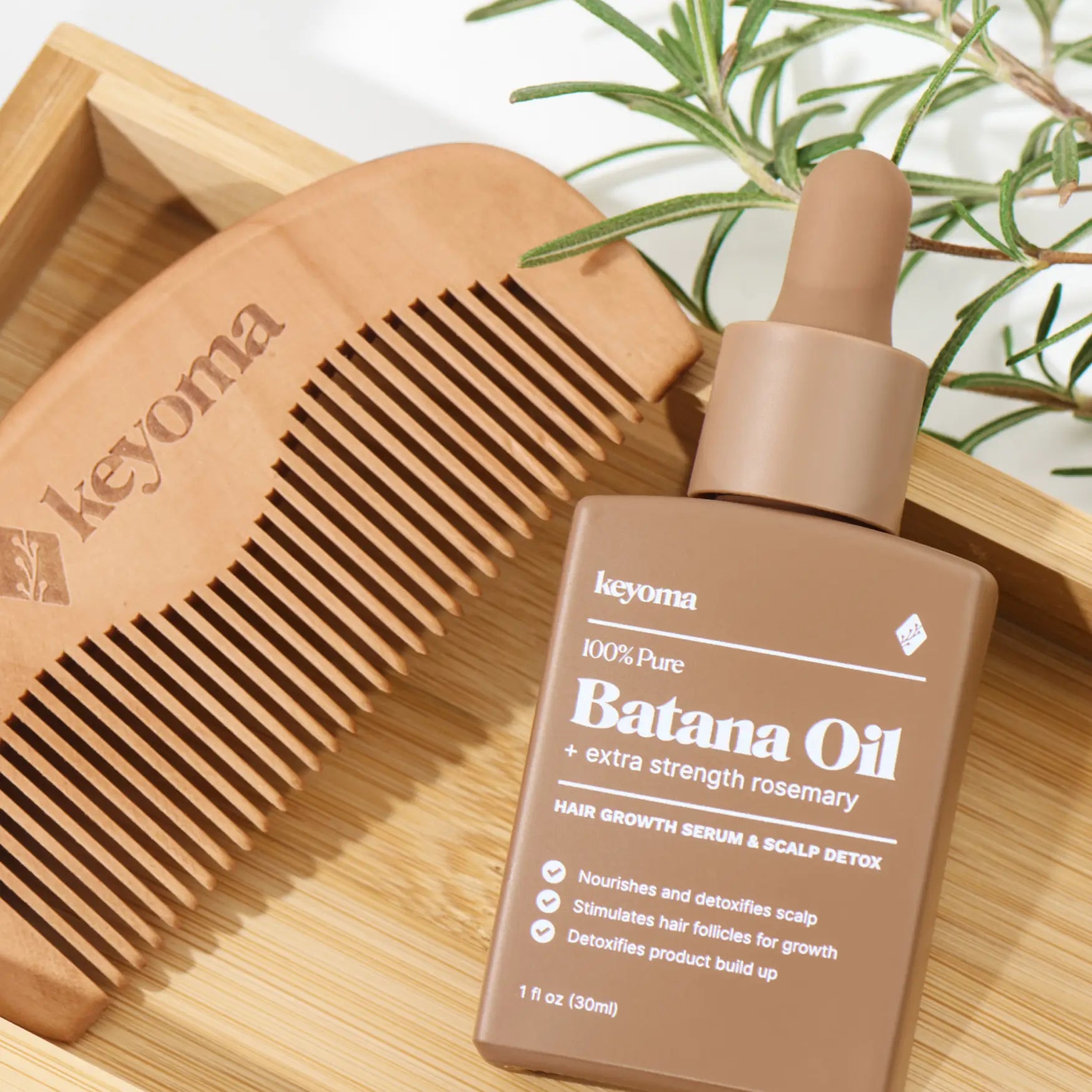
The Keyoma Batana Oil with Rosemary offers a practical option when you want batana oil in a controlled dropper format rather than scooping a dense, raw butter from a jar. Warm a small amount between your palms or fingertips, spread it through the target areas, and add more only where the hair still feels rough.
For high-density hair, divide the lengths into sections. This prevents the visible outer layer from becoming oily while the hidden inner sections receive little product.
Choose Moringa Oil for a Lighter Finish

Moringa oil may suit you when your hair needs shine and surface softness but becomes flat under richer products. Its cosmetic value comes largely from its role as an emollient oil with a high proportion of oleic acid.
Use it as a detail rather than a blanket. A small amount on the ends or outer layer can refine a style without coating the scalp.
Fine Hair and Easily Weighed-Down Strands
Fine hair has less physical mass per strand, so small amounts of oil can change how it moves. The hair may look separated, stringy, or flat even though it feels soft.
Moringa can be the easier starting point, but application still decides the finish. Place a tiny amount in your palms, rub your hands together until little visible oil remains, then lightly touch the ends.
Hair oiling is not one-size-fits-all. Cleveland Clinic dermatologist Shilpi Khetarpal, MD, notes that dry, coarse, tightly curled hair may respond well to oiling, while fine, straight hair is more likely to feel weighed down. She also recommends starting with a small amount and focusing on the ends.
If even a trace amount removes too much volume, use moringa only before shampooing or skip leave-in oil on days when lift matters.
Ends, Flyaways, and Between-Wash Styling
Moringa oil fits small corrections. Press it onto dry ends after styling, smooth a few flyaways, or use it to refresh sections that rub against collars, scarves, or bedding.
Avoid repeatedly coating the same area without cleansing. A lightweight oil can still accumulate when layered with leave-in conditioner, silicone serum, dry shampoo, or styling cream.
Watch the hair in natural light. Healthy-looking shine still allows individual strands to move. A greasy coating tends to group strands into narrow sections and darken the root area.
How to Use Either Oil Without Weighing Down Your Hair

Before replacing an oil, change one variable at a time. Reduce the amount, move the product lower, or shift it to wash day. This helps you tell whether the oil itself is a mismatch or whether the method needs adjustment.
Keyoma’s guide to the signs an oil is too heavy explains the difference between softness and coating. Greasy roots, collapsed volume, stringy sections, or hair that remains slick after washing usually point toward excess product, poor placement, or incomplete cleansing.
Start With the Ends
Apply oil where natural scalp oils reach last. The ends usually experience more washing, heat, weather exposure, friction, and detangling than newer growth near the roots.
Spread a small amount across your fingertips or palms. Press or glide it onto the ends rather than pouring oil directly onto the hair. Stop before the strands look visibly wet.
Scalp application should have a clear purpose. Pause if you notice new itching, burning, redness, tenderness, or bumps after using an oil or botanical blend.
Adjust the Amount Before Changing Oils
A rich oil used sparingly may feel lighter than a lightweight oil used heavily. Cut your usual amount in half and observe the hair after it fully dries.
Do not judge only while the hair is wet. Water and conditioner can temporarily hide how much residue remains. Check movement, root lift, strand separation, and how easily the hair accepts restyling after drying.
Changing the amount first also keeps your comparison fair. Switching oils while changing shampoo, conditioner, weather, and styling products makes it difficult to identify what helped.
Move a Rich Oil to Wash Day
When batana gives you softness but looks too heavy after styling, use it before shampooing. This preserves its richer conditioning role while letting cleansing remove excess surface oil.
Use moringa after washing when the ends need a lighter finishing touch. This division creates a useful two-oil routine without layering both across the entire head.
Cleveland Clinic’s guidance supports using a small amount on dry hair, focusing from the middle toward the ends, and washing the oil out afterward.
Can You Use Batana and Moringa Oil Together?
You can use both oils, but mixing them in one bottle is not always the most useful approach. Separate roles make the results easier to control.
Use batana as the richer wash-day step and moringa as the lighter finishing step. Your hair receives conditioning where it needs more slip and polish where it needs less weight.
You can also blend them in your palm for one application. Keep batana as the smaller or larger share depending on how much richness your hair tolerates. Test the mixture on one section before applying it throughout your hair.
Avoid assuming that combining oils doubles their value. More ingredients can create more buildup, and a mixture makes it harder to identify which oil caused heaviness or irritation.
Choose Batana Oil or Moringa Oil for Better Balance
Choose batana when your hair needs richer conditioning, stronger slip, or a focused pre-wash treatment. Choose moringa when you want lighter smoothing, controlled shine, or an ends-only product between washes.
Hair that sits between those needs does not have to commit to one oil. Give each oil a separate role. Use batana where the strands feel rough and moringa where the finished style needs polish.
For a streamlined option, use Keyoma Batana Oil with Rosemary in small, targeted amounts. Keep it on the driest areas first, monitor how your hair moves after drying, and adjust the placement before increasing the dose.
The right oil should make your hair easier to handle without making the routine harder to manage.
FAQs
Is moringa oil lighter than batana oil?
Moringa oil often feels lighter and spreads more easily, while batana commonly has a richer texture. Refinement, added ingredients, and the amount used can reverse that experience, so compare finished products rather than relying only on the oil name.
Which oil is better for low-porosity hair?
Moringa may be easier to use when low-porosity hair becomes coated quickly. Batana can still fit as a small pre-wash treatment on rough ends. Use less than you think you need and judge the result after washing and drying.
Can moringa oil be used as a leave-in?
Yes. Use a small amount on the mid-lengths or ends. Avoid pouring it directly onto the roots, especially when your hair is fine, straight, oily, or low in volume.
Can batana oil be used on fine hair?
Yes, but placement and dosage need more control. Use a minimal amount on dry ends or treat it as a pre-wash oil that will be shampooed out. Fine hair may lose movement when rich oil is used as an all-over leave-in.
Do batana and moringa oils support healthier-looking hair?
Both can support softer, shinier, more manageable strands by conditioning the hair surface and reducing friction during handling. Moringa-derived hair research is still developing, with a recent systematic review identifying mostly animal studies and one human case series.
For sudden shedding, widening areas of visible scalp, patchy loss, pain, persistent itching, or scalp inflammation, speak with a dermatologist instead of relying on cosmetic oil alone.
Featured Product
30% Off + 3 FREE Gifts
100% Pure Batana Oil + Rosemary


