

In this article
Bumps beside your ears or along your neck can appear even when the rest of your face looks clear. Before blaming a single ingredient, trace where your hair products travel. Shampoo may run behind the ears, conditioned hair may rest against the neck, and a coated pillowcase may return residue to clean skin overnight.
Hair products can contribute to breakouts when residue stays on nearby skin. Still, location alone cannot confirm acne or identify the responsible product. Irritation, friction, and sweat can create similar-looking bumps.
A useful investigation follows the contact route. Check what changed, where you applied it, what your hair touched, and whether the bumps calm down after one controlled adjustment.
Key Takeaways
-
Trace runoff, coated hair, fabrics, and accessories before blaming one ingredient.
-
Pause the most likely product first instead of changing your entire routine.
-
Keep hair products away from breakout-prone skin whenever application allows.
-
Seek medical care for persistent, painful, swollen, spreading, or draining bumps.
Can Hair Products Cause Bumps Around Your Ears and Neck?
Yes. Shampoos, conditioners, oils, gels, waxes, sprays, and leave-in treatments can reach the skin around your ears and neck. The American Academy of Dermatology explains how hair care products can cause breakouts when their oils reach the skin and clog pores. The resulting spots may include whiteheads or small, flesh-colored bumps, but appearance alone does not prove the source.
Timing and distribution provide better clues than location by itself. A product connection becomes more plausible after you introduce a product, increase the amount, change its placement, or wear coated hair against the affected skin. Do not treat an ingredient list as a verdict. Look for a repeatable contact pattern instead.
Trace How Hair Products Reach These Areas
Product transfer rarely stops at the hairline. Research on the deposition of rinse-off and leave-in hair product residue examined residue on several skin areas, supporting a closer look at contact routes.
Start with a short exposure check. Note recent products, their amount and placement, your shower order, and whether your hair covers the ears or neck. Add pillowcases, bonnets, hats, headphones, headbands, and collars. If your hair feels coated, compare it with common signs of product buildup, then return to the skin-contact question.
Shampoo and Conditioner Runoff
Water carries shampoo and conditioner behind the ears, along the jaw, and across the neck. Thick conditioner is easy to miss in skin folds or beneath dense hair.
During your next wash, note where the water travels. Bumps that follow a runoff path make the wash process worth adjusting, though they do not confirm a diagnosis.
Leave-In Products and Hair-to-Skin Contact
Leave-ins remain available for transfer longer than rinse-off products. Oiled ends can touch the neck, while styling cream near the sideburns can spread toward the ears through movement, sweat, or your hands.
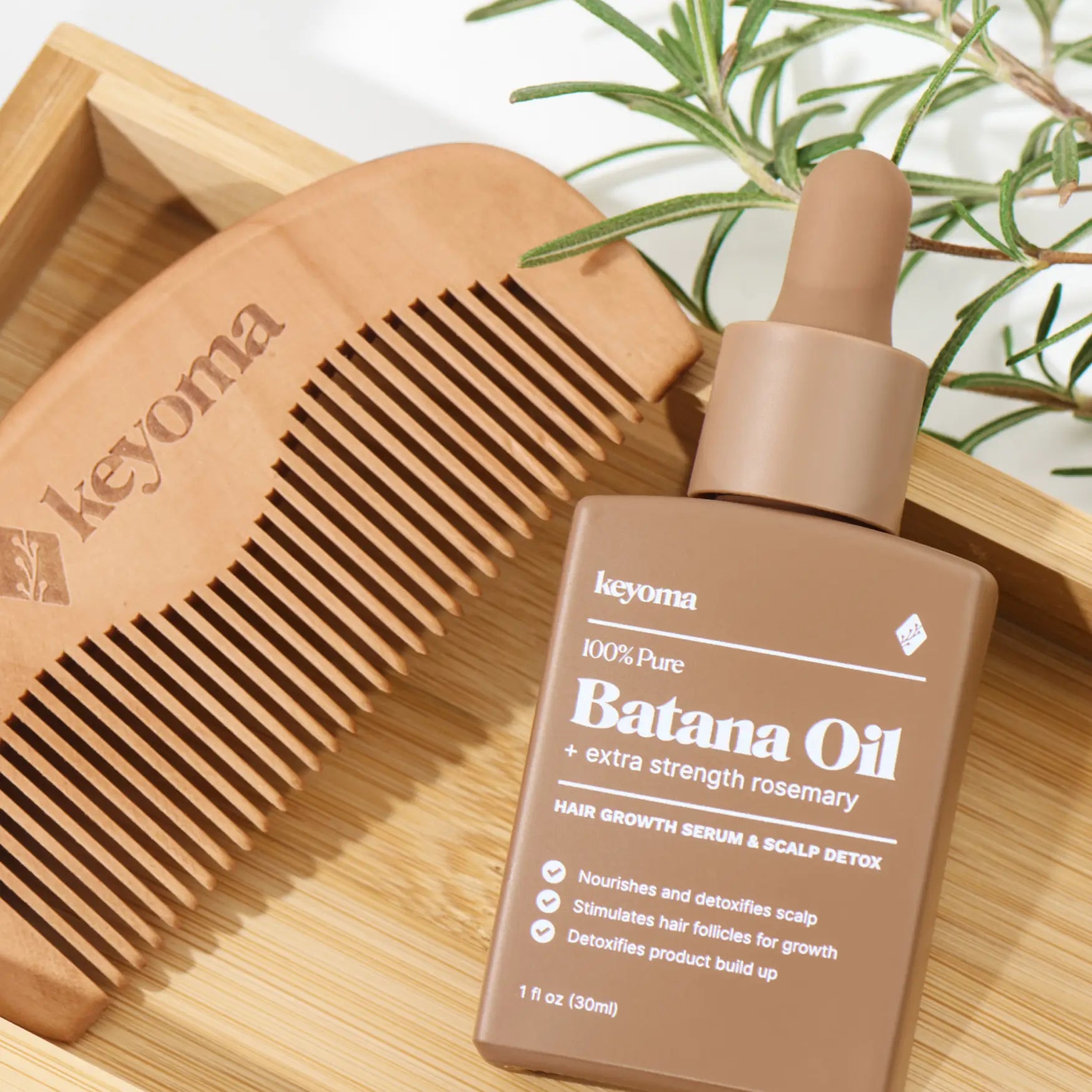
Placement can narrow the exposure without giving up conditioning. When using Keyoma Pure Batana Oil, apply a small amount only where your hair needs it and keep freshly coated strands away from your ears and neck. The product belongs in a hair-care step, not on active bumps.
Residue on Pillowcases, Headwear, and Accessories
Indirect transfer happens later. A bonnet, headphone cushion, or pillowcase can collect product from your hair and press it against the same skin for hours.
The AAD recommends washing items your head touches, including pillowcases, sheets, caps, hats, and headbands. Include frequently used headphones, helmet straps, and high collars. Otherwise, these surfaces can continue the exposure after you pause the suspected product.
Try a Product-Transfer Reset
A reset works best as a controlled test. Change the most plausible exposure, remove residue from contact surfaces, and track whether fewer new bumps appear. Improvement can support your suspicion, but it cannot confirm a diagnosis.
Pause the Most Likely Product
If symptoms are mild, begin with the newest product or the one most likely to reach the area. A new pomade applied near the ears ranks higher than a shampoo used unchanged for months. Hair oil becomes more relevant if you increased the amount or began sleeping with coated hair against your neck.
Do not stop a medically prescribed product without asking the prescribing clinician. If several products changed together, document each change.
Remove Residue From Skin and Contact Surfaces
Gently wash the outer skin that contacted the product, but do not scrub, squeeze, or scratch the bumps. Avoid putting cleansers, oils, or acne products inside the ear canal. Wash pillowcases, bonnets, headwear, towels, and other contact items according to their care instructions. A coated bonnet can otherwise blur the result after you pause an oil.
Track Changes Before Reintroducing Products
Use notes or consistent photos to record products, contact items, and new bumps. The AAD says product-related acne may take four to six weeks to clear after the responsible exposure stops, so one quiet morning proves little.
Look for a trend. Fewer new bumps may be more informative than how quickly older marks fade. Reintroduce only one product and stop if the skin becomes painful, swollen, blistered, or more irritated.
Prevent Hair Products From Reaching Your Skin
Prevention focuses on exposure control. Use the least amount that does the job, place it carefully, and remove residue from skin and fabrics.
Adjust Where and How Much You Apply
Keep leave-ins and oils on the hair that needs conditioning. Use the recommended amount of Batana oil for your hair length and texture as a starting point, then reduce it if your hair stays greasy or transfers product.
Residue on your hands, pillowcase, or collar can be one of the signs you may be using too much oil. Sectioning your hair and warming a small amount between your palms gives you more control than pouring oil near the ear.
Change Your Rinsing and Shower Order
Rinse hair products thoroughly, then wash behind the ears and at the nape. Clip conditioned hair up while washing your body so it does not rest against clean skin.
After styling, gently remove accidental product from the outer ear and neck. Aggressive scrubbing can add irritation and make the original pattern harder to read.
Look for Useful Product Labels
“Non-comedogenic,” “oil-free,” “non-acnegenic,” and “won’t clog pores” labels can narrow your options. A small eight-week study indexed in PubMed evaluated a non-comedogenic hair care regimen in people with mild to moderate facial and truncal acne and reported improvement. The result is not a guarantee for every formula or person.
Labels cannot account for application amount, skin sensitivity, or transfer from coated fabric. Treat them as screening clues.
When the Bumps May Have Another Cause
Product exposure is only one possibility. Cleveland Clinic lists sweat, friction, microorganisms, hormones, and product buildup among factors associated with scalp or hairline bumps. Similar factors can overlap around the ears and neck.
Itching, Burning, or Scaling May Suggest Irritation
Prominent itching, burning, scaling, swelling, or blistering deserves attention beyond a clogged-pore theory. The AAD’s contact dermatitis symptom overview shows that reactions vary and may include dry, cracked, itchy, tender, swollen, or blistered skin.
A clinician can assess whether these symptoms fit irritation, allergy, acne, folliculitis, or another condition.
Sweat, Friction, and Other Sources of Contact
Headphones, hearing devices, glasses arms, helmet straps, earrings, and tight headwear create friction where products collect. Heat and sweat can intensify the overlap. Clean reusable surfaces and check whether the fit repeatedly rubs one patch.
Location cannot separate these causes. Bumps under a headphone cup may reflect product transfer, friction, sweat, or a combination. Reduce the clearest exposures first.
Trace Breakouts Around Ears From Hair Products for Clearer Skin
Follow the transfer path before replacing your routine. Check runoff, direct hair contact, fabrics, and accessories. Pause the strongest suspect, clean contact surfaces, and document whether fewer new bumps appear.
Keep conditioning products focused on the hair itself. Careful placement lets Keyoma Batana Oil support your hair routine while limiting contact with your ears, neck, and breakout-prone skin. If the pattern persists or develops warning signs, move from home troubleshooting to a dermatologist’s assessment.
FAQs
How long can product-related breakouts take to clear?
The AAD says clearing may take four to six weeks after the responsible exposure ends. See a dermatologist if bumps persist, worsen, or scar.
Can rinse-out conditioner cause bumps behind the ears?
Yes, if residue repeatedly runs behind the ears and remains there. Rinse thoroughly and gently clean the outer skin. This pattern does not confirm the cause.
Should you stop every hair product at once?
No. When symptoms are mild, pause the newest or strongest suspect first. Do not stop medically prescribed products without contacting the prescriber.
Can hair oil transfer from a pillowcase to your neck?
Yes. A pillowcase can collect oil and press it against your neck. Wash contact fabrics while testing the suspected product.
Featured Product
30% Off + 3 FREE Gifts
100% Pure Batana Oil + Rosemary


