

In this article
You can generally use hair oil after a hair gloss once you have completed the treatment according to its instructions. The challenge is not compatibility. It is applying enough oil to soften dry areas without coating hair that already has a smooth, reflective finish.
Hair gloss and hair oil also produce shine in different ways. A gloss changes how the hair surface reflects light and may deposit color, depending on the formula. Oil smooths the feel and appearance of dry strands. Adding more oil will not make the gloss stronger, but it can make the result look flat or separated.
The right method depends on the type of gloss, your hair texture, and where dryness remains. Salon glosses, rinse-out treatments, color-depositing glosses, and leave-in glazes do not always follow the same application order. Finish and rinse your gloss as directed before layering another product.
Key Takeaways
-
Complete the gloss treatment according to its instructions before applying hair oil.
-
Apply a thin layer to the mid-lengths and ends first.
-
Fine hair usually needs less oil than thick, curly, or porous hair.
-
A greasy finish signals excess product, poor placement, or too-frequent application.
Can You Use Hair Oil After a Gloss Treatment?
Hair oil can fit into hair gloss aftercare when the treatment instructions allow leave-in products afterward. A rinse-out gloss should be fully rinsed before you add oil. A leave-in glaze may have its own layering order, so follow its label or your stylist’s directions instead of applying a universal waiting period.
The two products serve separate purposes. Gloss treatments primarily create a smoother, more reflective surface and may adjust tone. Hair oil coats or conditions the strands, helping dry ends feel softer and look more polished. Oil is an optional finishing step, not an extension of the chemical or color-depositing action of the gloss.
If your treatment included color, handle the hair gently after rinsing. The American Academy of Dermatology recommends using conditioner after washing and adjusting its placement to your texture, with fine or straight hair receiving more targeted application at the ends. Its healthy hair-care recommendations offer a useful foundation for processed hair.
For cleansing, conditioning, and styling beyond the oiling step, follow a broader color-treated hair routine. Keeping those decisions separate prevents you from expecting one finishing product to manage the entire aftercare process.
Signs You Need to Apply Hair Oil After a Hair Gloss
Do not judge the need for oil by shine alone. Glossed hair can look reflective while the ends still feel rough. Use touch, movement, and strand behavior to decide whether oil adds something useful.
Your Ends Still Feel Rough
Run your fingers lightly over the last few inches after the hair is dry. If the roots and mid-lengths feel smooth but the ends catch against your fingers, use a trace of oil on that area only.
The ends are older and often receive more friction, heat, and chemical exposure than the hair near the roots. Dermatologists also advise concentrating conditioner on the ends because they are typically the most fragile part of the strand, especially in everyday care for textured hair.
The Hair Has Shine but Lacks Softness
Shine does not always equal softness. A gloss may give the surface a reflective finish while lightened or porous sections still feel stiff. Press a few strands between your fingers. If they feel dry despite looking glossy, a thin oil layer may make them more flexible and pleasant to handle.
Frizz Appears Around the Mid-Lengths and Ends
A small amount of oil can smooth scattered frizz along the lengths. First check whether the frizz is localized or spread from roots to ends. Applying oil everywhere to fix a few rough areas often removes volume from sections that did not need product.
Your Hair Tangles After Drying
Glossed hair that catches easily at the ends may benefit from targeted lubrication. Apply oil only after gentle detangling rather than using it to force a comb through a knot. Persistent tangling may also point to split or highly weathered ends that oil can temporarily smooth but cannot repair permanently.
How to Oil Glossed Hair Without Buildup
Treat oil as a measured finishing layer rather than an all-over coating. Your starting amount should reflect the area that feels dry, not the total length of your hair.
Start With Less Than You Think You Need
Place the smallest usable amount on your fingertips or palm. One drop may be enough for fine, short, or freshly glossed hair, while thick or highly textured hair may need more. Product viscosity and dispenser size vary, so a fixed number of pumps is less reliable than watching how your hair responds.
For a more detailed starting point, compare your density and length with Keyoma’s guidance on how much Batana Oil to use. You can add oil, but removing too much usually requires blotting or washing.
Warm and Spread the Oil Between Your Palms
Rub the oil between your palms until they have a thin, even sheen. Your hands should not look wet. Spreading it first helps prevent one heavy patch from landing on the front layers or a single curl.
Glide your palms over the hair instead of squeezing the product into one section. Use the residue on your fingers for individual dry ends or flyaways.
Focus on the Mid-Lengths and Ends
Begin several inches below the roots and move downward. The American Academy of Dermatology gives similar placement advice for leave-in conditioner, recommending application from the mid-strands to the ends rather than the scalp.
If your roots already lie smooth after the gloss, adding oil there can make the style lose lift. Targeted ends-only hair oiling is often enough when the upper sections still look polished.
Add More Only Where Hair Still Feels Dry
Wait a few minutes, then reassess the hair in natural light. Look for rough ends, a dry patch near a lightened section, or curls that still feel rigid. Add the residue from another small amount only to those areas.
Stop when the hair moves freely and feels smoother. Separated strands, dark-looking sections, or collapsed volume indicate that you have crossed from conditioning into visible coating.
Adjust the Method for Your Hair Type
Your gloss creates the starting finish, but density, texture, and porosity determine how much oil that finish can carry. Use the same placement method with a different amount and frequency.
Fine or Straight Hair
Fine or straight hair often shows excess oil quickly because fewer bends and less volume conceal coated strands. Apply oil to dry hair as a finishing touch, using your fingertips on the ends rather than pressing both palms over the full length.
Skip the roots unless they are unusually dry and the product is designed for scalp use. Keyoma’s fine-hair oiling method offers more ways to protect softness without sacrificing movement.
Thick, Curly, or Coily Hair
Thick, curly, and coily hair may tolerate a richer application because natural scalp oils do not travel down bends as readily. The American Academy of Dermatology recommends applying oil or leave-in conditioner after washing and conditioning to help curly hair retain moisture.
Divide dense hair into sections so the outer layer does not receive all the product. Press a small amount into the driest lengths, then scrunch or smooth according to your curl pattern.
Dry, Porous, or Lightened Hair
Porous or lightened sections may feel dry sooner than untreated hair. Apply oil to damp hair if you want more even distribution before air-drying or styling. Use it on dry hair when only the ends need a final polish.
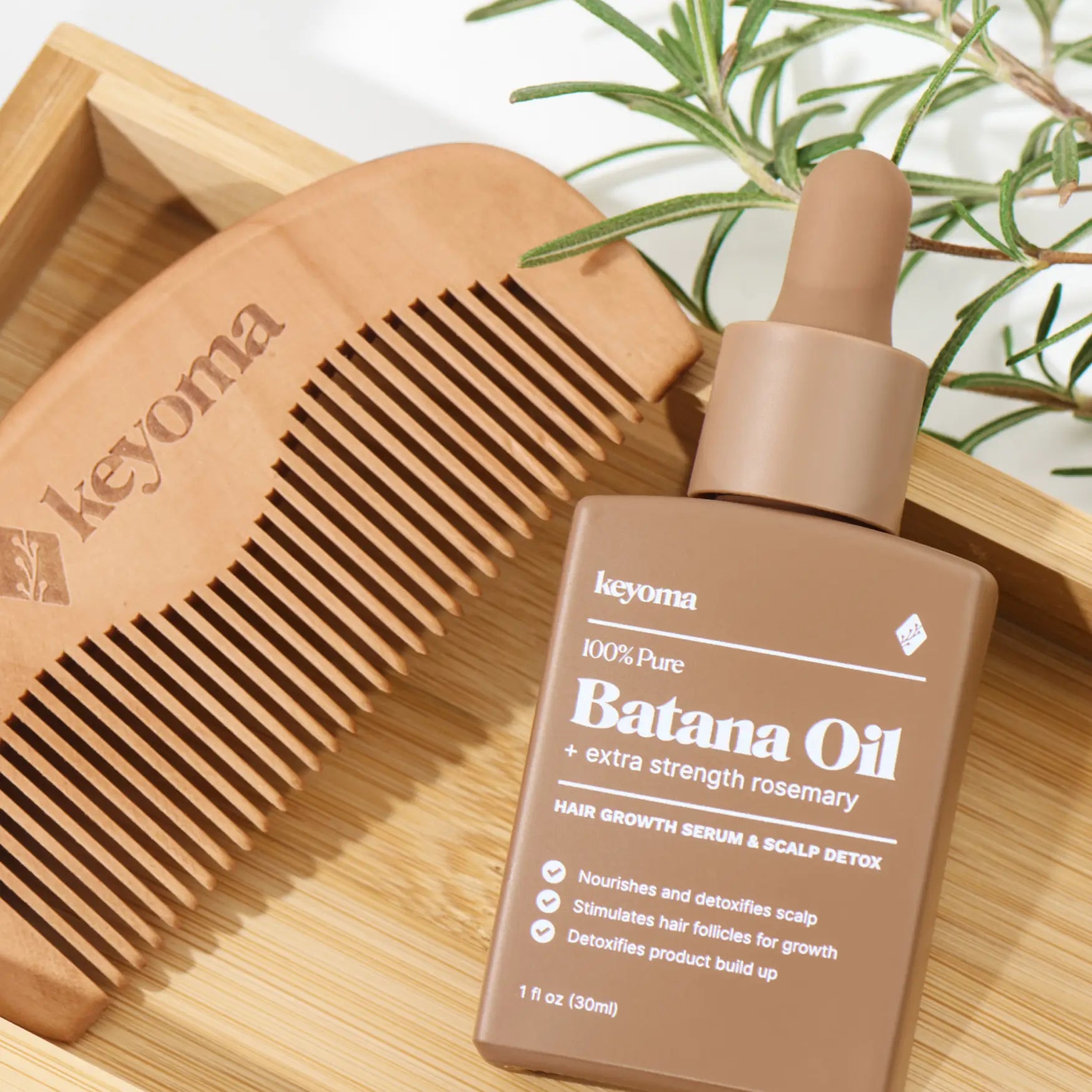
Keyoma Batana Oil has a richer feel than many lightweight finishing formulas. Warm a small amount between your palms and spread it thinly over the driest areas. The Keyoma Pure Batana Oil works best here as a concentrated conditioning option, not as a heavy coating over every strand.
Oil does not replace heat protectant unless the label specifically states that the product protects against heat. Apply a dedicated heat protectant before blow-drying, curling, or straightening.
What to Do If Your Hair Looks Greasy or Dull
A dull finish after oiling does not automatically mean the gloss failed. The oil layer may be too thick, concentrated in one area, or competing with other leave-in products. Check whether the problem appeared immediately after application or developed over several days.
Blot Away Freshly Applied Excess
If you have just applied the oil, press a clean microfiber towel or cotton T-shirt against the coated section. Do not rub, since friction can disturb the smooth finish and create frizz.
You can also run clean, dry hands through the area to redistribute a small excess toward drier ends. Avoid piling another styling product over the mistake because that usually adds more weight.
Clarify the Hair at Your Next Wash When Needed
If the hair feels waxy, clumps into narrow sections, or stays dull after brushing, wash it at your next normal cleansing time. Apply shampoo mainly to the scalp and let the lather move through the lengths while rinsing. A second wash may help when the first does not remove the coating, but avoid harsh scrubbing.
Repeated oil and styling layers can create visible product buildup. Follow your gloss instructions before using a clarifying shampoo, especially soon after a color-depositing service.
Reduce the Amount or Frequency Next Time
Use the result as feedback. Greasy roots point to poor placement. Stringy ends often signal too much product. Lost volume suggests that the formula or amount is too heavy, while a coated finish that appears after several applications signals that oil is being added faster than it is being washed away.
Keyoma’s steps for removing excess Batana Oil can help you adjust the next application without abandoning oil altogether.
Apply Hair Oil After Hair Gloss for Balanced Shine
Let the gloss provide the main reflective finish, then use oil only where the hair still feels dry, rough, or difficult to manage. Begin below the roots, spread a small amount across your palms, and reassess before adding more.
Fine or freshly glossed hair may need only a trace on the ends. Thick, curly, porous, or lightened hair may benefit from a slightly richer application. The right amount leaves hair soft and mobile. If strands separate, darken, or lose volume, scale back the amount or frequency.
FAQs
Will hair oil remove a gloss treatment?
A small amount of hair oil applied after a completed gloss treatment should not remove the gloss by itself. Follow the gloss label or your stylist’s aftercare instructions because salon glosses, rinse-out formulas, color-depositing treatments, and leave-in glazes use different systems.
Can I put hair oil on my roots after a gloss?
You can, but it is rarely necessary when your goal is a clean, polished finish. Root application can reduce volume and make freshly glossed hair look greasy. Concentrate on the mid-lengths and ends unless your scalp or product instructions call for a different method.
Do I need both hair oil and hair serum?
Not always. Oil usually adds conditioning and softness, while many serums focus on surface smoothness, frizz control, or styling. Their formulas vary, so check the label rather than assuming the names guarantee a specific function. Compare the difference between hair oil and serum before layering both.
Can I use hair oil before heat styling?
Only use an oil as your heat-protection step if its label includes a specific heat-protection claim and directions. Otherwise, apply a dedicated heat protectant first. Use the oil afterward as a light finishing step if the styled hair still feels dry.
Featured Product
30% Off + 3 FREE Gifts
100% Pure Batana Oil + Rosemary


