

In this article
Fine hair can benefit from oil, but it usually needs less product and more precise placement than thicker strands. Apply the smallest amount to the driest areas first, then stop before the hair loses movement.
Oil may add softness, shine, slip, and light frizz control. These cosmetic effects are temporary. Oil does not permanently repair split ends, increase strand diameter, or replace a water-based conditioner.
Use the start, check, and adjust method below to control the amount, placement, timing, and finish without wasting a wash day.
Key Takeaways
-
Begin with one drop or the smallest amount your dispenser allows.
-
Apply oil to the ends before touching the mid-lengths.
-
Keep finishing oil away from the roots when volume matters.
-
Change one routine variable at a time when troubleshooting greasiness.
Why Does Fine Hair Look Greasy After Oiling?
Fine hair describes the diameter of each strand. Thin hair refers to lower density or fewer strands. You can have fine hair at any density, so fine hair and thin hair are not interchangeable terms.
A small amount of oil can coat many narrow strands. As they group together, the hair may look stringy, flat, or darker. Oil near the roots also reduces lift and makes shine more visible.
Technique can matter more than the formula label. Even a lightweight product may look greasy when overapplied or concentrated in one area. A review in the International Journal of Trichology describes oils mainly as lubricating and conditioning materials that increase slip and shine, not as permanent repair treatments.
How Much Oil Should You Use on Fine Hair?
There is no universal drop count. Dispensers release different amounts, while density, dryness, damage, curl pattern, formula concentration, and application goal all affect how much you need.
Use an amount ladder instead:
-
Dispense one drop or the smallest amount available.
-
Spread it completely across both palms and fingers.
-
Apply it to the ends only.
-
Inspect the hair in natural light and feel its movement.
-
Add one more small amount only if dry sections still need it.
Your hands should feel lightly conditioned, not visibly coated. Cleveland Clinic dermatologist Dr. Shilpi Khetarpal advises using a small amount on the ends because oil can weigh down fine or straight hair. Cleveland Clinic's hair-oiling guidance also stresses individual variation.
If your current formula is consistently difficult to control, compare lightweight hair oils for fine hair rather than compensating by applying a heavy formula more often.
Step by Step: How to Oil Fine Hair Without Making It Look Greasy

A controlled application makes the biggest difference with fine hair. Rather than spreading oil through every strand at once, work from the driest areas upward and use only the residue left on your hands for sections that need less product. The steps below help you add softness and shine while keeping the roots light and the hair moving naturally.
Start With Clean, Dry Hands
Hand cream or styling residue can make a measured amount behave like a larger one. Wash and dry your hands first.
Spread the Oil Across Both Hands
Rub your palms and fingers together until the oil is almost invisible. This prevents a concentrated patch at first contact.
Apply Oil Where the Hair Needs It
Touch the oldest, driest ends first. Skim the product over small sections instead of dragging it from the roots. Keep it below the midpoint when your roots are oily. A detailed method for applying hair oil only to the ends can help treat rough tips without coating healthy roots.
Use Only the Residue on Lower Mid-Lengths
Use only the residue on your hands for the lower mid-lengths. Fine wavy or curly hair may need light coverage on selected dry bends, not every curl.
Check Before Adding More
Wait a minute and check the hair's movement. Add another tiny amount only where roughness remains. The American Academy of Dermatology recommends the smallest amount that does the job for leave-in products because fine hair needs less. AAD leave-in guidance also warns that scalp application can contribute to buildup.
|
Unwanted Result |
Likely Routine Mistake |
Next Adjustment |
|
Greasy roots |
Oil placed too close to the scalp |
Keep finishing oil below the mid-lengths |
|
Stringy ends |
Too much product on one section |
Use less and spread it more evenly |
|
Flat volume |
Oil traveled upward during application |
Clip roots away and treat ends first |
|
Uneven oily patches |
Oil was not spread across both hands |
Warm and distribute it before contact |
|
Residue after washing |
Too much oil or incomplete scalp cleansing |
Reduce the amount and shampoo the scalp well |
|
Hair still feels dry |
Oil used without enough conditioning care |
Pair it with a suitable conditioner or leave-in |
When Should You Oil Fine Hair?
Pre-wash oiling suits people who want softness or slip but prefer to remove the oil afterward. Apply a controlled amount to the lengths and ends, then shampoo the scalp thoroughly. Fine hair does not require overnight saturation.
Post-wash oiling is a finishing step and usually needs much less product. Follow the formula directions, then compare damp and dry application using the same amount. The overview of pre-wash and post-wash hair oil can help match the timing to your goal.
Scalp oiling is a separate choice. Fine strands do not automatically mean an oily scalp, though root application makes lost volume easier to see. The American Academy of Dermatology recommends washing according to oiliness, shampooing the scalp, and conditioning mainly the ends of fine or straight hair.
How to Fix Fine Hair That Looks Greasy After Oiling

Fine hair that looks greasy after oiling can often be corrected without changing your entire routine. First, remove or redistribute the excess product, then identify whether the problem came from the amount, placement, or timing. The fixes below can help restore movement and prevent the same result during your next application.
Blot Before Adding Anything Else
Press a clean microfiber towel or tissue over oily sections without rubbing. Gently redistribute a little product toward drier ends, and do not add more styling product.
Wash the Scalp Thoroughly
If blotting does not restore movement, wash the hair and concentrate shampoo at the scalp. Persistent residue may call for an occasional clarifying shampoo, but dry shampoo is not a replacement for removing buildup.
Adjust One Variable at a Time
Change only the amount, placement, timing, or formula next time. For an oily scalp with dry ends, cleanse according to scalp needs and keep richer products on the lower lengths.
Common Fine Hair Oiling Mistakes
The most common mistake is treating oil as hydration. Oil may reduce friction, add shine, and smooth the surface, but it does not supply water like a conditioner or leave-in. A dermatology review on shampoos and conditioners explains that conditioning agents smooth cuticle edges, reduce friction, and increase light reflection, supporting cosmetic rather than permanent repair claims.
Other mistakes include coating the roots, adding more before checking the first amount, and assuming a natural or lightweight formula cannot look greasy. Ordinary hair oil is not automatically a heat protectant. Use it before hot tools only when the label states that function. The AAD recommends limiting excessive heat and using the lowest effective temperature. Dermatologists' hair-damage guidance offers broader safe-styling advice.
Persistent itching, redness, sores, painful bumps, heavy scaling, sudden shedding, or patchy hair loss needs professional assessment rather than another oiling adjustment.
Master How to Oil Fine Hair for Weightless Shine
Successful fine hair oiling is controlled, not heavy. Use the smallest amount, spread it fully, treat the ends first, and stop while the hair still moves freely.
When the finish turns greasy, change one variable. Less product, lower placement, or pre-wash timing may give dry ends polish without sacrificing volume.
FAQs
Can you oil fine hair every day?
You can, but daily use is often unnecessary. Reduce the amount or frequency when hair looks flat or coated.
Should you apply hair oil to fine hair when it is wet or dry?
Follow the product directions. Damp hair may aid spreading, while dry application can offer more control. Test both with the same amount.
Can you oil your scalp if you have fine hair?
Yes, but strand diameter does not determine whether scalp oiling suits you. Stop if irritation or persistent buildup develops.
Is one drop of hair oil enough for fine hair?
It is a useful starting point, especially for short hair or dry ends. Check the result before adding more.
What is the difference between fine hair and thin hair?
Fine hair has a small strand diameter. Thin hair has lower density or fewer strands.
Why does hair oil make fine hair look stringy?
Excess oil groups narrow strands together. Use less and spread it across both hands for a lighter finish.
Can lightweight hair oil still make fine hair greasy?
Yes. Too much of a lightweight formula, or poor placement, can still flatten fine hair and create oily sections.
Featured Product
30% Off + 3 FREE Gifts
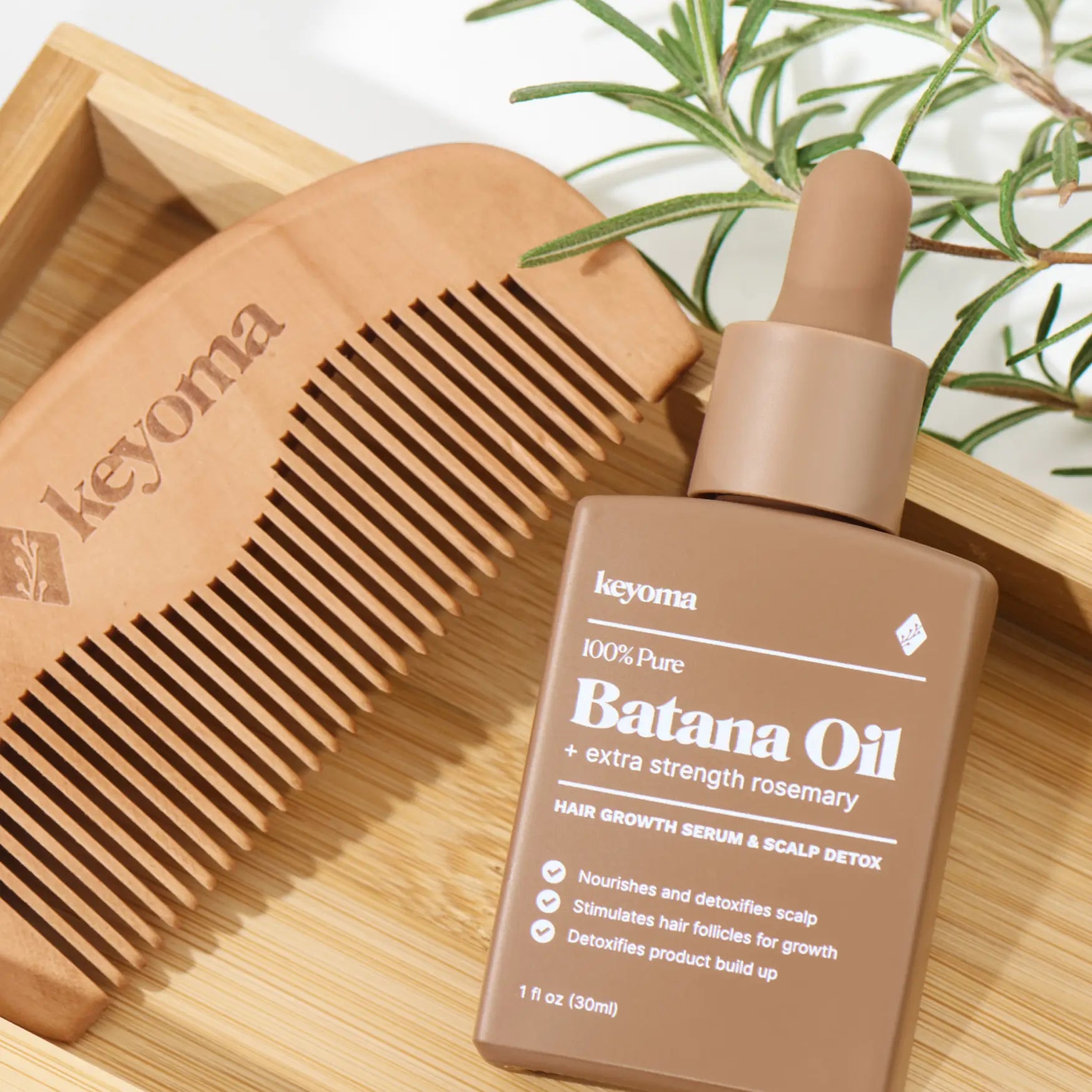
100% Pure Batana Oil + Rosemary


