

In this article
If your hair feels stiff after air-drying, the air is not necessarily the problem. Hair often dries hard because residue remains on the strands, several strengthening products overlap, or the hair stays compressed in one position while wet.
The texture of that stiffness matters. Hair that feels coated or tacky points toward a different cause than hair that simply holds its dried shape. And if a hard outer layer softens when you gently scrunch it, you may be feeling an intentional styling cast rather than a problem with your hair.
Instead of adding another conditioner or treatment, simplify one wash day and pay attention to where, when, and how the stiffness appears.
Key Takeaways
-
Hair can feel stiff after air-drying because of leftover conditioner, product buildup, hard-water minerals, strengthening treatments, or how it was positioned while wet.
-
A gel cast should soften when gently scrunched, while residue usually leaves the hair feeling coated, waxy, or heavy.
-
Changing one part of your routine at a time makes it easier to find the real cause.
-
Oils can add surface slip after the problem is addressed, but they cannot remove buildup, minerals, or structural damage.
Why Hair Can Feel Stiff After Air-Drying
Air-drying reveals what is already happening during your wash and styling routine. As the water evaporates, leftover products become more concentrated, strands settle into position, and any coating on the hair becomes easier to feel.
Before deciding that your hair is dry or damaged, ask three questions:
-
Does the stiffness soften when you gently move or scrunch your hair?
-
Does the hair feel coated, waxy, or sticky?
-
Is the stiffness concentrated in one area, such as the ends, underside, or roots?
Those details can help separate a temporary dried shape from residue or a persistent loss of flexibility.
Conditioner or Styling Product Was Not Fully Rinsed Out
Conditioner, leave-in cream, mousse, oil, and other styling products can dry into a noticeable film when you apply too much or distribute them unevenly.
This is especially easy to notice on fine or low-density hair. A product amount that works well for thick hair may make finer strands feel rigid, separated, or heavy. The underside of the hair may also feel stiffer if conditioner collects there and does not rinse away completely.
Pay attention to the sensation. Leftover product usually feels coated, waxy, tacky, or slightly damp even when the hair is dry. If that describes your hair, compare your symptoms with other reasons hair can feel waxy after washing.
On your next wash day, use less conditioner and rinse in sections. Lift dense areas away from the scalp so water can reach the hidden layers rather than flowing only over the surface.
Product Buildup Has Accumulated Over Several Washes
A single product may not create obvious stiffness. The problem can develop after several wash days as small amounts of oil, dry shampoo, conditioner, gel, and leave-in products remain on the strands.
This gradual film can make hair:
-
Feel coated even after shampooing
-
Dry in stiff or stringy sections
-
Look dull or unusually flat
-
Resist water when you try to wet it
-
Respond poorly to products that previously worked
Buildup can also create a frustrating cycle. When hair feels rough or unmanageable, you may add more conditioner or oil. Those additional layers can make the coating heavier without addressing what is underneath.
If the change developed slowly rather than after one new product, look for other signs of product buildup in hair. A clarifying shampoo may help remove general product residue, but follow the product directions and avoid treating every stiff wash day as a reason to clarify.
Hard-Water Minerals May Be Leaving a Film
Hard water contains higher amounts of dissolved minerals, commonly calcium and magnesium. Over time, mineral deposits can affect how hair feels and how well shampoos and conditioners perform.
Hard water becomes a stronger possibility when:
-
Your hair changed after moving or traveling
-
You notice chalky residue around faucets and shower fixtures
-
Shampoo lathers differently at home than it does elsewhere
-
Your hair stays dull, rough, or coated after you simplify your styling products
-
Several people in the same home notice a similar change
A regular clarifying shampoo targets oils and styling residue. A chelating product contains ingredients designed to bind to certain mineral deposits so they can be rinsed away. The two labels are sometimes used together, but the products are not automatically interchangeable.
Check your local water-quality report or use a water-hardness test before rebuilding your entire routine around hard water. If mineral buildup is likely, choose a product specifically labeled for hard-water or mineral removal and follow its instructions. Color-treated or already fragile hair may need a more cautious schedule.
Strengthening Products May Be Making Hair Feel Too Rigid
Protein masks, keratin treatments, reconstructors, and some bond-support products can be useful in the right routine. But stacking several strengthening formulas may leave some hair feeling firm, rough, or less flexible.
Research on hydrolyzed keratin and its interaction with hair fibers shows that keratin ingredients can interact differently with hair depending on their molecular size and the condition of the fiber. That makes “protein is always good” and “protein is always drying” equally unhelpful rules.
“Protein overload” is a popular label online, but stiff hair alone cannot confirm it. First, check whether your shampoo, conditioner, mask, leave-in product, and treatment all emphasize keratin, amino acids, reconstruction, repair, or strengthening.
If they do, pause one optional strengthening treatment for a few washes. Keep the rest of the routine stable so you can see whether flexibility improves. There is usually no reason to remove every protein-containing product permanently based on one stiff result.
Hair Dried in a Compressed or Fixed Position
Sometimes hair feels hard because it dried without room to move.
Wet strands can settle into a firm shape when they remain pressed against your shoulders, trapped under the back of your head, tucked behind your ears, or held in a tight bun or clip. Going to bed with damp hair can create the same effect.
Curly and wavy hair may also dry in defined clumps even without a strong-hold gel. Those clumps can feel firm at first but loosen when the hair is completely dry and gently separated.
The American Academy of Dermatology’s healthy-hair recommendations advise handling wet hair gently and absorbing moisture with a towel or T-shirt rather than rubbing it. After blotting, let your hair dry in a loose position. Avoid repeatedly touching it, but make sure it is not pinned against your scalp or clothing for hours.
Make Sure It Is Not an Intentional Gel Cast
A gel cast is the temporary shell that forms when a hold product dries around curls or waves. It helps preserve clumps and definition while the hair dries. Once the hair is completely dry, gentle scrunching usually breaks the cast and leaves the strands softer.
Unwanted stiffness behaves differently:
|
Texture Pattern |
What It Usually Feels Like |
|
Gel cast |
A dry outer shell that softens when gently scrunched |
|
Product residue |
Coated, waxy, sticky, or heavy after movement |
|
Compressed drying |
Hair holds a flattened or fixed shape but loosens with handling |
|
Persistent roughness |
Hair remains rough, tangled, or inflexible after the dried shape is released |
Do not clarify your hair simply because a styling gel created the hold it was designed to provide. Wait until the hair is fully dry, then gently scrunch a small section. If it becomes soft and mobile, the cast was likely doing its job.
Use a One-Wash Test to Find the Cause

A controlled wash day gives you better information than adding several corrective products at once. Keep the test simple and change only one category at each stage.
Step 1: Remove Optional Styling Products
Use your usual shampoo and rinse-out conditioner, but skip gel, mousse, leave-in cream, dry shampoo, and finishing oil for one wash.
If your hair dries softer, one of the removed products or the combined amount was likely contributing. Add products back one at a time on later wash days rather than returning to the full routine immediately.
If your hair remains stiff, the cause may sit earlier in your routine.
Step 2: Shampoo the Scalp and Rinse Thoroughly
Apply shampoo mainly to the scalp, where oil, sweat, skin cells, and products collect. Let the lather move through the lengths as you rinse instead of aggressively scrubbing the ends.
After conditioning, divide dense hair into sections and let water pass through each area. Run your fingers gently through the strands to check for slippery pockets of conditioner.
Longer rinsing is more useful than harsher scrubbing. Hair is more vulnerable to mechanical damage while wet, so rough handling can create another problem without solving the residue.
Step 3: Change Only One Treatment
If you use a keratin mask, bond treatment, reconstructor, or protein-rich conditioner, pause one optional treatment. Do not replace it with three moisturizing products during the same test.
Keeping the routine otherwise consistent helps you tell whether the treatment was affecting flexibility or whether the stiffness remains regardless of its use.
Step 4: Let Your Hair Dry Loose
Gently blot excess water with a soft T-shirt or microfiber towel. Then let your hair dry without a tight bun, braid, clip, or wrap.
Keep long hair from remaining trapped between your back and a chair. If the underside always dries stiff, bring the lengths forward or shift their position carefully before they begin setting.
Avoid brushing or repeatedly separating wet curls. The goal is to give the hair space to dry while still handling it gently.
Step 5: Compare the Result
Once the hair is completely dry, note:
-
Where the stiffness appears
-
Whether it feels coated, rough, or simply set in place
-
Whether gentle scrunching or movement softens it
-
Whether the roots and ends feel different
-
Which single change improved or worsened the result
A quick note on your phone can make patterns easier to see across two or three wash days.
Match the Fix to What Your Hair Is Telling You
Once you identify the most likely pattern, use the smallest adjustment that addresses it.
-
If your hair feels coated: Reduce the amount of conditioner or leave-in product and rinse more carefully.
-
If stiffness develops over time: Consider an occasional clarifying wash that suits your hair type and current treatments.
-
If hard water is likely: Confirm your water hardness and use a properly labeled chelating product when needed.
-
If strengthening products overlap: Pause one optional treatment and reassess before removing an entire ingredient category.
-
If your hair dries in a fixed shape: Change its position and avoid tight styles until it is dry.
-
If you have a gel cast: Wait for complete dryness, then gently scrunch to release it.
Do not keep layering oil over hair that feels coated. Oil can improve surface slip, but it will not dissolve product residue or remove hard-water minerals.
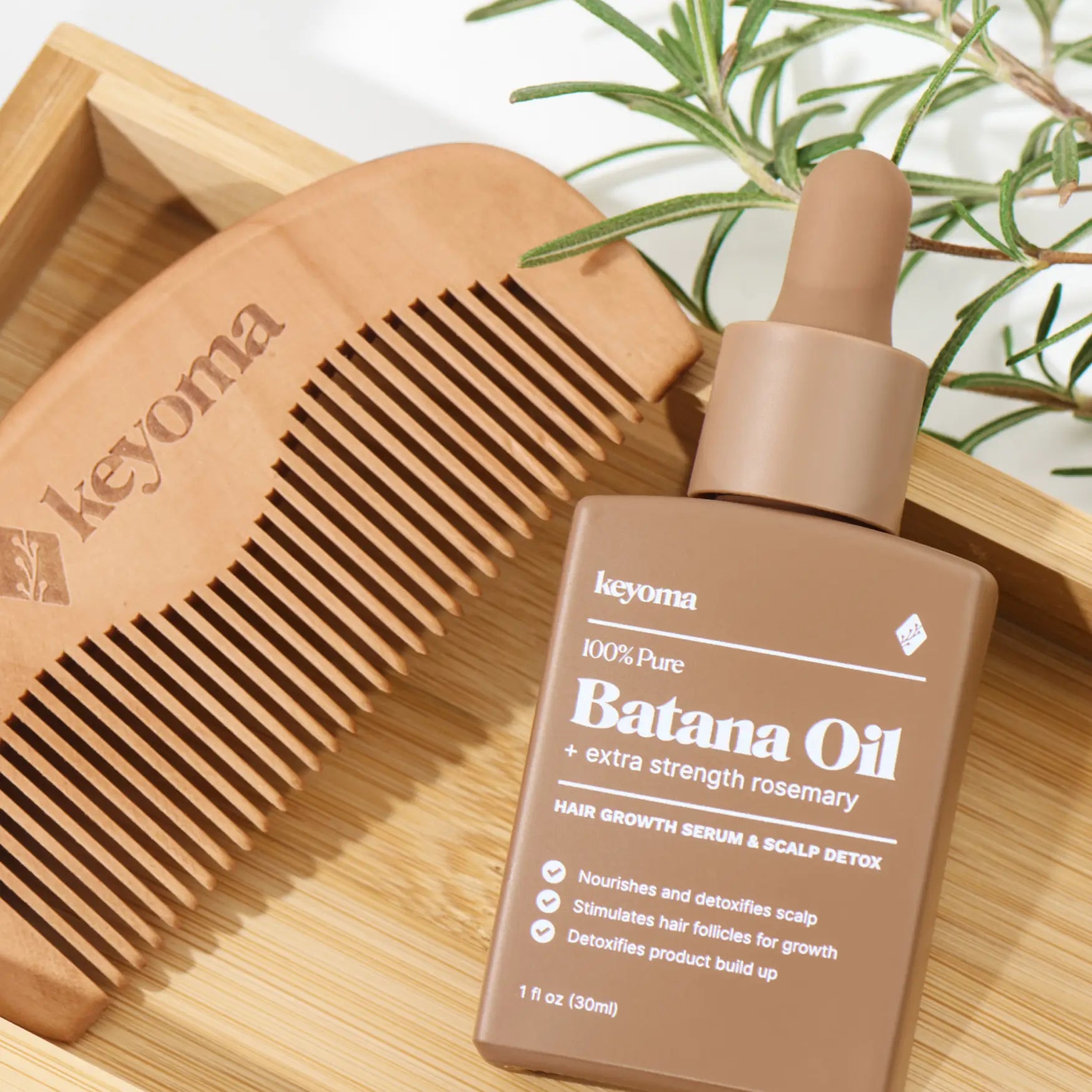
Once your hair feels clean and flexible again, a small amount of oil can support a smoother finish. Start with one or two drops of Keyoma Pure Batana Oil with Rosemary, warm it between your palms, and lightly touch it over the driest ends. Using a restrained amount helps you add softness and shine without recreating the heavy coating you just corrected.
When Stiff Hair Needs More Than a Routine Change
An occasional stiff result usually calls for routine troubleshooting rather than medical treatment. However, talk with a dermatologist or qualified hair professional if the texture change is sudden, persistent, or accompanied by:
-
Increasing breakage or severe tangling
-
Scalp burning, swelling, sores, or ongoing irritation
-
Noticeable hair loss or changes in the scalp
-
Hair that remains severely brittle after you simplify your routine
-
A texture change with no clear product, chemical treatment, or water change
The location and feel of stiffness can provide clues, but they cannot diagnose a hair-shaft or scalp condition.
Give Your Hair a Cleaner, More Flexible Air-Dry
When hair feels stiff after air-drying, adding more moisture is not always the right first move. Begin by deciding whether you are feeling a removable cast, a product coating, or persistent roughness.
Simplify one wash day, rinse thoroughly, pause one optional treatment, and let your hair dry without compression. Once you know which change restores movement, you can rebuild the routine with lighter, more intentional layers.
Air-drying should reveal your natural texture, not leave you guessing under a stack of products.
Featured Product
30% Off + 3 FREE Gifts
100% Pure Batana Oil + Rosemary


