

In this article
In most routines, you should complete the bond-building treatment before applying a separate hair oil. But the correct order depends on whether your bond builder is a pre-shampoo treatment, rinse-out mask, leave-in formula, or styling oil.
Start with the directions on the bond builder. Apply it to dry, damp, or clean hair as instructed, give it the required processing time, and rinse it out if necessary. You can then decide whether your lengths still need a small amount of oil for softness, shine, or easier handling.
Avoid coating your hair with oil before a bond treatment unless the manufacturer specifically allows it. Oil may affect how evenly the treatment spreads or whether it reaches the hair in the condition intended by the formula.
These products also perform different jobs. A bond builder follows a specific formula and application process to support damaged hair. Hair oil mainly conditions the strand’s surface. It may improve slip and reduce the rough feeling associated with overprocessed hair, but it does not rebuild chemical bonds.
Key Takeaways
-
Let the bond builder’s directions determine the product order.
-
Apply a separate oil after completing the treatment unless its label says otherwise.
-
Do not mix oil into a bond builder without explicit manufacturer approval.
-
Skip or reduce the oil when the treatment already leaves your hair soft and manageable.
Find Your Bond Builder Type Before Adding Oil

“Bond builder” does not describe one standard product format. Some are designed for use before shampooing, while others go on clean hair after washing. You may need to rinse one formula out and leave another in.
That difference matters more than the words on the front label. Before applying oil, read the directions and identify what kind of treatment you have.
Pre-Shampoo Bond Treatment
A pre-shampoo bond treatment may require dry, damp, or wet hair. Some formulas also instruct you to use the treatment before adding shampoo, conditioner, or styling products.
Do not assume that a pre-wash oil should come first just because both products belong before shampoo. If the bond builder requires direct application, oiling first creates an unnecessary layer between the treatment and your hair.
Use this order unless the label provides different instructions:
-
Apply the bond treatment to the hair condition stated on the label.
-
Leave it on for the full processing time.
-
Rinse or shampoo as directed.
-
Condition if the routine requires it.
-
Apply oil later only if your lengths still feel rough.
If you enjoy longer pre-wash oil treatments, consider scheduling them on a different wash day. Separating the two makes it easier to follow the bond builder’s directions and judge what each product contributes.
Rinse-Out Bond Treatment or Mask
A rinse-out bond treatment usually follows shampoo, although some formulas may occupy a different position in the wash cycle. It may replace your regular conditioner or sit between shampoo and conditioning.
Apply the treatment evenly and leave it on for the stated time. Do not pour a separate oil into the mask to make it feel richer. Changing the formula can affect its consistency, distribution, and intended application.
After rinsing, check your hair before adding anything else. If it already feels smooth and easy to detangle, another conditioning layer may not offer a useful difference. If the ends still feel rough once you reach the styling stage, apply a small amount of oil to those areas.
Leave-In Bond Treatment
Most leave-in bond treatments go on clean, damp hair. Apply the bond builder first so you can distribute it evenly without working through a layer of oil.
Some leave-in treatments require a waiting period before you comb your hair or apply another product. Give the formula that time. Adding oil immediately may interfere with even distribution or encourage you to manipulate fragile hair before the waiting period ends.
Once the required time has passed, continue with your routine. Add a small amount of oil only if the hair still needs more slip or softness.
Bond-Building Styling Oil
A bond-building styling oil is already an oil-based finishing product. Treat it as one complete step instead of automatically layering another oil over it.
Start with the amount listed on the label. Apply more only when specific areas still feel rough after the first application. Doubling up on oils can make damaged hair look shinier at first, but it can also leave fine sections separated, flat, or greasy.
Claims differ between formulas, too. Only rely on the heat-protection, strengthening, or styling benefits stated by that product’s manufacturer. The phrase “bonding oil” does not mean every oil performs the same functions.
Use This Product Order for Your Treatment
When the instructions do not show an entire wash-day routine, use this sequence as a starting point:
-
Cleanse or prepare your hair as required by the bond builder.
-
Apply the bond product to dry, damp, or wet hair as directed.
-
Give it the full processing or waiting time.
-
Rinse it out or leave it in according to the label.
-
Apply conditioner, leave-in conditioner, or a tested heat protectant when needed.
-
Add a small amount of oil to the roughest lengths and ends.
This order keeps oil in a supporting role. It also gives you a clear point at which to decide whether you actually need it.
Do not measure success by the number of products you apply. A chemically damaged strand can still become weighed down, sticky, or difficult to style. The goal is to use the fewest layers needed to make your hair manageable without ignoring the bond treatment’s intended application.
When to Keep Pre-Wash Oil and Bond Repair Separate
Oil and bond treatments can fit within the same overall routine, but using them during different wash cycles often makes more sense.
Separate them when:
-
The bond builder requires clean or product-free hair
-
You normally apply a generous pre-wash oil treatment
-
Your hair becomes limp after using both
-
The bond treatment is difficult to spread over oiled strands
-
You cannot tell which product is causing stiffness or residue
-
Your routine already includes a mask, leave-in, cream, and serum
For example, you could use the bond treatment during one wash and reserve a longer oil treatment for the next. This does not make either step less effective. It simply prevents two intensive product applications from competing for space in one routine.
Changing one variable at a time also gives you better information. If you apply oil, a new bond treatment, a rich mask, and a different leave-in during the same wash, you will not know which product helped or which one caused buildup.
Adjust the Oil Layer Without Overloading Damaged Hair

The smallest effective amount is usually the most useful starting point. Damage can make hair feel dry and rough, but that does not mean it can absorb an unlimited amount of product.
Consider your strand thickness, density, texture, and everything else already in the routine.
Fine or Easily Weighed-Down Hair
Begin with one drop or the smallest amount your dispenser releases. Rub it across your palms and lightly touch the final few inches of your hair.
Avoid placing oil near the roots unless the product is intended for scalp use. Fine hair may lose movement quickly when oil sits alongside a leave-in conditioner, styling cream, and bond treatment.
Allow your hair to dry before deciding whether to add more. Damp hair can conceal how heavy the finished result will feel.
Thick, Curly, or Coily Hair
Thicker or more textured hair may tolerate a richer oil layer, particularly when chemically treated lengths remain rough after conditioning.
Work in sections and apply a thin film to the ends first. Move upward only if the middle lengths still need more slip. This provides better control than pouring a larger amount into your palm and distributing it everywhere at once.
The American Academy of Dermatology recommends keeping curly hair conditioned and applying oil or leave-in conditioner after washing when additional moisture support is needed. That does not mean every routine requires both. Let the finished feel of your hair guide the amount.
Highly Porous or Chemically Damaged Ends
Chemically damaged ends may accept products unevenly. One section can remain rough while another becomes coated.
Instead of covering your entire head, place oil only where the hair catches, tangles, or feels noticeably rough. A targeted application can improve slip without flattening healthier sections.
Remember that a smoother finish is not proof that the oil repaired the internal structure. Oil can support softness and manageability, but it cannot permanently fuse split fibers or reverse severe chemical damage.
Signs You Should Reduce the Oil
Evaluate your hair after it dries and again before your next wash. A routine that feels soft while wet may become heavy once every layer settles.
You may be using too much oil if:
-
Your hair feels coated rather than soft
-
Fine sections look stringy or separated
-
The roots lose volume sooner than usual
-
Curls or waves stop holding their shape
-
Your hair remains sticky or dull after washing
-
The bond treatment becomes harder to distribute
-
Each application seems to require more shampoo
These signs do not automatically mean the bond builder caused the problem. Consider the total amount of oil, masks, conditioners, creams, serums, and styling products on your hair.
If the coated feeling continues, review the broader signs of hair oil overuse. Start by reducing the oil or limiting it to your ends before changing several parts of the routine at once.
Stiffness needs a different response from greasiness. If your hair feels rigid, adding more oil may only disguise the texture temporarily. Review how often you use strengthening, protein-rich, and bond-focused formulas instead of assuming every rough feeling calls for another conditioning layer.
Protect Chemically Damaged Hair Beyond Product Layering
Bond builders and oils cannot compensate for damage that continues faster than your routine can manage it.
The American Academy of Dermatology recommends conditioning after washing, reducing heat exposure, handling hair gently, and increasing the time between chemical services. These habits reduce further stress on hair that is already fragile.
Support your treatment routine by:
-
Spacing out bleaching, relaxing, perming, and coloring services
-
Avoiding multiple strong chemical services close together
-
Conditioning after shampooing
-
Letting hair partially or fully air-dry when practical
-
Using the lowest effective heat setting
-
Limiting repeated passes with hot tools
-
Detangling slowly with an appropriate wide-tooth comb
-
Reducing tight styles that pull on fragile sections
Do not assume a regular oil protects hair from high temperatures. Use a tested heat protectant according to its label when blow-drying, straightening, or curling your hair.
If breakage continues despite gentler handling and fewer chemical services, more product may not be the answer. A hairstylist can assess whether the weakest ends need trimming, while a board-certified dermatologist can evaluate persistent breakage that occurs with scalp symptoms or noticeable thinning.
Let the Bond Builder Lead Your Routine
Apply your bond builder exactly as directed before deciding where a separate oil belongs. Complete its cleansing, processing, waiting, and rinsing steps first. Then assess whether your hair still needs more softness or slip.
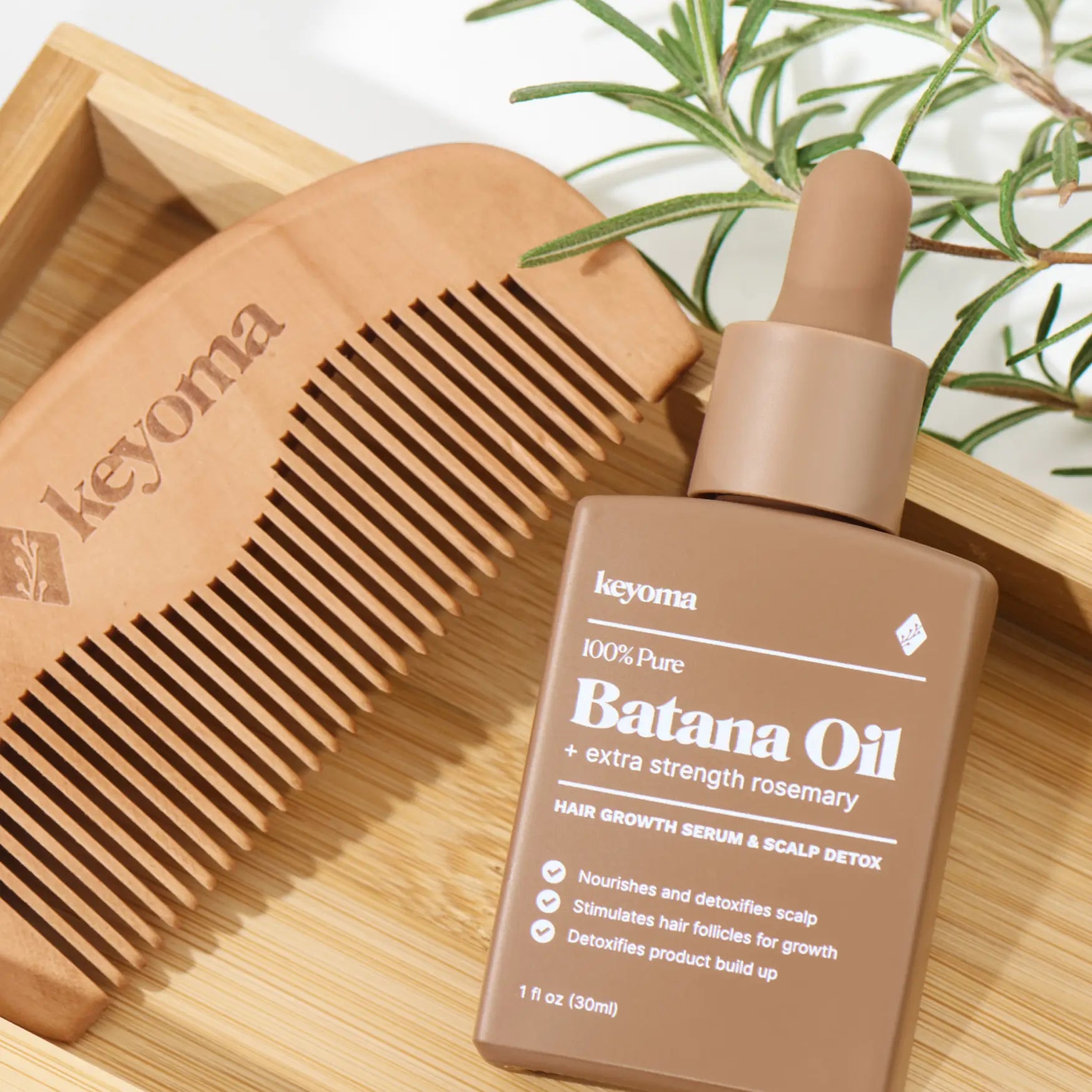
When you want a focused oil step, apply Keyoma Batana Oil with Rosemary separately rather than mixing it into the bond treatment. Start with a small amount on rough lengths or ends and skip it when your other products already leave your hair manageable.
This approach keeps each product in its proper role. The bond builder controls the treatment order, while oil remains an optional finishing or separate pre-wash step.
FAQs
Can I apply hair oil before a bond builder?
You should not apply hair oil before a bond builder unless the manufacturer says the treatment can be used over oiled hair. Apply the bond builder to the hair condition specified on its label, then use oil later if needed.
How long should I wait before applying oil after bond repair?
How long you should wait depends on the bond builder’s directions. Complete its processing, rinsing, or required leave-in time before applying another product.
Can I mix hair oil into a bond treatment?
You should not mix hair oil into a bond treatment unless the manufacturer explicitly permits it. Adding oil can change the product’s consistency and make even application more difficult.
Should I use oil after every bond treatment?
You do not need oil after every bond treatment. Skip it when the treatment and conditioner already leave your hair soft, smooth, and manageable.
Why does my hair feel greasy after using both products?
Your hair may feel greasy because the combined product load is too heavy for your strands. Reduce the oil first, keep it on the ends, and remove unnecessary creams or serums before replacing the bond treatment.
Featured Product
30% Off + 3 FREE Gifts
100% Pure Batana Oil + Rosemary


