

In this article
Hair snapping while detangling usually points to breakage when you find short, uneven pieces rather than strands close to your full hair length. But the hair in your comb may also include strands that had already shed from the scalp before you started detangling.
That distinction matters. Detangling can reveal natural shedding and create new breakage during the same session. A comb full of hair does not automatically mean the comb pulled every strand from your scalp.
Instead of diagnosing the problem from one hair or counting everything in the drain, look for a repeated pattern across the released hairs, the detangling process, and the hair that remains on your head.
Key Takeaways
-
Short pieces in several lengths point more toward breakage, while strands near your full hair length are more consistent with shedding.
-
Detangling can remove previously shed strands and break vulnerable hair during the same session.
-
A pale or club-shaped root end is only one clue and cannot diagnose the cause of shedding.
-
Compare several similar wash days instead of relying on an exact strand count from one session.
What Hair Snapping During Detangling Usually Means
Breakage happens when a strand fractures somewhere along the hair shaft. It can snap near the ends, around a worn section in the middle, or closer to the scalp. The remaining hair stays attached, but the released piece may land in your comb, hands, or shower.
Shedding happens differently. The entire strand releases from the follicle as part of the hair cycle. That hair may fall immediately, remain caught between neighboring strands, or stay trapped in a curl pattern until your next wash day.
This is why timing can be misleading. Finding a strand while combing does not prove that combing caused it to come out. The tool may simply have collected hair that was already loose.
Curly and tightly coiled hair can retain these released strands particularly well. If you do not detangle daily, several days of shed hair may appear at once. At the same time, a difficult knot can place enough tension on fragile strands to create fresh breakage. Both can end up in the same handful.
Use a Wash-Day Pattern Check to Separate Breakage From Shedding

You do not need to inspect every hair under bright light. Set the removed hair aside, finish detangling, and then assess the overall pattern.
This is an observation method, not a medical test. The goal is to determine whether breakage, shedding, or a mixture appears more likely so you can choose a sensible next step.
Compare the Lengths of the Released Hairs
Start by comparing the loose hairs with the length of your hair.
Breakage often produces short pieces in noticeably different lengths. You might see tiny fragments alongside pieces several inches long. This variation happens because vulnerable strands can fracture at different points.
Shedding more often produces strands close to their full grown length. If your hair reaches your shoulders and most of the removed strands appear similarly long, they are less likely to be pieces that snapped near the ends.
Length is still not proof. Bangs, layers, face-framing pieces, and naturally shorter areas can release full strands that look like breakage. New growth can also be mistaken for broken hair while it is still attached. Look at the group of removed hairs rather than judging one short strand.
Look at the Pieces and the Hair That Remains
Broken pieces may have frayed, split, rough, or sharply fractured ends. The hair still on your head may also provide useful context.
Breakage becomes more likely when you notice:
-
Ends that look less full than the roots
-
Increasingly uneven lengths
-
Short pieces appearing after difficult knots
-
More splits, roughness, or fraying through the ends
-
One area repeatedly losing length
These signs work together. Texture alone cannot confirm breakage because healthy curls, coarse strands, and weather-affected hair can all feel different without actively snapping.
If your main concern is scalp visibility rather than lost length, make sure you understand the difference between fine and thinning hair. Fine describes the diameter of individual strands, while thinning describes a reduction in overall density. Neither should be assumed from the amount of hair in one comb.
Notice What Happens as the Tool Moves
Pay attention before the hair reaches the comb.
A repeated catch followed by a sudden release, a snapping sound, or short pieces appearing directly beneath a stubborn knot supports active breakage. It means the strand may be meeting more tension than it can tolerate.
By contrast, a long strand that slides free with little resistance may have already shed and become trapped among neighboring hairs. This is common when wash days are spaced apart or the hair has been kept in a protective style.
The most useful clue is not simply where you found the hair. It is what happened immediately before it appeared.
Treat the Root End as One Clue, Not a Diagnosis
A naturally shed strand may have a small club-shaped or pale end. A broken piece usually will not because it fractured above the follicle.
However, this “bulb check” has limits. The end can be too small to see, covered by product, or confused with lint, buildup, or a split end. Not seeing a bulb does not prove that the strand broke. Seeing one does not explain why the hair shed.
Use the root end only as supporting information alongside strand length, detangling resistance, density changes, and the pattern across several wash days.
Decide Whether the Pattern Looks Mixed
You do not have to label every hair.
If you find many full-length strands along with a smaller group of short pieces, you may be seeing normal or increased shedding plus some mechanical breakage. If most of what you find consists of varied short pieces and detangling involved repeated snagging, breakage is more likely to be the dominant problem.
This mixed category is important because forcing every wash day into “breakage or shedding” can lead you in the wrong direction. You can improve a rough detangling technique while separately monitoring an unusual increase in full-length strands.
Why Hair May Break While You Detangle

Detangling places controlled tension on the hair. Healthy technique keeps that tension low enough to separate knots without unnecessarily damaging the strand. Breakage becomes more likely when resistance rises or the hair is already vulnerable.
Too Much Tension Builds at a Knot
Dragging a tool from the roots to the ends pushes several tangles into one compact knot. Pulling harder does not make that knot safer to remove. It concentrates force on a small group of strands.
Large sections can create a similar problem. You may not feel which strands are trapped, so the tool keeps moving while individual hairs remain caught.
Starting at the ends gives you a smaller area to clear. Once that section moves freely, you can work higher without combining every knot below it. The American Academy of Dermatology recommends slowly combing from the ends upward to detangle with minimal damage.
The Hair Does Not Have Enough Slip
Water and conditioner can help strands move past one another, but the right conditions depend on your hair type.
The American Academy of Dermatology advises people with textured or tightly curled hair to use a wide-tooth comb while the hair is damp. For straight hair, allowing it to dry slightly before gentle combing may reduce damage. Its dermatologists also recommend working through curly or coily hair in sections with water and leave-in conditioner rather than brushing it dry.
A detangling product should reduce resistance. If the hair still catches after application, adding more force is not the answer. Pause, add water or product if appropriate, and loosen the knot with your fingers.
For dry hair that needs extra softness, a small amount of Keyoma Pure Batana Oil can be smoothed through the lengths before washing or after conditioning. Use it to supplement a routine that already provides enough slip, not as a replacement for conditioner or a dedicated detangler. Oil may help the strands feel more manageable, but it does not stop shedding or repair a hair that has already fractured.
Existing Damage Lowers the Hair’s Tolerance
Heat styling, bleaching, relaxing, repeated friction, and worn ends can leave sections of the shaft more vulnerable. The comb may reveal the damage, even when it did not create all of it.
That is why changing tools alone may not solve persistent snapping. You may also need to reduce heat, space out chemical services, trim severely split ends, or adjust how you dry and style your hair.
For a broader look at the distinction, review the signs of hair breakage versus hair loss. This detangling guide focuses on what happens during wash day rather than every possible cause of broken or thinning hair.
Try a Lower-Tension Detangling Reset
Use your next session as a controlled reset rather than trying to rescue the entire routine at once.
-
Divide your hair into manageable sections. Smaller sections make it easier to locate resistance instead of pulling several knots together.
-
Create enough slip. Wet or dampen the hair when appropriate for your texture, then apply conditioner or a detangling product designed for your hair type.
-
Use your fingers first. Separate large tangles and remove trapped shed hairs before introducing a comb or brush.
-
Support the section above the knot. Holding the hair can reduce pulling at the scalp while you work on the tangled area.
-
Begin at the ends. Clear a short section, then move upward only when the tool passes through without catching.
-
Choose a suitable tool. A wide-tooth comb or flexible detangling brush can help, but no tool is gentle when forced through resistance.
-
Stop when tension increases. Add more slip or return to finger detangling instead of making faster, harder passes.
-
Assess the removed hair afterward. Look at the dominant length pattern instead of interrupting the routine to inspect every strand.
A better session should involve fewer hard catches and less force. It may not immediately reduce the amount of full-length hair you see because those strands may have already shed before you began.
Track the Pattern Without Counting Every Hair
Exact strand counting sounds objective, but wash-day conditions make it unreliable.
Someone who detangles every day will usually see less accumulated hair per session than someone who washes weekly. Hair length, density, curl pattern, protective styles, and how thoroughly you detangled last time also change what appears in the drain.
Instead, record a few repeatable observations:
-
Was the removed hair mostly short, full-length, or mixed?
-
Did the tool catch in the same areas?
-
Did your ends look less full?
-
Was your part wider or your scalp more visible?
-
Was this wash day comparable with the previous one?
A quick photo of your part or ends under similar lighting can be more useful than trying to count a wet clump of overlapping strands. Look for a trend across several comparable sessions, not a verdict from one stressful wash day.
When Hair Snapping or Shedding Needs Professional Assessment
Gentler technique can address avoidable mechanical stress, but it cannot identify or treat every reason for changing hair density.
Consider speaking with a board-certified dermatologist if you notice:
-
A sudden or sustained increase in full-length shed strands
-
A widening part, bald area, or visible reduction in density
-
Scalp pain, sores, inflammation, scaling, or intense itching
-
Breakage that continues after you reduce tension and heat
-
A major hair change following illness, childbirth, significant stress, restrictive eating, or a medication change
-
Uncertainty about whether you are seeing shedding, breakage, or both
Do not stop a medication because you suspect it affects your hair. Discuss that concern with the clinician who prescribed it.
The American Academy of Dermatology notes that a dermatologist can distinguish excessive shedding from hair loss and investigate the underlying cause. An at-home strand check cannot provide that assessment.
Make Your Next Detangling Session More Informative
When hair appears in your comb, start with the pattern rather than the amount. Short pieces in several lengths support breakage. Strands close to your full hair length support shedding. Finding both means both may be happening.
Then change what you can control. Add suitable slip, work in smaller sections, begin at the ends, and stop forcing the tool through resistance. Compare the results across similar wash days.
That approach gives you more useful information than a bulb check or exact strand count. It also helps you reduce unnecessary snapping while recognizing when a change in shedding or scalp density deserves professional attention.
Frequently Asked Questions
Why does my hair snap when I comb it?
Hair may snap when a vulnerable strand meets more tension than it can tolerate. Knots, insufficient slip, aggressive combing, heat damage, chemical processing, and worn ends can all make breakage during combing more likely.
How can I tell if the hair in my brush is shedding or breakage?
You can tell whether hair in your brush is more consistent with shedding or breakage by comparing its length, variation, condition, and the resistance you felt while detangling. Full-length strands favor shedding, while multiple short, uneven pieces favor breakage, but no single visual sign provides a diagnosis.
Can hair shedding and breakage happen at the same time?
Hair shedding and breakage can happen at the same time because detangling removes previously released hairs while tension may also snap fragile strands. A mixture of long strands and short pieces is therefore possible during one session.
Why does more hair come out on wash day?
More hair may appear on wash day because naturally released strands can accumulate between washes. This is especially noticeable in curly or coily hair and after protective styles because neighboring hairs may hold the shed strands in place.
Should I detangle my hair wet or dry?
Whether you should detangle wet or dry depends on your hair type. Textured or tightly curled hair often benefits from damp, conditioned detangling, while straight hair may be less vulnerable after it has dried slightly.
Featured Product
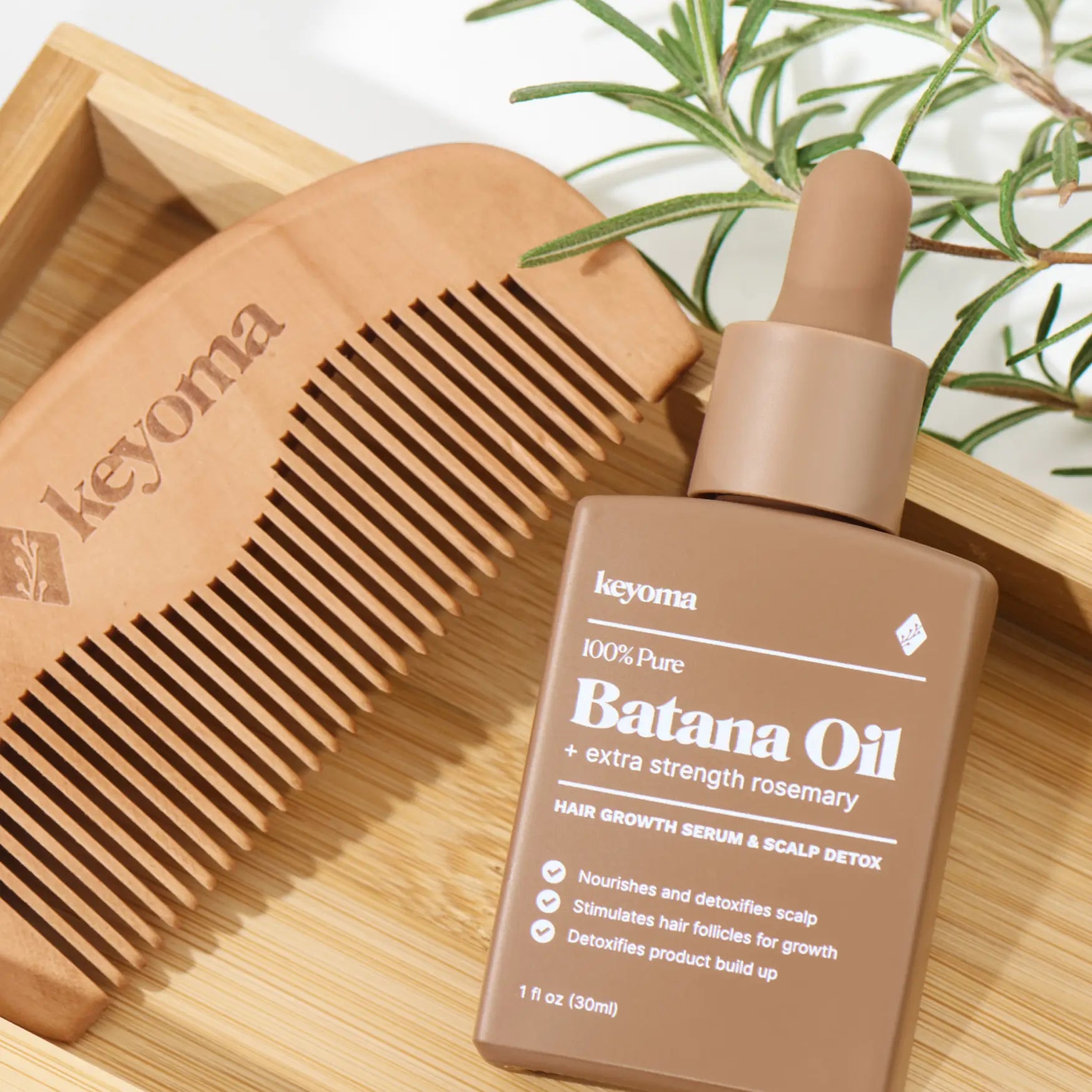
30% Off + 3 FREE Gifts
100% Pure Batana Oil + Rosemary


