

In this article
Low-density hair can benefit from oil, but it has less room for application mistakes. A little too much near the roots can reduce lift, group separate strands together, and make more of the scalp visible.
The answer is not necessarily to find the lightest oil or avoid oil completely. It is to control how much you use, where you place it, and whether you leave it in or rinse it out.
Start with the smallest amount you can dispense, spread it completely across your hands, and touch only the areas that feel dry. Stop while the hair still moves freely. If a richer oil softens your lengths but weighs them down, use it before shampooing instead of as a finishing product.
Key Takeaways
-
Low density describes how many hairs cover an area, not the diameter of each strand.
-
Start with the ends and keep oil away from the roots, crown, and visible part.
-
Judge the amount by movement and strand separation instead of shine alone.
-
Rich oils may work better as pre-wash treatments when leave-in use reduces volume.
Confirm That Low Density Is the Variable You Need to Manage
Hair density describes the number of strands growing within a given area of the scalp. If you have low-density hair, you have fewer strands contributing to the overall shape and fullness of your style.
This does not automatically mean that each strand is fine. You can have low-density hair with fine, medium, or coarse strands. You can also have many fine strands and still have high-density hair.
If you are unsure where you fall, Keyoma’s guide can help you check your hair density before you change your routine.
The distinction matters because density and strand diameter create different oiling problems. Fine strands can become coated quickly because each shaft is narrow. Low-density hair can appear flatter because there are fewer strands supporting the style. If your hair is both fine and low density, you will usually have even less tolerance for excess product.
Naturally low density is also different from a recent reduction in fullness. This article focuses on cosmetic care for hair that has always had lower coverage. Sudden shedding, a widening part, bald patches, or a noticeable change from your usual density deserves professional assessment rather than another oiling adjustment.
Choose the Oiling Method Before Choosing the Oil

Oil weight matters, but it is only one part of the result. A lightweight oil can still flatten your hair if you apply too much at the roots. A richer oil may work well if you place it only on dry ends or wash it out afterward.
Choose the method based on what you want the oil to do.
Use a Finishing Oil for Localized Shine
Finishing oil works well when a few ends, flyaways, or surface pieces look rough after styling. This should be a corrective step, not an automatic full-head application.
Let your hair dry and settle first. You may find that only the last inch or two needs attention. Spread a trace of oil between your fingertips and lightly pinch or smooth those pieces.
Dry application gives you a clear view of where the oil is going. It also makes overapplication visible quickly. If the treated pieces become darker, shinier, or more separated than the surrounding hair, you have used too much.
Use Oil on Damp Ends for Wider Distribution
Slightly damp hair can help a small amount of product spread across a wider area. It may suit low-density hair with dry lengths that need more than spot correction.
Blot away excess water before applying anything. Hair that is still dripping makes it harder to see where the oil has collected.
Apply any water-based leave-in first if your routine includes one. Then smooth a thin trace of oil over the ends. The American Academy of Dermatology recommends using the smallest amount of leave-in product that does the job and concentrating it where the hair is dry rather than on the scalp. The same placement principle can help you control an oil layer.
Use Richer Oils Before Shampooing
Low density does not always mean low conditioning needs. Coarse, curly, color-treated, or highly porous lengths may still feel rough even when there are fewer hairs on the scalp.
If a rich oil gives your hair useful softness but leaves it flat as a finishing product, move it to the pre-wash stage. Shampoo can remove the excess layer before styling, allowing you to use a more conditioning product without carrying its full weight into the finished look.
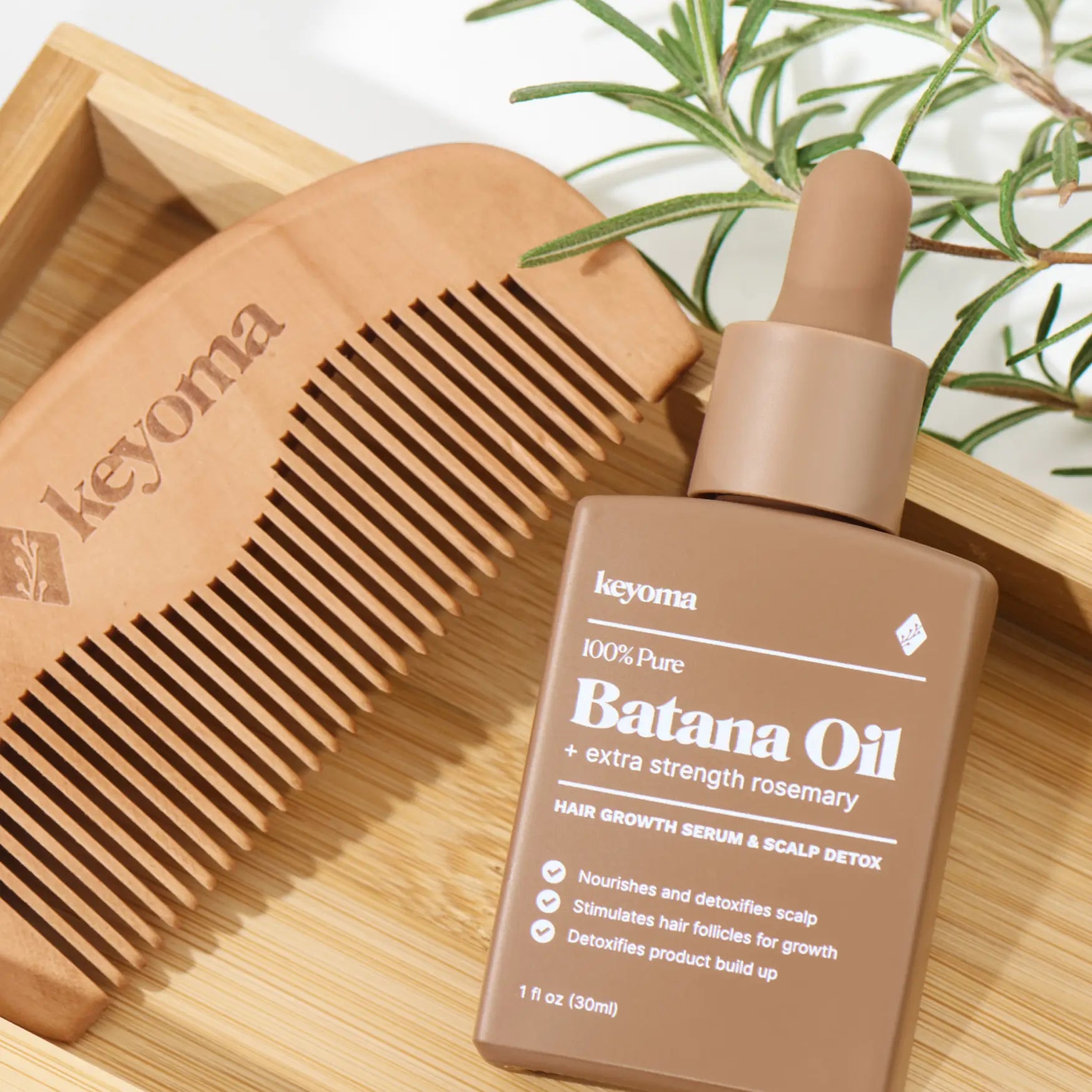
This is where Keyoma Pure Batana Oil with Rosemary can fit naturally. Batana oil has a richer texture, so low-density hair may respond better when you use it as a controlled treatment on the driest lengths before washing. Follow the product directions, keep the application focused, and avoid treating saturation as the goal.
Batana oil can support softness, shine, and slip. It should not be used as a substitute for hair-loss assessment or presented as a way to create new follicles.
Apply Hair Oil Without Flattening Low-Density Hair

The best hair oil for low-density hair is one you can control. Instead of copying a universal drop count, use a staged application that shows you when to stop.
Start With the Smallest Available Amount
Dropper and pump sizes vary. A thick oil also spreads differently from a thin serum. Hair length, dryness, curl pattern, damage, and strand diameter can all change how much you need.
Use this amount ladder:
-
Dispense one drop or the smallest amount the packaging allows.
-
Rub it across both palms and fingers until your hands look lightly sheened rather than wet.
-
Touch the ends first instead of sweeping your hands over the full length.
-
Wait and inspect the result before adding anything else.
One drop is a starting test, not a guaranteed dose. Short hair may need less, while long, coarse, or highly textured ends may need more. The point is to make each increase deliberate.
Keep Oil Away From the Volume Zone
The volume zone includes the roots, crown, part, and upper lengths. Oil in these areas can reduce lift and make strands group together close to the scalp.
That grouping changes how the hair looks even when you have not lost a single strand. Instead of each hair contributing its own visual space, several hairs begin moving as one glossy section. More scalp may show between those sections, creating the appearance of lower density.
Begin with the last few inches. Do not automatically apply from ear level downward if only the ends feel dry. You can always extend the application upward during a future use if the lower placement is not enough.
Use a One-Section Test
Before applying oil across all your lengths, test it on one small section.
Choose two similar sections on opposite sides of your head. Apply a trace of oil to one and leave the other untreated. After the oil settles, compare them in natural light.
Look at four things:
-
Does the treated section feel softer?
-
Do the strands still separate naturally?
-
Does the section swing and move like the untreated hair?
-
Did the oil improve roughness without making the section look darker?
The best result is not the shiniest section. It is the section that feels better while preserving its natural movement and width.
If the treated side looks stringy or thinner, change one variable. Use less product, apply it lower, or move that oil to a pre-wash routine.
Stop While the Hair Still Moves Freely
Free movement is a more useful stopping rule than a preset drop count.
Properly oiled ends should feel smoother and less grabby. They should not move as one coated piece. Your fingers also should not pick up an obvious oily residue after touching the hair.
Do not keep adding oil because one end still looks imperfect. Split or severely weathered ends may need trimming, and rough hair may need a water-based conditioner rather than another layer of oil. The Cleveland Clinic notes that oil may temporarily improve the appearance of split ends, but that cosmetic smoothing is not permanent repair.
Adjust the Routine Based on What You See

Low-density hair gives quick visual feedback. Flatness, separation, and residue are not signs that you must abandon oil. They show which part of the method needs to change.
Hair Looks Shiny but Flatter
Shine without movement usually means the oil layer is too broad or too high.
Use less during the next application and keep it farther from the roots. If the amount was already minimal, try using the same oil before shampooing instead of leaving it in.
Ends Still Feel Dry
Oil may reduce friction and make the surface feel smoother, but it does not replace every part of a conditioning routine.
If the ends remain stiff, rough, or brittle, use an appropriate rinse-out conditioner and consider a light water-based leave-in. The American Academy of Dermatology recommends conditioning after shampooing because damaged hair is fragile and more likely to break.
Once the hair has enough conditioning, a trace of oil can help finish the surface. Adding oil repeatedly to under-conditioned hair may only produce shiny roughness.
Hair Separates Into Stringy Sections
Stringiness usually means too much oil reached too few strands. Dispense less and spend more time spreading it over your palms before touching your hair.
Also check whether you keep returning to the same visible sections. Face-framing pieces and the outer layer often receive product several times while the rest receives none.
Oil Builds Up Before Wash Day
Daily layering can become visible quickly on low-density hair. If your hair looks increasingly flat or feels coated, reduce the application frequency instead of trying to counter the buildup with more styling products.
Wash according to your scalp and product use. Then restart with one controlled application rather than placing fresh oil over old residue.
|
What You Notice |
Likely Routine Issue |
Next Adjustment |
|
Flat roots |
Oil applied too high |
Keep the application on the ends |
|
Stringy sections |
Too much oil in one area |
Reduce and spread the starting amount |
|
Soft but heavy hair |
Leave-in oil is too rich |
Move it to the pre-wash stage |
|
Rough but shiny ends |
Oil is masking dryness |
Add water-based conditioning |
|
Greasy hair by the next day |
Excess frequency or product stacking |
Apply less often |
Build a Low-Density Hair Routine That Protects Volume
A good low-density hair routine creates softness at the ends without carrying unnecessary weight near the scalp.
Start by cleansing according to how quickly your scalp becomes oily and how much product you use. Apply conditioner mainly where the hair needs slip and softness. Use root-lifting or volumizing products near the scalp only if they suit your style, then let the hair dry before deciding whether oil is necessary.
At that point, look for a specific need. If only two dry pieces need smoothing, treat those pieces. If the full lower section feels rough, use a trace on damp ends during your next wash. If richer conditioning consistently helps but flattens the finished style, schedule an occasional pre-wash treatment.
Your strand diameter and curl pattern still matter. Someone with coarse, curly, low-density hair may need more conditioning than someone with fine, straight, low-density hair. Density determines how visibly extra weight affects fullness. It does not define your complete hair type.
If those labels are still getting mixed together, review the difference between fine and thin hair before choosing products. You can then adjust for both the number of hairs you have and the width of each strand.
Keep Softness Without Sacrificing Fullness
You do not need to choose between dry ends and flat roots. Treat hair oil as a targeted tool rather than a mandatory coating.
Begin with the ends, compare a treated section with an untreated one, and stop while the hair still moves freely. Move richer oils to the pre-wash stage when leave-in use reduces volume. Most importantly, change only one variable at a time so you can see whether the amount, placement, timing, or product weight made the difference.
For deeper conditioning without a heavy finished layer, try Keyoma Pure Batana Oil with Rosemary as a focused pre-wash treatment. Apply it where your hair needs softness, follow the product directions, and wash away the excess before styling for volume.
FAQs
What is the best hair oil for low-density hair?
The best hair oil for low-density hair provides enough slip or softness without causing strands to clump. Formula weight matters, but the amount, placement, timing, and condition of your hair often affect the result more.
Can low-density hair use oil every day?
Low-density hair can use oil every day, but daily layering is often unnecessary and may quickly reduce volume. Reapply only when the ends show a clear need rather than following a fixed schedule.
Where should I apply oil on sparse hair?
Apply oil to the driest ends first and keep it away from the roots, crown, and visible part. Expand the application only if the rest of the length still feels rough.
Is low-density hair the same as fine hair?
Low-density hair is not the same as fine hair. Low density describes fewer hairs within an area, while fine describes the narrow diameter of each strand.
Can hair oil make low-density hair look thinner?
Hair oil can temporarily make low-density hair look thinner when excess product groups strands together and reduces root lift. Using less oil and applying it lower can preserve a fuller appearance.
Can hair oil increase hair density?
Hair oil does not create new follicles or reliably increase the number of hairs growing on your scalp. Its practical role is to support softness, shine, slip, and easier handling.
Featured Product
30% Off + 3 FREE Gifts
100% Pure Batana Oil + Rosemary


