

In this article
Bumps after braids can follow excessive tension, contact irritation, trapped residue, or an inflammatory scalp problem. Their appearance alone cannot tell you which one is responsible.
Look first at when the bumps appeared, where they sit, and whether you also have pain, itching, scaling, crusting, or drainage. Those clues can help you choose a safer next step without turning a mirror check into a home diagnosis.
Act on the most urgent clue first. If the style hurts or pulls, release the tension. If the scalp is broken, draining, or getting worse, stop experimenting with products and seek medical care.
Key Takeaways
-
Pain, stinging, tenting, or headaches suggest the braids are applying excessive tension.
-
Timing and location offer useful clues, but they cannot diagnose a scalp condition.
-
Pause oils and styling products on active, broken, draining, or unexplained bumps.
-
Remove pressure promptly and seek care for worsening pain, spreading redness, or drainage.
What Bumps After Braids May Be Telling You
A row of bumps at tightly gripped roots tells a different story from an itchy rash wherever extension hair touches your neck. Bumps that emerge after days of sweat, gel, and oil also need a different first response.
Use the table as a triage tool, not a diagnostic chart.
|
Possible Trigger |
Useful Clues |
Immediate Action |
Escalation Signs |
|
Excess tension |
Pain, stinging, headache, scalp tenting, bumps at pulled roots |
Loosen or remove the affected braids |
Broken hairs, thinning, open skin, or persistent pain |
|
Contact irritation |
Strong itching or rash where extension hair or a product touches |
Stop the suspected exposure and avoid adding products |
Swelling, blistering, spreading rash, or trouble breathing |
|
Buildup or occlusion |
Later onset with greasy or flaky residue and sweat |
Clean gently and pause heavy products |
Tender pustules, crusting, drainage, or worsening redness |
|
Unclear inflammation |
Sore, itchy, crusted, or draining bumps without a clear pattern |
Leave the area alone and arrange medical advice |
Fever, rapid spread, severe pain, or hair loss |
Itching can accompany traction, a product reaction, or an inflammatory follicle problem. DermNet’s overview of traction alopecia lists itching, redness, scaling, pustules, broken hairs, and thinning among its possible features. Appearance should guide caution, not certainty.
Check the Timing, Location, and Symptoms
Take well-lit photos before changing the style or applying anything. Note whether each bump sits at a braid base, across a broader contact area, or beneath visible residue. Photos can show progression more reliably than memory.
If residue is the main clue, compare what you see with broader signs of product buildup. Buildup remains only one possibility. Immediate pain at pulled roots deserves a tension response even if gel is also present.
Bumps That Appeared Soon After Installation
Bumps that appear during installation or soon afterward, especially at the hairline, temples, or nape, point first toward mechanical stress. Pain, stinging, raised or “tented” scalp between parts, and a headache strengthen that concern.
The American Academy of Dermatology’s warning signs for tight styles include pain, stinging, crusts, and scalp tenting. A style that hurts is too tight. Do not wait several painful days for it to loosen on its own.
Itching or Rash Where Hair and Products Touch
Strong itching behind the ears, at the nape, or along the face may fit contact irritation more closely, especially where synthetic hair or products touch. The pattern can be broader than the braid roots.
Tension can itch too. Stop the newest suspected exposure when practical and watch whether the rash spreads. Facial swelling, widespread hives, or breathing trouble requires urgent medical help.
Bumps That Developed as Residue Accumulated
Bumps that emerge later alongside sweat, flakes, a tacky film, or repeated product layers make residue more relevant. Ask whether the change followed accumulation rather than the pull of installation.
Do not scrub to prove that buildup caused it. Gentle cleansing may remove residue, but tender pustules, crusting, or drainage can reflect an inflammatory condition that needs proper evaluation. DermNet describes scalp folliculitis as small, itchy pustules that can become sore and crusted, but only a clinician should determine whether that diagnosis fits.
What to Do as Soon as You Notice Bumps
Release obvious pressure, pause scalp products, and avoid scratching. Trying oil, vinegar, essential oils, or medicated products in quick succession can increase irritation and make the pattern harder to assess.
Release Pressure From the Affected Braids
Ask the braider to loosen or redo painful sections without more pulling. Take down affected braids when the grip cannot be corrected. Release buns, ponytails, or clips that add a second pulling force.
Scalp massage does not remove mechanical tension. Rubbing a tender area can also disturb bumps or broken skin. Pressure relief comes from changing the style, not trying to soothe the scalp while leaving the same pull in place.
Pause Oils, Gels, and Fragranced Scalp Products
Keep oils off active, broken, draining, or unexplained bumps. A fresh layer can trap residue, introduce another irritant, or hide changes. Pause edge control, fragranced sprays, dry shampoo, and unprescribed medicated products too.
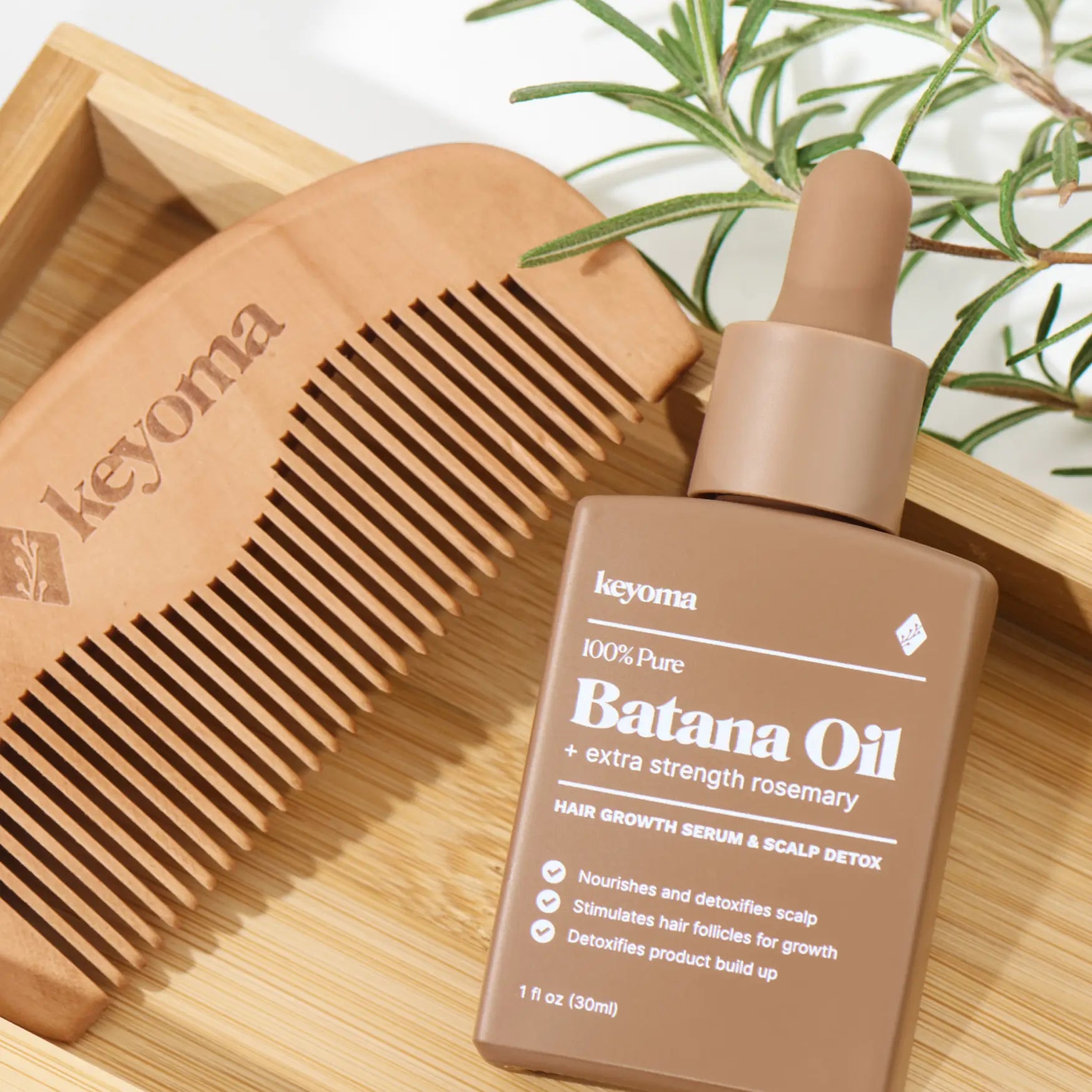
Once the scalp is comfortable and intact, a small amount of Keyoma Pure Batana Oil with Rosemary can condition dry lengths away from the roots. Its role is cosmetic conditioning, not treating bumps or hair loss.
Clean the Scalp Without Scratching the Bumps
If there is no open or draining skin, use lukewarm water and mild shampoo carefully between parts. Work with your fingertips rather than nails. Rinse well and let the scalp dry fully.
Stop if cleansing causes bleeding, sharp pain, or more drainage. Do not pick crusts or squeeze pustules. A clinician can advise on treatment after identifying the cause.
When Should You Remove the Braids?
Remove affected sections when pain, stinging, headache, or tenting continues after loosening. Remove the whole style when pressure is widespread or its construction prevents you from releasing painful roots.
Appearance is not a reason to preserve a harmful style. Neat parts and a recent installation do not outweigh scalp pain. The AAD advises asking for an affected area to be loosened when a weave or extensions cause pain or a headache, because those are signs that the style is too tight.
If bumps remain after pressure is gone, tension may have been only one part of the problem. Avoid reinstalling another tight style to cover the area.
Warning Signs That Need Medical Attention
Arrange prompt care if bumps worsen, spread, feel warm, drain pus, bleed, or form thick crusts. Fever, facial swelling, a rapidly spreading rash, or trouble breathing calls for urgent evaluation.
Watch the hair as well as the skin. Broken hairs around the forehead, a receding edge, or a localized thin patch can be signs of traction-related hair loss, not merely surface irritation. Prolonged or repeated tension can progress from non-scarring loss to permanent follicle damage, according to DermNet.
A dermatologist can separate conditions that look similar. Seek an assessment if the cause remains unclear, symptoms persist after removing the suspected trigger, or hair density changes.
How to Reduce the Risk With Your Next Style
Prevention begins during installation. Tell the braider that you do not want pain or a “tight for longevity” finish. Check the first few braids before the style is completed.
Choose a setup that reduces both grip and weight:
-
Request comfortable tension and speak up at the first sting or headache.
-
Use larger sections or lighter, shorter extensions when weight pulls at the roots.
-
Leave fragile edges out rather than forcing short hairs into a tight braid.
-
Avoid immediately pulling fresh braids into a high bun or tight ponytail.
-
Begin with a clean scalp and use fewer fragranced or heavy styling layers.
Note the extension hair and products used. If a rash returns with the same material, that history can help a dermatologist.
Address Bumps After Braids for a Safer Scalp
Match your response to the strongest clue. Release pulling when the roots hurt, stop suspected products when itching follows contact, and clean residue gently only when the skin is intact. If the bumps drain, spread, become more painful, or appear with thinning, move from home care to medical evaluation.
Protecting the style should never take priority over protecting the scalp. Once the area is calm, you can return to simple conditioning on the hair lengths and plan the next protective style around less tension, less weight, and fewer potential irritants.
Frequently Asked Questions
Will bumps go away after loosening the braids?
Some tension-related bumps may settle after the pulling force is removed, but there is no fixed timeline. Persistent, crusted, or draining bumps need medical evaluation.
Can synthetic braiding hair irritate the scalp?
Yes. Synthetic hair or substances used on it can trigger irritation. A rash along contact areas supports that possibility, but itching alone does not confirm the cause. Seek care for severe or spreading symptoms.
Should you put oil on braid bumps?
No oil should be treated as a universal remedy for braid bumps. Keep oil off active, broken, draining, or unexplained areas. Once the scalp is calm and intact, you may use a small amount on dry hair lengths, away from the roots.
Can bumps after braids lead to hair loss?
Bumps do not automatically mean hair loss, but bumps alongside ongoing tension, broken hairs, receding edges, or thin patches deserve attention. Repeated pulling can cause traction alopecia, so loosen or remove the source of tension and see a dermatologist when density changes.
Featured Product
30% Off + 3 FREE Gifts
100% Pure Batana Oil + Rosemary


