

In this article
Yes, you can generally use batana oil after a keratin treatment, but the timing depends on the exact smoothing system your stylist used. Wait until every no-wash, no-moisture, and styling restriction for that treatment has ended before adding oil.
There is no universal 48-hour or 72-hour rule. Some salon formulas are considered complete before you leave, while others need an undisturbed setting period. Your stylist’s written aftercare instructions should take priority over general advice found online.
Once you are cleared to wash and style normally, treat batana oil as an optional cosmetic conditioner. A small amount may add softness, shine, and slip, but it is not proven to repair chemically altered hair, preserve the smoothing treatment, or make the results last longer.
Key Takeaways
-
Follow the waiting period for your exact keratin treatment.
-
Apply the smallest useful amount to the ends first.
-
Keep scalp oiling separate from length conditioning.
-
Reduce or stop use if buildup or irritation develops.
Can You Use Batana Oil After a Keratin Treatment?
Batana oil is usually compatible with keratin-treated hair after the treatment-specific restrictions have ended. It does not need to “bond” with keratin to be useful. Like other cosmetic oils, its practical role is mainly to coat and lubricate the hair surface, which may make strands feel smoother and easier to handle.
Reviews of hair-cosmetic science describe oils and conditioning agents as tools for reducing friction, improving combing, and supporting gloss rather than rebuilding the fiber from within.
Research on hair cosmetics and hair-fiber conditioning supports those limited surface benefits. ect studies testing batana oil specifically after a keratin smoothing service are lacking. Evidence for batana oil itself is also limited, so claims should stay modest. A medically reviewed overview of batana oil notes that research has not established it as a hair-loss or regrowth treatment. hoose your timing based on the treatment:
-
No-wait treatment: If the manufacturer and your stylist allow immediate washing and styling, the restriction period is already over. For example, Brazilian Blowout’s official consumer guidance says its Original and Express treatments have no waiting period. Even then, avoid saturating freshly treated hair when a tiny ends-only amount will do.
-
Treatment with a waiting period: Do not apply oil until the stated no-wash or no-moisture window ends. Oil application can require handling, sectioning, and later shampooing, all of which may conflict with early aftercare.
-
Treatment name unknown: Contact the stylist or salon and ask which formula was used. Do not assume that every service follows the same three-day rule.
Compatibility also depends on your hair and scalp. Rich oils can flatten fine strands or accumulate near the roots, while sensitive skin may react to an ingredient. Starting with less makes the result easier to judge.
Can Batana Oil Remove a Keratin Treatment?
A small amount of batana oil on the lengths is not known to chemically dissolve or instantly remove a keratin treatment. The greater practical risk is overapplication. If you use enough oil to require repeated or aggressive shampooing, the extra washing may make the visible smoothing effect fade sooner than a lighter routine would.
Batana oil should not be described as a treatment extender. It may increase shine, reduce roughness, and lower friction, but those cosmetic effects do not prove that the salon formula lasts longer.
Hair products can improve surface feel without reversing structural damage. does not hydrate hair by supplying water. It may slow moisture loss or change surface feel, but it cannot permanently reseal split ends or reconstruct chemically and heat-altered areas. Smoother-looking ends reflect temporary coating and lubrication.
How to Apply Batana Oil After Keratin

Once your stylist’s waiting and washing restrictions have ended, application becomes more important than using a generous amount. Careful placement can give dry or rough sections extra slip and shine without weighing down the rest of your hair.
Confirm Your Treatment’s Waiting Period
Check the salon card, product name, or stylist’s message before applying anything. Once normal washing and styling are permitted, test batana oil on a small section first, especially when the product contains multiple ingredients.
Do not use oil to compensate for discomfort immediately after the service. Burning, marked itching, scalp tenderness, or eye and breathing symptoms need attention rather than another layer of product.
Start With the Ends
Place one or two drops between your palms, rub them together, and lightly press the residue over the driest ends. Add another drop only when the first amount disappears without leaving the hair slick. The practical goal is a thin film, not visible saturation.
Keyoma’s explanation of how much batana oil to use can help you scale the amount to your length and density. Keep it away from the roots during your first applications so you can judge the finish.
You can apply a trace amount to dry hair for shine or to slightly damp lengths after leave-in conditioner. Avoid adding oil before high heat unless the product is specifically labeled and tested as a heat protectant.
Adjust the Amount to Your Hair Type
Fine or straight hair usually shows excess oil quickly. Use the residue left on your hands rather than dispensing a full dropper, and concentrate on the final few inches. Keyoma’s tips on oiling fine hair offer a useful lighter-application approach.
Coarse, curly, or porous hair may tolerate more across drier sections. Porosity is only one factor. Density, strand thickness, existing leave-ins, and the keratin finish also affect heaviness. Reviewing your hair porosity can explain why the same amount behaves differently.
Keep Scalp Use Separate
Length conditioning and scalp oiling are not the same step. If your goal is shine or reduced friction, apply batana oil only from the mid-lengths downward. A scalp application adds more variables, including skin sensitivity, buildup, and the need for thorough cleansing.
The linked Keyoma Batana Oil and Rosemary serum is a two-ingredient scalp serum made with batana oil and rosemary, not plain batana oil. Its official page identifies both ingredients and gives scalp-focused directions.
After a keratin treatment, introduce it only when salon restrictions have ended, patch test first, and use less than usual if your roots already feel coated. oma’s comparison of scalp oiling and hair-length application can help you choose one purpose at a time and identify whether placement causes greasiness or irritation.
How Often Can You Use It on Treated Hair?
There is no ideal frequency for every keratin-treated head of hair. Begin with one light application after washing and styling, then assess the result. Repeat only when roughness returns and the roots still feel fresh.
Fine hair may need only occasional use, while coarse or highly porous hair may tolerate small applications more often. Frequency should follow the visible result, not a belief that daily oiling will preserve the keratin service. More product does not create more protection once the surface already feels coated.
Dullness, separated strands, tackiness, or faster-oiling roots can signal product buildup, especially over leave-ins or styling creams. Reduce the amount or frequency before adding a stronger cleanser that may conflict with salon aftercare.
Common Problems and How to Adjust

Even a compatible oil can cause problems when the amount, placement, or frequency does not suit your hair. Most issues can be managed by changing how you apply it, but irritation or persistent discomfort is a reason to stop and seek professional advice.
Hair Feels Greasy or Flat
Use less at the next application and move the placement farther from the roots. For fine hair, the oil left on your palms after rubbing them together may be enough. Applying to only the roughest ends is often more useful than coating every strand.
If you used too much, avoid layering on dry shampoo or more styling product. Wash gently according to your approved routine. Keyoma’s steps for washing out thick hair oil can help remove residue without repeated scrubbing.
Hair Feels Dry, Rough, or Brittle
Adding more oil is not always the answer. Hair may need water-based conditioning, have buildup, or have experienced heavy heat during the service. Use a compatible conditioner, limit extra hot-tool passes, and ask whether the treatment has specific aftercare.
A light oil can reduce friction and improve softness, but it cannot reverse internal damage. If the roughness appeared suddenly after the service, worsens with breakage, or affects the curl pattern more than expected, contact the stylist before experimenting with heavier treatments.
Scalp Feels Irritated
Stop applying the oil or serum and wash it out gently if you develop itching, redness, burning, swelling, or scaling. Do not assume tingling proves that a product is working. A reaction may come from batana oil, rosemary, fragrance, another product in the routine, or the smoothing service itself.
Persistent or severe symptoms deserve professional assessment. The U.S. Food and Drug Administration’s hair-smoothing safety guidance notes that some heated smoothing products can release formaldehyde and may cause eye, nose, throat, lung, or skin irritation.
Seek prompt medical advice for breathing difficulty, wheezing, significant swelling, or symptoms that do not settle after the exposure ends. Use Batana Oil After Keratin Treatment Without Losing Smoothness
Wait for the rules attached to your exact smoothing formula to end, then start with the smallest practical amount on the ends. Judge batana oil by how your hair responds, not by claims that it bonds with keratin or locks the treatment in place.
Keep scalp use separate, reduce the amount when hair turns flat, and stop if irritation appears. Careful timing and light placement let you pursue softness and shine without turning a simple conditioning step into a buildup problem.
Use Batana Oil After Keratin Treatment With Less Buildup
Batana oil can fit into post-keratin hair care once the waiting period for your specific treatment has ended. Use it as a light conditioning step for softness, shine, and reduced friction rather than as a way to repair the hair or preserve the salon treatment.
Start with a minimal amount on the ends, keep it away from the roots unless you are intentionally treating the scalp, and adjust based on how your hair responds. Reducing the amount or frequency is usually enough if the hair begins to feel flat, greasy, or coated.
Featured Product
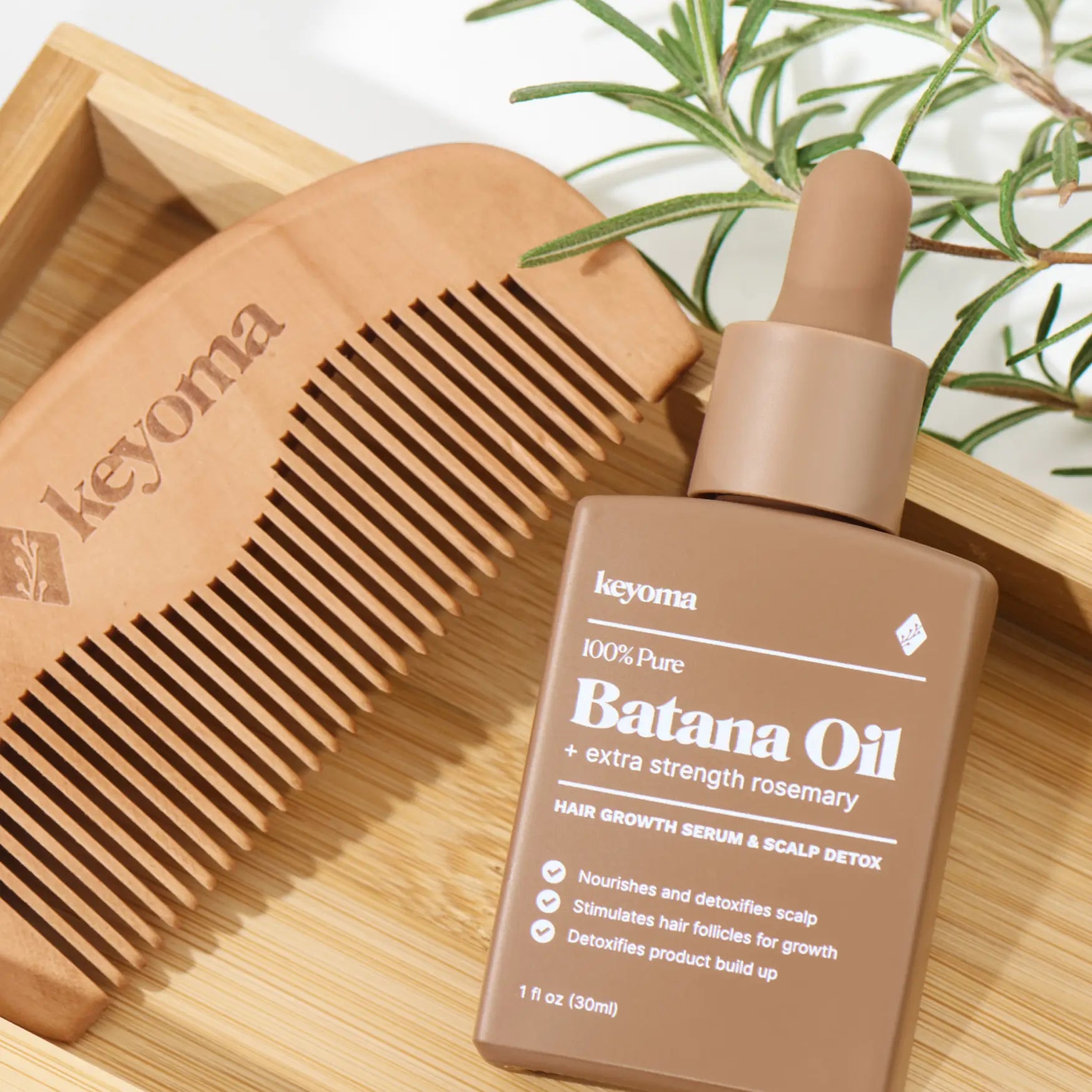
30% Off + 3 FREE Gifts
100% Pure Batana Oil + Rosemary


