

In this article
Scalp oiling and oiling the hair lengths are different techniques. Scalp application targets the skin around the follicles, while length application coats the hair fiber from the mid-lengths to the ends. The better choice depends on the area you want to address.
Use scalp oil only when the scalp is the target and the formula is intended for skin contact. Apply oil to the lengths when you want more softness, slip, shine, or control over rough and frizzy ends. Many people need one approach but not the other.
You can also divide the head into separate zones. An oily scalp can sit above dry ends, and a comfortable scalp does not need oil simply because the lower lengths feel weathered. Choosing the location first helps prevent flat roots and excess residue.
Key Takeaways
-
Scalp oiling targets skin, while length oiling targets the hair fiber.
-
Dry ends do not automatically mean your scalp needs oil.
-
Fine hair usually needs less oil and lower placement.
-
Both zones can be treated separately with controlled amounts.
Scalp Oiling vs Hair Lengths: Which Do You Need?

Your goal should decide where to apply hair oil. Use a scalp-focused step for a dry-feeling scalp that tolerates the formula. Choose the mid-lengths and ends for dryness, frizz, tangling, or roughness.
The American Academy of Dermatology advises matching care to hair type, applying shampoo mainly to the scalp, and concentrating conditioner on the ends of fine or straight hair.
Scalp Is Living Skin
The scalp contains follicles and sebaceous glands and produces sebum. The CDC notes that oil can build up with sweat, dead skin, dirt, and product residue.
Do not assume flakes mean dryness. Cleansing habits, buildup, irritation, dandruff, or another condition may be involved. Persistent pain, redness, sores, heavy scaling, bumps, drainage, or unexplained hair loss needs professional assessment.
Hair Lengths Are Nonliving Fibers
The visible shaft is a keratinized fiber with cuticle and cortex layers. It cannot heal like living skin. Products can smooth it but cannot permanently rebuild damage. A review of hair shaft structure and cosmetics describes how cuticle damage changes the fiber’s surface.
Oil can reduce friction and limit moisture loss, but it does not add water. Conditioner or a water-based leave-in handles hydration, while oil mainly adds lubrication and smoothness.
Scalp Oil and Hair Oil Depend on the Label
“Scalp oil” and “hair oil” are not always separate product categories. Some formulas suit the scalp, some the lengths, and some both. Follow the label rather than assuming every oil is safe everywhere.
Never apply undiluted essential oils to the scalp. Fragrance and botanical blends can also irritate skin, even when labeled natural or pure.
Scalp Oiling Is Usually a Pre-Wash Step
Direct scalp oiling is easier to manage before shampooing, limiting how long added oil remains with sebum, sweat, and styling residue.
The difference between pre-wash and post-wash hair oil affects amount and removal. A heavier scalp application generally belongs before washing, not at the roots as a daily finisher.
Length Oiling Can Be Pre-Wash or Leave-In
Pre-wash oil can lubricate lower hair before cleansing. A tiny leave-in amount can smooth rough ends when the label permits it.
Cleveland Clinic dermatologist Shilpi Khetarpal, MD, recommends a small amount on dry hair from the middle to the ends and cautions that scalp oiling does not suit everyone. AAD guidance on leave-in conditioner likewise keeps it away from the scalp to reduce buildup.
When Do You Need Scalp Oiling

Scalp oiling is optional. Consider it when the scalp is the focus, the skin is intact, and the product is designed for scalp use. A comfortable or oily scalp usually needs no extra oil.
Your Scalp Feels Dry but Otherwise Calm
A small amount may provide temporary comfort when the scalp feels dry or tight without inflammation, sores, or heavy scaling. Oil is not a treatment for dandruff, psoriasis, seborrheic dermatitis, infection, or unexplained irritation.
Before adding oil, review your cleansing frequency and current products. The AAD notes that flakes may appear when hair is not shampooed often enough or when the chosen conditioner, oil, or scalp moisturizer does not suit the hair type.
You Are Using a Scalp-Specific Formula
Choose a formula labeled for scalp use and follow its timing and removal directions. Use a hair oil patch test first, especially with essential oils, fragrance, or several botanicals.
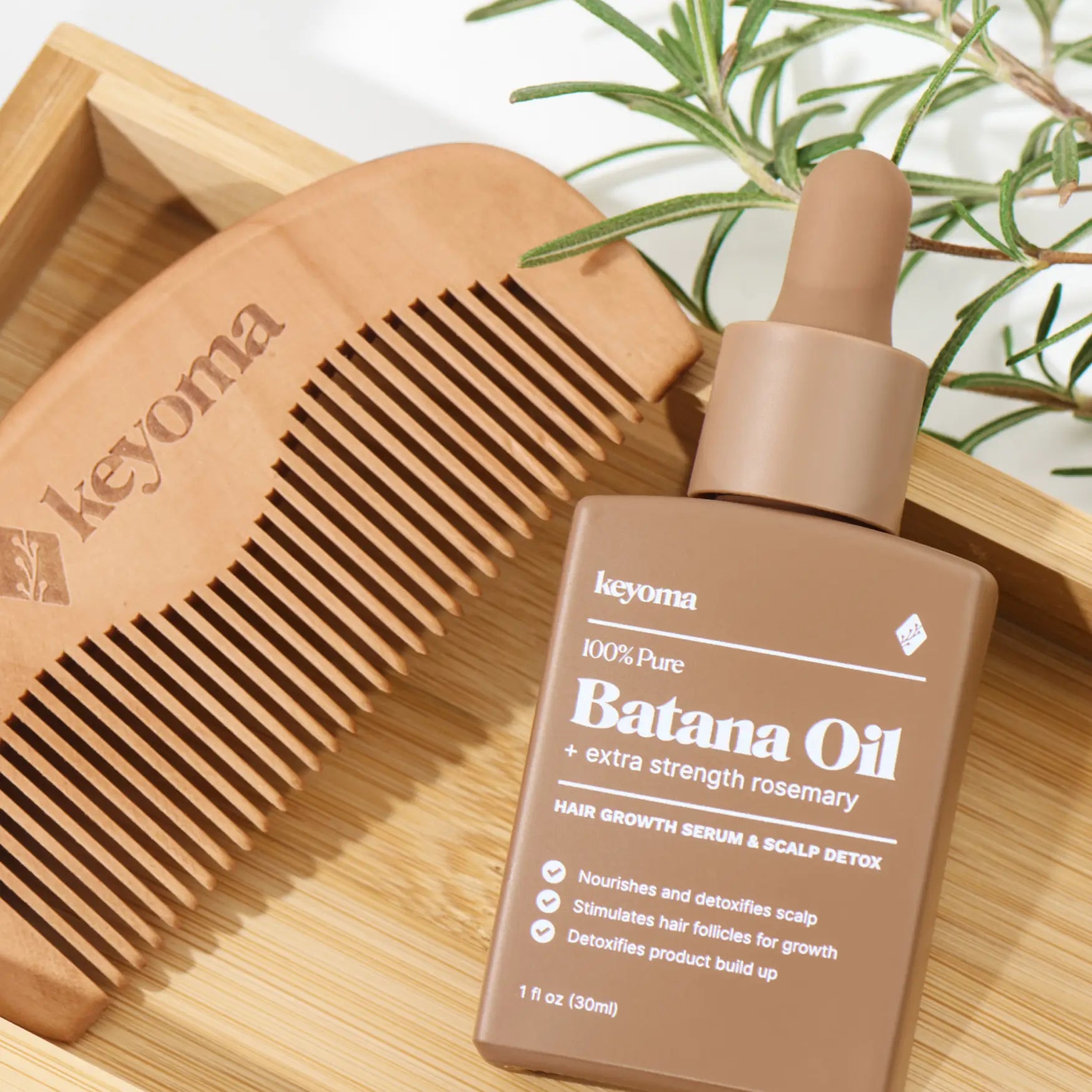
Looking for a scalp-focused oil? Keyoma Pure Batana Oil & Rosemary Oil is made for targeted application to the scalp and roots. Follow the product directions, use only a small amount, and patch test before broader application.
Stop if you develop burning, persistent itching, redness, swelling, or bumps. More product will not produce a better result.
You Want Massage Without Confusing It With Oil
Scalp massage and oiling are separate. A small 2016 standardized scalp massage study found increased hair thickness, but it studied massage rather than oil and does not prove that oil creates follicles or guarantees faster growth.
For a deeper evidence review, see whether scalp oiling promotes new hair growth. Use scalp oil because the scalp needs targeted care, not because massage findings have been attached to the product.
You Can Remove the Oil Thoroughly
Scalp application usually requires shampooing without aggressive scrubbing. If roots remain waxy, itchy, separated, or flat, reduce the amount or stop applying it there. These tips for washing out thick hair oil can help when residue is the main problem.
Heavy application can force more cleansing and dry the lengths. Stop when removal creates more problems than the oil solves.
When Do You Need Hair Lengths Oiling

Length oiling is often better when the scalp feels normal or oily but the lower hair feels rough, dry, tangled, or frizzy. It smooths that area without weighing down the roots.
Your Ends Feel Dry, Rough, or Frizzy
The ends are usually the oldest and most weathered hair, with more exposure to washing, brushing, friction, heat, and the environment. AAD guidance for Black hair calls the ends the oldest and most fragile area.
Oil can add slip and soften roughness temporarily. Understanding why hair ends get dry first can also help you reduce the habits that keep weathering them.
Your Roots Get Oily or Lose Volume
Ends-only application conditions dry areas while leaving oily roots alone. People with an oily scalp and dry ends often need two approaches rather than a full-head treatment.
Apply oil from the ends upward and stop before the roots. If the hair looks darker, stringy, or limp, use less or place it lower next time.
Your Hair Type Needs More or Less Placement
Fine hair may need only a trace on the last few inches. Thick, coarse, curly, or coily hair may tolerate oil farther upward. Density, porosity, existing products, and wash frequency also affect the amount.
For a focused method, applying hair oil only to the ends can preserve root volume. Begin with less than you think you need, then add more only if the ends still feel rough.
You Want Softness, Slip, and Shine
Length oiling mainly provides cosmetic results such as softness, slip, shine, and less visible frizz. It does not permanently repair split ends or reverse chemical and heat damage.
Coconut oil has ingredient-specific evidence. A PubMed study found less protein loss than with mineral or sunflower oil under the tested conditions. The result does not apply to every oil and does not require scalp use.
Can You Oil Both the Scalp and Hair Lengths?
Yes, but use a split-zone method. Apply a small, scalp-appropriate amount only where the skin is the target. Then use a separate amount on the mid-lengths and ends. The zones do not need equal coverage, timing, or frequency.
Use this decision check:
-
Oily, comfortable, flaky, or irritated scalp: do not assume it needs oil.
-
Dry or rough lower lengths: concentrate oil on the ends.
-
Fine hair that loses volume: use a tiny amount and keep it low.
-
Thick, coarse, curly, or coily hair: extend a light layer upward if needed.
-
Both areas need attention: treat and evaluate them separately.
A scalp treatment usually fits before a planned wash. A leave-in finishing amount should be light enough that it does not shorten the time before your next wash.
Common Mistakes When Choosing Where to Apply Hair Oil
Most problems come from treating the scalp, roots, lengths, and ends as one uniform area. Better placement often solves greasiness before you need a different product.
-
Oiling flakes without identifying the cause: Buildup, irritation, insufficient cleansing, and dandruff can all produce flakes.
-
Using the same amount everywhere: Roots show weight sooner, while dry ends may tolerate more.
-
Leaving scalp oil on by default: Overnight contact is not necessary for every formula or scalp.
-
Treating ordinary oil as heat protection: Use it before hot tools only when the finished product is labeled as a heat protectant.
-
Expecting oil to repair damage: Oil may smooth weathered ends, but it cannot fuse split fibers permanently.
Reviewing other hair oiling mistakes can help separate placement errors from washing or product problems. The useful amount is the smallest one that gives the intended result without coating the wrong zone.
Choose The Oiling Routine Without Greasy Roots
Choose scalp oiling when the scalp itself is the target, the skin tolerates the formula, and you can wash it out comfortably. Choose length oiling for dry ends, roughness, frizz, tangling, or lost shine.
Your scalp and ends can have opposite needs. Treating them as separate zones keeps roots lighter and directs oil toward the area most likely to benefit from its cosmetic effect.
Featured Product
30% Off + 3 FREE Gifts
100% Pure Batana Oil + Rosemary


