

In this article
If you are comparing batana oil vs camellia oil, the better choice depends less on which oil has more “benefits” and more on how much weight your hair can handle. Camellia oil is usually the lighter shine oil. Batana oil is usually the richer conditioning oil for dry, coarse, curly, or breakage-prone strands.
Both oils can make hair look smoother by adding slip, reducing friction, and softening the feel of dry ends. Neither oil can heal split ends, reverse medical hair loss, or permanently repair a damaged strand. Once the hair fiber is split or weakened, oil can only help it behave better cosmetically.
Use camellia oil when you want a polished finish without heaviness. Use batana oil when your hair feels rough, brittle, thirsty, or stressed from friction and styling. The right answer is the oil that gives enough softness without making your roots flat or your lengths coated.
Key Takeaways
-
Camellia oil is usually better for light shine and fine hair.
-
Batana oil is usually better for richer conditioning on dry hair.
-
Both oils support breakage cosmetically, not medically.
-
Use less oil than you think and build slowly.
Which Oil Is Better for Shine and Breakage?
Camellia oil is better if your main goal is shine with movement. It tends to suit fine, low-density, straight, wavy, or easily weighed-down hair because it can smooth the surface without leaving the hair feeling coated. That makes it a strong choice when your hair is not severely dry, but the ends look dull or slightly rough.
Batana oil makes more sense when breakage is tied to dryness, friction, or coarse texture. It has a richer feel, so it can help hair feel more conditioned before washing or after styling when the ends need extra cushioning.
A hair care physicochemistry review explains that conditioning agents can smooth the hair surface, reduce friction between fibers, and improve gloss, softness, and manageability. That is the right frame for both oils: they support the hair surface, but they do not rebuild the strand like living tissue.
The safer question is not “Which oil is stronger?” It is “Which oil gives my hair enough slip without too much residue?” Fine hair can look greasy from a small amount of rich oil. Coarse or curly hair may absorb a light oil visually without feeling conditioned enough. Breakage support comes from reducing stress on fragile lengths, not from treating the scalp like a growth treatment.
Batana Oil vs Camellia Oil: Quick Comparison
|
Comparison Point |
Camellia Oil |
Batana Oil |
|
Texture |
Usually lighter and silkier |
Usually richer, denser, and more conditioning |
|
Finish |
Soft shine with less weight |
Deeper softness with a more coated feel |
|
Breakage Support |
Helps reduce friction on lightly dry ends |
Helps cushion brittle, rough, or friction-prone strands |
|
Best Hair Types |
Fine, low-density, straight, wavy, or easily oily hair |
Coarse, curly, coily, thick, dry, or high-friction hair |
|
Best Use Case |
Light finisher or small amount on dry ends |
Pre-wash treatment or occasional richer conditioning |
Texture and Weight
Camellia oil usually feels more elegant on hair that gets flat quickly. If your hair loses volume at the crown, separates into oily-looking pieces, or feels stringy after leave-ins, a lightweight hair oil is the safer first choice. Apply it to the ends only, then check your hair after an hour. If the shine improves without collapse, the amount is probably close.
Batana oil sits in a richer category. That can be useful for hair that feels rough even after conditioner, but it can be too much for fine or oily hair as a leave-in. Readers with fine strands may get better results by treating batana as a rinse-out step instead of a finishing oil. If you are still learning how your hair responds to oils, a practical how to oil fine hair approach can help you avoid greasy roots and limp lengths.
Shine and Smoothness
Shine depends on how smoothly light reflects from the hair surface. When the cuticle feels rough, lifted, or uneven, hair often looks dull even if it is clean. A small amount of oil can make the surface look more even by adding slip and reducing the dry, frayed look on the outer layer.
Camellia oil has the edge for shine when the hair already feels fairly healthy but lacks polish. A rinse-off conditioner study found that conditioners containing argan oil or camellia oil made bleached hair appear more lustrous and softer than shampooing without conditioner, though the study tested conditioner formulas rather than pure oil alone. That distinction matters. Camellia oil can support shine, but the final result still depends on dose, hair condition, and the rest of the formula or routine.
Breakage and Fragile Ends
Breakage often worsens when strands rub against each other, snag during detangling, or stay dry enough to feel brittle. Oils can help by reducing friction and giving fragile ends more slip. The American Academy of Dermatology notes that damaged hair is fragile and tends to break, and it recommends gentler habits such as conditioning, avoiding rough towel drying, and limiting heat exposure through its hair damage guidance.
Camellia oil fits mild dryness and light friction. Batana oil fits hair that needs more cushion, especially around dry ends, protective styles, textured lengths, or strands exposed to repeated styling. Split ends still need trimming when they travel upward. Oil can temporarily smooth the look of split ends, but it cannot seal them permanently.
Best Hair Types
Camellia oil is usually a better match for fine hair, low-density hair, oily roots, and anyone who wants shine without a heavy finish. It can also work well on medium-density hair when used as a tiny finishing step on the ends.
Batana oil is usually better for coarse hair, curly hair, coily hair, dense hair, and hair that feels dry soon after washing. It is also a stronger fit when the ends feel rough to the touch, not just dull in certain lighting. If your hair is both fine and dry, choose the method more carefully: camellia can be the leave-in shine step, while batana may work better before shampoo.
When Camellia Oil Makes More Sense

Camellia oil makes more sense when the problem is dullness, light frizz, or dry-looking ends rather than deep roughness. It gives you a cleaner way to test whether your hair needs oil at all because it is less likely to overwhelm the strand.
For readers who want the deeper application method without turning this comparison into a camellia-only routine, the full camellia oil application guide is the better next step. Here, the main decision is simple: choose camellia when your hair needs polish more than heavy conditioning.
Fine or Easily Weighed-Down Hair
Fine hair shows excess oil quickly. A few drops can turn shine into separation, especially near the face, roots, or crown. Camellia oil is usually easier to control because you can warm a small amount between your palms and skim it over the last few inches.
Check the result in natural light, not just bathroom lighting. If your hair looks shiny but still moves freely, camellia is doing its job. If the ends clump, the oil is either too heavy, too much, or applied too high.
Light Shine Without a Greasy Finish
Camellia oil works best when you want a smooth finish after blow-drying, air-drying, or refreshing second-day hair. It should make the hair look softer without leaving a visible oil layer.
Place it where dryness shows first: the ends, outer layer, or frizz-prone pieces around the shoulders. Avoid the scalp unless your routine specifically calls for it and your skin tolerates oils well. Oil on the scalp is not automatically better for shine, and it can make fine hair look dirty faster.
Smoothing Dry Ends Between Washes
Between wash days, camellia oil can soften ends that look slightly rough from brushing, friction, or dry air. It is not meant to replace conditioner, but it can make the ends feel less grabby.
For hair that becomes dry at the bottom but oily near the roots, keep the oil below the ears and use less than you think. If your main issue is ends that dry out before your next wash, a broader hair oil for dry ends approach can help you match placement to the problem instead of coating the whole head.
When Batana Oil Makes More Sense

Batana oil makes more sense when light oils disappear without making your hair feel conditioned. Dry, coarse, curly, or dense hair often needs more cushioning because the lengths experience more friction, bending, and tangling. A richer oil can help the hair feel softer and less rough during detangling or styling.
A Formula Botanica ingredient overview identifies batana oil as Elaeis oleifera kernel oil and describes it as a rich oil often used in hair care for thicker or curly hair, while also noting that quantities should be adjusted for finer hair. That balance is important. Batana can be useful, but it is not automatically right for every head of hair.
Coarse, Curly, or Very Dry Hair
Coarse, curly, and coily strands can feel dry even when they are not damaged because natural oils do not travel down textured hair as easily. Batana oil can help by adding a richer layer of softness to the lengths and ends.
Use it where the hair feels roughest. If your ends feel dry, your mid-lengths tangle, or your curls lose softness quickly, batana may provide a better cushion than camellia. If your roots get oily quickly, keep batana away from the scalp and treat it as a length-focused oil.
Pre-Wash Conditioning for Fragile Strands
Batana oil is especially useful as a pre-wash treatment because shampoo can remove excess residue while leaving the hair feeling more conditioned. That makes it easier to use on hair that needs richness but cannot tolerate a heavy leave-in finish.
Apply a modest amount to the mid-lengths and ends before washing, then shampoo thoroughly. If you want a one-ingredient option for this use case, pure batana oil for richer pre-wash conditioning fits best after you already know your hair responds well to richer oils.
Breakage From Friction, Dryness, or Styling
Batana oil fits breakage that comes from handling stress: rough detangling, dry ends rubbing against clothing, protective styles that leave ends exposed, heat styling, or repeated brushing. It helps most when the strand needs slip and softness before the next source of friction.
Be careful not to treat every broken strand as a sign that you need more oil. Breakage can also come from chemical processing, heat damage, tight hairstyles, or rough tools. If shedding is sudden, patchy, paired with scalp pain, or continues despite gentler care, oil is not the right main answer.
How to Use Each Oil Without Overdoing It

The easiest way to overdo hair oil is to apply it like conditioner. Oil is more concentrated and less forgiving. A small amount can change the finish, especially on fine or low-density hair.
Place oil where friction and dryness actually show. For most people, that means the mid-lengths and ends, not the scalp. If your hair looks flat after oiling, reduce the amount before switching products. If your hair still feels rough, change the timing by using oil before washing or over a leave-in conditioner.
Use Camellia Oil as a Light Finisher
Camellia oil works well after styling or when dry ends need a little polish. Rub a tiny amount between your palms until your hands look lightly sheened, then smooth it over the ends. Avoid pressing the oil into the roots unless your scalp is dry and oil-tolerant.
If your hair is fine, apply it from the back first. The front pieces usually need less product and show greasiness faster. If your hair is medium or thick, work in sections so you do not overload the top layer while missing the drier underside.
Use Batana Oil as a Richer Treatment
Batana oil is better as a treatment when your hair needs more conditioning than shine. Warm a small amount between your fingers, apply it to dry or slightly damp mid-lengths and ends, and let it sit before washing. Shampoo well enough that the hair feels clean, not waxy.
For leave-in use, be much more conservative. A touch on the ends may be enough for coarse hair, while fine hair may do better with no leave-in batana at all. If residue is a recurring issue, the how much batana oil to use breakdown can help you scale the amount by density and hair length.
Adjust the Amount by Hair Density and Porosity
Density tells you how much hair you have on your head. Porosity tells you how readily your hair seems to take in and lose moisture. Dense hair can usually handle more oil than low-density hair. High-porosity or chemically treated hair may feel like it absorbs oil quickly, while low-porosity hair may let oil sit on the surface.
A simple test is enough. Apply a very small amount to one hidden section near the ends. If it feels smoother after an hour, keep that amount. If it feels coated or piecey, use less or switch to pre-wash oiling. For low-porosity hair that gets buildup quickly, batana oil for low-porosity hair needs especially careful placement and rinsing.
Can You Use Batana Oil and Camellia Oil Together?
You can use batana oil and camellia oil together, but layering them at the same time is usually unnecessary. The cleaner approach is to give each oil a separate job. Camellia can be your lighter finishing oil, while batana can be reserved for occasional richer conditioning before wash day.
This pairing works best when your hair has mixed needs. For example, your ends may need richer pre-wash conditioning once in a while, but your finished style may only need a light shine oil. Use batana when the hair feels rough before washing. Use camellia when the hair is already clean and styled but needs a softer finish.
Avoid combining both oils on the same day if your hair is fine, oily, low-density, or prone to buildup. Too much oil can make healthy hair look limp and make damaged hair harder to assess. If the roots feel greasy but the ends still feel dry, focus on better placement before adding more products.
Choose the Right Oil for Your Hair’s Needs
Choose camellia oil if you want lightweight shine, smoother ends, and less risk of a greasy finish. It is the better first option for fine hair, oily roots, low-density hair, or hair that needs polish more than deep conditioning.
Choose batana oil if your hair feels dry, coarse, curly, brittle, or rough enough that lighter oils do not give enough softness. It fits best as a richer treatment, especially before washing or on the driest parts of the lengths.
Neither oil should be treated as a cure for split ends, alopecia, or unexplained shedding. Use them as cosmetic support for friction, dullness, and dry-feeling strands. The best result comes from matching the oil to your hair’s weight tolerance: camellia for light shine, batana for richer conditioning, and less product whenever your hair starts to look coated instead of healthy.
Featured Product
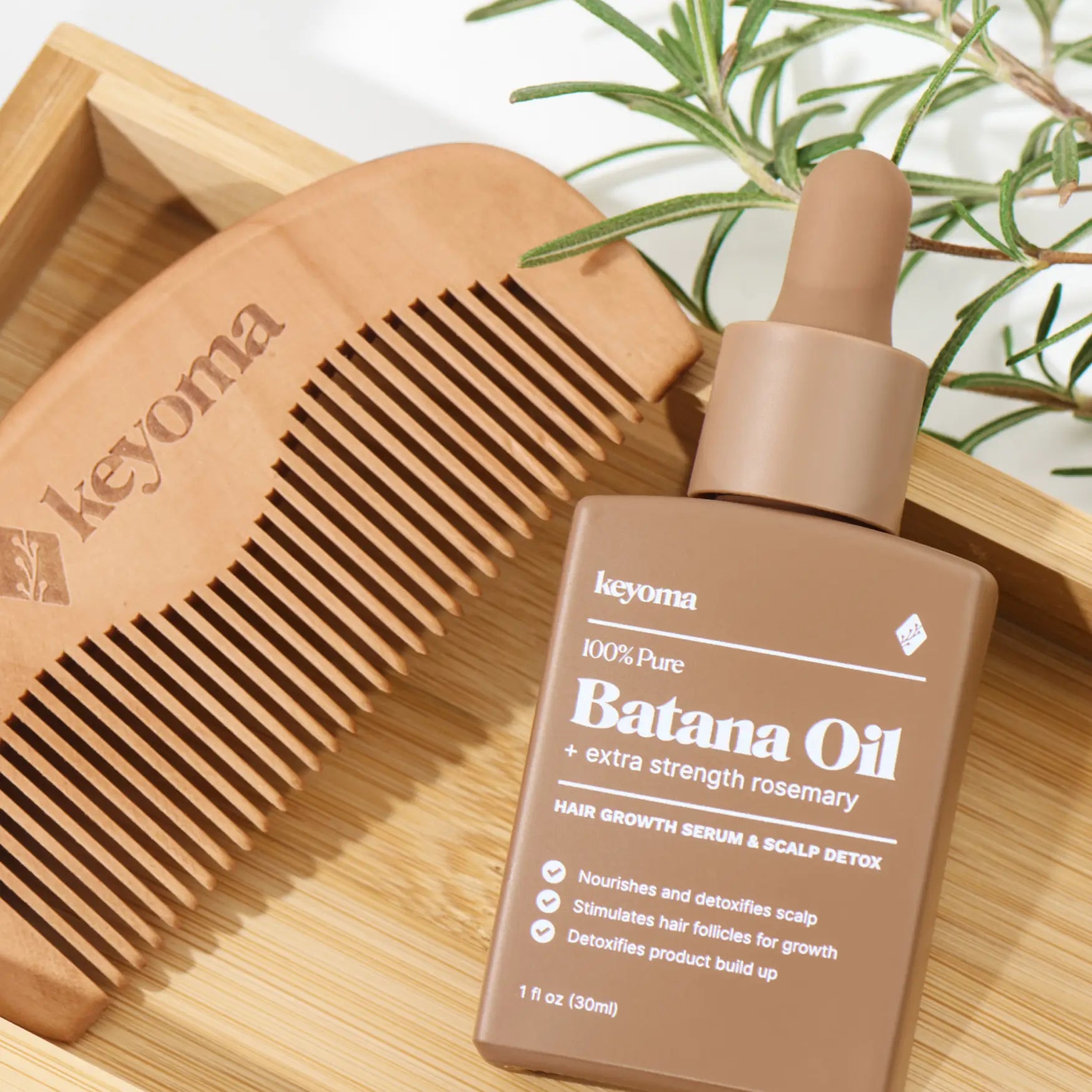
30% Off + 3 FREE Gifts
100% Pure Batana Oil + Rosemary


