

In this article
Afro hair is distinct and needs a tailored routine to keep it healthy and looking good. Many men and women with afro textures find it hard to choose products and techniques that work, but with a steady plan, you can grow and style your hair in a way that feels good.
Key Takeaways
-
Afro hair has dense, curly textures that shrink, dry easily, and need tailored care.
-
Common hair loss triggers include hormones, scarring conditions, stress, illness, medications, and thyroid disorders.
-
Early warning signs include thinning edges, shedding, breakage, irritation, receding hairline, widening parts, bald patches.
-
Healthy routines emphasize regular moisture, gentle detangling, protective styles, scalp monitoring, and suitable textured hair products.
What Afro Hair Is and How It Differs
Black hair, often called afro hair, has a distinct texture that’s usually curly, coily, or kinky. You see this hair type most in people of African descent. Compared with straight hair, Afro textures are denser and shrink easily. So it can look much shorter when dry than it does when wet and stretched.
Its structure also makes afro hair more likely to get dry, break, and develop some hair loss issues, like traction alopecia from tight styles or too much handling. Hair fits into four main categories – type 1 straight through type 4 coily. Many African-Americans fall within the type 4 curl group, which is tighter, kinkier, and more coily.
Common Hair Loss in Black Men and Women

The leading reasons for sudden hair loss in type 4 hair include the factors below.
PCOS and Hormonal Changes in Hair Loss
Caused by hormone imbalance, often higher androgens in women. Thinning tends to show at the crown and along the part, and you may also see acne, irregular periods, or increased facial hair.
Frontal Fibrosing Alopecia (FFA) in Afro Hair
A scarring form of hair loss. It mostly impacts the front hairline, which gradually recedes. The skin in affected areas may look pale or shiny. Hair often doesn’t return because the follicles are damaged.
Central Centrifugal Cicatricial Alopecia (CCCA) in Type 4 Hair
Another scarring condition, usually beginning at the crown and spreading outward in a circle. Many people report burning, itching, or tenderness there. Without early treatment, the loss can become permanent.
Alopecia Areata and Patchy Hair Loss
An autoimmune condition. Your immune system targets hair follicles. Shedding often shows up as round bald patches. In those areas, the scalp usually looks smooth.
Telogen Effluvium and Shedding Across the Scalp
Set off by stress or a major event such as illness, surgery, or childbirth. A few months later, hair sheds across the whole scalp. It typically resolves after the trigger is addressed.
Thyroid Disorders and Diffuse Thinning
It happens when thyroid hormone is too low or too high. Hair gets thin and fragile over the entire scalp rather than in spots. You’ll often notice body changes too, like shifts in weight, fatigue, or temperature intolerance.
Early Signs To Watch For in Afro Hair
If you’re noticing shifts in your hair, watch for these early signs of hair loss in afro textures:
- Thinning edges or temples: Hair along the hairline and sides starts to look finer or sparse, especially in women who often wear tight styles that tug at the edges.
- Increased shedding: You notice more loose strands on your brush, in the shower, or on your pillow, even without any routine changes.
- Breakage and shorter strands: Areas, often near the edges or crown, look uneven or filled with short, snapped pieces because strands break before reaching full length.
- Scalp irritation or tenderness: Your scalp feels itchy, sore, or sensitive, and the discomfort shows up in the same spots where you see thinning or shedding.
- Receding hairline: The hairline gradually shifts back from the forehead, more common in men, forming a clear M shape at the temples.
- Thinning at the crown: Hair on the top or back becomes less full, and you might see more scalp in that circular spot in both men and women.
- Widening part: Your part line slowly looks wider, especially in women, as more scalp shows between sections of hair.
- Patchy bald spots: Small or mid sized areas lose hair in patches. This can affect anyone and may show up suddenly or spread slowly in different places.
Catching these signs early matters, since it helps protect your hair from more serious or lasting loss.
Type 4 Hair Care Tips for Healthier Curls

Each Type 4 subtype has unique needs, but all do well with steady moisture, gentle handling, and scalp care. Treat your routine as small, repeatable weekly steps, then adjust based on how your curls respond.
4A Hair Care Tips for Defined Curls
For 4A hair, begin with a consistent moisture routine. Pick a gentle, hydrating shampoo, then follow with a rich conditioner that softens strands without a heavy film. After rinsing, use a leave-in on damp hair so curls stay flexible and less likely to break during styling.
After hydrating, choose lightweight, water based creams or milks instead of thick butters that weigh curls down. Smooth a small amount through in sections, focusing on mid lengths and ends. A wide tooth comb gave me slip without snagging.
While hair is still wet, apply a curl defining gel or cream to enhance the natural “S” pattern, smoothing it with your fingers or a wide tooth comb. Let your hair air dry or use a diffuser on low heat to keep definition and limit frizz.
If you like to seal moisture, apply a small amount of light oil at the very end, and you can choose a batana with rosemary oil blend if you want extra nourishment and a soothing option for your scalp.
4B Hair Care Tips for Soft Coils
For 4B hair, start the wash day by soaking your hair with water and applying a slip rich conditioner so curls feel soft and easy to handle. Detangle slowly with your fingers or a wide tooth comb, starting at the ends and moving toward the roots to limit breakage that can add to thinning over time.
Take your time here, and if you meet a knot, add more conditioner and gently separate it rather than pulling. After rinsing, shift to a moisture sealing routine like the LOC method: first apply a water based leave in (liquid), then smooth a light oil through your hair, and finish with a cream to lock it in.
For the oil step, pick a simple natural oil or a batana with rosemary oil blend if you want something that may support scalp comfort, shine, and healthy looking growth. Between wash days, care for your scalp by keeping it clean and lightly hydrated. Put a small amount of oil or scalp serum on your fingertips and massage in circles to ease dryness and flaking.
On wash days, a sulfate free cleansing conditioner with hydrating ingredients can remove buildup without stripping your curls.
4C Hair Care Tips for Dense Coils
For 4C hair, build your routine around deep, long lasting moisture, since this pattern loses hydration quickly. Start with a gentle cleanser or co wash, then follow with a thick, nourishing conditioner. Let the conditioner sit for several minutes so it can penetrate your strands.
With hair soaking wet and coated in conditioner, detangle carefully with your fingers from the ends up, working in small sections to avoid extra breakage. After rinsing, use a moisture layering routine like the LOC or LCO method, choosing rich creams and butters that keep hair soft for several days.
Apply a liquid leave in, then follow with a cream and finally seal with an oil, or reverse the order of cream and oil if your hair likes it better. A pea size amount warmed between my palms added shine without flattening the curl. This is a good place for a heavier natural oil like batana with rosemary oil, which can help your hair look shinier and feel more protected between wash days.
Give your curls time to dry without heat when you can, shaping gently with your hands instead of pulling or stretching hard. Try to save flat irons, hot combs, and high heat blow dryers for rare occasions, since 4C hair is especially prone to heat damage, which can weaken strands, change your curl pattern, and cause more breakage over time.
What Is the Best Way To Maintain Healthy Afro Hair?

Use these key haircare tips to keep your Afro hair in good shape.
Buy the Right Hair Products for Your Type 4 Hair
Whatever type 4 pattern you have, make sure you’re using products that suit it. Most people with textured hair will benefit from using the following regularly:
-
Leave-in conditioner: This stays in after washing, keeping coils or curls smooth and intact without weighing hair down.
-
Hair oil: Use batana oil on your ends to keep them from drying out.
-
Afro comb: Use a wide toothed pick to detangle without disturbing your natural curl pattern.
-
Moisturizing shampoo: Choose a shampoo with hydrating ingredients, such as fatty alcohols like cetyl alcohol, stearyl alcohol, and cetostearyl alcohol.
-
Moisturizing conditioner: A quality conditioner helps you remove tangles and knots, tame frizz, and seal the cuticle, which may help repair light damage from heat and chemicals.
Find the Right Hairstyle for Your Afro Hair
Protective styles and relaxers can make Afro hair easier day to day, but overusing them can cause more harm than good over time.
Keep protective styles in for no more than a month at a time to lower the risk of traction alopecia. While any braid can pull on follicles, the styles below may create less tension than heavy box braids and tight cornrows.
Maintain a Healthy, Comfortable Scalp
Healthy scalp care can help prevent issues like traction alopecia. Learn to spot signs of a scalp problem so you can reduce the risk of hair loss. Watch for:
-
Pain or tightness on the scalp when hair is tied back or styled.
-
Itchy, irritated scalp.
-
Dandruff and skin flaking (this may also signal scalp psoriasis).
-
Rashes or redness, especially after starting a new product (this may be a sign of allergic contact dermatitis).
Your scalp health connects to your overall health, so aim for a balanced diet, regular exercise, and have any other symptoms checked to rule out underlying conditions.
Protect Your Afro Hair Health With Keyoma
Two scenarios can dictate your afro hair care. If you're noticing increased shedding or breakage, especially around the edges, it's time to ease up on tight styles. Conversely, if your hair feels constantly dry and brittle, focus on adding more moisture with leave-in conditioners and regular deep conditioning treatments.
Adapting your routine to what your hair is telling you can make all the difference in maintaining healthy afro hair. A little flexibility goes a long way.
Want more tips on maintaining a healthy scalp and preventing hair loss? Head over to the Keyoma Hair Care blog for step-by-step guides and fresh tips.
Featured Product
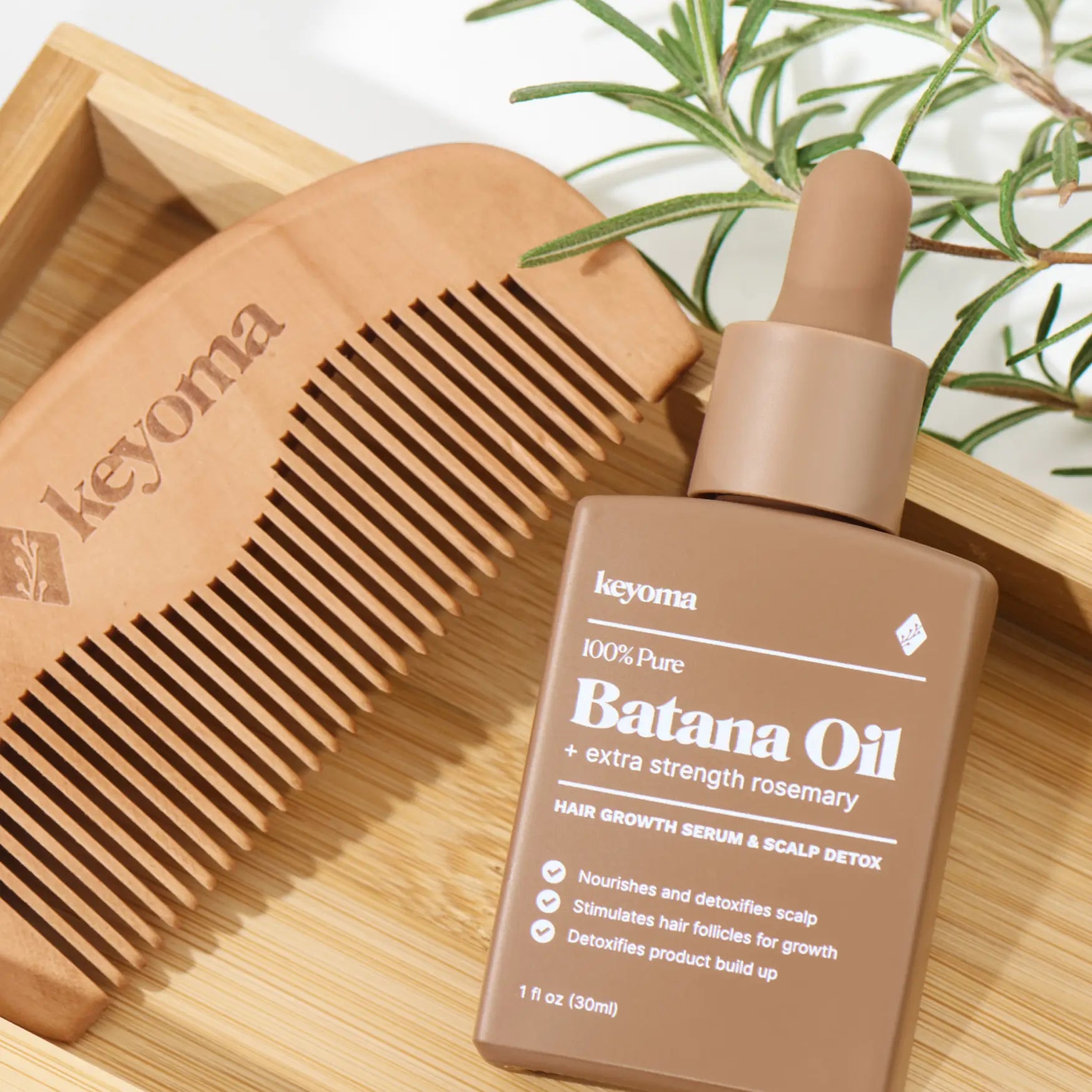
30% Off + 3 FREE Gifts
100% Pure Batana Oil + Rosemary


