
In this article
To stay healthy, your hair requires both protein and moisture. Disulfide bonds hold each hair strand together. Proteins give these bonds strength, which makes hair stronger and less likely to break. Moisture helps keep the strand hydrated and smooth. However, it isn't always easy to find the correct protein-moisture balance.
Hair that lacks either one becomes less elastic and more prone to breakage and split ends. To prevent frizz, dryness, and general unruliness, you need the right amount of nutrients and hydration. Your hair is likely experiencing a protein-moisture imbalance if your curls appear limp and lifeless or your hair feels dry and brittle.
Want to know how to determine whether your hair needs protein or moisture? We'll go over everything you should know about protein versus moisture, along with the best advice and products for balancing it all.
Key Takeaways
-
Protein strengthens hair bonds, while moisture keeps strands hydrated, smooth, and flexible.
-
Stretch test: snapping quickly suggests moisture needs, while gummy stretching suggests protein.
-
Chemical treatments, heat, sun, buildup, diet, pollution, and illness can weaken hair.
-
Rotate moisture and protein treatments, adjusting if hair feels stiff, limp, or breaks.
Protein vs. Moisture: What Each One Does
According to research, keratin, a protein, makes up 95% of our hair. This keratin serves as the foundation of your hair and is essential for healthy hair. Over time, several external variables, including chemical treatments, heat and sun exposure, poor diet, pollution, dirt, product accumulation, and illness, have an impact on hair health.
These factors cause keratin protein to be lost from hair, making it feel brittle, dry, and straw-like. Let's discuss moisture now. While keratin strengthens and reinforces hair bonds, moisture keeps those bonds properly hydrated and nourished. This gives hair lubrication, which lessens environmental stress resistance and enhances its general appearance.
Hair cuticles tend to open wide and allow moisture to escape when they come into contact with hair damage. Our hair needs both protein and moisture to remain healthy. For this reason, it's crucial to ascertain what your hair requires to maintain a balance between the two.
Signs Your Hair May Need Protein

Your hair is made of protein, which helps to give damaged strands their strength and structure back. Your hair might need protein to regain its strength if it's weak, brittle, or easily broken. The following are some typical signs that your hair needs protein:
Overprocessed or Chemically Treated Hair
Your hair's natural protein structure can be harmed by chemical treatments like coloring, relaxers, or perms. Your hair might require protein-based care to regain its inherent strength if you've recently undergone one of these treatments. Treatments with amino acids or bond builders are ideal for this kind of repair.
Low Elasticity
Your hair's capacity to stretch without breaking is called elasticity. Your hair is lacking the protein it needs if it breaks easily when you try to stretch it. Protein treatments work wonders for increasing elasticity and preventing brittleness.
More Breakage Than Usual
Your hair might be protein deficient if you're finding more hair in your brush or on the floor than usual. Damaged hair lacks the strength necessary to withstand environmental stresses and styling, which results in breakage. Protein treatments aid in restoring the strength and elasticity that your strands require.
Limp or Weak Hair
A protein boost may be required for hair that feels limp and lifeless. Hair loses its ability to hold its shape or withstand regular styling when it lacks protein because it becomes soft and fragile. A strong protein treatment (like the Protein Bond Reconstructor) can help to restore structure and resilience.
Signs Your Hair May Need More Moisture

While protein is important for strength, moisture is necessary for smoothness, softness, and hydration. Your hair may be lacking the moisture it needs to maintain a healthy, glossy appearance if it is dry, frizzy, or excessively porous. The following are some signs that your hair needs moisture:
Dull Hair and Less Shine
Healthy, well-moisturized hair should naturally shine. Your hair may be losing moisture if it appears lifeless and dull. Hydrating treatments help to restore shine by hydrating and smoothing the hair cuticle.
Tangly or Hard-to-Manage Hair
A moisture boost may be required if your hair is always tangling or feels unmanageable. Dry hair is more prone to tangling because it lacks the natural oils and water needed to keep it smooth and soft. Hair is made easier to manage and style with moisturizing treatments.
Dry, Brittle, Straw-Like Hair
Your hair is in dire need of moisture if it feels rough, dry, or like straw. Hair that is moisture-deprived becomes porous, allowing it to absorb water rapidly but lose it equally quickly. Deep hydration is provided by moisturizing treatments like our HT Hydra Therapy Treatment, which helps to restore the moisture balance in your hair.
Frizz, Especially in Humidity
Frizz, particularly in humid conditions, frequently indicates a lack of moisture. Your hair becomes dry and seeks moisture from the environment when it lacks water, which causes frizz. By sealing the hair cuticle, moisturizing treatments can lessen frizz and improve shine.
How to Figure Out If You Need Moisture or Protein

Consider protein to be strength and structure and moisture to be flexible and soft. Typically, your hair asks for one of these two things more forcefully, and when you compare the symptoms side by side, they appear very different.
1. Moisture Signs: Dry and Stiff Hair
The hair barely stretches and then snaps rapidly when you do a strand stretch test. Often, it seems harsh, dull, tangles easily, and the ends may feel stiff or straw-like.
Hair that is moisture-deprived tends to feel tight, frizzy, and difficult to detangle in daily life, even while using conditioner. The obvious "vision" here is hair that is unable to bend. It breaks because it lacks sufficient flexibility.
2. Protein Signs: Weak, Gummy Hair That Won’t Hold Shape
The strand stretches a lot on the same stretch test, feels mushy or gummy, and doesn't return to its original shape. Hair like this might feel soft, but it acts weakly. Curls may droop, definition fades rapidly, and the hair may feel like it won't "hold together."
You might see more breakage when detangling in daily life because the strand lacks the structure to withstand stress. The obvious "vision" here is hair that bends excessively. It loses strength and form because it doesn't bounce back.
The Quickest Way to Decide
Give moisture first priority if your hair is dry, rough, stiff, frizzy, and prone to breaking. Prioritize protein if your hair is overly stretchy, gummy, weak, and unable to hold its shape or curl pattern.
To prevent overdoing it, dedicate one wash day to either moisture or protein, then check your hair for the next 24 to 48 hours. Add a tiny protein step the following time if it feels softer but is still weak. Reduce protein and reintroduce moisture if it feels stronger but becomes stiff or rough.
A Simple Routine to Balance Moisture and Protein

Your routine is typically lacking in moisture, protein, or the appropriate ratio of the two if your hair is dry, rough, frizzy, or breaks easily. Hair is kept soft and flexible with moisture. Protein helps to strengthen weak spots so that hair can withstand washing, styling, and detangling. The goal is to rotate them in a way that your hair can tolerate, not to load up on one item.
Step 1: Eat for Protein and Hydration
Hair is primarily composed of protein; therefore, consistently low protein intake can make it more challenging for your body to promote robust growth over time. Aim for a reliable protein source at each meal, and then combine it with iron- and zinc-rich foods that promote healthy hair.
Eggs, fish, chicken, lean beef, yogurt, milk, cheese, tofu, tempeh, beans, lentils, chickpeas, and nuts are all good choices. Combine plant proteins throughout the day, such as rice with beans or hummus with whole grains, to improve amino acid coverage if you do not consume much animal products.
Also, maintain consistent hydration as dehydration can make hair feel more brittle and drier. If you are going through extreme fatigue, sudden heavy shedding, or suspect a deficiency, it is worthwhile to consult a doctor for basics like iron and thyroid because hair can be sensitive to those changes.
Step 2: Pre-Poo Before Washing
Apply a pre-wash product to slightly damp or dry hair, and let it sit for 10 to 30 minutes. This will make it easier to untangle hair, lessen breakage when detangling, and improve the effectiveness of your conditioner afterward.
Choose a pre-poo that is moisture-focused, such as coconut milk, aloe vera, or a light coating of oil or butter, if your hair feels rough, dry, or frizzy.
If your hair feels weak, excessively stretchy, or limp, use a lighter pre-poo that contains amino acids or hydrolyzed proteins, and keep the time brief to prevent your hair from becoming stiff. My sister had fewer tangles after a short pre-wash oil.
Step 3: Cleanse Gently
Without vigorously rubbing, shampoo your scalp and let the suds run through the lengths. A more gentle wash helps avoid that stripped feeling, which can worsen moisture loss. If you need a stronger wash to get rid of buildup, plan to follow it up with a deeper conditioning step so that your hair doesn't stay dry and rough.
Step 4: Condition Every Wash
After shampooing, apply conditioner and carefully detangle your hair while it is still slippery. After your hair feels smoother, rinse it. This is your foundational step that promotes strength and moisture, even on days when you aren't receiving treatment.
Step 5: Pick a Moisture or Protein Treatment
Select one treatment option according to your hair's needs for the week. Use a deep moisturizing mask and leave it on for 15 to 20 minutes, ideally under a shower cap or gentle heat, if your hair is dry, stiff, frizzy, or tangles easily.
Use a protein treatment for the precise amount of time specified on the label, then use a normal conditioner or moisturizing mask afterward to keep your hair flexible if it feels weak, breaks easily, feels gummy, or stretches without bouncing back.
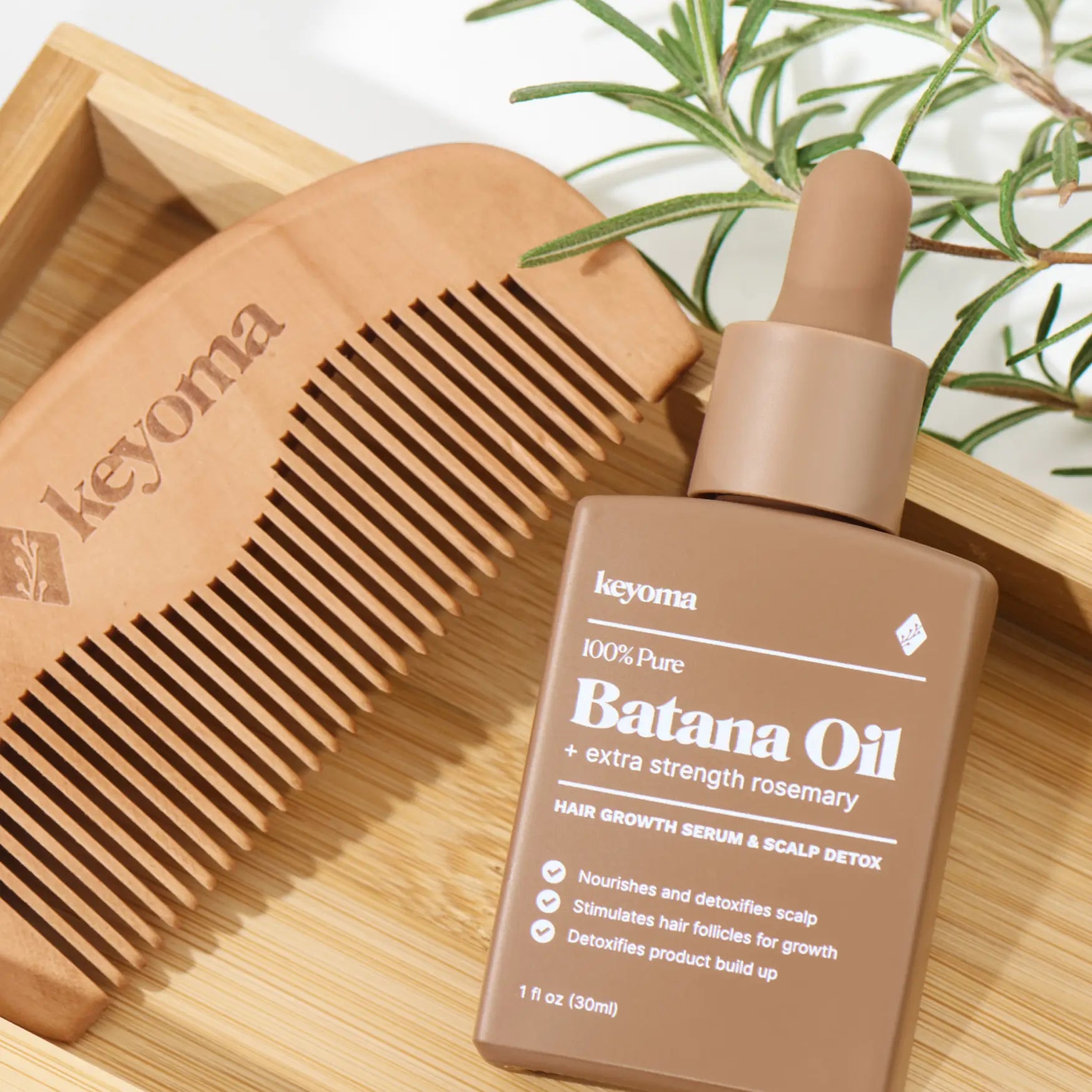
Step 6: Apply Batana Oil With Rosemary
Gently squeeze out any extra water after rinsing out your conditioner or treatment to ensure your hair is moist but not dripping. Warm a tiny amount of Keyoma batana oil with rosemary between your palms, then gently apply it to the outer layer of your hair, paying special attention to the crown, hairline, and areas with halo frizz.
Applying batana oil to curl pattern in a smoothing motion rather than rubbing will avoid upsetting your strands. If your roots get oily, keep it off of your scalp and use less than you think you'll need to start. Warm one drop between your fingertips and press it into frizzy areas to smooth them without weighing hair down if flyaways appear after your hair dries.
Step 7: Layer Leave-In and Styler
Apply your leave-in while your hair is still warm and moist so that it distributes evenly. Add a cream next if you need more softness or definition. To seal in moisture or control frizz, finish with a very small amount of oil. Hydration stays in the hair longer when products are used from lightest to heaviest.
Step 8: Keep the Balance Between Washes
Reduce protein and concentrate on moisture for the next wash or two if your hair starts to feel stiff and brittle. Add a regulated protein treatment if your hair feels too soft, limp, overly elastic, or breaks easily, then switch back to washes that are moisture-focused. Hair will stay soft, strong, and flexible over time thanks to this rotation.
Rotate Moisture and Protein, Then Seal With Keyoma Batana Oil
Stop chasing one fix until your hair swings to the opposite problem. Weak hair gets loaded with protein until it snaps like straw. Dry hair drowns in moisture until curls melt into mush. Treat your hair like a pendulum instead.
When you add protein and your hair feels stronger but starts to roughen after two days, that's your signal to pause protein and rotate back to a moisture-focused wash. If a deep conditioner leaves your hair soft but limp by midweek, layer in a light protein step next time. This back-and-forth rhythm keeps your strands flexible and resilient without tipping into breakage.
Ready to lock in that balance? Explore the Keyoma Hair Care blog for step-by-step protein-moisture guides and weekly rotation plans.
Featured Product
30% Off + 3 FREE Gifts
100% Pure Batana Oil + Rosemary


