
In this article
“Club hair” sounds like a style for a night out, but it’s simply the technical term for a normal part of your everyday routine that happens in your hair growth cycle.
When you run your fingers through your hair and a few strands come away, they’re usually club hairs. If you look closely, you may notice a small bulb at the base of those hairs.
Those hair strands, which have stopped growing and have a keratinized bulb at their base, are common and usually nothing to worry about. They’re fully formed hairs that have simply stopped growing. You have some on your head right now.
In some cases, shedding a larger-than-usual number of club hairs at once can signal an underlying issue worth checking.
Let’s look at why club hairs happen, when they’re expected, and which hair loss treatments may help with shedding.
Key takeaways
-
Club hairs are resting hairs with a keratinized bulb at the root tip.
-
In telogen, follicles hold club hairs for months and shed up to 100 daily.
-
Extra club hair shedding can follow fever, surgery, stress, thyroid problems, or medications.
-
Balanced nutrition, gentle washing, looser styles, and scalp care can reduce shedding overall.
What Is Club Hair?
Club hairs are a normal part of the hair growth cycle. That cycle lets your hair grow longer, pause, and then shed naturally, too.
The hair growth cycle has three main phases:
-
anagen (the growing phase)
-
catagen (shift phase)
-
telogen (the resting phase)
The last phase is when a follicle becomes dormant and stops adding length. Even then, the strand doesn’t drop out right away. It stays in place for a while. Instead, the follicle remains attached to the shaft and a club hair develops.
Club hairs are the final product of a growth cycle and have a keratin (protein) bulb at the root end of the strand. That bulb helps keep the hair seated in the follicle until it sheds and the cycle restarts again. As follicles produce new hairs, the new strands slowly replace and push out older club hairs over time.
The telogen phase can last about three to four months. During this time, it’s normal to shed up to 100 club hairs a day through washing and styling your hair. There are about 100,000 strands of hair on the human head, and at any moment, you can have between 1 and 10 of your follicles in the shedding phase.
What Is the Cause of Club Hair?
Club hairs show up when a follicle reaches the end of its cycle and stops growing. Hair growth needs blood flow, and steady circulation brings oxygen and nutrients to the follicle as needed. That’s why a scalp massage can boost circulation and may support growth.
With a club hair, the follicle holding the strand goes dormant and shrinks, which cuts off blood flow to that hair. Without that blood flow, the strand can’t keep growing, even if it stays put. It can still stay attached in place for up to three or four months.
Club hairs don’t form overnight. It often takes an average of two weeks for a club hair to fully develop from start to finish. These hairs form at the end of catagen, the transition between the growth phase and the resting phase.
Common Triggers for Club Hair Formation
High fever, trauma, and major surgery can all lead to sudden, temporary shedding. Certain drugs may also raise the number of club hairs you shed. Common examples include beta blockers, retinoids, blood thinners, hormone therapy, and vaccinations. Other issues that can affect hair health and cause heavier club hair shedding include:
-
Genetics
-
Low-protein eating or crash dieting.
-
Starting or stopping certain medications.
-
After childbirth
-
Menopause
-
Vitamin deficiencies
-
Chemotherapy
-
Heavy metal intake
If an infection is behind abnormal club hair shedding, your doctor may prescribe antibiotics to treat it properly.
Club Hair symptoms
Most club hairs have a small, bulb-like tip on the end closest to your scalp. Because there’s less melanin around that bulb, it may look pale or translucent. In some cases, you may see a darker, black bulb on the end of a shed hair.
Unlike broken hairs, club hairs feel smooth along the shaft and are longer and formed.
Here are some signs to watch for if you notice changes in your growth pattern or overall hair look from week to week that could suggest club hair:
-
Hair shedding. It’s normal to lose about 50 to 100 hairs per day. If you suddenly shed more hair than normal all at once, it may mean more club hairs are present.
-
Thinning hair. Extra club hairs may contribute to noticeable thinning areas on your head if many hairs stay in telogen (the resting) phase.
-
Visible bulb. Club hairs have a bulb at the end that may look black, clear, or pale when the strand sheds.
-
Hair length. Compared with shorter, broken strands (often from brushing too hard), club hairs are usually longer and complete. Notice what your shed hairs look like over several days, and whether they seem fully formed, or if they look like snapped pieces from breakage.
Natural Club Hair Treatment

If club hair shedding is bothering you, you’re likely wondering what you can do. Treating the root cause of excess shedding, such as ongoing stress or illness, often helps the issue settle. Meanwhile, certain medications and everyday hair habits may also help.
Balanced nutrition
Think of your diet as the base for stronger hair overall. It won’t stop genetic hair loss, but it may help reduce shedding tied to malnutrition over time.
Some nutrients you can focus on include:
-
Iron
-
Zinc
-
Biotin
-
Vitamin D
Learn more about nutrition for hair loss.
Supplements
It’s hard to get every nutrient your hair needs from food alone. Supplements can help cover gaps in a simple way. I noticed I kept up best when I took them with breakfast daily.
They’re called “supplements” because they’re meant to add to a healthy diet, not replace it. If you choose to take them, improving your overall eating habits still matters for the best results.
Hair Care Products and Practices
Hair products and the routine you follow each day can make a real difference over time, especially during stressful stretches. Here are a few steps you can take to reduce stress and damage, support recovery from telogen effluvium, and keep excess club hair shedding in check.
-
Avoid tight hairstyles. Pulling long hair into tight ponytails or braids can trigger traction alopecia and worsen loss and thinning over time.
-
Practice gentle hair care. Avoid harsh products, high-heat styling, and brushing too roughly, since these habits can increase damage and make shedding look worse.
-
Prioritize your scalp health. Scalp care supports hair health. If you have dandruff, use a dandruff detox shampoo to keep your scalp clean and calm. A close friend with a sensitive scalp felt better with cooler rinse water. Try scalp massages since they may stimulate hair follicles.
-
Try products to increase hair volume. If club hair makes thin spots more noticeable, try thickening shampoo with saw palmetto. Using volumizing shampoo and conditioner can also improve how limp, thin hair looks.
-
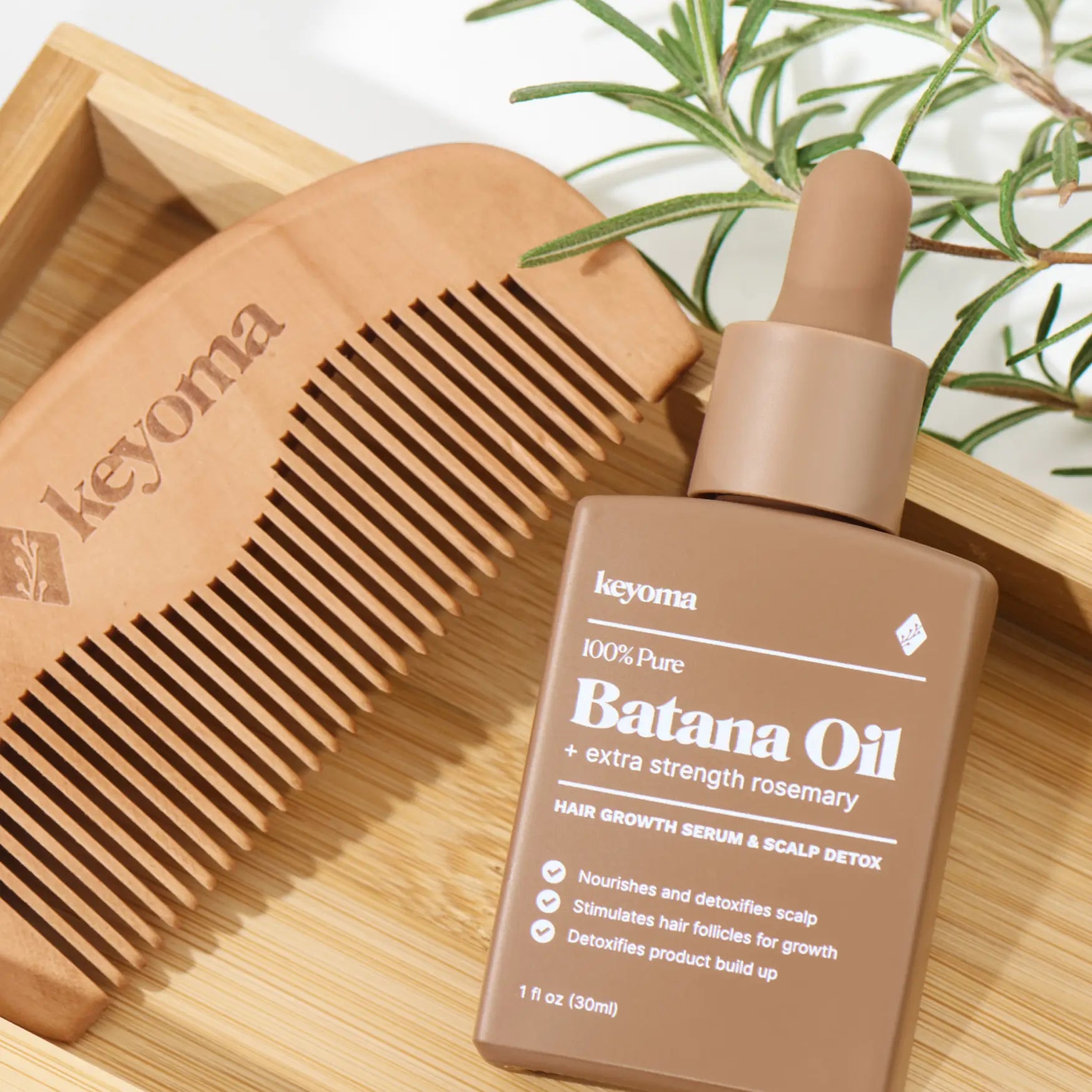
Hydrate. Dry, damaged strands can make overall hair look thinner. Consider using Keyoma’s Pure Batana Oil with Rosemary to moisturize your hair and promote hair growth over time.
Seeing Club Hair? Create a Gentle Wash Routine With Keyoma
If you’re suddenly seeing more hairs with bulbs than usual, take it as a sign to ease up on strain, not to panic or scrub harder. Keep handling gentle, support scalp comfort, and look for patterns over a few weeks instead of day-to-day swings.
Explore Keyoma hair care articles for simple trackers and gentle shedding routines.
Featured Product
30% Off + 3 FREE Gifts
100% Pure Batana Oil + Rosemary


