

In this article
Marula oil shows up in plenty of luxe hair products because it can feel nourishing. So what are the benefits of marula oil for hair, and how can you use it in a way that works? This lightweight oil comes from marula seeds and is often mentioned as one of the top oils for hair health.
You’ll find it in hair products like conditioners and hair masks, and it’s also common in skincare products. You’ll learn the benefits of marula oil for hair, how to use it effectively, and what to watch for in your hair care routine.
Key Takeaways
-
Marula oil is a lightweight, quick-absorbing emollient that softens hair without weighing it down.
-
Fatty acids and amino acids can support moisture retention, slip, and a smoother strand feel.
-
Antioxidant, anti-inflammatory, and antimicrobial properties may help support scalp comfort and protection.
-
Patch testing can help you avoid irritation, and using too much may cause oily buildup at the roots.
What Is Marula Oil
Marula oil comes from the marula tree, which is native to southern Africa. In the past, Marula trees grew mainly in the wild and were considered fairly rare. Some African tribes linked them with fertility and a happy marriage. Today, Marula trees are cultivated, so they aren’t as uncommon as they once were.
Across Africa, different parts of the marula tree have been used in foods and as medicine for many years. The tree produces fruit with a hard nut and white kernels inside. The oil can be extracted from these kernels or from the nut’s outer husk.
Because marula oil absorbs easily, it works well in skin and hair care. It’s considered an emollient, meaning it soothes, softens, and adds moisture to the areas where you apply it. On skin, marula oil can soften by sealing in hydration.
It also has antioxidant, anti-inflammatory, and antibacterial properties that may help protect the areas where you use it and possibly soothe reddened skin. Most people can use marula oil, and it hasn’t been found to interact negatively with other products. However, it tends to be a good fit for people with dry or cracked skin.
Benefits of Marula Oil for Hair Health

Marula oil is a common ingredient in hair products, and there are a few solid reasons why. Here are some benefits it may have for your hair health.
Similar to Sebum and Non-Comedogenic
Marula oil’s texture and makeup are similar to sebum – the natural waxy, oily substance your scalp produces. If you have skin conditions such as acne, you may find this appealing because marula oil is considered non-comedogenic and shouldn’t clog pores. It’s also been said to calm irritation and dryness tied to eczema and similar skin concerns.
How Marula Oil May Help Protect Elastin
This may be one of the benefits of marula oil for hair growth that curlies and coilies appreciate most. Elastin is one of the proteins that helps make up the skin of your scalp.
It helps keep hair follicles firmly rooted and more resistant to handling by providing some stretch, true to its name. That added stretch can help curls and coils hold up better during detangling and styling.
Amino Acids and Fatty Acids in Marula Oil
Researchers have shown that L-arginine and glutamic acid, two amino acids found in marula oil, can help keep skin hydrated and moisturized. The oil also contains palmitic, stearic, oleic, and myristic acids, which are fatty acids that act as emollients by protecting, moisturizing, and lubricating the scalp.
Lightweight Feel and Fast Absorption
Marula oil typically won’t feel heavy on your skin or leave your hair looking greasy. Your scalp and strands can absorb it quickly, so its beneficial components can get to where they may do the most good for natural hair.
That connects to another reason people mention marula oil for hair growth. Because it absorbs so readily, it may help transport other good-for-your-scalp-and-hair ingredients into your skin and strands.
Antioxidants in Marula Oil
Antioxidants are protective. They help protect cells from free radical damage, ultraviolet sun exposure, and the environmental stress that comes with pollution. Marula oil contains antioxidants , including vitamin E, vitamin C, and phenolic compounds.
Antimicrobial and Anti-Inflammatory Properties
Current evidence suggests marula oil may have antimicrobial properties, which could help support a healthier scalp. Its anti-inflammatory effects have also been attributed, in part, to its rich fatty acid content.
How to Use Marula Oil on Hair

Marula oil can be a versatile, nourishing add-on in your hair care routine. Here’s how you can use it to get the most out of it:
How to Pair Marula Oil With Pure Batana Oil
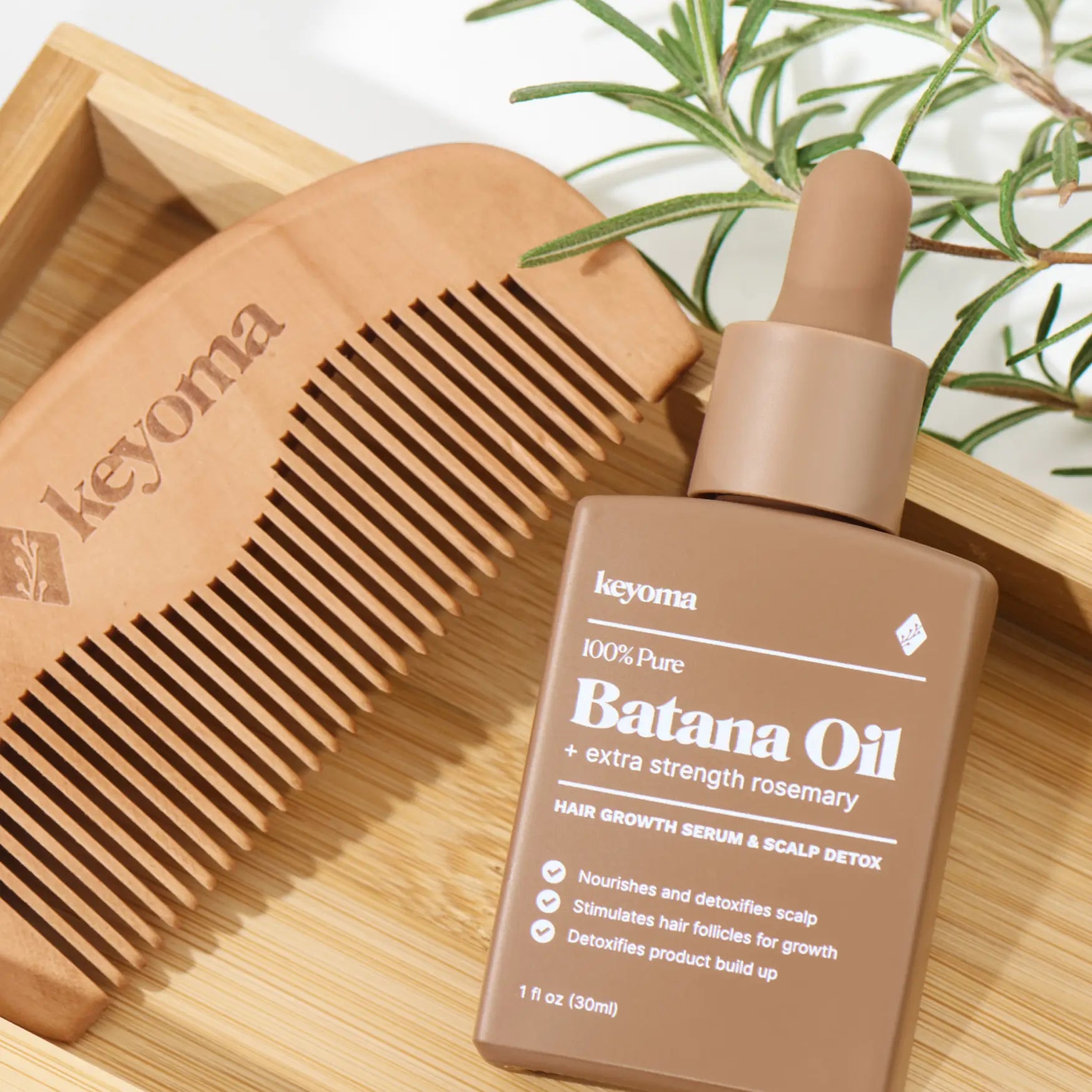
Marula oil is a lightweight option that works well for smoothing, shine, and softening without making hair feel weighed down. If you like the finish of marula but need something more targeted for the scalp and fuller-feeling roots, pure batana oil is a stronger “scalp-first” option to add alongside it.
Batana oil is richer than marula, so it can support a dry scalp and help hair feel more conditioned, while rosemary oil is commonly used in routines focused on hair vitality.
Use on the Scalp and Massage In
Apply a few drops of marula oil directly to your scalp and massage gently. This can help support a healthy scalp and hair growth.
Apply on Damp Hair
For best results, apply marula oil to damp or wet hair. If your hair is fine, a few drops may be enough, while thicker or curly hair might do better with a slightly more generous application.
Use Before Heat Styling
Before you use heat-styling tools, apply marula oil from roots to ends. This can provide a protective barrier against heat damage and help keep your hair smooth and shiny.
Mix Into Your Products
Add a few drops of marula oil into your favorite shampoo, conditioner, or styling products. This can boost their moisturizing and nourishing feel without changing your routine.
How Often to Use It
If your hair is dry or damaged, you can use marula oil daily. Otherwise, applying it 2-3 times a week is usually enough to help maintain healthy hair.
Marula Oil Side Effects and Risks

Marula oil has very few documented side effects. It’s generally safe for most people, especially when applied to hair or skin. Still, there are some potential risks to keep in mind:
-
Allergic reactions. This is rare, but some people may be allergic to marula oil.
-
Skin irritation. Marula oil may irritate the skin in some people. Always do a patch test before applying it to your scalp or hair.
-
Oily buildup. Using marula oil too often can lead to oil buildup in your hair and greasy roots. To avoid this, use it sparingly and adjust your use based on your hair type.
Choose a Lightweight Finish With Marula, or Go Scalp-First With Keyoma Batana Oil
Reach for marula oil when you want lightweight softness and shine without greasy roots. It absorbs fast and may help calm dryness, but the dose is where many people get tripped up. Start with a few drops on damp mid-lengths and ends, then stop. If your hair still feels rough after it dries, you likely need better moisture sealing, not more oil.
If your scalp is the issue instead, keep marula for lengths and choose a scalp-first oil step a few times per week so you don’t overload your roots. Consistency matters more than quantity, and buildup is the fastest way to make hair look dull and flat.
Featured Product
30% Off + 3 FREE Gifts
100% Pure Batana Oil + Rosemary


