

In this article
You handle your hair all the time – washing it, styling it – but rarely stop to think about it. Ever wonder what hair is made of or how many strands most people have?
We got curious and looked it up. (Happy to help.) After a whole lot of reading, here are 20 fun facts all about hair!
Key Takeaways
-
Hair grows continuously and about 90% grows while 10% rests.
-
Cutting hair does not change growth speed, but trimming removes split ends.
-
Hair is mostly keratin, the same protein found in skin and nails.
-
Typical shedding is 50 to 150 hairs daily with replacement growth starting.

1. Hair Grows Almost All the Time
It’s wild to consider, but your hair is likely growing right now. At any moment, about 90% of your hair is in a growth phase while roughly 10% is resting. A single strand typically lives around five years. Warmer climates can nudge growth a bit faster because heat boosts scalp circulation, which supports growth. (So yes, Florida’s heat does have a perk!)
2. Scalp Hair Helps With Temperature Control and UV Protection
The hair on your head works as insulation and can aid cooling, and it also helps shield your scalp from the sun’s UV rays. The role of hair elsewhere is still debated, especially since we rely on clothing for warmth unlike many other mammals.
3. Goose Bumps Happen When Tiny Muscles Lift Hair Follicles
When you get cold, tiny muscles attached to your hair follicles contract and make the hairs stand up. Those goose bumps raise a thin layer that helps trap warmth close to the skin.
4. Cutting Hair Does Not Change How Fast It Grows
You’ve probably heard this one: trims don’t change how fast hair grows. (Surprising, right?) What trims do is remove split ends, which can creep up the shaft and thin it out. When that happens, hair may look stalled, so it’s smart to book a trim when you notice those splits.
5. Hair Is Mostly Made of Keratin
Wondering what hair is made of? The outer layer of each strand is built from a protein called keratin. You’ve seen it before because the same compound appears on the surface of your skin and in your nails.
Many products rely on keratin to help hair feel stronger and look shinier, and salons often offer keratin treatments that smooth and straighten. This protein also shows up in animals’ hooves, claws, feathers, and manes.
6. Black Is the Most Common Hair Color Worldwide
Darker shades are most common worldwide, with black leading the way. Red is the rarest hair color – only about 1% of people have it naturally. Somewhat unexpectedly, just 2% of the population is naturally blonde, which puts it second on the rarity list.
7. Hair Is One of the Fastest-Growing Tissues in the Body
Hair ranks among the fastest-growing tissues in your body, second only to bone marrow. On average, strands grow about 0.5 inches per month and 6 inches per year. Even with that pace, you’ll likely wait around three years for shoulder length and about seven for waist length.
8. Most People Have About 100,000 to 150,000 Scalp Hairs
That’s more than you might guess. (So don’t stress over the 50 to 150 you shed yesterday.) The total varies by natural color. Blondes average around 150,000 hairs while black or brown usually falls between 110,000 and 100,000, and redheads tend to have about 90,000.
9. Hair Shape Helps Determine Straight, Wavy, or Curly Texture
Straight hair has round fibers, while wavy and curly hair often shows more irregular, oval-shaped fibers.
10. Two Pigments Create Natural Hair Color
Two pigment types account for all natural hair shades. Eumelanin dominates in dark-blond, brown, and black hair, and pheomelanin dominates in red hair. Minimal pigment in the strand leads to blond hair.
11. Eyebrows Help Protect Eyes and Show Emotion
Your eyebrows help block dirt, sweat, and rain from hitting your eyes, and they play a big role in non-verbal cues like sadness, anger, and excitement.
12. Hair Is More Elastic When It’s Wet
Hair stretches more than you might expect. At the salon, you may notice your hair seems longer wet before a blowout. That’s normal. Water lets hair expand, and when it’s wet, it can stretch up to 30% beyond its dry length.
13. The Cuticle Is Hair’s Protective Outer Layer
The outermost part of each strand is the cuticle, a layer of overlapping, scale-like cells that guard the inner structure. Cuticle-on hair leads to higher-quality, longer-lasting extensions.
14. Losing 50 to 150 Hairs a Day Can Be Normal
It can feel alarming to see hair in your brush or gathering in the drain, but daily loss of 50 to 150 strands is normal. Once a hair is shed from its follicle, a new one begins to grow. A follicle can repeat this cycle up to 20 times. Thinning usually becomes visible only after more than 50% of scalp hairs are gone.
15. Hair Care Can Add Up to Months Over a Lifetime
We feel it – caring for your hair takes time. Women spend about 2 hours a week washing, drying, and styling on average. (Only that much? Some of us do more.) By age 65, that adds up to roughly 7 MONTHS spent on hair. And that doesn’t even include salon visits.
16. One Hair Strand Can Hold More Weight Than You’d Expect
A single hair can bear around 100 grams of weight, and taken together, all scalp hairs can support up to two tons. That’s about the weight of two elephants.
17. Hair Has Five Main Elements Plus Trace Elements
Five key elements make up hair: sulphur, hydrogen, nitrogen, oxygen, and carbon. In total, 14 elements can be found in one strand. And here’s a surprise – your baby’s hair contains trace amounts of GOLD.
18. Hair May Grow Faster in Warm Climates
Heat can increase circulation throughout the body, including the scalp, which may encourage growth. Even so, genetics and diet matter too – of course.
19. Hair Can Reflect What Has Been in Your Bloodstream
Hair can reflect personal exposure. Analyzing a strand may detect substances that entered the bloodstream, including medicines, drugs, alcohol, vitamins, and minerals.
20. Babies May Have More Gold in Their Hair Than Adults
Yes, gold. Babies younger than three months can carry more gold in their hair than older people. It comes from their mother’s breast milk, but before you reach for the clippers and a bank slip, remember it’s a trace element. A newborn’s hair contains less than 0.1mm per meter.
Use These Hair Facts Today to Put Shedding in Perspective and Worry Less
Looking at this hair-facts article, the biggest mistake is treating every clump of shed hair as a crisis when the body is simply cycling through its 20 follicle lifespans.
For step-by-step shedding trackers and fresh troubleshooting tips that turn worry into data, explore the Keyoma Hair Care blog.
Featured Product
30% Off + 3 FREE Gifts
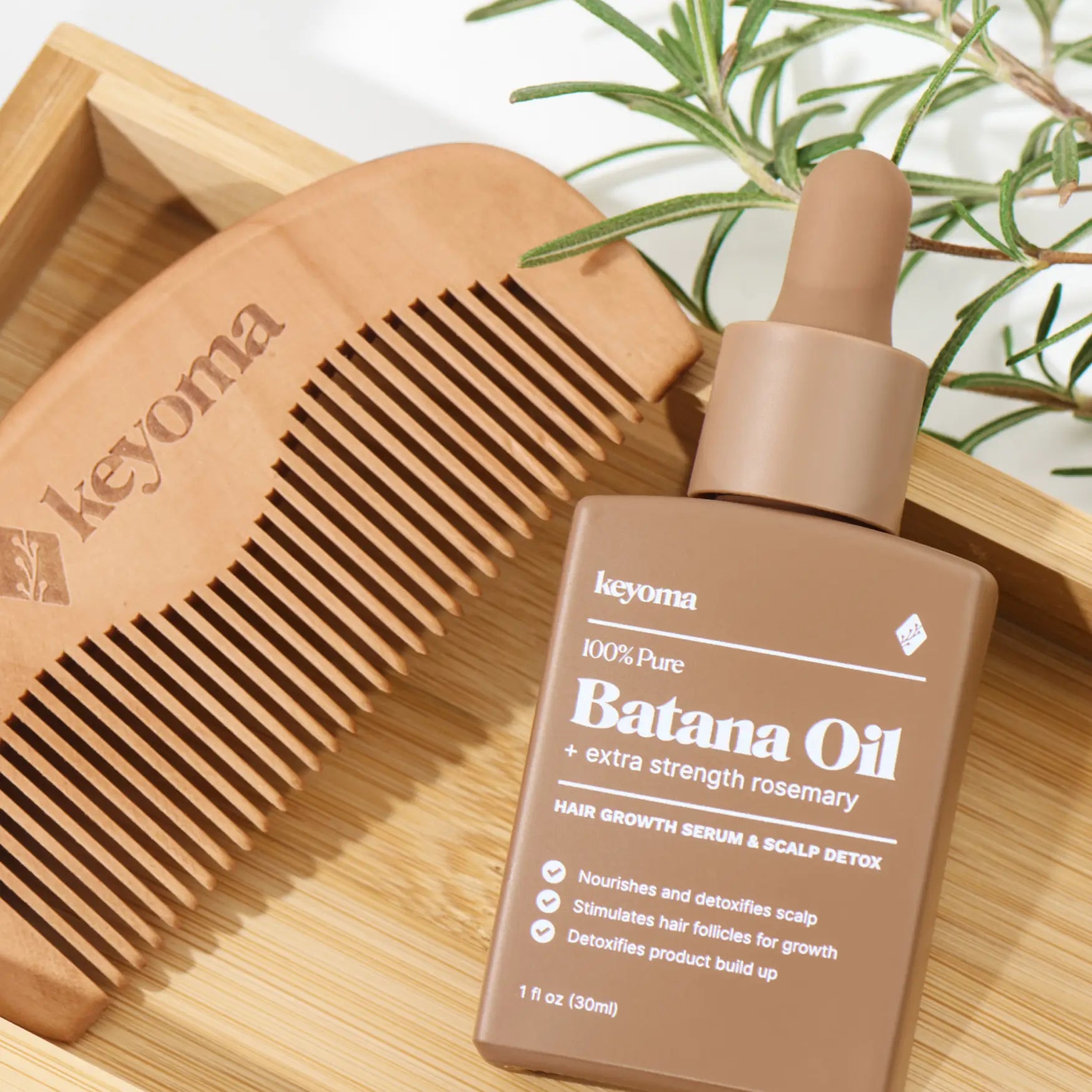
100% Pure Batana Oil + Rosemary


