

In this article
Hair-building fibers offer a fast way to hide thinning hair and bald spots. They do this by sticking to your existing hair, making it look thicker and fuller.
Let’s explore how these fibers work, how to put them on, and any possible downsides.
Key Takeaways
-
Hair-building fibers are keratin-based microfibers that cling to existing strands for thicker appearance.
-
Best results come from clean, fully dry hair and gradual, root-focused layering.
-
Light hairspray setting improves hold, while heavy brushing can disturb coverage.
-
Possible downsides include irritation, color transfer, buildup, eye contact, staining, or inhalation risks.
What Is Hair-Building Fibers
Hair building fibers are made of keratin protein, which is what your own hair is made of. These tiny fibers are carefully cut to have a static charge, so they stick to your hair. When you sprinkle them on spots where your hair is thin, they instantly make your hair look thicker and fuller.
Benefits of Hair-Building Fibers

Now that you understand what hair fibers are and how they create fuller-looking hair, the real question becomes whether they're worth adding to your routine. From natural blending to instant coverage, these keratin-based products offer seven distinct advantages that address common concerns around thinning hair.
Each benefit plays a different role in helping you manage visible scalp and regain everyday confidence. See what fibers can do for you.
1. Natural-Looking Coverage
Hair building fibers can fill in sparse spots by grabbing onto the hair you already have. If you use a light touch and pick a color that matches your roots, the fibers will blend in. They'll also make your scalp less visible.
Fibers can also make your hairline and part look less wide, which is where thinning often shows up the most. The trick is to add them little by little, so your hair looks natural, not heavy.
2. Fast, Noticeable Results
The main reason people use fibers is that they deliver a change you can see right away. In just a few minutes, your hair can appear thicker and more even, especially on the top of your head, at your temples, or along your part. This comes in handy before meetings, dates, photos, or any time you want a quick boost without a haircut or lengthy styling.
3. Easy At-Home Application
Most fibers are easy to put on at home and don't make much of a mess. You'll want to start with dry hair. Then, sprinkle or spray the fibers onto the areas where your hair is thin. Keep the container close to your head for better aim.
After that, pat your hair lightly, so the fibers settle in. Then, style your hair as usual. With a mirror and a little practice, you can learn how much fiber you need and do the whole thing in minutes.
4. Longer-Lasting Hold
Fibers are made to hold onto your hair, so they can stay in place all day while you work and run errands. A light spray can help them hold even better, especially around your hairline. They can also withstand light wind and normal movement if you put them on the right way.
For the best results, don't rub your head a lot or run your fingers through your hair too often. I find that using a setting spray really helps keep the fibers in place all day.
5. A Non-Damaging Cover-Up Option
Hair fibers are a cosmetic cover-up, not a chemical treatment, so they usually fit into your regular hair care. You don't need to bleach, heat, or process your hair to make it look fuller.
They wash out when you shampoo, making them a simple option compared to things like hair transplants. As long as you keep your head clean, fibers are a gentle way to improve how your hair looks without hurting it.
6. Flexible Shade Matching
Hair fibers come in lots of colors, so you can find a close match for your own hair. This is important because the better the match, the more real your hair will look, especially in bright light or close-up pictures.
If your hair is between colors, you can mix two colors to get a more natural look at the roots. This also works if you have highlights, gray hair, or different colors from your roots to the ends.
7. A Confidence Boost
Thinning hair can make you feel insecure, even if others don't notice it as much as you do. Fibers can ease that worry by making your hair look fuller and more balanced. This can help you feel better when you're talking to people or out in public.
When you aren't constantly thinking about your hair, you may feel more self-assured. That little bit of confidence can change how you act at work, in photos, and just in everyday life.
How to Apply Hair Fibers for Maximum Hold

When you use hair fibers, you want them to stay in place but still look natural. Whether they last a few hours or all day depends on how well you get your hair ready, how slowly you put the fibers on, and how carefully you set everything.
1. Prep Your Hair First
Start with hair that is clean and totally dry. Any water, oil, or product on your head can keep the fibers from sticking well. It might also make them clump up or slide off during the day. If you shampoo, skip conditioner on your scalp, since soft roots don't grip as well.
Dry your hair well, especially around your crown and part. If your hair feels very smooth, use a root-lifting product to give it some texture. This will help the fibers stick without making your hair heavy.
2. Pick the Right Shade and Applicator
Pick a fiber color that matches your roots, not the ends of your hair. The color at your roots will look the most natural, especially in bright light. If you're between two colors, go a little lighter, as it will look more real once you layer it on.
Using a spray applicator helps you put the fibers exactly where you want them, especially around your hairline. Use a mirror, so you can see the top of your head. This will make it easier to put the fibers on evenly.
3. Apply Fibers in Thin Layers
Put the fibers on a little at a time instead of all at once. Start with a light shake or a few short sprays aimed at the spots where your hair is thin. Focus on the roots, not the length of your hair. This lets the fibers bond to your hair and make it look thicker, instead of just sitting on top.
Stop and check how it looks before you add more. Layering a little at a time will help you avoid a flat or fake appearance.
4. Build Natural-Looking Density and Shape
After the first layer, shape the fibers, so they look like your natural hair. Lift sections of your hair and put fibers under the top layer, so your hair looks thick from within, not just on the surface. Don't fill in your hairline or part perfectly. If you leave a little space, it will look more real.
5. Blend With a Gentle Touch
Blend gently, so you don't mess up the coverage. Lightly tap the areas where you put the fibers with your fingers to help them settle. If you need to, use a soft brush and move it gently. Brushing too hard can pull fibers away from the roots and show your scalp again. This will reduce how well they hold and how real they look.
6. Set Fibers for All-Day Hold
To finish, mist hairspray lightly over the areas where you put the fibers from about eight inches away. A light mist will hold the fibers in place without making your hair stiff or shiny. Let the hairspray dry completely before you touch or style your hair. This is important for keeping the fibers in place all day.
7. Style and Touch Up With Care
Once the fibers are set, style your hair gently, so you don't disturb the roots. If you use heat, keep it away from your head and don't pull it through the areas with fibers. To touch up, use just a little bit of fiber where you need it. Too many layers can make your hair look heavy.
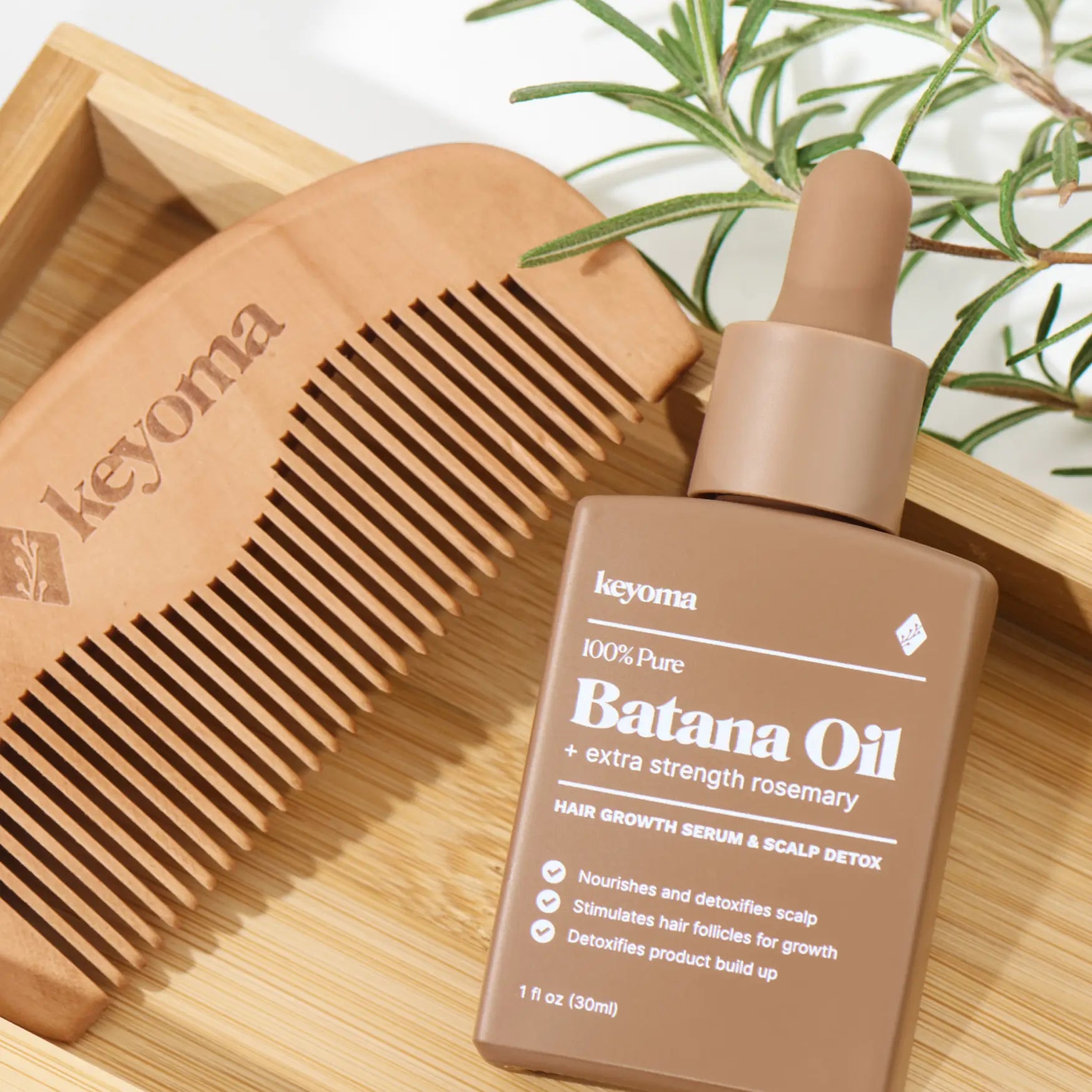
8. Batana Oil With Rosemary Timing
Batana with Rosemary Oil is best as a conditioning treatment, not right before you put on fibers. Put a little on your scalp at night or a few hours before you style your hair. Then, shampoo and dry your hair before you use fibers.
This lets your head and hair get the benefits of the oil without leaving anything behind that could keep the fibers from sticking.
Common Side Effects and How to Reduce Them

While hair fibers are usually safe, some people might have side effects. Here's what you might expect and how to deal with it:
-
Some people might have a little irritation, redness, or itching on their head after using hair fibers.
-
Colour Transfer: If you don't use hairspray correctly, hair fibers might end up on your clothes or pillow.
-
Over time, fibers can build up on your hair and scalp, which can make your hair look heavy.
-
If hair fibers get in your eyes, they might cause irritation.
-
Putting on hair fibers might stain your hands, especially if they're damp.
-
Inhaling hair fibers can be dangerous, especially if you have breathing problems.
If you have any serious side effects after using hair fibers, stop using them right away. A doctor can give you more advice.
Get All-Day Hold Today With Hair Building Fibers on Dry Roots
Treat hair fibers like a camera filter for your hair, not a cure. The payoff is speed, but the trade-off is grip. Fibers only bond well when your roots are clean, dry, and not coated, so the best “pro” move is timing your conditioning away from fiber days.
If you want coverage that lasts, then keep oils and leave-ins off your scalp before you apply fibers, and use them at night or hours earlier so you can wash and dry fully first. That one shift reduces clumping, sliding, and that obvious powdery look.
Want more styling-proof routines for thinning days and wash days? Visit the Keyoma Hair Care blog.
Featured Product
30% Off + 3 FREE Gifts
100% Pure Batana Oil + Rosemary


