
In this article
Natural hair shrinkage shows up often for people with curly or coily textures. It happens when strands coil tightly and make your hair look shorter than its true length.
Shrinkage can feel annoying, yet it is a normal trait of curls that you can guide with the right care. Below, you’ll find practical ways to maintain length, look and care for natural hair that tends to shrink.
Key Takeaways
-
Natural hair shrinkage is normal in curls when strands coil tighter as moisture changes.
-
Shrinkage relates to hair shaft shape, internal bonds, porosity, water exposure, and humidity.
-
Moisture focused routines use sulfate free shampoo, conditioners, masks, and leave ins to hydrate.
-
Managing shrinkage also involves detangling, stretching, sleep friendly styles, and sealing with batana with rosemary oil.
What Is Hair Shrinkage
Even hair that has stayed the same length for years can still shrink. Natural hair shrinkage is just what it sounds like. Curls move from a stretched shape to a tighter, more compact coil.
Your curl pattern does not change when it tightens up. As hair dries or loses moisture, each strand contracts.
Shrinkage is not a sign that hair is damaged. It is part of what gives curls their shape, and if you like your coils as they are, you may welcome it. You do lose visible length when curls contract, so if you want a longer look you can reach for anti-shrinkage products for natural hair and refresh your style when you want something different.
What Causes Shrinkage

Understanding why curls contract helps you decide which techniques will work best for your texture. Shrinkage traces back to your follicle shape and the hydrogen bonds that break every time water touches your strands. See how bond chemistry drives your curl behavior.
How Hair Shaft Shape Affects Curl Pattern
The shape of hair relates to the curve of the follicle. A curved follicle produces curly hair. A straight follicle produces straight hair. Curly and coily shafts also form through uneven keratinization, which creates internal tension that leads to twists and bends. The hair shaft is made of keratin proteins connected by three main side bonds.
These are hydrogen, salt, and disulfide bonds. Together they help set hair’s strength and stretch. Hydrogen and salt bonds are physical bonds that break fairly easily. Hydrogen bonds can break when exposed to water or heat. Salt bonds react to pH and can break when touched by acidic or alkaline solutions.
Disulfide bonds differ from salt and hydrogen bonds because they need chemical reduction or oxidation to change. With a relaxer, for example, the solution breaks and relaxes disulfide bonds. After these bonds are broken they cannot reform, so the straightening effect becomes permanent.
How Water Intake Changes Hair Shape
When hair meets water, hydrogen bonds can break and the shape can shift. The shaft becomes more elastic and simpler to mold. That is why curls often look looser when damp and restyling feels easier.
As hair dries, new hydrogen bonds form on their own in the shape you set during styling. This might be with rollers, brushing, or twists and braids. Your hair holds a short-term memory of that new shape. Once hair meets water again, including humidity or water-based products, those weak hydrogen bonds break and hair returns to its natural pattern.
Here is the key. Your porosity strongly affects how much water your hair pulls in, especially from the air around you. Humidity-resistant products can help block extra moisture and make it easier to maintain your style.
Whether you like it or not, shrinkage is part of the curl story. If it is not your preference, there are styling options that can elongate your strands. Shape your hair so it works for you.
Ways to Reduce Natural Hair Shrinkage

Even with great care, some level of shrinkage will always show up, and that is completely normal. The amount you see depends on your curl type, your routine, how consistently you moisturize, and which anti-shrinkage products you use at each step.
You can cut down on shrinkage with a few steps. Moisture is the main anti-shrinkage strategy, along with checking your product labels. Hydrating oils and plant butters can help reduce contraction, and certain styling methods can stretch strands too. Keep these points in mind:
Lock In Moisture During the Wash
Long-lasting hydration begins in the wash stage. The shampoo you choose can influence how fast your hair dries out later, even if you do not notice right away. To retain moisture, start with a sulfate-free shampoo that cleans without stripping your natural oils.
Pick formulas that lift scalp buildup while supporting strength and reducing breakage, which can matter when shrinkage is on your mind.
Detangle Thoroughly to Reduce Hidden Shrinkage
Hair that is not fully detangled will look shorter, which can be confused with curly hair shrinkage. This is more about tangles hiding your length than moisture, but they are linked. If you skip detangling, your products will not spread evenly and hydration will not reach every strand.
Use a wide-tooth comb with a moisturizing styling cream to soften and reinforce your hair so it looks smoother and longer. Start at the ends and move toward the roots to avoid extra pulling and breakage.
Layer Rinse-Out and Leave-In Conditioner
After cleansing, begin layering moisture. Apply a rinse-out conditioner to add hydration and help with detangling. Emollient, moisturizing ingredients can make the process easier and may start gentle stretching before you style. Follow with a leave-in conditioning milk, then finish with a hydrating styling cream or pudding.
The leave-in acts like a primer to boost moisture. Your styler then adds hydration and smooths each strand to help keep frizz in check.
Add a Weekly or Monthly Treatment Mask
Add a richer moisture mask to your monthly routine for extra hydration. With nourishing emollients and moisturizing ingredients, you are adding water and then sealing it in. That can reduce visible shrinkage once hair fully dries.
Stretch Curls Manually for Length
Manual stretching works on wet and dry hair. While hair is wet, gently stretch sections as you apply your styling products. Try the LOC method, which layers leave-in, oil, and cream, and finger comb products from roots to ends. Once hair is dry, lift compacted curls at the roots with a pick for added elongation.
Protect Your Style While You Sleep
Even if you sleep with a satin bonnet or scarf, you can set your hair at night to keep curls looser by morning. The way you sleep affects curl shape and overall hair health.
If your length allows, try a pineapple. Gather curls loosely at the crown with a scrunchie. This can create a mild stretch and deliver more volume when you wake up.
Seal Moisture With Batana and Rosemary Oil
After moisturizing and finishing your style, especially if you used the LOC method, warm a few drops of batana with rosemary oil between your palms. Smooth it lightly over mid-lengths and ends. This helps seal in moisture, reduce frizz, and keep curls feeling soft as they dry, which can make shrinkage look less intense.
Batana can add a small stretch and more volume in the morning. Try to remember that shrinkage can be frustrating, yet it is not a problem. It might change how your style looks for a while, but it also signals good hydration and batana gives your curls extra character.
Reduce Shrinkage and Nourish Your Curls With Keyoma
Shrinkage proves your curls are holding water, so the goal is not to eliminate it but to control when it shows up.
Start by applying products on soaking-wet hair, then stretch each section gently as you finger-comb from root to tip. If you wake up with tighter coils than you styled, mist lightly with water and use a pick at the roots instead of rewetting completely.
That preserves your moisture seal and adds instant length. The trade-off is simple: more stretch usually means less volume at the crown, so decide which matters more for each style.
When you want hydration that fights shrinkage without weighing curls down, explore Batana with Rosemary Oil on the Keyoma Hair Care blog for application tips and pairing ideas that keep your length visible all day.
Featured Product
30% Off + 3 FREE Gifts
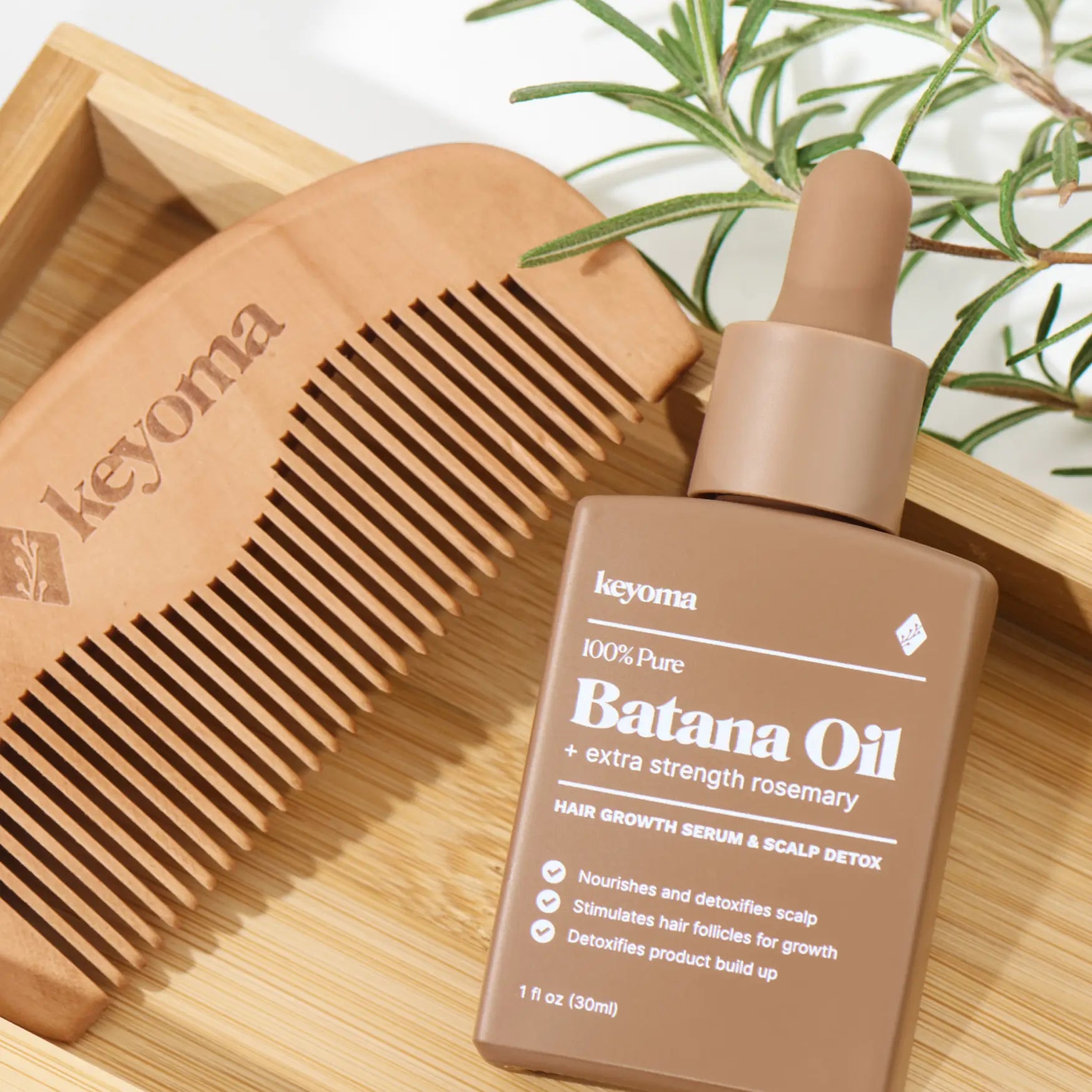
100% Pure Batana Oil + Rosemary


