

In this article
The best oils for coarse hair depend on what you need the oil to do. Coconut oil is the strongest evidence-backed choice for pre-wash protection. Batana, avocado, olive, and castor oils provide richer conditioning or sealing, while argan and jojoba oils are easier to control as lightweight finishers.
Coarse hair refers to the diameter of each strand. It does not automatically mean your hair is dense, curly, dry, damaged, or highly porous. Someone can have coarse, straight hair with low density, while another person can have fine strands with dense curls.
Choose an oil by considering three factors: how much weight your hair tolerates, whether products absorb or remain on the surface, and where the oil belongs in your routine. An oil that performs well before shampooing may feel greasy when used as a daily finishing product.
Key Takeaways
-
Coconut oil offers the strongest evidence for pre-wash protection.
-
Rich oils work best on dry lengths that tolerate added weight.
-
Argan and jojoba oils provide lighter shine and frizz control.
-
Hair oils condition strands but do not add water or cause regrowth.
Quick Picks by Oil Weight, Porosity, and Use
Oil weight is a practical description of how a product feels, not a standardized scientific measurement. Processing, blending, and added ingredients can make a naturally rich oil feel lighter in a finished formula.
Use the table as a starting point. Your best match is the oil that improves softness and movement without leaving waxy residue, limp roots, stiff ends, or separated curls.
|
Oil |
Relative Weight |
Best Porosity or Concern |
Best Application Method |
Main Drawback |
|
Coconut oil |
Medium to heavy |
Porous, damaged, or brittle-feeling hair |
Pre-shampoo treatment |
Can make some strands feel stiff |
|
Batana oil |
Medium to rich |
Dry, rough, high-porosity coarse hair |
Pre-wash treatment or damp-hair seal |
Can build up when overapplied |
|
Avocado oil |
Medium |
Dry hair needing softness and slip |
Pre-wash treatment or light sealing |
May flatten low-density hair |
|
Olive oil |
Heavy |
Extremely dry or rough lengths |
Short pre-shampoo treatment |
Can be difficult to rinse out |
|
Castor oil |
Very heavy |
Rough ends needing a strong seal |
Targeted use on ends |
Sticky texture and high buildup risk |
|
Argan oil |
Light to medium |
Frizz, dullness, or dry ends |
Finishing oil |
May feel too light for severe dryness |
|
Jojoba oil |
Light |
Buildup-prone or low-porosity hair |
Light sealing or finishing |
May not soften extremely rough lengths enough |
For broader washing, conditioning, and styling guidance, use the full coarse hair care routine rather than trying to solve every texture concern with oil alone.
The 7 Best Natural Oils for Coarse Hair
The oils below are ranked by their most useful role, not by popularity. No single oil is the best choice for every person with coarse hair.
1. Coconut Oil for Evidence-Backed Pre-Wash Protection
Coconut oil is the strongest choice when your main goal is protecting coarse hair during washing. It works best as a pre-shampoo oil on mid-lengths and ends, especially when the hair feels brittle after heat styling, chemical treatments, or repeated wetting.
A study comparing coconut, sunflower, and mineral oils found that coconut oil reduced protein loss in damaged and undamaged hair when used before or after washing. Its lauric-acid-rich structure gives it a strong affinity for hair proteins, which helps explain why it behaves differently from oils that mainly coat the surface.
Coconut oil does not suit every coarse strand. If your hair feels rigid, dull, rougher, or harder to detangle after use, apply less or reserve it for occasional pre-wash treatments. That reaction does not automatically prove “protein overload.” It may simply mean the oil or application method does not suit your hair.
2. Batana Oil for Dry, High-Porosity Coarse Hair
Batana oil is a richer option for coarse hair that feels rough soon after conditioning, develops dry ends quickly, or needs more slip than lightweight oils provide. It fits best as a pre-wash treatment or as a thin sealing layer over damp, conditioned lengths.
Because batana oil has a richer texture, it can help dry strands feel softer and smoother. These are cosmetic conditioning benefits. Current evidence does not establish batana oil as a treatment for hair loss or as a clinically proven way to regrow hair.
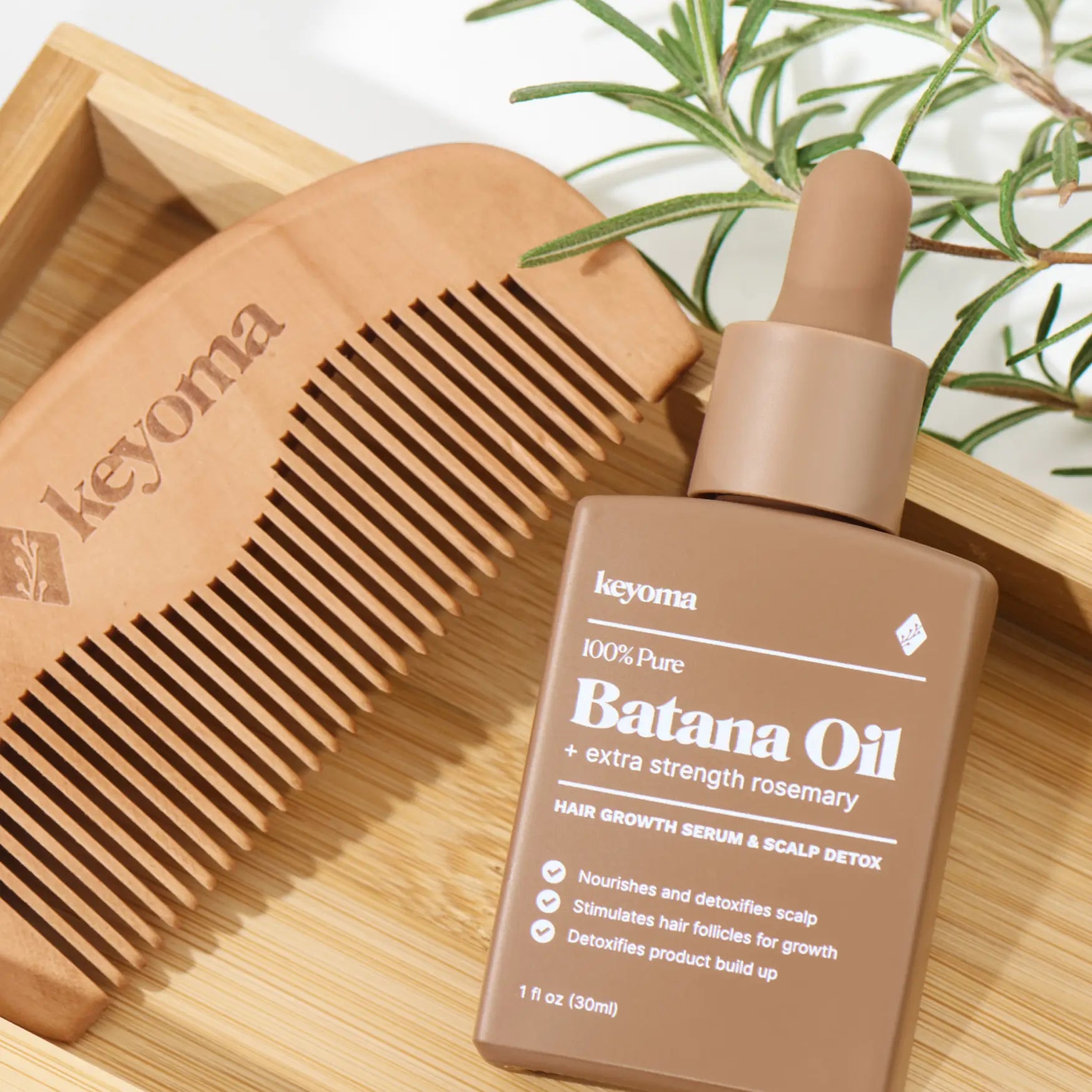
For readers who prefer a finished formula instead of mixing oils, Keyoma Pure Batana Oil with Rosemary offers a two-ingredient option that can be applied according to the product directions. Use it as a targeted conditioning step rather than coating already-soft sections.
Low-porosity coarse hair may still tolerate batana oil, but application becomes more important. A light pre-wash layer is often easier to control than a heavy leave-in coating. Keyoma’s advice for using batana oil on low-porosity hair explains how to adjust placement when products tend to remain on the surface.
3. Avocado Oil for Medium-Heavy Conditioning
Avocado oil sits between lightweight finishing oils and heavy sealants. It is a useful option when argan or jojoba oil disappears without softening rough ends, but olive or castor oil leaves the hair coated.
Use avocado oil before shampooing when dryness affects most of the length. It can also work as a light sealing oil after a water-based conditioner, especially on coarse curly or coily hair that loses softness soon after drying.
Research shows that oil behavior depends on the ingredient, hair condition, processing, and application method. A 2024 study found differences in how coconut, avocado, and argan oils interacted with damaged and undamaged hair fibers, reinforcing that plant oils should not be treated as interchangeable.
Watch the final shape of your hair. If waves collapse, curls stretch, or straight hair separates into oily pieces, reduce the amount or move the oil to your pre-wash step.
4. Olive Oil for Very Dry Lengths
Olive oil is one of the heavier natural oils for thick or coarse hair. It suits strands that remain rough after lighter products or become difficult to detangle at the ends.
Apply it mainly to dry mid-lengths and ends before shampooing. A thin, even coating provides more control than saturating the hair. Heavy application may require repeated shampooing, which can work against the softness you were trying to achieve.
A hair-fiber penetration study found that coconut, olive, and sunflower oils behaved differently from mineral oil during testing. The findings support the broader point that some oils interact with hair beyond forming an identical surface layer, although they do not prove that olive oil permanently repairs damage.
Olive oil is less suitable as a frequent dry-hair finisher. If it remains visible after styling or attracts lint, reserve it for wash-day use.
5. Castor Oil for Targeted Heavy Sealing
Castor oil is the thickest option on this list. Its sticky texture makes it better for targeted sealing than for full-length daily application.
Use it on rough ends that lose softness faster than the rest of your hair. It can also be blended with a lighter oil to improve spread. Applying castor oil from the scalp to the ends may create buildup, reduce movement, and make cleansing harder.
A systematic review of coconut, castor, and argan oils found weak evidence that castor oil may improve hair luster, but it found no strong support for hair-growth claims. Use castor oil for shine, reduced friction, and heavy sealing, not as a regrowth treatment.
If the ends become tacky or clump together, switch to avocado oil or use less castor oil.
6. Argan Oil for Lighter Frizz Control and Shine
Argan oil is a stronger choice when your coarse hair needs polish without a heavy coating. It suits straight or wavy coarse hair that loses volume under rich oils, as well as curls that need smoother ends without stretched definition.
Apply it after styling to dry mid-lengths and ends. Spread the product across your hands first, then skim the roughest areas. A thin film should add shine without making individual strands stick together.
Evidence for argan oil causing hair growth or producing major structural improvement remains limited. The same systematic review found no significant evidence supporting argan oil for growth or major improvements in hair quality. Its value is mainly cosmetic, including shine, lubrication, and a smoother finish.
Readers deciding between a rich conditioner and a lighter finisher can use Keyoma’s batana oil and argan oil comparison for a more focused breakdown.
7. Jojoba Oil for Buildup-Prone Coarse Hair
Jojoba oil is technically a liquid wax, but it is commonly used like a hair oil. It spreads easily and usually feels lighter than castor, olive, or unrefined coconut oil.
It is a useful starting point for coarse hair that has wide strands but low density, greasy roots, or a tendency to collect residue. Apply it lightly to damp ends after conditioning or use it on dry flyaways after styling.
Jojoba may not provide enough cushioning for severely dry, bleached, or highly porous hair. If the hair looks shinier but still feels rough, move to a medium-weight oil such as avocado or batana.
For a closer look at their different textures and uses, Keyoma’s batana oil and jojoba oil comparison separates rich conditioning from lighter finishing.
How to Choose an Oil for Your Coarse Hair
Choosing by curl pattern alone can lead to the wrong product. Two people with coarse curls may need different oils when one has dense, bleached, high-porosity hair and the other has untreated, low-density hair that collects buildup easily.
Start With Strand Size, Then Check Porosity
Coarse hair describes the width of individual strands. Density describes the number of strands on the scalp, while curl pattern describes their shape.
Porosity describes how readily the hair takes in and loses water. High-porosity hair may become wet quickly, dry quickly, tangle easily, or lose softness soon after conditioning. Low-porosity hair may take longer to become fully wet and may develop surface residue from rich products.
These observations are more useful than relying on one floating-strand test. Product buildup, mineral deposits, chemical processing, and leftover styling products can affect how hair behaves.
Match the Oil Weight to Its Intended Use
Choose the routine position before choosing the oil.
A pre-shampoo oil can be richer because it will be cleansed away. A sealing oil should form a thin layer over damp hair after a water-based conditioner. A finishing oil needs to be light enough to preserve movement.
Keyoma’s broader hair oiling tips explain how pre-wash, damp-hair, and dry-hair application serve different purposes.
A common mistake is using one oil for all three jobs. Castor oil may work on rough ends before shampooing but feel sticky as a finisher. Argan oil may add shine after styling but provide too little softness as a rich pre-wash treatment.
Adjust for Straight, Wavy, Curly, or Coily Hair
Straight coarse hair tends to show excess oil faster because residue is more visible along a smooth strand. Wavy hair may lose volume when oil is applied too close to the roots.
Curly and coily hair often benefits from added slip, but curl pattern does not automatically mean the hair needs the heaviest oil. Low-density curls can become flat or separated under castor, olive, or heavy coconut oil.
Judge the result after the hair dries completely. Softness, movement, and defined sections suggest the amount works. Oily patches, flattened roots, stretched curls, stiffness, or a waxy coating suggest that the oil is too heavy or overapplied.
How to Apply Hair Oil Without Greasy Buildup
Application controls the result as much as the ingredient. Even coarse hair can become limp or coated when oil repeatedly accumulates on areas that were not dry.
Use Rich Oils Before Shampoo
Coconut, batana, avocado, olive, and castor oils are easier to control when used before shampooing. Divide the hair into sections and apply the oil mainly where the strands feel rough.
Avoid saturating the scalp unless the product is specifically intended for scalp use and your skin tolerates it. Oil on the lengths and oil on the scalp address different concerns.
Frequency should follow your hair’s response rather than a universal schedule. Keyoma’s guide to hair oiling frequency explains how scalp type, wash schedule, and product weight change how often oil makes sense.
If coconut oil causes stiffness, use less or change oils. If olive or castor oil survives the next shampoo, reduce the amount rather than cleansing the lengths aggressively.
Seal Damp Hair After a Water-Based Product
Hair oil does not add water to dry hair. Apply a water-based conditioner or leave-in product first, then smooth a thin oil layer over the areas that lose softness.
Oil can reduce surface friction and slow moisture loss, but it should not replace conditioning. Start at the ends and move upward only as far as the hair remains rough.
Stop before reaching sections that already feel smooth. Adding oil to every strand because some ends are dry often causes greasy roots and dull, coated lengths.
Finish Only the Rough Mid-Lengths and Ends
Argan and jojoba oils are easier to control as finishing products. Rub a small amount between your palms, then skim the mid-lengths and ends after styling.
Do not keep layering oil onto unwashed hair without checking for residue. Limp roots, separated curls, dullness, trapped lint, stiffness, and a waxy feel all point toward buildup.
Persistent itching, redness, bumps, or tenderness are different from ordinary product heaviness. Stop using the product and review the possible side effects of hair oiling before applying another oil.
What Hair Oils Can and Cannot Do
Hair oils can add slip, soften rough ends, improve shine, reduce friction, and help conditioned strands retain a smoother feel. Coconut oil also has evidence for reducing protein loss when used around washing.
Oils cannot permanently repair split ends, replace missing cuticle material, or supply water to dehydrated hair. A smoother appearance does not mean the damaged structure has returned to its original condition.
Reduced friction and breakage may help you retain more length, but length retention is not the same as new hair growth. Batana, castor, argan, avocado, olive, jojoba, and coconut oils should not be presented as proven treatments for baldness or unexplained shedding.
Scalp burning, persistent itching, inflamed bumps, thick scaling, sudden shedding, or widening areas of visible scalp need more than cosmetic oiling. Stop applying the irritating product and seek advice from a dermatologist or another qualified healthcare professional.
Choose the Best Oils for Coarse Hair Without Buildup
Choose coconut oil when you want an evidence-backed pre-wash option. Choose batana or avocado when dry lengths need richer softness without the extreme weight of castor oil. Reserve olive and castor oils for hair that tolerates heavier sealing.
Argan and jojoba work better when your priority is shine, frizz control, and movement. Test one oil and one application method at a time so you can tell whether the ingredient helps or merely leaves a coating.
The best match should make coarse hair feel softer and easier to handle without flattening the roots, separating the curl pattern, or leaving residue after washing.
Featured Product
30% Off + 3 FREE Gifts
100% Pure Batana Oil + Rosemary


